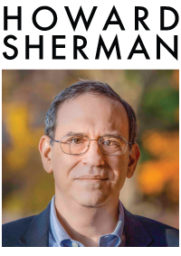
Keynote: School Theatre Can Be More

October 18th, 2017 § 0 comments § permalink

The Florida Association for Theatre Education invited me to be the keynote speaker at their annual conference, held in Orlando October 12-14, 2017. The text below represents an edited version of that address, which was written to be spoken, not read, so please forgive oratorical repetitions, some of which will have been minimized already. There were various ad libs during the course of the speech which, I’m afraid, have now escaped me.

*    *    *

At the risk of telling you things you know all too well, since it is you who do the teaching and I who spend my time opining on theatre, sometimes from in the midst of the fray and sometimes from the sidelines, especially when it comes to school theatre and theatre education. School theatre, whether academic or extracurricular, is of course the teaching of the practice of making theatre – learning and understanding a text, interpreting it through writing, direction, design and performance.

School theatre is a bonding experience for students, a place where those with a common interest can come together with like-minded peers. Theatre is a place where students who may not fit some arbitrarily perceived model of “typical” can find others who are like them at their cores, drawn together by a need to express themselves or support the expressions of others, rather than by throwing or hitting a ball into or over a net, or a wall, or a hoop. School theatre is teamwork without fractures and brain trauma. School theatre is a place where open displays of emotion are not only accepted but encouraged. School theatre is a place where students can become someone other than who they are on the way to becoming who they will be. School theatre is a place where students can play a role in making hundreds of people laugh, or cry, or applaud as one, in response to what they’ve done.

As I said, doing what you do, you know all of this and more. Believe me, even though you may not hear it often enough, there are many people who applaud and appreciate you for your role in all of this, as I do. Indeed – and I know all too well the countless challenges you face – at times I envy you, because what you do has so much meaning in the lives of your students. You are the teachers who are in a position not just to be liked and appreciated, but loved and remembered.

*    *    *

So why, if I perceive all of this achievement, do I say that school theatre can be more? I say it because of some of the work that I do, that I have chosen to do, or perhaps has chosen me, almost as if by accident.

As some of you may know, over the past half-dozen years, I have become a vocal advocate against the censorship of school theatre. By virtue of the jobs I’ve had – including running theatres and the American Theatre Wing – my voice is given some credibility. Once I was no longer constrained by those jobs, I found myself using that voice in new ways.

It began with a blog post about a show I know well, at a school near where I grew up, an arts magnet high school, with a majority population of students of color, which was in the process of canceling a production of August Wilson’s Joe Turner’s Come and Gone, over its use of the n-word. Because I have written at length about this incident, I will jump to the conclusion, which is that the show did go on, and it was presented without altering the words of one of America’s greatest playwrights. My voice was one among many; please do not think I am taking or deserve sole credit.

Since then, I have had occasion to advocate and even fight for any number of shows to be done in high schools and colleges, and for them to be performed just as they were written. The list includes – and in some cases there have been several instances of these shows, not just one-offs – Sweeney Todd, Spamalot, Legally Blonde, Rent, Almost Maine, The Laramie Project, Ragtime and more.

What I have seen over these years, as I have looked at school theatre and read about it, as I have parsed The Educational Theatre Association’s annual list of the most-produced shows, is an inclination to play it safe, to avoid potential conflict, to stick with the tried and true. This comes from school administrations, from school boards, from parents, from community groups, who think that school plays should just be good fun, that they should be appealing for ages eight to eighty.

I am all for fun. I love to be entertained. I understand why the list of the most produced musicals in high schools is now made up largely of titles drawn from popular family films and the biggest Broadway hits.

But I worry that these shows dominate school theatre not because they are the best shows or even the shows students are most interested in, but because they aren’t going to offend or even annoy anyone at all – and because they’re familiar titles that help sell tickets. As a result, while students unquestionably learn many things from being a part of school theatre and any show that’s chosen – rigor, structure, teamwork, and so on – they aren’t necessarily learning from the shows themselves. Yes, most family musicals have clear morals and lessons, but they are simple and surface. Students don’t have to look to find them and they certainly don’t have to struggle with them.

I favor that struggle.

*    *    *

Many of you may be aware of a recent study out of the University of Alabama which shows that students who see theatre learn from it in ways they don’t from watching a film, even a film of the same story. As the authors of the study wrote, “Theater is a window for students to a broader world. Exposure to that broader world may increase their understanding and acceptance of that broader world, which is why we see increases in Tolerance and Social Perspective Taking. Plays may be more effective than movies in helping students understand and accept that broader world because we react differently to human beings acting out a story in front of us than to representations of human beings on a screen. The in-person experience may create greater emotional connections.”

Now think about the fact that this study is simply about seeing theatre. It doesn’t begin to address the experience of making theatre.

It’s worth noting that, as I’ve spread this study around on social media, many people have responded by saying, “Well of course.” “We knew that.” “It’s obvious.” But that’s a response that’s only obvious to those who are already supporting theatre, who already believe in theatre, who already frequent theatres, who already teach theatre. However, that it was demonstrated in a controlled experiment is the kind of evidence-based proof we need about the value of theatre, about its ability to evoke empathy. Keep that study, and others like it that you may know of, very close and accessible. You never know when you might need them.

But just think: if that’s what’s happening in spectators, imagine what theatre is doing, imagine what theatre can do, for students who make theatre. Of course, you don’t have to imagine it, because you see it, you foster it.

As I proceed here, I would ask you to understand that even if the examples I give touch upon the kind of work you do, that I’m not here to criticize anyone’s choices. As I hope I’ve established, I place tremendous value in what you do. Some of you may already work from the mindset I advocate; others may not by choice or by the strictures of policy. All I am asking is that you think about whether you can expand the range of what you undertake. Can you make school theatre more?

*    *    *
The body of dramatic literature, and I include musicals in that, is pretty vast. Yet as the Educational Theatre Association’s own research, extensively studied by National Public Radio a couple of years ago has shown, when it comes to plays, the most produced plays in high schools – with the exception of Almost, Maine and more recently Peter and the Starcatcher – are mired in the work of the 1930s, 40s and 50s.

Why is that so? Is it because plays ceased being worthwhile some 60 years ago? No, that’s not the case. Yes, the language of plays may have become more expansive as taboos were broken, but that doesn’t mean every play contains language or subjects that might not be appropriate in a school setting.

Probably a more significant trend is that casts have become smaller, in order to become more producible commercially, and that doesn’t work well for those school programs with a lot of students vying for roles. Another is the fact that fewer plays are produced each year on Broadway, and so the titles are less familiar, the repertoire less known to the average person. That Almost, Maine broke out the way it has is extraordinary and singular, considering it never played Broadway and didn’t have any significant commercial success, not to mention that it was intended for four actors.

Interestingly, a play that is often produced – and often challenged – is The Laramie Project, and its appeal for many schools is something that it has in common with Almost, Maine. Just because it was written for a smallish cast playing multiple roles doesn’t mean it has to be. Almost, Maine’s four actors can become 20 or so, and Laramie Project can accommodate dozens. They are often produced because of the need for a large cast play, rather than content.

But of course Laramie Project talks of issues that have little in common with You Can’t Take It With You and Harvey, two regulars from the Educational Theatre Association list. LGBTQ rights, murder, justice, guilt, redemption – that’s what the real people portrayed in Laramie must cope with, and what the students who portray those people must understand. That may be “too much” in the eyes of some authorities, yet do students learn more from enacting the lives of people addressing a tragic hate crime or from the fairy tale story of a lonely ogre seeking acceptance? Both have lessons, but which runs deeper, which offers more?

Which prepares students for the larger world, for the world they live in, the world they will face? The vast majority of your students will not become artists, but they are all citizens of this country, of this world. Can the work you do with them be more than just about developing skills and empathy, but about preparing them to look at life both critically and compassionately? Indeed, can school theatre speak directly to their lives as they are now?

The shows I referenced are but two examples, and I’m not here to advocate for one and slam the other. They are just two shows that you’re all likely to know.

In research conducted by EdTA, the discussion of social issues discussed in theatre classrooms and productions between 1991 and 2012 has dropped precipitously. Here are some numbers: multiculturalism, down 10%. Drug and alcohol abuse, down 20%. Divorce and single parent families, down 20%. Teen suicide, down 20%. The topic of bullying, not even listed in 1991, is way up, yet the subject of teen suicide is down? How does that even make sense?

Not only can school theatre be more, school theatre has been more. There is more school theatre than ever, but it is retreating to safety, it is avoiding struggle.

*    *    *
In considering this issue, I believe there is an even more central question that often isn’t easily answered: who is school theatre for? In my work, I have developed my own hierarchy, and I apply it rigorously when considering situations that arise in school theatre, and how my own work may apply to it. But even if we do not see eye to eye on many things I’m discussing, I hope you may find this applicable no matter what your perspective may be.

First and foremost, I believe that school theatre is for the students who choose to do school theatre. That is the core constituency to be served, that is who must benefit most. This may seem obvious, but I have seen situations where this fact is forgotten, especially when programs face any type of crisis.

Secondly, I think school theatre is for the other students in the school. These are the peers of the students who participate, and they may be drawn in to the theatre, the auditorium, the converted cafeteria. They may well be affected by what they see, and indeed while they may not choose to participate in theatre subsequently, they may seek out other theatre in the months, the years, the decades to come.

Third, school theatre is for parents, so they can experience and appreciate what their children choose to participate in, and see their talents, whether its manning a spotlight or singing center stage.

Fourth, school theatre is for siblings and extended family, for much the same reasons as parents, but for reasons I’ll explain in a moment, they should not be lumped together.

Fifth and finally, school theatre is for the community at large, that is to say parents of non-participatory students and those in the community who have no direct connection to any current student or students at the school.

I imagine these five groups as a series of concentric circles, with the central circle being the students who participate in and study theatre at the center, then widening out to the other groups.

Why do I separate parents from the rest of families, and those without students in the program or at the school at the fringes?

First, because the choice of what is done in school theatre should not be constrained by the need to appeal to siblings younger than the students themselves. Yes, it’s a treat when younger siblings can see their brothers and sisters on stage, but that should not drive play choice. High school material should not be infantilized for the entertainment of middle school and elementary school students; middle school plays shouldn’t be comparably limited. To do so does a disservice to the core constituency, the students at the center.

That’s also why those without any direct stake in the drama program, or even the school, are at the farthest ring from the center – because those who have no stake shouldn’t drive the educational priorities of theatre. School theatre shouldn’t be looked at as a public relations tool with which to entertain the community at large, since doing so diminishes the focus on the students themselves.

I have been challenged on this by people who say that all theatres have to keep audiences in mind when planning their programming, so kids should learn about that now. To them I say, yes, you’re right about the professional world, but this isn’t professional theatre, this is school theatre. And I refer back to my concentric circles and point to who is at the center, who is most important, and it’s the students studying and making theatre.

*    *    *

I appreciate that there are many school theatre programs that are required to be self-sustaining financially. That gets my blood boiling, because sports programs are rarely saddled with the same requirement. But I must accept a certain reality. To that I say that excellent work with students will, over time, develop respect for what is undertaken, regardless of whether schools are producing familiar, safe titles or not.

I imagine that many of you have read Drama High by Michael Sokolove, or know of the program that Lou Volpe built in Levittown PA and which Tracey Gatte carries on today. Did you know that beginning this spring, that book will be a NBC TV series, called Rise? That’s right – what music teachers got with Glee, you will now get, only better, because your story will be told by the producer and writer who created the series Friday Night Lights.

If ever there was a moment for school theatre to step up to the next level, to be more, this is it. If Rise turns into a popular hit, if it runs, you will have the greatest tool imaginable to build the case for and the strength of your work, your programs, your students. Because you won’t be doing it alone. You’ll have a TV network behind you, 22 episodes a year.

*    *    *
Whenever I get involved in an issue regarding school theatre, about a challenge to school theatre, I am usually told early on, “You have to understand, this is a very conservative community.” Never once have I been told, “Oh, this is an incredibly liberal community.” It just doesn’t happen. Those words were said to me sotto voce about the prevailing sense of Florida and Florida education when I was invited to speak with you today. As you can see, I was undeterred.

I hope you’ll notice that nothing I’ve said today is explicitly political, in terms of liberal or conservative, red state or blue state, because when it comes to allowing students to learn, to creating opportunities for students to learn, I believe there must only be knowledge. When it comes to theatre, there must always be discovery.

Yes, there are those who will take my having spoken about The Laramie Project as political, because it portrays the aftermath of the killing of a gay youth 19 years old this week. But that murder is a crime is not a political position, it’s a commonly held moral position. That the play explores a wide range of community response to that crime is not political, it is human and humane. But let me leave Laramie be, and mention some shows you may want to think about, if you haven’t already done them, even in contrast with some shows you likely have done.

I am here in the south and I suspect that many of you have done, or considered, To Kill A Mockingbird. I for one hope schools will begin to look beyond that story, beloved as it is, because it is the story of a white man who must save a black man, and how his white household is affected by that decision. It is a white savior narrative. There are few roles of any size for black actors, let alone Latinx actors, or Asian actors, and race is important to the telling of the story. If you choose to do the show, then I urge you to think about how you cast it, not turning a blind eye to race, but with consciousness about how interracial casting can affect that story.

Alternately, if you are in a school with a significant black population, think about doing one of August Wilson’s plays, because they will open up not only your stages, but conversations you couldn’t have imagined. Think about the plays of Quiara Alegría Hudes, if you have Latinx students. Think about the plays of Lynn Nottage, of David Henry Hwang; of musicals by Jeanine Tesori that aren’t just Thoroughly Modern Millie and Shrek. Whatever you do, don’t make the assumption that your production must look like the original production, don’t assume that unless a cast of characters says that a character is black, Asian, Latinx, Middle Eastern, Native American that it must be played by a white student. You can make school theatre more, you can make shows more, at times, by going beyond what has been before.

I know that between multiple classes and shrinking resources it can be difficult, but I know that drama teachers, like their students, when push comes to shove, always do more, step up and achieve more. So I say once again that I am not here to make the assumption that some of you aren’t already doing this, but to be your cheerleader, in the same way that I know you inspire your students to more. If you need help, if you meet challenges, know that I’m available to help you, and I know many, many more people working professionally who will do so as well.

That’s why when Ragtime was going to be edited by school administrators without approval in Cherry Hill New Jersey earlier this year, which would have lost them the rights to the show entirely, Brian Stokes Mitchell not only spoke up for the show, he went and met with students, teachers and the local NAACP in Cherry Hill to make sure the show went on. In fact, the debate over Ragtime in Cherry Hill achieved something all too rare – that production of Ragtime became required viewing for every student in the school, all 2400 of them. That meant that theatre was more, because it prompted conversations that didn’t stop at the auditorium doors, but permeated English classes and history classes in the weeks and days surrounding that production. Sadly, it took a crisis for that to happen. Wouldn’t it be something if school theatre was something every student always had to see? After all, as I alluded to earlier, we must create not only the artists of tomorrow, but the audiences as well.

*    *    *

Because I am an endless rewriter, and was working on this as late as this morning, I am going to take what seems like a sudden turn in topic before I close.

As I have read and heard this week, as many of us have, about the despicable and vile behavior of Harvey Weinstein, it has been tempting to blame it only on the wonton ways of Hollywood. But his behavior is not unique to Hollywood, it is sickeningly suffused through every part of American life where men hold power over women, where people hold power over one another. Some of you may have had your own comparable experiences, and that is profoundly troubling and infuriating.

Theatre is not immune to this: just over a year ago a small theatre company in Chicago, Profiles Theatre, shut down suddenly when its own culture of sexual harassment and abuse – in the guise of art – was brought to light after decades. Audiences learned that what seemed to be intense emotional performances were instead at times abuse being played out for them – it had gone beyond acting, beyond safety, into horrifying reality and been offered to them as if it were artifice.

Last week, The New York Times finally got people speaking on the record about Harvey Weinstein, just as when the Chicago Reader got people speaking on the record about Profiles Theatre. More stories will emerge, sad to say – but maybe, just maybe, this will serve to stem the generational tide of abuses of power to obtain sexual gratification, to obtain control.

Why do I bring this up in the context of school theatre? First, because we must together make clear that such behavior is unacceptable, it isn’t art and that it must be called out and stopped. But also speak of it because theatre can teach students that they have voices and can use them, that they should not be afraid to stand in the spotlight and say what must be said, or to shine a harsh light on transgressions, on injustices that must be stopped. If they have the chance to tell stories that engage with what is difficult in the world, indeed with what may be wrong in the world, alongside telling stories that bring joy and entertainment into the world, then their work in theatre makes them better actors, writers, directors, designers and technicians. But it also makes them better people, and better citizens, with knowledge, gifts and understanding that will be of value to them whatever they may be in life.

Theatre can be more because theatre is not an end unto itself. It is a microcosm of life, and there are so many lives to be understood and stories to be told. It should never be too soon to start telling them in the incredible diversity and variety, whether spoken, sung, danced or all three together. Thank you for giving of yourselves to help your students tell stories not just in your classrooms and on your school’s stages, but for the rest of their lives.


Telling James Franco’s lawyer, “Your client does not have any valid claim”

September 28th, 2017 § 0 comments § permalink

This summer, when an attorney for actor James Franco sent New York’s People’s Improv Theatre a cease and desist letter regarding the venue’s planned presentation of the play James Franco and Me, PIT’s response was to cancel the booking. At the time, Kevin Broccoli, author and performer of JF and Me had no legal representation, and so the stories that emerged were that Franco had successfully shut down the production, as highlighted in numerous media outlets, including  The New York Times and Rolling Stone.

Among the organizations that stepped in to assist Broccoli were the Arts Integrity Initiative and the Dramatists Legal Defense Fund, and in August, DLDF secured the pro bono services of the law firm Davis Wright Tremaine to represent Broccoli in an effort to insure his play could be seen. Yesterday, DWT responded in writing to Thomas Collier, the attorney at Sloane, Offer, Weber and Stern, who had sent the original cease and desist, asserting that it was without foundation and that Broccoli may present the play and companies may produce it under the protections offered by the First Amendment.

In a statement to Arts Integrity, Broccoli said, “I’m truly amazed at the amount of support my play has received since July when this story broke.  I’m very grateful to Davis Wright Tremaine, especially Nicolas Jampol and Kathleen Cullinan, who have been working tirelessly, and to Dramatists Legal Defense, who helped connect me with them.  Right now it appears that there’s an opportunity to do the play at several theaters across the county, including New York, and that’s really been my goal from the beginning.”

Jampol’s letter to Collier asks for a response within two weeks. The full text, with all legal citations and footnotes, appears below. It makes for fascinating reading and important information for playwrights.

*     *     *

We represent playwright Kevin Broccoli in connection with your client James Franco’s attempt to pressure theatrical venues into cancelling performances of Mr. Broccoli’s play James Franco and Me (the “Play”). In particular, we write in response to your July 7, 2017 cease-and- desist letter to the People’s Improv Theater, which resulted in the cancellation of several performances of the Play.

For the reasons explained below, we are confident that your client does not have any valid claim in connection with the Play. Contrary to the assertions in your letter, the First Amendment provides playwrights and other creators of expressive works – including both your client and Mr. Broccoli – with robust protection against the claims you threatened. Put simply, Mr. Broccoli does not need Mr. Franco’s permission to perform the Play, and will perform the Play as he desires. Mr. Broccoli also reserves the right to take legal action if your client continues to interfere with his contractual relationships with theatrical venues.

The Play

In the Play, a character named Kevin – which is based upon, and typically played by, Mr. Broccoli – sits in a hospital waiting room while his father is dying. The “James Franco” character stays with Kevin during the agony and tedium of awaiting a loved one’s fate in a lonely and impersonal waiting room. Their wide-ranging discussion tackles numerous topics like art, passion, sexual identity, and death, while engaging in a critical exploration of Mr. Franco’s films and television projects, including 127 Hours, Spring Breakers, Pineapple Express, Rise of the Planet of the Apes, General Hospital, Spiderman, Oz the Great and Powerful, and This Is the End, among others.

In addition to exploring Mr. Franco’s works, the Play parodies the public perception of Mr. Franco as a passionate, eccentric actor and artist who fully invests himself in his work. In one scene, for example, the “James Franco” character describes how he emotionally cut off his arm in preparation for his role as Aron Ralston in 127 Hours. In other scenes, the character vehemently disclaims any interest in money, highlighting Mr. Franco’s perception as someone who is not simply interested in pursuing projects for maximum financial gain – he believes in the art, and strives for something more than wealth creation.

Apart from examining Mr. Franco’s career and public perception, the Play also uses the “James Franco” character as a vehicle to explore Mr. Broccoli’s own feelings about life, death, his career, and his relationship with his father against the looming sense of mortality in the hospital waiting room. As one review explained, “this play becomes a kind of meta commentary on life, celebrity, loss, failure and friendship.”1

While not relevant to whether Mr. Franco could establish a valid claim against Mr. Broccoli in connection with the Play, the fact is that Mr. Broccoli is a long-time admirer of Mr. Franco and his work, and the portrayal is overwhelmingly positive. The Play specifically refers to Mr. Franco as “one of the most spontaneous and unique performers of his generation,” and explains that if Mr. Franco “stands for anything, it’s artistic simplicity.”

Mr. Franco Has No Viable Right-of-Publicity Claim

The First Amendment protects Mr. Broccoli from any right-of-publicity or misappropriation claim in connection with the “James Franco” character in the Play. Under well-established law, celebrities simply do not enjoy absolute control over the use of their name and likeness, particularly in an expressive context, such as a play.2 Mr. Franco has benefited from this principle in numerous of his works with characters that were based on, or inspired by, real people and events.

In Sarver v. Chartier, 813 F.3d 891, 896 (9th Cir. 2016), for example, an Army sergeant brought right-of-publicity claims against the producers of the film The Hurt Locker, which featured a fictional character that the plaintiff contended was based on him. In affirming the dismissal of the claims, the court explained that “The Hurt Locker is speech that is fully protected by the First Amendment, which safeguards the storytellers and artists who take the raw materials of life – including the stories of real individuals, ordinary or extraordinary – and transform them into art, be it articles, books, movies, or plays.” Id. at 905. Almost four decades earlier, in Guglielmi v. Spelling-Goldberg Productions, 25 Cal. 3d 860, 862 (1979), Rudolph Valentino’s nephew sued over a television movie titled Legend of Valentino: A Romantic Fiction, a fictionalized version of his uncle’s life. In rejecting the claim, Chief Justice Bird wrote for the majority of the court in a now-widely-cited concurrence3 explaining that the First Amendment protected the film against plaintiff’s cause of action for misappropriation of Valentino’s name and likeness:

Contemporary events, symbols and people are regularly used in fictional works. Fiction writers may be able to more persuasively, or more accurately, express themselves by weaving into the tale persons or events familiar to their readers. The choice is theirs. No author should be forced into creating mythological worlds or characters wholly divorced from reality. The right of publicity derived from public prominence does not confer a shield to ward off caricature, parody and satire. Rather, prominence invites creative comment. Surely, the range of free expression would be meaningfully reduced if prominent persons in the present and recent past were forbidden topics for the imaginations of authors of fiction. Id. at 869.4

Without these critical protections, content creators would be required to obtain approval from any real person – or such person’s estate – depicted in a television series, motion picture, or theatrical production, which would allow them to veto controversial or unflattering portrayals. This would place a significant restriction on the marketplace of ideas and would have prevented the production of acclaimed films such as Spotlight, The Social Network, and Selma. As mentioned above, Mr. Franco himself is no stranger to depicting real individuals, including in Milk, Lovelace, and Spring Breakers, among many others.

Mr. Broccoli uses the “James Franco” character to comment on Mr. Franco’s career and public perception, while using it as a vehicle to explore Mr. Broccoli’s feelings about his own life and work, among other topics. In other words, in addition to dealing with a matter in the public interest – Mr. Franco and his career – the Play uses the character to enable Mr. Broccoli to “more persuasively, or more accurately, express [himself].” Guglielmi, 24 Cal. 3d at 869. See also Comedy III Productions, 25 Cal. 4th at 397 (explaining that “because celebrities take on personal meanings to many individuals in the society, the creative appropriation of celebrity images can be an important avenue of individual expression”). As a result, the Play enjoys broad protection under the First Amendment and against any potential right-of-publicity claim that Mr. Franco might assert.5

Mr. Franco Has No Viable Trademark-Infringement Claim

The Lanham Act and state trademark law do not exist to imbue trademark owners and celebrities with the unrestricted power to prevent the unauthorized use of their marks or names in expressive works. Instead, trademark law is “is intended to protect the ability of consumers to distinguish among competing producers, not to prevent all unauthorized uses” of a mark. Utah Lighthouse Ministry v. Found. for Apologetic Info., 527 F.3d 1045, 1052 (10th Cir. 2008). Based on the Play, no reasonable viewer would be confused into thinking that Mr. Franco had sponsored or approved the Play – in fact, the Play makes clear that the “James Franco” character is a fictionalized version of Mr. Franco, and there is absolutely nothing in the Play that suggests or implies that Mr. Franco himself had any involvement in the Play. The implausibility of consumer confusion would bar any trademark-infringement claim here.

Even if Mr. Franco could somehow establish the elements of a Lanham Act claim, it would still fail because the Play is an expressive work entitled to full First Amendment protection. When a Lanham Act claim targets the unauthorized use of a mark in an expressive work, the traditional likelihood-of-confusion test does not apply because it “fails to account for the full weight of the public’s interest in free expression.” Mattel v. MCA Records, 296 F.3d 894, 900 (9th Cir. 2002). Instead, such claims must pass the Rogers test, which bars any Lanham Act claim arising from an expressive work unless the use of the mark “has no artistic relevance to the underlying work whatsoever, or, if it has some artistic relevance, unless the title explicitly misleads as to the source or the content of the work.” Rogers v. Grimaldi, 875 F.2d 994, 999 (2d Cir. 1989). The Rogers test is highly protective of expression, and has since become the constitutional threshold for Lanham Act claims arising from the unauthorized use of marks within expressive works.6

The first prong of the Rogers test is satisfied if the alleged mark as any artistic relevance to the underlying work. See Rogers, 875 F.2d at 999. Courts have interpreted this requirement to mean that “the level of artistic relevance of the trademark or other identifying material to the work merely must be above zero.” Brown v. Electronic Arts, Inc., 724 F.3d 1235, 1243 (9th Cir. 2013) (brackets omitted). The second prong of the Rogers test is satisfied unless the defendant’s work makes an “overt claim” or “explicit indication” that the plaintiff endorsed or was directly involved with the work. Rogers, 875 F.2d at 1001 (“The title ‘Ginger and Fred’ contains no explicit indication that Rogers endorsed the film or had a role in producing it”). This requirement of an “overt claim” applies even where consumers mistakenly believe there is some connection between the mark owner and the expressive work. See, e.g., ETW, 332 F.3d at 937 n.19 (finding that a painting of Tiger Woods did not expressly mislead consumers despite survey evidence that sixty-two percent of respondents believed the golfer had “an affiliation or connection” with the painting “or that he has given his approval or has sponsored it”).7

Because the Play is an expressive work entitled to full First Amendment protection, the Rogers test would apply to any trademark claim Mr. Franco might bring. It is beyond dispute that Mr. Franco’s name is artistically relevant to a play that examines his career and public persona. Moreover, the Play does not make any explicit claim that Mr. Franco endorsed or was affiliated with the Play. To the contrary, Mr. Broccoli made clear in press interviews that the “James Franco” role would be played by different actors – not Mr. Franco8 – and never made any statement or suggestion that Mr. Franco sponsored or was otherwise involved with the Play. Accordingly, because the Rogers test is easily satisfied, the First Amendment bars any trademark-infringement claim by Mr. Franco.9

Mr. Franco Must Cease Interfering with the Exhibition of the Play

We request that Mr. Franco stop interfering with Mr. Broccoli’s right to exhibit the Play, and Mr. Broccoli expressly reserves his right to pursue a claim for such interference. Despite the fact that he can rightfully exhibit the Play without Mr. Franco’s permission, Mr. Broccoli is still an admirer of Mr. Franco, and is willing to engage in dialogue with him or his representatives regarding any specific objections he has to the Play or whether any particular disclaimer would alleviate Mr. Franco’s concerns. Like Mr. Franco, Mr. Broccoli is dedicated to his artistic craft, and despite his legal right to exhibit the Play without Mr. Franco’s permission, he would prefer to focus his time and energy on the Play, and not this dispute.


Footnotes

1 https://www.broadwayworld.com/rhode-island/article/BWW-Review-Unique-and- Hilarious-JAMES-FRANCO-AND-ME-At-Epic-Theatre-Company-20161121.

2 As one court explained in affirming the dismissal of a right-of-publicity claim arising from a film, “[t]he industry custom of obtaining ‘clearance’ establishes nothing, other than the unfortunate reality that many filmmakers may deem it wise to pay a small sum up front for a written consent to avoid later having to spend a small fortune to defend unmeritorious lawsuits such as this one.” Polydoros v. Twentieth Century Fox, 67 Cal. App. 4th 318, 326 (1997).

3 See Comedy III Productions v. Gary Saderup, 25 Cal. 4th 387, 396 n.7 (2001) (recognizing that Chief Justice Bird’s concurrence “commanded the support of the majority of the court”).

4 Chief Justice Bird also explained that it would be “illogical” if the First Amendment allowed the defendants to exhibit the film, but prohibit them from using Valentino’s name in advertising for the film. Id. at 873. See also Polydoros v. Twentieth Century Fox Film Corp., 67 Cal. App. 4th 318, 325 (1997) (holding that the use of the plaintiff’s name and likeness in a film was not an actionable violation of the right of publicity, and thus “the use of his identity in advertisements for the film is similarly not actionable”).

5 The transformative-use defense would provide another layer of constitutional protection against a right-of-publicity claim because Mr. Franco’s likeness is “one of the ‘raw materials’ from which an original work is synthesized,” and his “likeness is so transformed that it has become primarily the defendant’s own expression.” See Winter v. DC Comics, 30 Cal. 4th 881, 888 (2003).

6 See, e.g., Cliffs Notes v. Bantam Doubleday Dell, 886 F.2d 490, 495 (2d Cir. 1989) (holding that “the Rogers balancing approach is generally applicable to Lanham Act claims against works of artistic expression”); ETW Corp. v. Jireh Pub., Inc., 332 F.3d 915, 928 n.11 (6th Cir. 2003) (explaining that the Rogers test is “generally applicable to all cases involving literary or artistic works where the defendant has articulated a colorable claim that the use of a celebrity’s identity is protected by the First Amendment”); E.S.S. Entm’t 2000 v. Rock Star Videos, 547 F.3d 1095, 1099 (9th Cir. 2008) (“Although [the Rogers test] traditionally applies to uses of a trademark in the title of an artistic work, there is no principled reason why it ought not also apply to the use of a trademark in the body of the work.”); Univ. of Alabama v. New Life Art, 683 F.3d 1266, 1278 (11th Circ. 2012) (expressing “no hesitation in joining our sister courts by holding that we should construe the Lanham Act narrowly when deciding whether an artistically expressive work infringes a trademark,” and applying Rogers to “paintings, prints, and calendars”).

7 Similarly, the Rogers court found that the defendants did not expressly mislead despite evidence that “some members of the public would draw the incorrect inference that Rogers had some involvement with the film.” 875 F.2d at 1001. The court explained that any “risk of misunderstanding, not engendered by any overt claim in the title, is so outweighed by the interests in artistic expression as to preclude application of the Lanham Act.” Id.

8 http://www.providencejournal.com/news/20161107/theater-review-intriguing-james- franco-and-me-at-cranstons-epic-theatre.

9 Any unfair-competition claim would fail for the same reasons as a right-of-publicity or trademark-infringement claim. See, e.g., Kirby v. Sega of America, 144 Cal. App. 4th 47, 61-62 (2006) (where First Amendment barred plaintiff’s misappropriation and Lanham Act claims, it also barred her unfair-competition claim).

The Stage: Critics should learn the language of disability

September 17th, 2017 § 0 comments § permalink

Madison Ferris, Sally Field, and Joe Mantello in The Glass Menagerie (Photo by Julieta Cervantes)

Sam Gold’s production of Tennessee Williams’ The Glass Menagerie produced a wide range of critical responses when it opened last week, and that surely wasn’t unexpected. Based upon Gold’s 2015 staging for Toneelgroep Amsterdam, it is a radically deconstructed version of the play, different in look and feel than most (presumably) of those that came before it.

Where Gold’s staging likely differs from the vast majority of its predecessors is in the director’s decision to cast Madison Ferris, an actor with a mobility disability (in her case deriving from muscular dystrophy) in the role of Laura. Williams’ text certainly made clear that Laura had a mobility disability, but it has been traditionally played with a limp, or perhaps a leg brace.

Ferris uses a wheelchair, on stage and in daily life. There is no question that the physicality of Laura in this version is different than what Williams’ described, but so is much of the production. The casting of Ferris, like any other element of the production, is certainly fair game for critical consideration. But some of the language that emerged in critics’ efforts to talk about Ferris’ performance is striking.

We read that Laura, or the actor who plays her, is “physically challenged”. She has a “physical handicap”. She is “wheelchair-bound”. She “suffers” from muscular dystrophy. That these terms are largely eschewed by the disability community, which finds such terminology patronizing, insulting, archaic, misinformed or some combination of all four, seems to have escaped many writers (these examples are all from different reviews, from major outlets) and their editors.

Another review, after explaining how Ferris negotiates a set of steps with some help from other actors, describes the act as “an agonizing process, painful to watch, and a forceful symbol of the physical burden Amanda has to shoulder”. Still another wonders, “Why is Ferris’ disease called upon to generate a spectacle?” One critic says that the casting “blurs the boundary between character and actress.”

Performers with visible disabilities are rarely seen in the commercial world of Broadway, with notable exceptions being the Deaf West Theatre productions of Big River (2003) and Spring Awakening (2015), the latter casting Broadway’s first wheelchair-using actor. So the unfamiliarity that arts journalists now display regarding how they write, or speak, about disability is perhaps understandable, but that doesn’t excuse it.

To declare someone with a disability a burden on their parents, no matter the circumstance, is judgmental ableism. Does a disability that blurs the line between actor and role blur it in some undefined way that all other acting performances manage to escape? How can someone be “wheelchair-bound” in a production where the actor and character regularly move in and out of the chair?

While most, but not all, of the quotes above are from negative notices, they demonstrate the degree to which the writers are perhaps uninformed about or uncomfortable with disability. It reveals much more about them than about the production, displaying their lack of personal experience and perhaps even their fear of disability and people with disabilities.

In a week when British audiences have learned that Mat Fraser will play Richard III, and a call has gone out in the US theatre community seeking an actress of color with a mobility disability for yet another Glass Menagerieartists with disabilities and those who advocate for them (and until recently, I was employed as the latter) have reason to be encouraged. But arts journalists owe it to the artists they cover, and the audiences for whom they report, to get up to speed with language surrounding disability. They can like what they see or not, but perhaps they would do well to avoid giving (often significant) offense where, I would hope, none is intended.


This post originally appeared in The Stage newspaper.

The Stage: Mourning playwright AR Gurney and the end of an Off-Broadway era

September 15th, 2017 § 0 comments § permalink

Andrew Keenan-Bolger and Carolyn McCormick in A.R. Gurney’s Family Furniture at the Flea Theater. (Photo by Joan Marcus)

Playwright AR Gurney would have found great irony in the fact that his life was commemorated at Broadway’s Music Box Theatre this week because, despite his success, Broadway was never much of a home to him.

Only four of his nearly 40 plays ever made it to the Great White Way, and the longest run was for his 1987 work Sweet Sue, which eked out six months including previews. Gurney attributed that entirely to the presence of Mary Tyler Moore and Lynn Redgrave in the four-strong cast.

The playwright, known to one and all as Pete for reason long lost to his family lore, had a career that flourished Off-Broadway and in regional theatres. When he died in June at the age of 86, there were the appropriate obituaries for such a successful and prolific man of the theatre. But there were few critical surveys of his career, or think pieces about what his plays had meant, like those that followed the deaths of Edward Albee and Sam Shepard.

Gurney’s work was never groundbreaking, but it resonated strongly with audiences of many ages, even though it was steeped in the lore of the white Anglo-Saxon Protestants who had dominated America for many years.

From the very start, Gurney was quietly, subtly rebelling against his genteel upbringing, simultaneously taking pleasure in the traditions that had surrounded him growing up while poking fun at them theatrically.

At Tuesday’s memorial, it was noted that his father took genuine displeasure at Gurney’s chosen career and the sentiments expressed in his plays. Despite that, until his father’s death, he was always billed as A.R. Gurney Jr., out of respect.

As it happens, I first had the opportunity to meet and work with Pete in 1984, when I was only two weeks out of college. He had only truly broken through in his career two years earlier, at the age of 52, with his comedy The Dining Room.

While he was fond of noting the critical reception for Scenes from American Life in 1971, it was The Dining Room that made his name, and allowed him to stop teaching full-time – that alternate profession had sustained him for two decades. He didn’t fit the model of an emerging playwright in appearance, demeanour or choice of dramatic subjects.

I didn’t quite realise this at the time, and I treated him as I treated every artist I met in my earliest years: with something approaching awe. But Pete’s warmth and genuine interest in every person he met led to a professional friendship that lasted the rest of his life, even though he was only three years younger than my dad. When I took a new job in 2003, he called me to say he was proud of me – the most paternal gesture I can imagine, and one that I will never forget.

Being a younger, Jewish man, Pete’s works held a certain anthropological fascination for me. As I watched his plays over the years, often with audiences that seemed to have stepped out of his plays – as did much of the crowd at his memorial – it struck me that they were coming to see their way of life satirised, criticised and – perhaps against their will – eulogised.

Pete’s particular gift, lost to the casual observer, was that he managed to do this without giving offence. I liked to say that his audiences recognised his characters as the family down the street, but never as themselves.

At the memorial, actor Holland Taylor, who had worked with Pete often, said: “He may have hung his heritage out to dry, but he was always dressed in it the next day.”

Pete’s greatest success was certainly his play Love Letters, which was translated into 24 languages and produced in 40 countries. In its simplicity, it was perhaps his most structurally daring play: two actors, seated at a table, reading from their scripts, never looking at one another until the penultimate moment, requiring no rehearsal, consisting entirely of a life-long correspondence of unrequited love.

What few recall is that Love Letters followed his uncharacteristic work The Snow Ball. While his plays typically called for a single set and perhaps six actors at most, The Snow Ball took place in multiple locations, called for a cast of about 16, and if memory serves, about 80 costumes.

Yes, I worked on his most technically complex play, and one of his least seen. At the memorial, director Jack O’Brien railed against a now-deceased Boston critic who had derailed its path to New York.

I will miss Pete always, and with that I will miss the Off-Broadway era that allowed him such great success. While his regional productions were legion, and presumably will remain so, we no longer see the days when plays would transfer from Playwrights Horizons, the late Circle Repertory or other not-for-profit venues to sustained commercial runs Off-Broadway, as Pete’s did.

Now plays either move on to Broadway or they finish their limited runs and are lost to New York, more often than not setting the stage for larger audiences and bigger royalties outside of the city than in it.

Pete didn’t mourn the passing of the world in which he was raised; he told me it was culturally bankrupt when I interviewed him in 2015. But with his death I mourn the passing of an era when plays didn’t have to move to Broadway in order to have a chance of survival in New York, and could find ongoing homes in smaller theatres.

Without that, I fear we lose the opportunity to foster emerging playwrights most fully, whether they’re 20-year-old tyros or, like Pete, 50-year-old overnight successes.

At North Shore Music Theatre, An Absence of Race, Ethnicity and Understanding Prevails

September 14th, 2017 § 0 comments § permalink

It’s a bit hard to follow the thinking of Bill Hanney, the owner and producer at North Shore Music Theatre in Beverly, Massachusetts. Initially, it was hard because Hanney was silent, not responding to complaints – initiated by Lauren Villegas of Project Am I Right? – over the lack of Latinx casting in the company’s production Evita, which has no Latinx performers in principal roles and seemingly few in the entire cast.

The theatre’s first response came on the personal Facebook page of Kevin P. Hill, producing artistic director at North Shore, who wrote, in part:

North Shore Music Theatre understands that there has been concern expressed over the casting of our production of Evita. As the recipient of the Rosetta LeNoire Award for non-traditional casting, NSMT has always encouraged performers of all ethnicities to audition for our productions. The cast process for Evita was no different. We made extensive efforts to see as many diverse performers as possible and contracts were offered to many performers of diverse ethnicities, including Latino. Some contract offers were accepted, and others were not. Our talented cast and crew of Evita include professionals from diverse backgrounds – a reflection of NSMT’s vision.

In attempting a defense, Hill brandished an award from Actors Equity with which the theatre was honored in 2003 – under entirely different management. In fact, since NSMT had gone bankrupt in 2009, and Hanney’s ownership began only in 2010, Hill’s citing of an award received by a prior regime, one which carries the outdated terminology of “non-traditional” casting, was a weak public relations move.

Subsequently, in a Boston Globe feature on Constantine Maroulis, who was cast in the role of Che, we got some of the American Idol runner-up’s thoughts on race and ethnicity in casting. Maroulis declared that as part of a Greek American family, he had experienced racial bias, saying, “Even in the late ’70s, moving to an incredibly white suburb and affluent area, we were treated like terrorists at first . . . so I’m not exactly a loaf of Wonder Bread, either.” He went on to declare his thoughts on race in casting, saying, “I don’t think it’s an issue; I think people are trying to make it an issue.”

People were trying to make it an issue because of the long-standing exclusionary patterns when it comes to opportunities for people of color in theatre, film and television. People were making it an issue because while the original Evita in New York, 38 years ago, cast an Italian and a Jew in the roles of Latin Argentinians, the most recent revival featured Latinx actors in the two principal roles, demonstrating that the world has moved forward. North Shore’s casting of the production demonstrates that there’s still a way to go.

In an article in the Globe on September 11, Hanney spoke out for the first time regarding the casting issue. He told reporter Don Aucoin:

“I do colorblind casting,’’ said Hanney. “You have to be able to sing, dance, and act. That’s the criteria.’’

“If a Latino person came in and they were the best, they’d be in my show,’’ he asserted. “We found the right people. Our focus was not to find a Latino. It was to find the right Eva, Che, Peron, etc.”

Of course if the casting was, to use another phrase no longer in favor, truly color blind, then why didn’t Hanney manage to cast any actors of color in the few leading roles Evita offers. Shouldn’t the law of averages have managed to yield even one?  Is it possible that not a single talented person who is Black, Asian, Middle Eastern, Native or Latinx could possibly measure up to the white actors Hanney favored?

But as he followed up in conversation with the Boston public radio station WBUR, Hanney started to trip over his own reasoning:

“I don’t even — I never even thought about that — that type of casting.”

Unless a show calls for a specific ethnicity as in “Miss Saigon” or “Dreamgirls,” Hanney says, he doesn’t consider ethnicity at all.

“If it’s a dance show, which ‘Evita’ is, they have to dance it, they have to sing it, they act it. Those are the three most important things,” he says.

Well, despite its earliest casting, Evita does call for specific ethnicity. While Argentina’s current population is heavily influenced by Europeans who immigrated there a century ago, mixing with the indigenous population, Argentina is a Latinx country. So why wasn’t that taken into consideration? Some color conscious casting seemed called for – by the setting and text, even if it is a show created by two Englishmen who knew little of the actual locale of their show.

Hanney told Playbill that ethnicity in Evita is, as far as he is concerned, irrelevant. “There is no part of the story that speaks to events happening to her or not happening to her because of her race, nor are her actions motivated by her race.”

*    *    *

Taking a deeper dive into the North Shore website, it’s possible to take a closer look at their pattern of casting, albeit on a limited basis. The site shows cast bios and headshots for the current and immediate past season – EvitaMary Poppins, West Side Story, Spamalot, Funny Girl, A Christmas Carol, Beauty and the Beast, Young Frankenstein and The Music Man (bios and headshots aren’t available for tenth show, Singin’ in the Rain).

With the caveat that race and ethnicity aren’t possible to fully assess based solely on names, professional bios and images, a review of NSMT shows reveals that of 320 performers, including children, it appears that just 21 roles were played by people of color. That’s a total of 6.5% of all actors hired this year and last, a number that would drop by more than half were it not for West Side Story and Evita.

Compare this with the demographics of the area in which North Shore produces. According to data from the Boston Redevelopment Authority, the city of Boston itself has a population that is 47% White, 22% Black, 18% Latinx, 9% Asian, 2% Mixed Race and 2% Other. Expand out to the greater Boston metro area, as defined by The Boston Foundation, and the population is 77% White, 10.1% Latinx, 8.3% Black and 7.2% Asian. Zoom in on Beverly itself, the community where NSMT is located – per City-Data.com, it is 90% White, 3.7% Latinx, 2% Asian, 1.3% Black, 1.3% Mixed Race, and less than 1% Other.

So no matter what yardstick one uses, North Shore Music Theatre only manages to achieve only slightly better than half of the racial mix in its overwhelmingly white town, let alone represent the greater Boston area from which it draws its audience. If NSMT was indeed blind to color, then it would at least match its own community, since presumably talent is distributed equally throughout all racial and ethnic communities. But North Shore, while it does do local casting, also casts out of New York, where there is no shortage of racially and ethnically diverse talent. So are their numbers a result of bias on the part of the theatre or an utter failure of their casting mechanisms? That’s a question with which one hopes they’re willing to grapple. But the only explanation for the failure to match up to their color blind rhetoric lies in there somewhere.

If North Shore were a not-for-profit, the pressures of granting bodies – foundations, corporations and government agencies – might force their hand. But presumably so long as they’re selling sufficient tickets to operate, owner and producer Bill Hanney only answers to the box office. Consequently, he might do well to look at the some of the demographic studies linked earlier, because they show the same story that’s happening in metropolitan areas around the country: whites do not represent the majority of most major cities and soon will not represent the majority of the population of America overall. If he hides behind vague commitments to colorblind casting which aren’t even borne out in his actual casting, then perhaps he’ll gain his awakening on a wholly economic basis. After all, in order to sustain a theatregoing audience for his venue he needs to demonstrate that his seats are open and welcoming to all by proving it through the artists he puts on stage.

Note: because of the limited information on the North Shore website, fuller information on their casting during the Hanney era may yield different results. If North Shore wishes to share that information, data will be recalculated and this post will be revised accordingly.

The Stage: Do parodies like a rock musical of Game of Thrones risk burning out the genre?

September 1st, 2017 § 0 comments § permalink

Game of Thrones: The Rock Musical – The Unauthorized Parody

Earlier today, I received an invitation to an Off-Broadway show called Game of Thrones: The Rock Musical – The Unauthorized Parody. While I appreciate the offer, I’m not putting the show on my theatre calendar.

The simple reason for this is that I’ve never seen Game of Thrones. So spending time with a spoof of something I know only from a deluge of comments on social media seems unappealing. Yet it’s only the latest in a line of shows which exploit similar territory, creating a theatrical sub-genre: a veritable unauthorized parody parade.

I can think of a few predecessors, including Thank You for Being A Friend (a musical Golden Girls spoof), Showgirls! The Musical!, Friends the Musical Parody, and Bayside! The Saved By The Bell Musical. I’m sure there are more.

I’ve never seen or read the source material to any of these (apart from Friends, which long ago lost its appeal), so I’ve not checked out the shows. Why put myself in the position of being the odd man out when all around me people would be having a good time (presumably) and getting all of the references?

I had an experience much like that at an entertainment called Drunk Shakespeare (I don’t consume alcohol) and attended only because a young former colleague was among its producers. But it simply reminded me of high school and college parties where I felt awkward and out of place.

Of course, anyone can do anything they wish to Shakespeare, whose works haven’t been in any way eligible for even a whisper of copyright protection for centuries. In general, though, even for works under copyright in US law, such as Game of Thrones, there’s a carve-out specifically for parodies. The law insures we can make fun of things, which is a pretty terrific protection.

That said, I can’t help wondering whether many of these shows are emerging less from a creative impulse but rather a baldly mercenary one – that the principle of fair use prompts the creation of works that exist mainly to capitalise on the underlying work. It’s entirely legal, but I have to ask whether it’s a case of commerce over creativity.

I love parody when done well. My friends at the Reduced Shakespeare Company have decades of experience spoofing broad targets – sports, books, US history and the Bible, among others. I thoroughly enjoyed a fringe show called Pulp Shakespeare several years ago, which rendered Tarantino’s film Pulp Fiction in iambic pentameter. I regret missing the one-man show in which the performer enacted Macbeth in the voices of characters from The Simpsons.

Forbidden Broadway has become beloved for taking the theatre itself down a notch, using the tunes of the shows it toys with. But it’s worth noting that its newest incarnation, Spamilton, while taking on more than simply the show its title implies (one of its best jokes comes from a late appearance by a character from a 40-year-old musical), surely benefits from a strong, singular parodic association.

Terry Teachout, drama critic of The Wall Street Journal, has taken to referring to the endless churn of works based on movies that arrive on Broadway as “commodity musicals”.

My bias against some of these spoofs is that I fear they are commodity parodies, judging solely by their marketing. After all, if they must deploy lengthy titles for the specific purpose of ostensibly distancing themselves from their source while simultaneously exploiting it, they’d seem to be trying to have their cake and eat it.

I don’t begrudge the creators of these shows any success nor do I wish to condescend to their audiences. I’m not their target audience as shown by my unfamiliarity with the works they’re sending up.

But even though they may succeed, I suspect that in proliferation, they run the risk of saturating the market, much as movie parodies like Hot Shots and Scary Movie devolved from the heights of Young Frankenstein and Airplane and burned out the genre.

So I forgo certain parodies based on gut instinct, while admittedly delighting in others. For those I skip, perhaps I’ll take the occasional evening off to leaf through my volume of vintage MAD magazine spoofs. After all, even Stephen Sondheim wrote for Off-Broadway’s The Mad Show back in the 1960s. You never know where a parodist could end up someday.

Contrary to What You’ve Heard, You Can Cast Albee Plays Diversely

August 18th, 2017 § 1 comment § permalink

It is unlikely that many people in the theatre are unaware of the controversy that arose in mid-May, when a small Portland, Oregon theatre company proposed a production of Edward Albee’s Who’s Afraid of Virginia Woolf? with a black actor in the role of Nick. Outcry built swiftly after Michael Streeter of the Shoebox Theatre posted the following message to Facebook:

“I am furious and dumbfounded. The Edward Albee Estate needs to join the 21st Century. I cast a black actor in Who’s Afraid of Virginia Woolf? The Albee Estate called and said I need to fire the black actor and replace him with a white one. I refused, of course. They have withheld the rights.”

This touched off a tidal wave of conversation, debate and anger over the actions of the Albee estate, with many decrying the late playwright, who had been well known to exert significant control over all productions of his plays during his lifetime, as racist. That charge was leveled at the representatives of the estate as well, since they were sustaining what were understood to be Albee’s wishes.

So it was rather surprising when, just a couple of weeks ago, the Pulse Theatre Chicago opened their own production of Virginia Woolf, with black actors as George and Martha and white actors as Nick and Honey. This seemed to contradict the prevailing takeaway from the Shoebox controversy.

Upon learning of the production via a review by Kerry Reid in The Chicago Tribune, Arts Integrity contacted Sam Rudy, the spokesman for the Albee estate, to ask about how this production had been allowed to go forward when the Shoebox production had not been able to, unless they had recast with a white actor as Nick.

In response, Rudy shared a statement from Jonathan Lomma of WME, Albee’s agent and now agent for the estate. It read:

“Regarding your inquiry, the Albee Estate gave Chicago’s Pulse Theatre Edward’s own script edits that the playwright thought could be useful when George and Martha are portrayed by actors of color, as they are in the current Chicago production.

Those approved edits by Edward himself were used in an all African-American production of Woolf at Howard University several years ago.

While it has been established that non-Caucasian actors in different combinations have played all the roles in the play at various times with Edward’s approval, he was consistently wary of directors attempting to use his work to provide their own commentary by, for instance, casting only Nick as non-white, which essentially transforms George and Martha into older white racists, which is not what Edward’s play is about.”

The edits suggested  by Albee primarily consist of a word or short phrase, 13 in all, mostly adjusting references to hair and eye color. The most significant change is a brief section in the Act 2 “begin and water” monologue.

In conversation, Lomma drew attention to a particular speech of George’s, which Albee felt was completely transformed, in a profoundly negative way, were it to be spoken by an older white man to a younger black man:

“All imbalances will be corrected, sifted out…  We will have a race of men…test-tube bred…incubator born…superb and sublime…  Everyone will tend to be rather the same…  Alike.  Everyone…and I’m sure I’m not wrong here…will tend to look like this young man here… I suspect we will not have much music, much painting, but we will have a civilization of men, smooth, blond and right at the light-heavyweight limit…  diversity will no longer be the goal.  Cultures and races will eventually vanish…the ants will take over the world….  And I am, naturally, rather opposed to all this.”

The Zachary Scott Theatre Center production of Edward Albee’s “Who’s Afraid of Virginia Woolf?”

The Howard University Virginia Woolf

As Lomma noted, there had been productions of Virginia Woolf cast with black actors during Albee’s lifetime. When the Shoebox controversy arose, many people pointed to a production at the Oregon Shakespeare Festival in 2002 in which Andrea Frye, a black actress, played Martha with white actors in the others role. Less noted was a 2003 production at the Zachary Scott Theatre Center in Austin, again with a black actress, Franchelle Stewart Dorn, as Martha in an otherwise white ensemble.

While in May the estate was not able to provide much detail about these productions, a college production at Howard University, while mentioned in passing at the time and cited in Lomma’s statement, is evidence that Albee was not doctrinaire about race in the play.

Vera Katz, the first white theatre professor at the historically black Howard University, planned a production of Virginia Woolf as her final show before retiring in 2001. She reached out to Albee and he visited the show while it was in rehearsals, and offered suggested changes to the text that would make minor changes appropriate for an all-black production.

In June of this year, Michon Boston wrote on her Eclectique 916 site about the Howard University production, which she said was the first time she had seen the play staged. She reached out to Vera Katz to ask about Katz’s experience of producing the play, given the controversy that had just flared.

She received the following response from Katz, which Boston said Katz specifically asked her to share:

“My delay to responding to this debate is because my husband is critically ill.

In 2001, I had the audacity to contact Mr. Albee by writing him a letter in long hand and sending it through his agent. What I asked Mr. Albee in the letter was to adjust two specific changes to his play, “Who’s Afraid of Virginia Woolf” for a performance by an African American student cast at Howard University.

These changes were:
1) The mysterious baby we never see referred to as a “blond blue-eyed child”;
2) The university names in which George has lectured and taught.

My husband said “You’ll never hear from him.”

To my surprise, Edward Albee responded by calling me. He immediately agreed to discuss the changes asking me to get my script and reviewed them with me over the phone. The “blue-eyed” child became “the dark dusky child”, and the university names became HBCUs – Howard, Fisk, Wilberforce, etc.

Mr. Albee expressed his desire to visit Howard and talk with the young actors. When he arrived he insisted on shaking every actor’s hand and gave a brilliant lecture about the play.

He was extremely interested in a tour of the campus. During the tour he was very knowledgeable of persons the dormitories and buildings were named for — Mary McLeod Bethune, Dr. Charles Drew, Frederick Douglass, Harriet Tubman, and Ira Aldridge. For me, he seemed to want to expand his awareness of the Black experience during this visit.

Albee stood for a long time in front of a portrait of Ira Aldridge (actor). He talked about the importance of Ira Aldridge to the theater.

Mr. Albee said he was unable to attend the performance of “Who’s Afraid of Virginia Woolf” because his play “The Goat or Who Is Sylvia?” was in production.

We thanked him by mentioning his visit in the program at Howard and sent him a copy (of the program).

Boston concluded her post by noting that Katz was working on a book in which she would go into more detail about her interactions with Albee and the Howard University Virginia Woolf.

Kate Robison and Adam Zaininger as Nick and Honey in Edward Albee’s “Who’s Afraid of Virginia Woolf?” at Pulse Theatre Chicago (photo by Joe Mazza)

Professional vs. Non-Professional Productions

Following a phone conversation earlier this week with Arts Integrity, Chris Jackson, Producing Artistic Director of the Pulse Theatre Chicago and director of their Virginia Woolf, shared a statement explaining how they secured the rights for the show, having already explained that the company had no difficulty with its plans. He wrote:

“Pulse Theatre Chicago is a 501 (c)(3) non for profit, non-equity professional theatre company. We rent spaces across the city when we decide to mount each production. We do not have an artistic home and we work on a very low budget, mostly out of pocket. All of our artists are paid a small stipend after the run of the show. Because of those factors, Dramatist [Dramatists Play Service] informed us that we only qualify to the non-professional rights to the production, which in regards to casting, only requires that the gender of the characters may not be changed from the intended.

“To my knowledge, the estate only had an issue with the interracial casting of the couple of Nick and Honey, which is understandable because in my opinion that casting choice disrupts the central theme of The American Dream being unachievable. I don’t think the estate is complete restrictive of actors of color being cast in Albee plays. If they were, we wouldn’t be talking! As far as I know, the estate approved our production. The only communication I have received from the estate about this production specifically came from them through Dramatist. They sent, opening night, the revisions that Albee made for the Howard University production of the show.”

In conversation, Jackson noted that he had secured rights to Virginia Woolf more than a year ago, while Albee was still alive.

As it happens, the licensing rights for Virginia Woolf are slightly complicated, compared to many plays. Dramatists Play Service handles the non-professional rights, while Samuel French handles professional rights, resulting in part from the fact the DPS didn’t begin handling professional rights until the early 1980s. Lomma continues to handle “first class rights,” which include Broadway, national tours and the West End.

So while Pulse is a professional non-Equity company, for the definitions that exist between DPS and French, their production was deemed non-professional. While Shoebox is comparably small, they appear to have been defined as professional for the purposes of licensing.

Following a conversation with Arts Integrity, and responding to questions about the process of licensing Albee’s work, Peter Hagan, President of DPS, sent the following e-mail:

“Our Albee nonprofessional licenses essentially mirror our boilerplate licenses for our other plays.  The language simply says – as our other licenses do – that the play must be performed as written by the author, with no changes, etc.  As you know, Mr. Albee was very specific about how casting changes could affect the authenticity of what he had written.  Our license form for the Albee plays is actually quite old – so old, in fact, that it includes Albee’s prohibition against performing the play before a segregated audience!

As I told you, we do not represent the professional rights to some of the Albee plays, including Who’s Afraid of Virginia Woolf? For all of those Albee plays for which we do represent the professional rights, there is a stipulation that the director, actors, set, costumes and rehearsal schedule must be approved by the Estate of Edward Albee before a license is granted, as was the case when Mr. Albee was alive. As you know, he took a very hands-on approach to the professional productions of all of his plays.

As for our distinction between what is considered a professional production and what is considered nonprofessional, when actors are paid $150 per week or more for their work, we consider that a professional production, whether it is Equity or non-Equity.  Samuel French has a different policy, so you should check with them about that.”

Asked about how Samuel French handles the stipulations on Albee plays that French represents, the company’s executive director Bruce Lazarus said that, for all shows they license, “On professional productions, if requested by an author, we submit any information that is requested to the author’s agent. We support a playwright’s right to approve casting to be sure it reflects their authorial intent.”

Albee famously denied all requests to allow for productions of Virginia Woolf with entirely male casts.

*   *   *

Sophie Okonedo and Damian Lewis in the 2017 West End production of Edward Albee’s The Goat, or Who is Sylvia? (photo by Johann Persson)

In the wave of controversy over the Shoebox production that never was, a debate flourished over the rights of authors, and subsequently their estates, to exert control over the way in which plays are produced, beyond even the specific of Edward Albee’s requirements. It extended to the question of how long copyright protection runs and whether estates, by following the express wishes of an author too slavishly following their death, may be sustaining outdated thinking, be it in how texts are examined or how society has evolved since the play debuted.

Arts Integrity has written many times in the past in support of artists rights and the right of their estates, based in the legal protections afforded to authors in the theatre, which differs from film and television (and cases where a play may be sold for adaptation into those media). Arts Integrity also advocates for inclusive casting, and opening traditionally, and in some cases roles that were explicitly thought of as, white to performers of color.

It bears noting that Edward Albee passed away less than a year ago. While many chafed against the degree to which he controlled his works during his lifetime, and indeed may disagree with his feelings about the casting of Nick in relation to the rest of the company, it is not necessarily realistic to expect the people to whom he entrusted his estate to immediately abandon his wishes within months of his passing. That said, it is not unrealistic to imagine that the estate’s thinking will evolve, especially as current trustees of the estate will eventually give way to successors in future years, given the term of copyright.

For now, the creative elements of Albee’s plays in professional production, including directors and casts, will continue to be reviewed and approved by the agent for the estate, Lomma, and trustees of the estate, as submitted to them by DPS and French. However Lomma indicated that, save specifically for Nick in Virginia Woolf being cast as black with the others characters as white, there is no hard and fast proscription against artists of color taking on roles in the plays. Sophie Okonedo’s role in a recent West End production of The Goat, a role played on Broadway by Mercedes Ruehl and then Sally Field, is evidence that’s the case.

However, all parties represented in this article made the point of saying that the sooner producers engage in conversation about their interest in Albee’s plays, and their plans for them, the less likely it is that issues will arise.

In contrast to the impression left in May, Jonathan Lomma said, on behalf of the estate, “In Edward’s almost 30 plays, virtually all of the roles can and should be done in a diverse, color conscious fashion.”


James Franco Won’t Like This and There’s Nothing He Can Do About It

August 7th, 2017 § 2 comments § permalink

Those who have followed the career of James Franco, and at times it has almost been hard to avoid, are aware that the actor had a period where he was a perpetual student, described in 2008 in Vanity Fair as displaying a “pan disciplinary omnivorousness.” He has a bachelor’s degree in English from UCLA, did graduate studies at Columbia, NYU Tisch, Yale and Brooklyn College, and has lectured at the UCLA School of Film, Television and Theater. Since English, writing and other creative endeavors were part of his studies, presumably along the way he might have learned a few things about the First Amendment, copyright law and the fair use provisions.

But whether this was a gap in all of Franco’s study, or whether it occurred while he was allegedly asleep in class (Franco denies that charge, on the basis of it being a bonus lecture), the creative dynamo and education addict seems to have had no qualms about shutting down a Cranston RI-born show, James Franco and Me, when it dared to book a short August run in New York at the People’s Improv Theatre (PIT). Multiple media outlets, attuned to covering Franco in his many ventures, briefly reported the creative censorship in July, including Salon and The New York Times.

Some reports at the time suggested that the play, by and starring Kevin Broccoli, was about Franco. Broccoli disputes that claims, saying, “In the show, it is stated that he’s fictional. It’s even suggested he might be an imaginary friend. Nothing that he says in the show is a direct quote of his. There are no quotes from any of his movies. As far as I know, nothing that ‘he’ talks about in the show actually happened in real life.”

Kevin Broccoli

“But the show is highly autobiographical on my end. So the really bizarre thing about this, for me, is it really does feel like someone’s not allowing me to tell my own story, because they want to prevent me from just using some celebrity’s name in something.”

It is well established that parodies of people are permitting under the fair use provisions of copyright law, though to be accurate Broccoli wasn’t parodying a written work, but rather playing with the persona of a public figure. Whether or not the show was funny or serious is irrelevant, since parody need not serve only comic purposes. Broccoli asserts that he has taken nothing specific from the public record of Franco’s life, only the idea of James Franco, public figure.

The cease and desist letter, from attorney Thomas B. Collier of Sloane, Offer, Weber and Stern was sent not to Broccoli, but rather to PIT, prompting them to cancel the James Franco and Me booking out of concern of being subjected to legal action. It claims, in part, Franco’s right of publicity, as well as asserting trademark violation and unfair business practice according to California Business and Professions Code Section 17200 and California Civil Code Section 3344, which the letter quotes as follows:

“Any person who knowingly uses another’s name, voice, signature, photograph or likeness on or in products, merchandise or goods for the purposes of advertising or selling or soliciting purchases of products… shall be liable for any damages sustained by the person or persons injured as a result thereof.”

The New York statutes regarding right of publicity can be found here.

But Epic Theatre Company, Broccoli’s Rhode Island based troupe, never employed Franco’s voice, signature, or likeness (a local publication created an image juxtaposing Franco and Broccoli’s faces), and even if it did use his name, it wasn’t to sell a commercial product as meant by the statutes invoked. Artistic use falls within the First Amendment, which Mr. Collier omits, presumably to frighten PIT and through them, Broccoli and Epic. The letter, incidentally, concludes by asserting that it is itself a copyrighted legal communication, and therefore can’t be published in whole or part. More scare tactics.

With the threat of such action hanging over the show, Broccoli said he has been unable, to date, to secure an alternate venue. In fact, even when he remounts the show for a single performance this Saturday back in Rhode Island, he is excising Franco and calling the show __________and Me, because he can’t afford to defend himself from actions by Franco and his attorneys. He likens the show he’ll now perform, as a benefit for the ACLU, it to the internet parody “Garfield Without Garfield.”

What has taken place here is that James Franco and Me has been shut down because Kevin Broccoli and his company don’t have the financial wherewithal to battle a celebrity with considerably greater resources. His first amendment rights have been trampled because he isn’t wealthy enough to fight back, and so his play, at least in its original form, is silenced.

The situation recalls that faced by David Adjmi’s 3C, a dark parody of the television series Three’s Company, which was kept out of production following its premiere at Rattlestick Theatre by a specious claim from the rights holders to the original series, who claimed that, among other things, it would damage their opportunities for commercial exploitation of the then-35 year old sitcom in the live theatrical marketplace. In that case, Adjmi could not afford to fight the case alone, but was supported by the law firm of Davis Wright Tremaine and by the Dramatists Guild and Dramatists Legal Defense Fund. The court ultimately ruled in favor of Adjmi and the play, which is now receiving productions – including, coincidentally, one last month at Epic Theatre.

Arts Integrity contacted Bruce E.H. Johnson, a partner at Davis Wright Tremaine to ask his thoughts about the cease and desist letter sent to the PIT in regards to James Franco and Me.

“In my opinion, this claim is bogus,” wrote Johnson, in response to e-mailed questions, which included inquiries as to whether “right of publicity” laws come into play in this case.  “The right of publicity applies only to advertising and commercial use; it does not apply to a play, which is absolutely protected by the First Amendment.”

Johnson continued, “Any advertisements for a First Amendment product, like a play, are also protected by the same First Amendment principles.  From Steven G. Brody and Bruce E.H. Johnson, Advertising and Commercial Speech: A First Amendment Guide at 2-30 (2d ed. 2017): ‘The courts normally afford full First Amendment protection to advertising promoting speech in books, movies, and other fully protected media.’   And the fact that ‘tickets are being sold’ to the play doesn’t make it a commercial product.  This First Amendment principle was affirmed by the US Supreme Court in New York Times v. Sullivan (1964), finding absolute First Amendment protection: ‘That The Times was paid for publishing the advertisement is as immaterial in this connection as is the fact that newspapers and books are sold’.”

In Johnson’s assessment, “I can’t think of any situation where a celebrity sued for a fictional portrayal in a play.  Given the absolute First Amendment protection here, such a lawsuit would be immediately tossed out.” Broccoli notes that the New York Musical Festival was advertising a show entitled Matthew McConaughey and The Devil as part of their 2017 season. Woody Harrelson is also a character in the show.

It is particularly worth noting that James Franco and Me is not even the first theatrical piece to prominently invoke Franco. In Chicago, The Gift Theatre presented Under The Gun Theater’s Dear James Franco, an improvised evening of reading celebrity letters in 201, which was reviewed in Chicago outlets, including The Reader. Promotional copy in the Goldstar website read, in part, “Though the night is being called Dear James Franco, the letters are not necessarily written by or to the Pineapple Express actor, but judging by the hilarity of previously published open letters to Franco (as seen in Slate, Gawker and more), it sure wouldn’t hurt.”

But in the meantime, without the means to defend himself or his play, Kevin Broccoli is being – because he’s taking a creative approach in response to censorship he’s not equipped to fight – partially silenced. Perhaps someone or some firm with the legal resources and expertise will step up to challenge Franco, Collier, and his firm, because every time a groundless cease and desist is allowed to curtail the creativity of artists, the whole field suffers.

Of course, Mr. Franco is even a fan of performance art, and given his proclivity for perpetual learning, perhaps he can get a quick law degree and defend Kevin Broccoli from James Franco. That would be justice indeed.


“Judas Iscariot” Doesn’t Deserve This Treatment

August 4th, 2017 § 15 comments § permalink

If you happen to be going to see the current production Stephen Adly Guirgis’s The Last Days of Judas Iscariot at the Shelton Theater in San Francisco the next ten days, you’ll find an insert in the program that declares, “The play you are seeing tonight has been improperly and extensively cut & edited. These edits were made without permission, against the wishes of the playwright, and in violation of Federal Copyright Law.” There’s a red, stencil-like image, similar to an old rubber stamp, declaring “WARNING” across the text.

You might think this is some sort of joke, some meta-theatrical twist, but it’s not. At least the message about copyright violations isn’t.

Director Richard Ciccarone, in a director’s note, talks about his rationale in approaching the play:

“For me, a play is a living document that should transform from production to production. It is something the author bestows upon the public as a gift to be shared and theatre remains the greatest interpretive art the human race has developed. I say this because it is my fervent belief that as a director, an actor, a designer, a producer, a stage manager, a board operator, and an audience member, we are all taking the work of one artist and reinterpreting it into our own separate experiences. The play may not be what the author intended in his original vision, but as a work of art. I believe it is our duty to interpret and not simply repeat, to participate, not just transmit, and by doing so become a collaborators [sic] in the work.”

What this statement doesn’t admit is that he has done something more than approaching the play in a way that is something other than the author’s original vision, which may be open to certain interpretation. He has cut the text, taking a two hour play down to about 80 minutes. This was done without the author’s permission or the knowledge of the licensing house, Dramatists Play Service (DPS). It is a violation of the authors copyright, and Guirgis had every right to shut the show down.

Remarkably, he did not, showing the same desire to not be punitive to a small company and for actors to not lose work that prompted him to allow a production of The Motherfucker With The Hat to continue at Theatreworks in Hartford, Connecticut in 2011. In that case, key Latinx roles had been cast with white actors, with no auditions held for those roles.

Informed of the Shelton Theater situation by DPS, Guirgis sent a letter to Matt Shelton, the theatre’s founder, listed as Actor/Director/Producer on the company’s website, and Richard Ciccarone, about the situation. It read, in part:

“I do not wish to shut you down. And yet – it is not acceptable what you have done. You guys are not students. Matt, you have been producing theater for 25 years – and you know DAMN WELL cutting my script in half violates Federal copyright laws…”

He then asks them to create inserts with the language that appears in the first paragraph, closing with:

“Put in the inserts. Or close the play. Your choice. Either way – please send my love and thanks to the rest of the cast. And my thanks to both of you as well.

Hail Caesar, baby!”

As the situation became widely public on Facebook, Guirgis wrote more about it in a playwrights group there, and he is quoted here with permission:

“But now I see they put a stupid WARNING thing over the statement i asked them include — and it looks more like marketing (oh, warning! something “taboo”) — rather than an admission of fault on their part. THANK YOU for sharing this photo. I’ve written to them again. Te [sic] truth is the guy who runs the theater seems like an asshole. And he was unapologetic about doing what they did. I don’t like the idea of shutting down artists, but, if they don’t get rid of that stupid warning, then i will….

Lastly – people fuck with the words and alter our scripts all the time and it should never happen. And the excuse they gave me for cutting the script was NOT for creative reasons, but because of time & budget constraints, and that’s no excuse for either. Anyway, thank you for your attention to this matter. It sucks. For all of us.

Guirgis told Arts Integrity that the theatre has stopped responding to his calls, and he has resorted to sending them messages via Facebook, with no response. He also pointed out an image for the show that he found on Ciccarone’s Facebook, which may be fan art but includes dates and prices, but which failed to even credit him as the author.

He further wrote to Arts Integrity, when approving use of his Facebook statements, “You know, LAB was a small theatre (and is again). I got no heart to shut the SF people down, but if I have to, I will.”

“The fact is,” Guirgis continued, “this happens all the time. Lack of respect for the written word in plays starts in schools where teachers regularly ask students to cut monologues or scenes, or they direct plays with students in them and the cut at will. So we are taught that the actual text is not sacrosanct. And that’s fucked, ya know?”

This situation with the play has become known only a week and a half prior to the production’s closing, and it began performances in late June. So audiences who have seen the production prior to the program insert’s appearance may think they have seen Guirgis’s play, but they haven’t. They have seen a chopped up summary of the play, created according the whims of Richard Ciccarone, Matt Shelton and the Shelton Theatre. Those audiences have been lied to. Illegally.

As of now, if the “warning stamp,” that Guirgis sees as sarcasm in response to his instructions, isn’t quickly removed, it’s possible that the last days of Judas Iscariot at the Shelton may come even sooner than planned. The theatre’s lack of response to Guirgis – there has also been no response to Arts Integrity’s own e-mail inquiry, with the theatre’s voicemail message box full and not accepting messages – doesn’t bode well. Guirgis has offered the production a lifeline, but in their scofflaw arrogance, they are once again doing it their way, not according the author’s wishes. They may soon learn an expensive lesson, and it will be interesting to learn how quickly they’ll be able to license any plays in the future if this is how they choose to treat playwrights and texts.

Update, August 5, 2017, 11 am: Matt Shelton responded, via Facebook, to Stephen Adly Guirgis at approximately 2 am eastern time (11 pm San Francisco time) regarding the nature of how the program insert has been handled and other questions that have been raised by so many about the Shelton Theater production. It reads:

“Please understand that I’m not on Facebook and don’t have a feed only phone and such. I’m just now getting wind of all this. I did apologize sincerely to your agent and to our Dramatists Play Service representative. I really appreciated your letter and felt it was as sincere as I was. The insert was changed appropriately. I’m not sure why everyone has their pitch forks out. But I did apologize for adapting your Play and am sincerely regretful that it has hurt you and others and I am sorry for this. Please contact me via e-mail and/or phone. I am happy to fly out and discuss this with you as gentleman [sic].”

There are Facebook pages for both Matt Shelton and Shelton Theatre.

Guirgis also shared one of Shelton’s original e-mail communications to Dramatists Play Service, after questions were raised about the production, which read, in total:

We actually couldn’t open until the 29th of June. We’ve done 15 shows. We hope to close August 12th for a total of 21 shows. This produciton [sic] though low attendance has been very well received. We have been producing theater for 25 years as a small independent theater and took liberties with the play for the reasons stated in the directors attached letter. No harm was intended to anyone or any community. We continue to try to bring beauty to the world and appreciate your efforts in allowing us this opportunity.

Additionally, Guirgis shared Richard Ciccarone’s letter to him, which over three pages detailed every change and edit. The introductory portion of the letter read, in part:

I am writing today first to apologize for any harm I may have committed in the production of your work The Last Days of Judas Iscariot, and second, to explain my reasons as requested in your letter….

As far as my methods to bring this work to light, I am guilty of reducing the script so that, for economic reasons only, we could present it to our audience. We are a small theater, seating 74 people, which often depends on programming two shows an evening in order to break even. We also did not have the resources to fully cast this production within our budget. These were the foremost reasons that I had to make the cuts that I did, as difficult as that was….

The decisions that I made were not the result of artistic solipsism, but so that our theater could present a work of true genius within our limitations. I hope and beg that you let us present the balance of our run with the understanding that we will never do anything like this again.

Shelton Theater has, as of this update, still not responded to Arts Integrity’s request for an interview.

“The Last Days of Judas Iscariot” at the Shelton Theater.

Update, August 5, 8:30 pm: Stephen Adly Guirgis has informed Arts Integrity that, on the advice of multiple counselors, he has authorized Dramatists Play Service to send a cease and desist letter to the Shelton Theater requiring them to suspend any further performances by the company of their production of The Last Days of Judas Iscariot, as a result of their violation of copyright law and the licensing agreement. The company has already removed all mention of the show from their Facebook page and website.

Update, August 5, 9:30 pm: Stephen Adly Guirgis posted the following message to Facebook at 9:10 pm: “We are shutting down the Shelton Theater production of Judas. They’ve been served a Cease & Desist order. I really wish it didn’t have to be this way. But they did it to themselves. Don’t violate federal copyright law. And if you get caught — don’t be glib. There are no winners here. My apologies to the actors. And THANK YOU to all for the support.”

Update, August 5, 11:30 pm: Stephen Adly Guirgis has made one final Facebook post on this situation. It reads:

LAST JUDAS UPDATE: Matt Shelton & I have corresponded. I have no hard feelings. Neither does he. The show has been closed & we move forward with respect. No enemies. No bad guys. Shit happens. We are all theater people here. Many freaks — but one tribe. Room to grow. Room to learn. Room to forgive. If you’re in San Fran — support the Shelton Theater. The fight’s over — so no need to choose sides. Forgive them. Forgive me. THANK YOU.

Update, August 22, 7 pm: In response to an editorial, offered as a report, by John Wilkins on KQED, Dramatists Guild executive director for business affairs Ralph Sevush wrote an extended response regarding copyright. It read, in part:

“You describe all the wonderful ways theater companies have, or might have, reinterpreted the work of Arthur Miller, Albee and Guirgis, and have decided they are necessary to “loosen things up.” And that “fidelity is a wan virtue.” Again, you offer assumptions and opinions dressed up as facts. Regardless of your metaphysical views on the nature of fidelity, the fact is that many authors do agree that their work should be freely reinterpreted and they give theaters great latitude in revising their work. I’ve seen recent productions of Mr. Miller’s plays on Broadway that would probably set Arthur’s hair on fire, but the estate does give latitude to new interpretations. On the other hand, some authors and estates do not. Are they wrong for keeping their works “musty”? Perhaps, but they are allowed to be “wrong and foolish”… or is that a right you only reserve to producers and directors? In any event, authors do not get to hold the reigns tightly forever… just ask Bill Shakespeare.”

Sevush’s entire letter can be read here.


Graphic design for “The Last Days of Judas Iscariot” via the Shelton Theatre website and photo from the production via the company Facebook page.

This post will be updated as circumstances warrant.

David Mamet Doesn’t Feel Well

July 24th, 2017 § 0 comments § permalink

On Saturday, the Wall Street Journal published an essay by the playwright and screenwriter David Mamet, entitled “Charles Dickens Makes Me Want To Throw Up.” As it turns out, the essay was just one chapter in the forthcoming book, “David Mamet’s Physiological Responses To Classic Literature.” While we must wait for publication to fully understand precisely why Mr. Mamet takes issue with so many well known writers, a small selection of leaked chapter headings provide some sense of his thinking.


Elizabeth Barrett Browning makes me itch in places I can’t reach.

F. Scott Fitzgerald’s words yield the sensation of getting lemon juice in a paper cut.

Samuel Beckett causes my elbow to feel like I just whacked my funny bone, the name of which incidentally is a complete misnomer because it hurts like hell.

Mark Twain precipitates acid reflux if I read him after 7 pm.

Leo Tolstoy makes me break out in hives and if anyone tells you calamine lotion helps they’re just plain wrong.

Franz Kafka gives me a stuffy nose and you try finding a Neti Pot in the Hamptons in the middle of summer.

Anton Chekhov causes me to go into anaphylactic shock and do you know how much those freaking Epi-pens cost?

Reading Shakespeare aloud in college gave me tinnitus which is why I listen to music all the time.

Jonathan Swift gives me chest gas that mimics the onset of a heart attack but isn’t and don’t tell me it’s just an anxiety attack because that simply pisses me off.

Emily Dickinson prompts me to weep uncontrollably and I hate showing anything resembling human emotion other than disdain.

Moliere gives me the hiccups and the only way to stop them is if someone sneaks up behind me and shouts, “Look, it’s Lindsay Crouse!”

Ernest Hemingway soothes me. Like a man.