How To Defend Your High School Musical

November 29th, 2013 § 8 comments § permalink

Last weekend in Connecticut, Trumbull High School’s Thespian Society presented their fall play. On Monday afternoon, instead of a scheduled informational session for those planning to audition for the spring musical, Rent (the school edition), a full meeting of the Thespian Society was called. At that meeting, the school’s principal informed the students that Rent was cancelled.

Trumbull High School

Trumbull High School

Describing the meeting, Trumbull High Thespian Society president Larissa Mark said, “There were a lot of tears from the kids because Rent is so precious to so many of us.” As to how the principal explained his decision, Mark said, “I can’t say I know the reason, because it’s still unclear to so many of us.”

Now at this point, you might imagine this is going to be another story about an authoritarian, puritanical school administration squashing the dreams of helpless students. And that’s where you’d be wrong.

On Monday evening, after completing other commitments, Mark got organized and began to organize her peers. Having seen a raft of comments on social media while she was otherwise engaged, many carrying the phrase “Rentbellion,” she recommended a more measured tone. “I didn’t think ‘Rentbellion’ was going to help our case. We had to create an organized response. I said that students should speak with their parents about this and not act brashly.

“On Tuesday morning, “ Mark continued, “I helped organize a bunch of students with petitions to go around. In the course of two days, we collected 1,516 signatures, which is about two-thirds of our school. On Wednesday, I handed [the principal] the original copies of the signature sheets and surveys we’d done to the Trumbull community. We had asked whether people would support Rent and gave them a chance to make comments. We got over 400 responses and an almost overwhelming number of yesses.”

Mark also created a “Trumbull for Rent” Facebook page (which has over 4000 likes as I write), wrote a letter to the local Patch site (where another student was quoted anonymously), was interviewed by the Trumbull Times and Connecticut magazine and, by Wednesday evening (the night before Thanksgiving, mind you), had spoken with the local ABC and CBS affiliates. This is an impressive campaign even by professional standards, all marshaled by a 17 year old high school senior.

To the students, everything happened suddenly on Monday, but in fact there had been behind the scenes discussions going on since late October. Jessica Spillane, a 17-year-veteran of the high school, the English Department Chair, and English and drama teacher and director of the Thespian troupe and the spring musical, said her first conversation with principal Marc Guarino had occurred, spontaneously, on October 23, when they happened to run into one another. By Spillane’s account, Guarino said, “I just heard yesterday that we were doing Rent as the musical. Did we ever talk about this?” Spillane said she replied, “I don’t know but we announced in August. It’s been on our website since then. It had been announced through daily announcements for two weeks at the beginning of the school year. I said that it’s the school edition.” She said the selection of shows has always been autonomous, not requiring prior approval.
rent school ed“Should I be worried?” Guarino asked, according to Spillane. She replied, “Absolutely not. We’ve got nothing but support. If there are any questions, I’ll handle them.” Spillane says that two weeks later, Guarino met with her to say that the plans to do Rent were “on hold.” Spillane provided him with the script, her conceptual plans for the production, and information on productions at other area high schools, including Amity Regional in Woodbridge and Greenwich High School, as well as the Fairfield Teen Theatre. She also gave him many of the books she had been using as research.

Subsequently, Guarino told Spillane that he had met with his assistant principals and the president of the Parent-Student-Teacher Association. He said he needed to speak with the superintendent. On November 20, Guarino told Spillane he could not support going forward with the production. In an appeal to the superintendent, Spillane was informed that he was backing the principal’s decision. Spillane made the decision to delay informing the students until after the fall play finished over the weekend.

Did Spillane inspire Mark’s campaign? “I told the kids that we [referring to herself and other Thespian advisors] needed to take a step back and not be seen as puppetmasters. The kids said ‘if we’re going to be heard, we need to be rational, respectful, organized and articulate’.”

So where does this all stand?

The first two days of Mark’s campaign resulted in Principal Guarino informing Spillane that he was reconsidering his decision and that he would be speaking with the superintendent when school resumes Monday. Yesterday, Mark said, “We just want to keep people as active as possible because we don’t want to lose any steam over the weekend.”

Now it’s worth noting that Principal Guarino is new at Trumbull High this year. It’s also important to note that he’s not been issuing edicts from on high – after informing the students of the cancellation, he remained with them for an hour to talk about his choice. He is obviously not trying to make this adversarial, and is open to further discussion. No doubt the tone set by the students played a role in this, along with their effective outreach.

I am reminded of a situation in nearby Waterbury a few years ago, when a canceled production of Joe Turner’s Come And Gone was reversed thanks to passionate students and the support of the Yale Repertory Theatre, which helped create educational sessions for students and the community to address the play’s use of “the n-word” multiple times, to place its more difficult themes in a proper educational context. Now the time has come for everyone who loves theatre to lend their voices to the students’ efforts, but with the respect and level-headedness that the students have employed. If you love theatre, like the Trumbull For Rent Facebook page. If you have deep feelings about Rent and its value for students and what it may have meant in your life, share them with Principal Guarino at Mguarino@trumbullps.org. If you are a theatre professional and you are able, offer to go to Trumbull High School and lead workshops for the students and the community. This posting is my offer of that support.  But heed the wisdom of Larissa Mark and act with respect.

“I think the main reason why Rent is so important is that homosexuality, drug use and disease are not ‘issues’ in the twenty-first century,” Mark told me, fittingly on Thanksgiving morning. “They’re part of our lives. It’s not fiction to us, it’s reality. The fact that so many people think of it this way is a reflection on our community. Trumbull is a very accepting community and a production of Rent will only reflect that.”

By the way, remember how I mentioned that Mark had a commitment after the announcement of the cancellation which prevented her from springing to immediate action? It was a government class, and she was at the town hall from 3:30 to 10 p.m. Let’s help her and all the students at Trumbull High School ensure they’re able to do Rent this spring. Then let’s nominate Larissa Mark for public office. Imagine what she could do.

Note: Via e-mail, I reached out to Mark, Spillane and Guarino to request interviews at about 3:45 pm on Wednesday afternoon. Principal Guarino did not respond to my request, as he has not responded to any media requests thus far. Should I hear from him, this post will be updated accordingly.

Update, Wednesday December 4 at 8 am: Last night, at a regularly scheduled meeting of the Trumbull Board of Education, a letter from Trumbull High School principal Marc Guarino was read out. In the letter, Guarino affirmed his decision that Rent should not be produced at his school this year. To date, Mr. Guarino has personally made no public statement about his decision since his meeting with students on November 25, declining all media requests. That he would not personally appear to make his final decision known, and to participate in discussion about how he arrived at his conclusion, sets a poor example for public discourse. What at first seemed like it might yield a beneficial dialogue has taken on the air of an edict.

 

Another Sad Farewell For August Wilson

November 25th, 2013 § 2 comments § permalink

The August Wilson Cultural Center

The August Wilson Cultural Center

If Trip Gabriel, the New York Times reporter who wrote yesterday’s story about the dire straits of the August Wilson Cultural Center in Pittsburgh, were steeped in Wilson’s writing, he might have noted a sad irony. In August’s final play of his ten-play Century Cycle, Radio Golf, the plot turns on the fate of a decrepit house in the Hill District, the setting for almost all of the Cycle plays. The home of the great Aunt Ester, a seer and guide who reputedly lived for centuries, is standing in the way of urban redevelopment, until one of the men spearheading the project begins to regret the loss of this historic home and fights, at great personal cost, to save it.

That tale was August’s creation. But now two Wilson homes in Pittsburgh are on the precipice. The first is August’s actual boyhood home on the Hill, owned by one of his nephews but long boarded up; the other is the gleaming new downtown cultural center, opened only in 2009, on the verge of being taken by the bank to which it owes the money which funded its construction. It sits without programming and no visitors, used primarily by a megachurch that rents it on Sundays for its predominantly white congregation.

The August Wilson Theatre

The August Wilson Theatre

With arts organizations like the Minneapolis Orchestra and the New York City Opera all but finished and already buried, respectively, it’s not difficult to understand how a new arts facility that opened in the wake of the 2008 financial crisis has failed to succeed, but of course there are countless reasons that contributed both to its construction and its downfall. The story has been followed in detail in the Pittsburgh press; the Times story makes it a matter for national attention at a time when it may already be too far gone. It is nonetheless quite sad, since there deserves to be a commemoration of one of America’s greatest playwrights beyond the Broadway theatre that bears his name, long the home to Jersey Boys, though that honor is not unwelcome in the least.

Radio Golf At Yale Rep (Photo: Carol Ros)egg

Radio Golf At Yale Rep (Photo: Carol Rosegg)

In Radio Golf, Harmond Wilks risks his career and faces possible indictment, largely self-inflicted, in order to preserve history and the soul of a lost neighborhood. No doubt many people have made sacrifices and given support in the effort to create the August Wilson Cultural Center and it must be painful to see it failing so very publicly. I cannot help but wonder what his widow and his children must feel to see what was surely a source of emotional support and civic love rise and fall in just a few years time. That this happens just as reports of the precarious state of many of America’s black theatre companies have also gained national attention makes the story even sadder.

I have never believed in the “if you build it, they will come” school of arts promotion; I don’t know the people who led the Center or their specific plans and where they went awry. As no doubt some of them have, I would like to think that at the last minute some deus ex machina, or more specifically some deep pocketed individual or group, might rescue the Center, but that is the heart of a theatregoer speaking, not the mind of an administrator. Yet the administrator dreams that if by some miracle it happens, the Center is put in the hands of people with the commitment and skill to successfully and creatively run it.

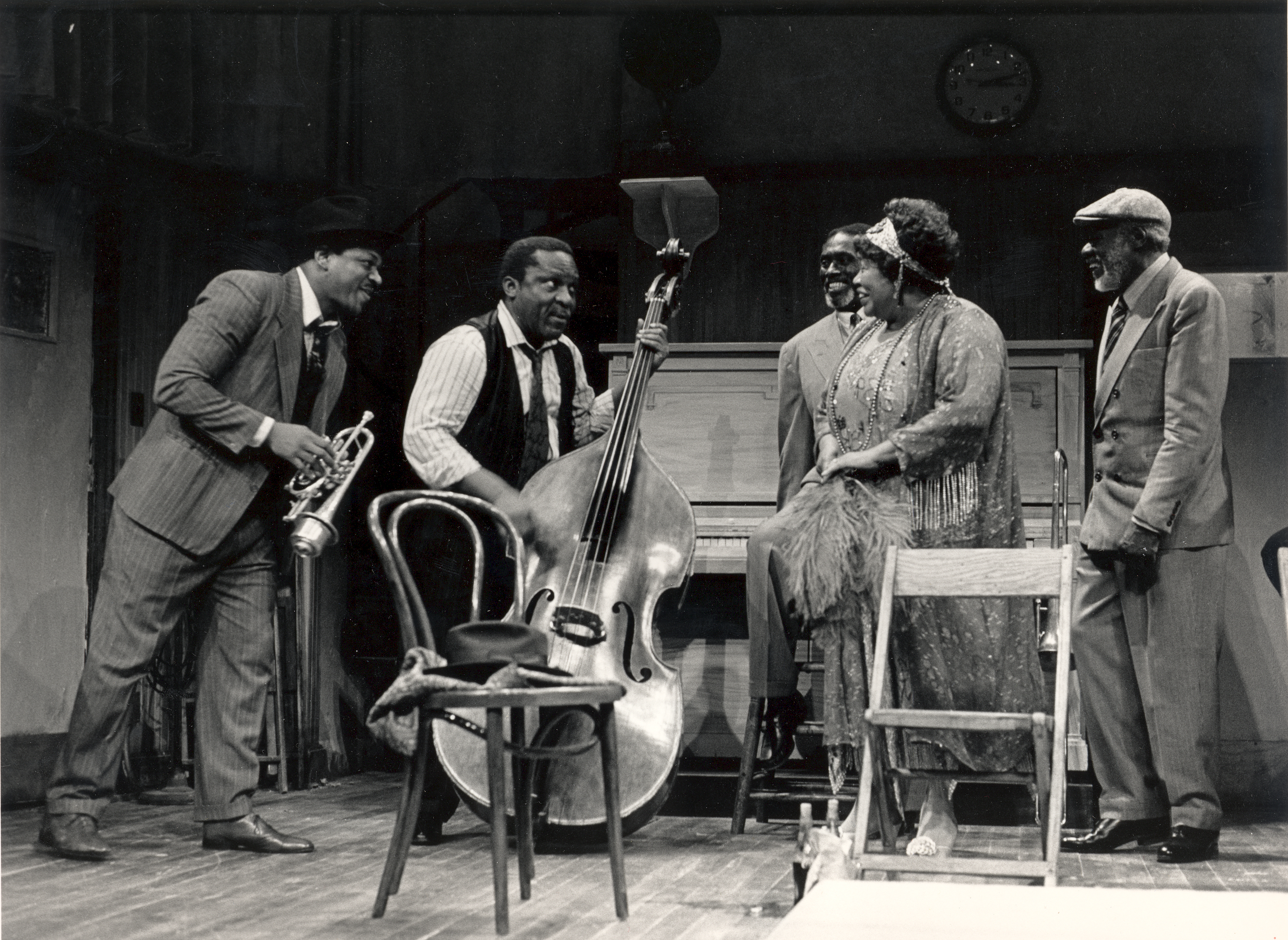
Ma Rainey’s Black Bottom at Yale Rep (Photo: William B. Carter)

Ma Rainey’s Black Bottom at Yale Rep
(Photo: William B. Carter)

I came of age in the theatre just as August burst onto the national scene. I saw Ma Rainey’s Black Bottom in a pre-Broadway engagement on the campus of my college, I saw the premiere of Joe Turner’s Come And Gone at Yale Rep; I saw The Piano Lesson in its first reading in the barn at The O’Neill Theatre Center as well as its final dress rehearsal at Yale; I attended the Broadway openings of Two Trains Running, Gem of The Ocean, and Radio Golf. I have seen many other productions of his work.  Though I knew August only casually, I was to have been a guest on a 60th birthday barge trip on the Nile that he and his producing partner Ben Mordecai had planned together, because my wife worked with Ben, and therefore August; she was ultimately a producer of August’s final Cycle play. The trip never happened because the birthdays fell in 2005, the year that Ben’s cancer recurred, leading to his death in May, followed by August’s passing only months later.

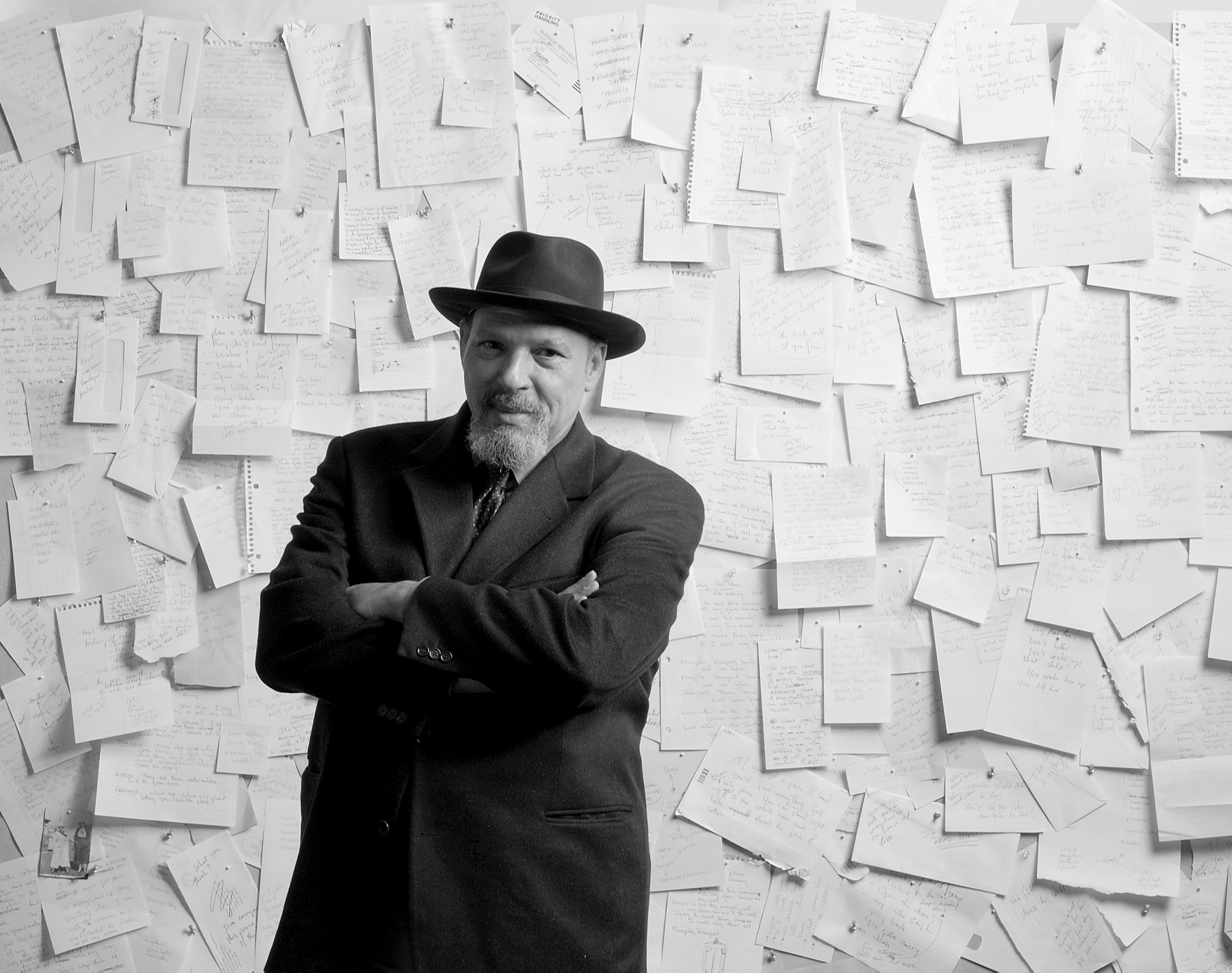
August Wilson (Photo: David Cooper)

August Wilson in 2004 (Photo: David Cooper)

So my most direct connection to August is one of a great opportunity missed, and I feel the same sense of lost opportunity as I read about the troubles of the Center in Pittsburgh. I wish I could rush out there and lend whatever help I can, but I don’t have the financial resources and it seems as if I would be much too late regardless. Even if Pittsburgh will lose what could have been an extraordinary cultural and community asset, at least America and the world will always have August’s Pittsburgh (and one fateful night in Chicago) through his writing . As I write this, Ruben Santiago-Hudson is sustaining August’s living legacy by enacting August’s words at the opening night of How I Learned What I Learned, a monologue Wilson originally wrote for himself to perform.

There is one bit of positive news that the Times missed. Wilson’s boarded up childhood home may yet see life again, as a plan to reopen it as a coffee shop was announced just over a week ago. Since August was well known for writing in coffee shops, perhaps that will be the truest memorial, rather than the $42 million edifice that never really become anyone’s home.


Playing Favorites With Shakespeare On Broadway

November 21st, 2013 § 0 comments § permalink

Rylance’s Richard III

Rylance’s Richard III

When it comes to Shakespeare, not all plays are created equal. That’s far from a surprise to anyone who pays attention; Hamlet certainly ranks far ahead of King John in the canon, and even Coriolanus and Timon of Athens get more attention than Pericles. A great deal of this situation in recent years, at least in the U.S., is attributable to the educational curriculum, which has a strong hand in creating the “greatest hits.” The hierarchy is also a product of performers’ aspirations, and I daresay that when asked what Shakespeare roles they’d like to play, actors respond more frequently with Lear and Rosalind than Henry VIII and the Countess of Roussillon.

Rylance in Twelfth Night

Rylance in Twelfth Night

The choices for the current Shakespeare plays in repertory on Broadway are among the more familiar titles, but they take on novelty for being all-male casts and indeed for being in rotating rep. Had it not been for the coincidence of a competing rep of Waiting For Godot and No Man’s Land in the same season, the Shakespeares would have been the only shows in rep on Broadway since the mid-90s. A key selling point in the Shakespeare rep is actor Mark Rylance, playing Olivia in Twelfth Night (or Twelfe Night as they’re spelling it in ads) and the title role in King Richard The Third.  After his triumphs in Boeing Boeing, La Bête and Jerusalem, one suspects the audiences would flock to anything Rylance chose to perform, except perhaps those poems he reads as award acceptance speeches.

The January calendar of Twelfth Night and Richard III

The January calendar of Twelfth Night and Richard III

So while it’s hardly the discovery of a shocking secret, I was surprised today to discover that the Shakespeare rep doesn’t treat its productions as equals: in general there are six weekly performances of Twelfth Night and only two of Richard III. The producers (and perhaps Mr. Rylance) have decided that the market will bear plenty of comedy and not so much tragedy, with the added bonus that Stephen Fry appears only in the comedy, and for some of us, he’s a big draw too. They also may be saving a few dollars by making fewer set changeovers, since labor costs money.

I can’t say that I wouldn’t have lobbied for the same balance, if I’d had a say in the matter. I happen to have a great love for Twelfth Night, due to it having been the first play I worked on when I started at Hartford Stage in 1985. As for Richard III, even though I’ve seen terrific productions with Ian McKellen and Richard Thomas, among others, I always feel a bit lost in the constant realignment of loyalties throughout the play, and I rarely walk away having had an emotional experience, even as I might appreciate the talent on stage. Indeed, my college roommate, who has been my Shakespeare wingman for some three decades, was befuddled when I refused to see Richard III at BAM last year; I just didn’t feel like it and he wasn’t going to change my mind (he took his mother-in-law). By the way, I should note I have not yet seen the current Broadway shows.

Shakespeare scholars and Rylance buffs may be dismayed to learn of this programming imbalance. The former might not cotton to the elevation of a comedy over a history, but the latter may just be realizing that if they wish to be Rylance completists, they’d better hustle up on getting tickets, because the Richard III inventory is much scarcer than the seats for Twelfth Night.  As for whether there’s a deeper meaning to favoring one play over the other beyond gauging the marketplace, I leave that for the academics to debate.

P.S. Waiting for Godot and No Man’s Land each play four shows a week. Make of that, you should pardon the expression, What You Will.


Seriously President Obama: The NEA?

November 21st, 2013 § 0 comments § permalink

nea logoNovember 21, 2013

President Barack Obama

1600 Pennsylvania Avenue

Washington DC  20500

Dear President Obama:

There was an anniversary yesterday, and I’m willing to bet that you forgot all about it. You didn’t need to send a card, but it would have been nice if you’d made some gesture of recognition, of concern. Presidents often do that sort of thing, especially when they’re stalling about something. But since you were silent, I’ll remind you: yesterday was the one-year anniversary of the day that Rocco Landesman announced his resignation as Chairman of the National Endowment for the Arts.

Now I can understand if you don’t remember the letter I wrote you about this in June, expressing my concern about this issue; it might have registered somewhere in your press office, but there are probably lots of bloggers yapping about this issue or that every day. Yet in August, your inaction on this topic was written about on successive days by Robin Pogrebin in The New York Times and Frank Rizzo in The Hartford Courant, and surely those are outlets that your media team pays closer attention to. But months have passed since then, still without a word.

I wouldn’t, as David Letterman says, give your problems to a monkey on a rock, especially with the current Obamacare debacle and the Senate denying hearings on some of your judicial nominations. But as a citizen who places the arts very highly among issues dear to me, your seeming abdication of responsibility or interest in the National Endowment for the Arts and its empty chairmanship has become not only absurd but insulting.  It’s bad enough that the NEA is a frequent and easy target for those who want to carve up the budget willy-nilly or wage some fatuous war on culture, but without the full force of the presidency behind the agency, the government’s commitment to the arts (and the humanities, since the NEH is in the same boat) suggests that they are of no value to anyone at all in Washington, since it is the Democrats who usually speak up most strongly in defense of government funding of the arts.

I said it before and I’ll say it again, if you don’t have the time to have someone on your staff deal with this, then by all means nominate Joan Shikegawa, the acting chair, and let her fully assume the leadership mantle. The agency may be functioning as it stands, but you’re hobbling it by not appointing an officially vested leader. It’s also worth mentioning that in the past few weeks, two key staff positions have also opened up at the NEA, as Ralph Remington, head of the theatre and musical theatre program leaves for a job with Actors Equity, and the agency’s chief of staff Jamie Bennett decamps for ArtPlace America. I’m not saying there’s any connection here, simply that at a time when the agency has important decisions to make very soon, you have proven unable to make one after a full year’s time.

I take no pleasure in watching you struggle these days, but after an almost playful tone in my prior communiqué, my sense of humor on this topic is pretty much gone. I still support you, Mr. President, but I’m impatient now. Surely someone in your staff can vet candidates and get someone appropriate ready for your review. But in the meantime, your silence is sending a very negative message about the future of government funding of the arts and the value of the arts in Americans’ lives. You disappoint me and my colleagues and to be honest Mr. President, when you start making us angry, you’re really chipping away at your base.

Sincerely,

Howard Sherman

Addendum: 20 minutes after I posted this letter, Mark Swed, music critic at The Los Angeles Times, posted an excellent essay about President Kennedy’s one-time role as “arts patron in chief.” It speaks directly to the leadership gap in this area today and throws the problem of the NEA into even greater relief.


The Pungent Imagery of Urinetown UK

November 14th, 2013 § 0 comments § permalink

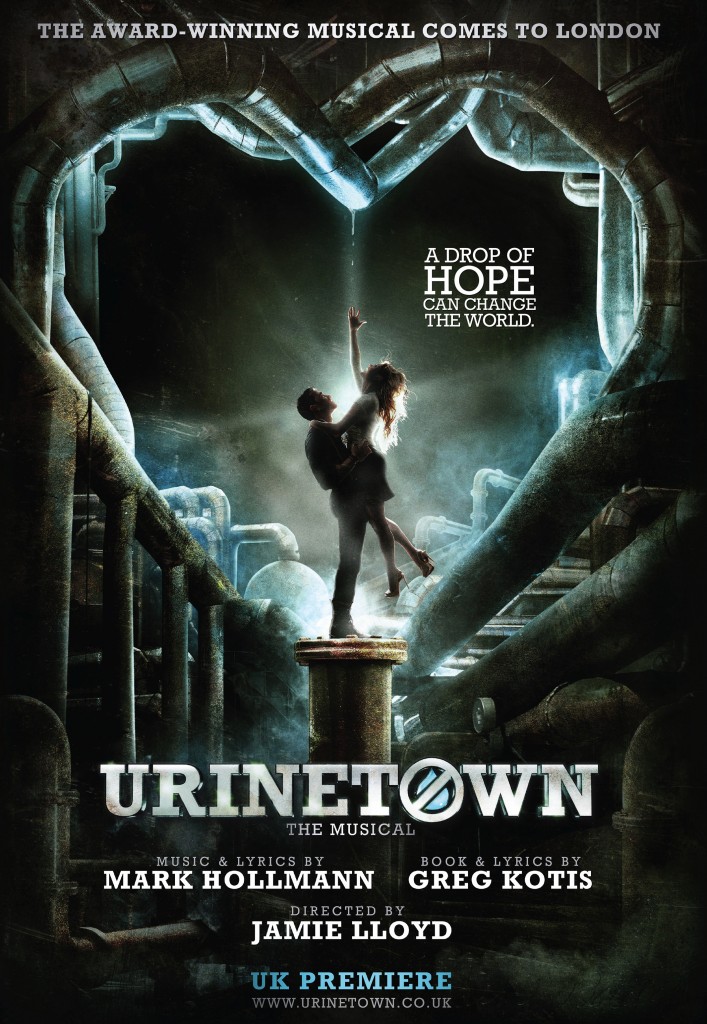
Urinetown Poster-707x1024When I saw it for the first time last week, I was really struck by the poster for the West End debut of the musical Urinetown. Why? Because it didn’t look like a theatre poster. It looked like a movie poster.

In point of fact, it looked to a certain degree like the poster for Star Trek: Into Darkness, which owed a debt to the poster for The Dark Knight Rises. Many movie posters are endlessly iterative and imitative, as they want to subtly remind you of other successful films in the same genre. I give points to Urinetown UK for evoking dark futures with humanity under threat – completely consistent with the world conjured in the show. Equally apt, it counters the darkness by placing a young attractive couple, reaching for a drop of water, at the center of a spaghetti-tangle of (empty) pipes, and they added a tagline: “A drop of hope can change the world.”

It has taken almost a decade since Urinetown’s Broadway closing for it to reach England, so the opportunity to capitalize on Broadway buzz has long since faded, That certainly suggests one reason why the graphic bears no relationship to the Broadway marketing material, unlike The Producers, The Book of Mormon, Jersey Boys and so many other US to UK transfers. That works in two directions as well, since Mamma Mia! and Matilda ads look the same in both countries, having started in London.

cosetteAs I pondered the Urinetown UK art, it struck me that one reason the vast majority of theatre ad design looks so different from movie ad design is that while a movie is trying to simply drive sales and pique interest, theatre designs, more often than not, are trying to build a brand. If theatre images emphasize a star, they could be undermining a long run, since eventually stars leave; movies have no such problem. Think of the image of Les Mis’ Cosette: as the show ran and ran, the image became so ubiquitous that they could run ads without the show’s title and you would know what the ad was for. Producer Cameron Mackintosh’s team even could play with the image, running variations on Cosette that honored holidays or welcomed other shows to Broadway. And it was hardly the only show to do that: think of the Phantom’s mask, the eyes of Cats, the Chagall-esque Fiddler on the Roof, Larry Kert running after Carol Lawrence for West Side Story (though that would eventually be supplanted by Saul Bass’ fire escape logo for the film). Colleges, high schools and community theatres use knock-offs of these designs for years and years.

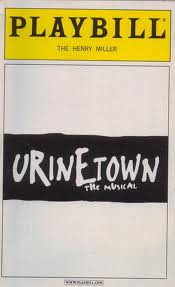
urinetown us playbillAs I’ve said, it’s the lapse in time that has afforded Urinetown UK the chance to go in another direction, since given the relative age of the show, it doesn’t undermine a worldwide branding effort.  The other reason they have that opportunity: in my opinion, the original Urinetown graphic never became iconic. Do you remember it? Perhaps only vaguely, and I suggest that’s because it was only a type treatment, as opposed to an image, a true logo, a brand.

To digress for a moment: when I worked at Hartford Stage, one of my responsibilities was to work with a range of local designers to secure pro bono graphic designs for each of our shows. In addition to keeping expenses down, it insured that each show would have its own feel and look, with the ads held together by a very solid, strong and consistently utilized company logo. In this process, the artistic director had only one edict – there must be some representation of the human in every graphic. He believed that people are at the center of theatre, that audiences come to watch people on stage, and so the human element – sometimes nothing more than an eye or a hand – was a reminder of the unique nature of live theatre. In hindsight, thinking back over 50 shows, I believe he was right and I’ve advocated for this approach ever since. To be fair, not every design was perfect, and some worked better as art than as marketing, but the best remain those that followed the artistic director’s dictum. If you think of great theatre graphics, I’d be willing to bet that you’ll find the majority do so as well. That’s why, at least in my estimation, there’s not a graphic image from the Broadway Urinetown that lingers in memory.

But turning back to Urinetown UK, as I have often this week, I continue to applaud the complexity and sophistication of its imagery, which come to think of it also recalls that used for Terry Gilliam’s film Brazil.  I was so intrigued, that I took the time to watch a three-minute promo video for the show and, to be honest, it ended up showing me what I think is missing from the Urinetown campaign. A barrage of words flew at me from a variety of speakers, all describing the experience of the show: epic, wackadoo, eco-friendly, apocalyptic, daring, exciting, entertainment, political, adventurous and satirical wit. Director Jamie Lloyd said he hoped it would advance “conversations about climate change, environmental disaster, the moral responsibility of big business.”

But looking at the poster and watching this video, I realized that something has been, if not forgotten, downplayed for this Urinetown, at least as I know the show.

It’s very, very funny. I laughed a lot.

Not only that, it is especially funny to those who know and love musicals, since it’s “satirical wit” is focused, in part, on previous, iconic musicals.

Now if it is Lloyd’s intention to lean heavily on the show’s Brechtian overtones and downplay the humor, then you can probably ignore everything from here on in.  But if Urinetown UK– with all of its topical, political and social overtones – is to retain its irreverent take on both a world without water and its stance as a love letter to musical comedy, then I’d urge the powers that be to tweak the tone of their rhetoric and their imagery, lest they mislead their potential audience – and those who buy. Remember, you’re fighting a title that, for some, carries a whiff of something distasteful, even while it becomes a memorable point of distinction from most other musical theatre.

I’ve heard it said many times that if a show is a hit, its logo – whatever it is – looks brilliant. And perhaps in the long run, if there is in the long run, that becomes a self-fulfilling prophecy. But when you’re trying to set expectations and lure audiences, every communication is freighted with meaning (it can even effect the advance perception of critics who were previously unfamiliar with the material), and what I remember most of Urinetown was having a darned good time.


Your Friendly Neighborhood Theatrical Tell-All

November 4th, 2013 § 0 comments § permalink

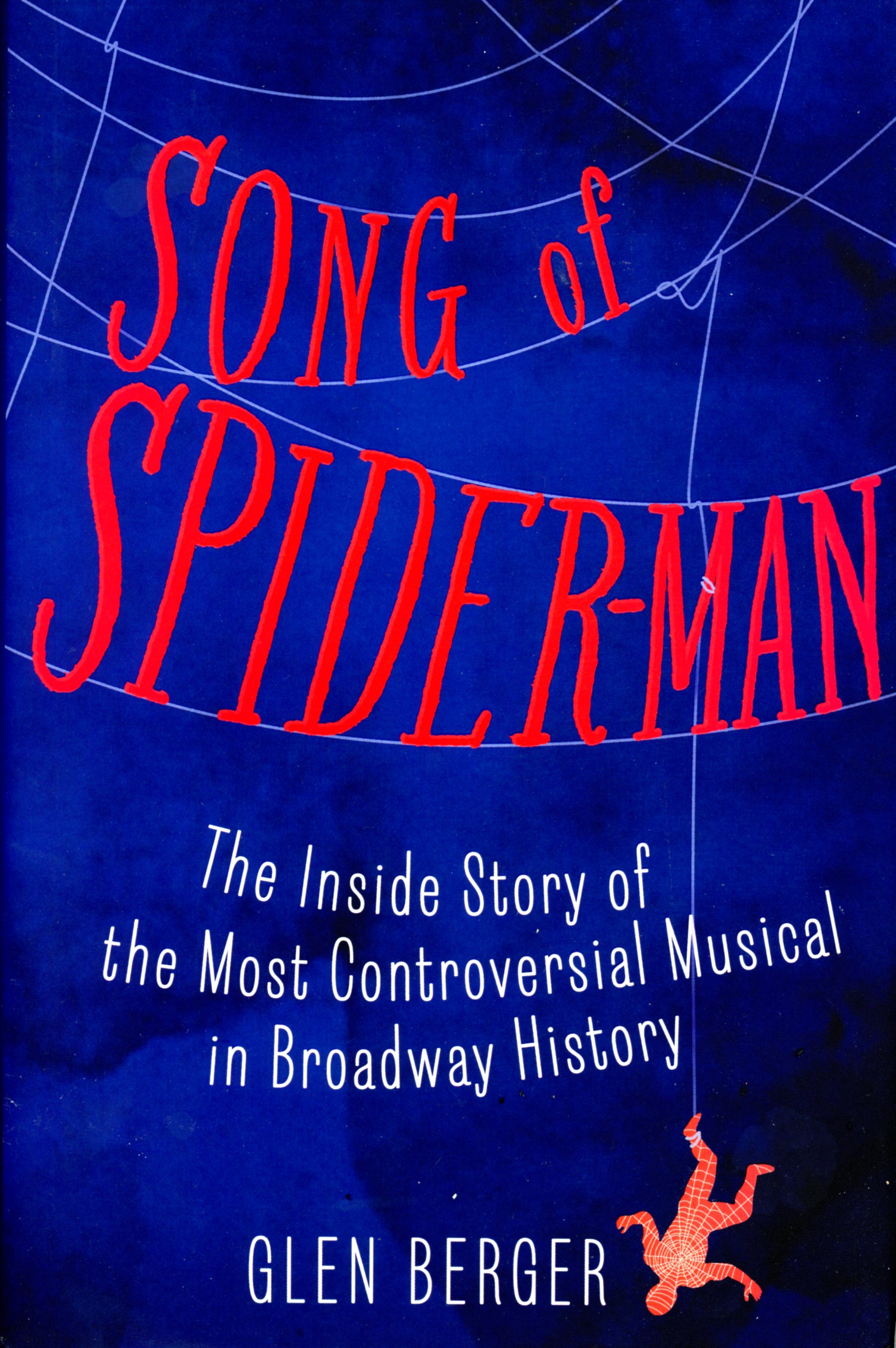
It’s not unusual for book releases to be coordinated with a related event taking place elsewhere in the media circus: the autobiography that appears just as a star’s major film is coming out, the personal memoir that primes the public for a political campaign. However, no one can accuse Julie Taymor of engaging in such wanton promotion – she certainly can’t be pleased that Glen Berger’s Song of Spider-Man: The Inside Story of the Most Controversial Musical in Broadway History (Simon & Schuster, $25) debuts just as she returns to the stage with A Midsummer Night’s Dream at Theatre for a New Audience in Brooklyn. One imagines she’d have been happier if there were no book at all.

Countless people are reading and writing about the book as another chapter in the seemingly never-ending saga of Spider-Man: Turn Off The Dark, the headline generating musical that has been the target of brickbats from arts journalists virtually since the show was first announced. Spider-Man: TOTD seemed to throw raw meat to the media at every turn, ranging from fundraising challenges and production delays to several highly publicized cast injuries which seemed to turn the show into a latter-day Roman arena. It kept Patrick Healy of the Times and Michael Riedel of the Post in competition for breaking tidbits in a manner rarely seen before.

song of spiderman002I didn’t find Berger’s book particularly revealing, largely because it covers ground that had been extensively reported elsewhere, and I confess to having consumed the events as they happened. In fact, I made a point of seeing the very final performance of the Taymor version and the opening night of the version reworked without her – and, for the most part, Berger’s – consent, after they had been supplanted by Philip William McKinley and Roberto Aguirre-Sacasa respectively. Yes, I watched the show’s travails, as most did, as a theatrical car wreck in slow motion, a modern-day tragedy of creative hubris played played out in benday dots and rock chords.

For all that Berger recounts, the book constantly reminds the reader that it is the story of Spider-Man: TOTD as viewed through one person’s biased eyes – rather than the whole story. Berger goes out of his way to paint himself as a innocent caught up in the maelstrom of vastly more famous, and vastly wealthier, artists than himself. His emphasis on being separated from his family, of his personal financial troubles, of how different his world is from that of his acclaimed and wealthy collaborators Bono and Taymor – they grow tiresome, as if Berger deserves some sympathy or absolution for his role in the debacle by virtue of his less lofty perch. But he’s not exactly Nick Carraway observing the actions of Gatsby and the Buchanans – he’s a willing participant until his own calculations backfire on him, severing his ties forever with Taymor, who he has built up as his own artistic Daisy. To compare him to Faust conveys a grandeur I decline to confer.

The fact is, reading Berger’s book is like watching only one viewpoint from Rashomon, and one is all too aware that others undoubtedly have very different versions of the same events. I can’t help but suspect that the musical might at best be a page or two should Bono write his life story; producer Michael Cohl would no doubt recount the saga as a story of how he rescued a damaged show that most believed was dead on arrival; should Taymor tell her version, it will be of an artist (herself) persecuted by greedy philistines. Whether anyone will care to follow the tale repeatedly refracted through varying prisms is anyone’s guess, though that might be the only way to get the real story.

All of this should not suggest that Berger’s book has no value. It is, at the very least, a superb answer to the perennial question about troubled or failed shows: “Didn’t anyone realize how bad it was going to be?” The book is an encyclopedia of ignorance, ego and self-delusion, a look at how a theatrical property, especially one with such a high profile, almost becomes unstoppable, and the many ways in which it can go wrong, of how perspective is lost when you are so close to the work for so long.  Aspiring producers should read it as a cautionary tale – not about a one-off disaster, but rather about when it pays to just say no, shut a show down, and move on, since Spider-Man may be the most expensive show to date, but there are plenty of complete flops that followed much the same misguided path.

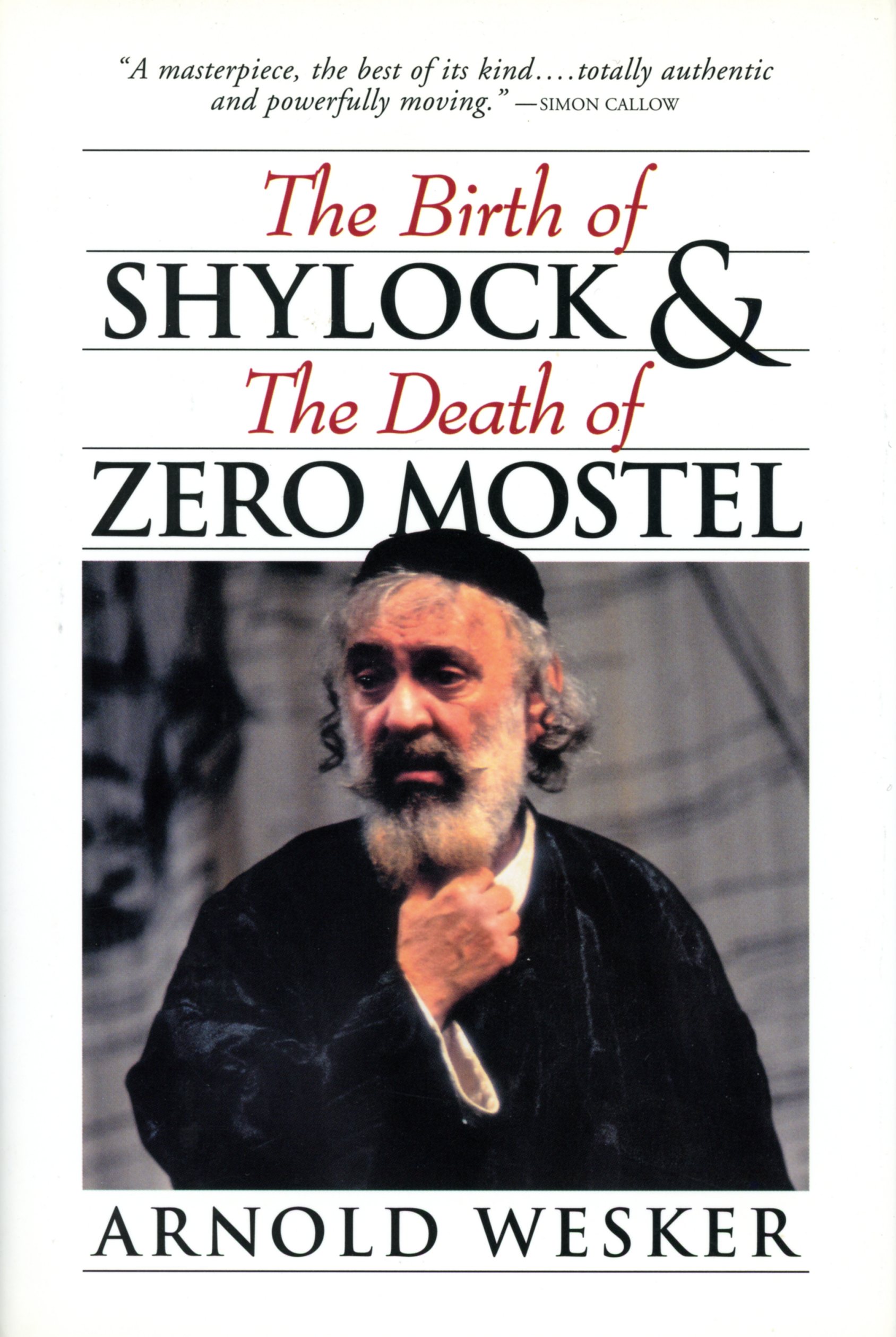
birth of shylock005Inevitably, Berger’s book will find its way onto many a theatrical bookshelf, even if it doesn’t have the elegance or educational value of many other books with which it shares conceptual and theatrical DNA. As I read it, I was reminded of a book about a vastly less well known disaster: playwright Arnold Wesker’s The Birth of Shylock, The Death of Zero Mostel, a chronicle of a quick Broadway flop notable mostly for the death of Mostel, its leading actor, who died while the show was trying out in Philadelphia. Like Berger, Wesker seems almost entirely unaware of his own complicity in the show’s failure, even as he repeatedly tells about his taking aside actors to countermand the edicts of the show’s director, John Dexter.  Shylock the show is in the dustbin of Broadway history, whereas the legend of Spider-Man will surely go on; however, the author’s account of the production of Shylock makes for better literature than Song of Spider-Man.

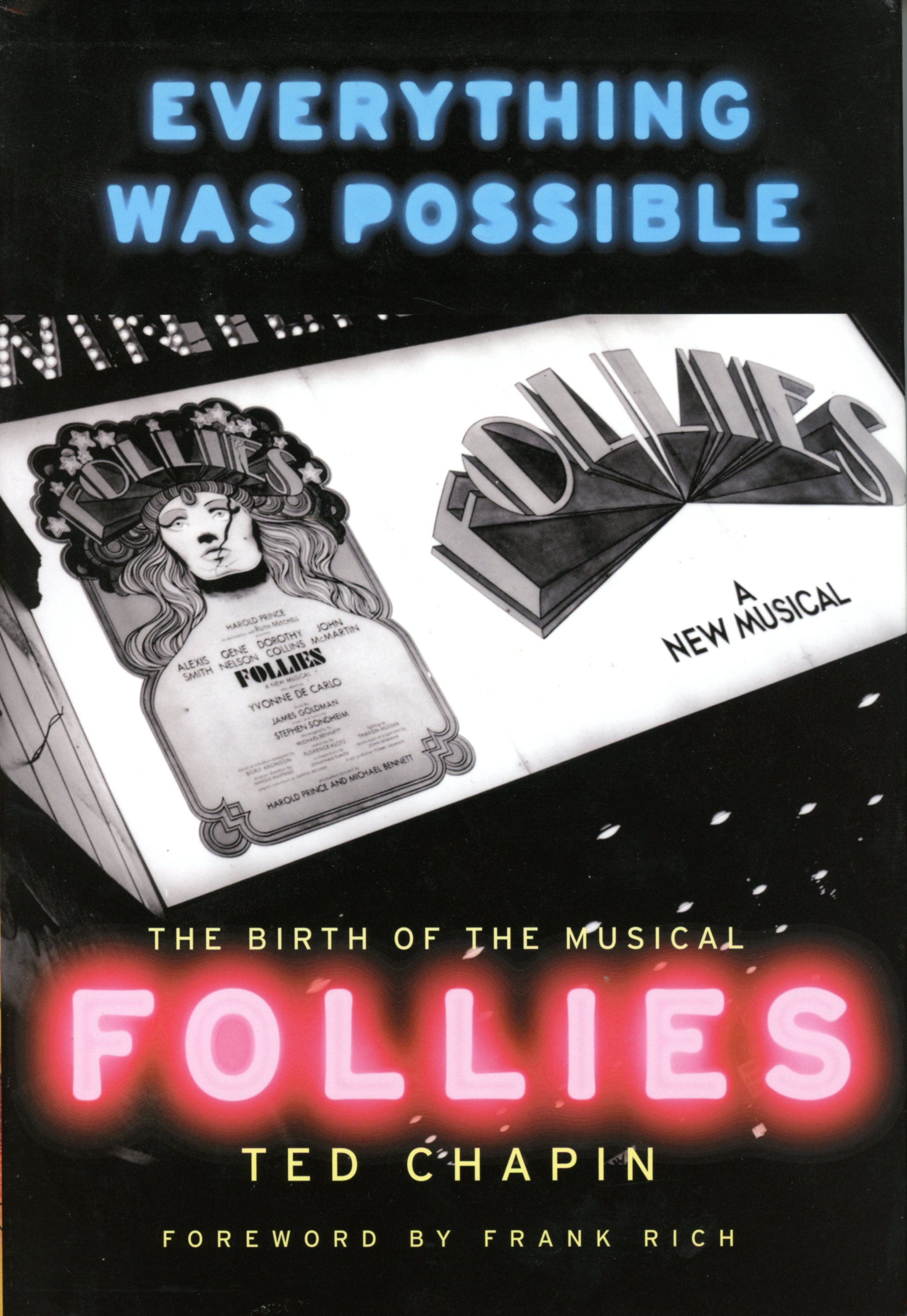
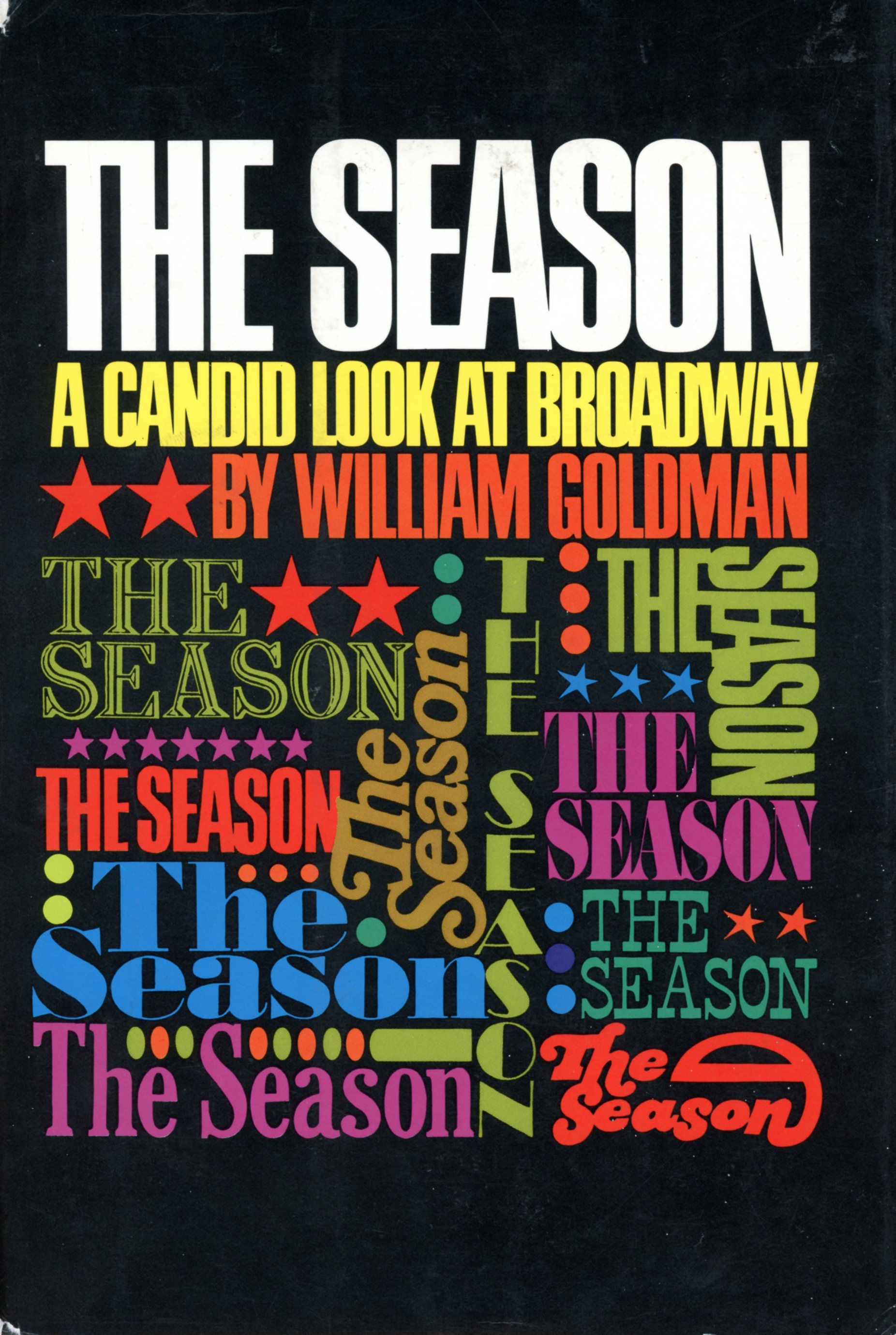
everything was possible003the season004While there are certainly great Broadway books  of autobiography (Moss Hart’s Act One is an exemplar of the kind), more often than not the best chroniclers are those on the fringes or outside of a production entirely. Ted Chapin’s Everything Was Possible: The Birth of the Musical ‘Follies’ is an impeccable recent example of the former, derived from Chapin’s own notes as a production assistant on the original Follies; William Goldman’s The Season: A Candid Look At Broadway has long stood as a grand achievement of the latter. Of course, in both cases, the authors were given rare access, which seems almost impossible in the more media savvy world of today; the film industry was reminded about the danger of giving journalism too much access when critic Julie Solomon roamed free on the set of a Brian DePalma film, resulting in The Devil’s Candy: Anatomy of a Hollywood Fiasco, a detailed chronicle of the famous flop The Bonfire of the Vanities.

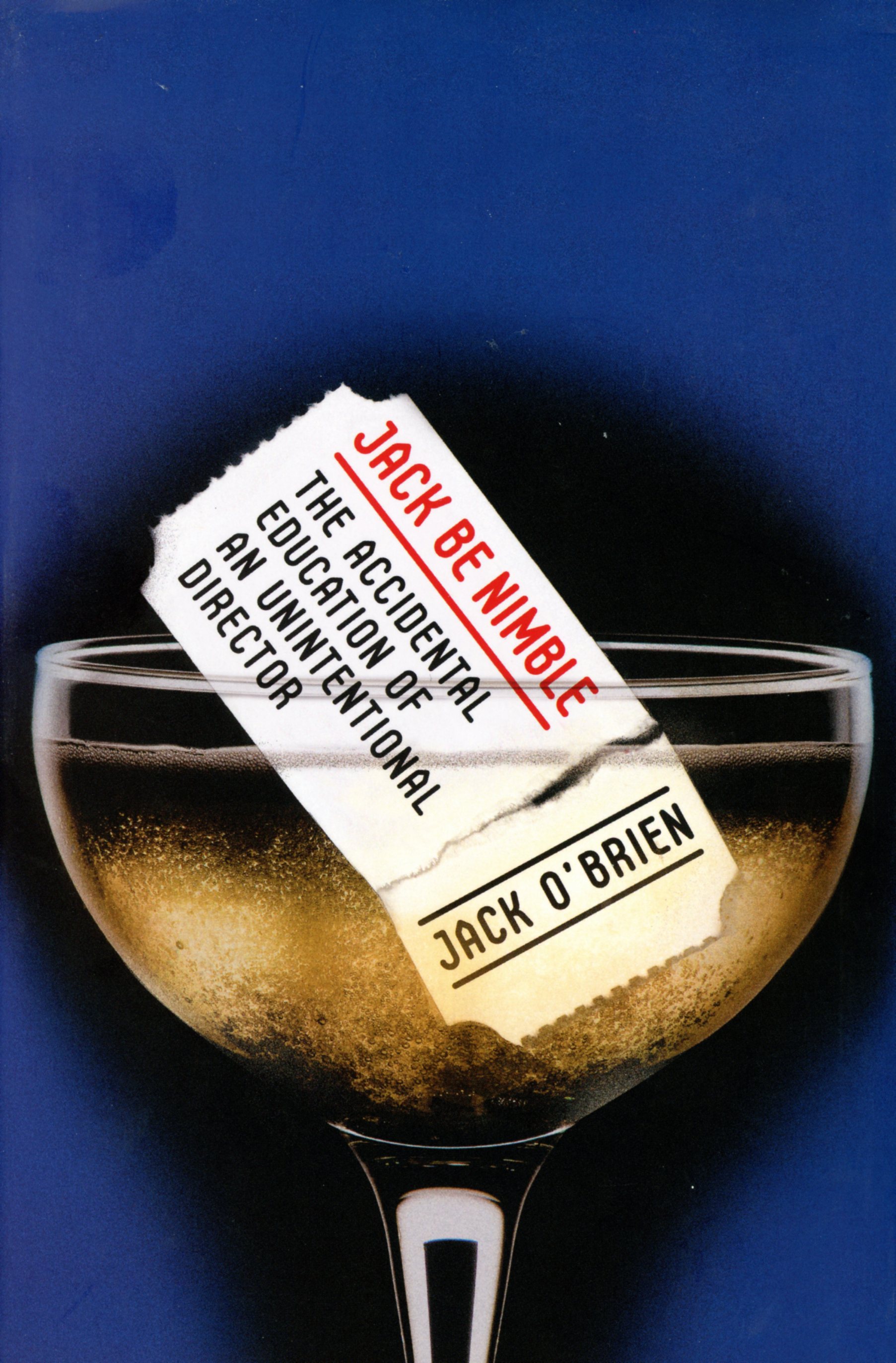
jack be nimble006Though it covers work which is vastly less infamous and some 50 years in the past, I daresay that Jack O’Brien’s recent Jack Be Nimble: The Accidental Education of an Unintentional Director (Farrar Straus and Giroux, $35) is the more worthy, entertaining and educational insider theatre book of the year. While O’Brien could have easily produced a standard memoir, given his own considerable achievements as a director, he followed Chapin’s lead and instead opted to write about the access he had as a young man to a remarkable confluence of talents: the members of the APA and later the APA-Phoenix theatre companies, which included Richard Easton, Rosemary Harris and above all the now little-remembered Ellis Rabb. I know firsthand what a wealth of stories Jack can tell about his own exploits, but by deciding to honor the artists who formed his own aesthetic, he has written a work of history and memoir that is ultimately more important and informative than Berger’s attempt to make a few more dollars off the Spider-Man debacle.

Perhaps, one day, a young PA on Spider-Man: TOTD will emerge with his or her own book, to draw the truest picture of what went on as the web collapsed.  Until then, we’re left with a lopsided recap of a story that we mostly know, told by what is called, in literary circles, an unreliable narrator.

U.S. Is Losing “Theatre At The Movies” Race

October 30th, 2013 § 0 comments § permalink

Position 1: a stage production that is recorded, filmed or actually broadcast live ceases to be theatre. It may be considered television or film, but it is a record of theatre, not the thing itself. True theatre is experienced in the flesh, so to speak.

Position 2: for people who have no means to see any theatre, or a specific production, a recording or live transmission of the event, whether it occurs in a movie theatre or on a computer, is better than not seeing it at all, provided it is at least competently produced.

Position 3: even though it means I don’t get to see some things that really interest me, I don’t enjoy recorded theatre, no matter how artfully done, and I’m lucky enough to have access to lots of great theatre live, so after a few tries, I now don’t go. But that shouldn’t stop anyone else.

nt live adWhy have I laid out these positions so baldly, rather than making a case for them? Because I want to talk about an aspect of the growing appetite for cinecasts, NT Live, the home delivery Digital Theatre and the like that isn’t about the viewing experience at all. That’s a matter of opportunity and preference and I leave it to everyone else to hash out those issues. My interest in this trend is about how it is branding certain cultural events and producers ­– and how U.S. theatre is quickly losing ground.

In general, people attend commercial theatre based upon the appeal of a production – cast, creative team, author, reviews, word of mouth, etc. Who produced a show is pretty much irrelevant, and only theatre insiders can usually tell you who produced any given work.  In institutional theatre, the producer has more impact, as people may attend because they have enjoyed a company’s work previously, because it conveys a certain level of quality. This is true in major cities and regionally, and while the name of the theatre alone isn’t sufficient for sales, it is a factor in a way it isn’t in the West End or on Broadway.

digital theatre logoAs a result, what is happening with theatrecasts is that the reach of the companies utilizing this opportunity is vastly extended, and the brands of the companies travel far beyond those who sit in their seats or regularly read or hear about their work. There’s long been prestige attached to The Royal Shakespeare Company, the Metropolitan Opera and the National Theatre; now their presence in movie theatres has served to increase access and awareness.  These longstanding brands are being burnished anew now that more people can actually see their work. The relatively young Shakespeare’s Globe, even as it makes its Broadway debut, is also gaining recognition thanks to recordings of their shows.

It should be noted that for UK companies, “live” is a misnomer when it comes to North American showings. We’re always seeing the work after the fact, given the time difference, so in many ways it’s no different than a pre-recorded stage work on PBS. But the connotation of live is a valuable imprimatur, and few seem to mind it, even when there are “encore” presentations of shows from prior years. The scale of a movie screen, the quality of a cinema sound system appear to be the true lure, along with the fact that these are not extended engagements, but carefully limited opportunities that don’t compete with actual movie releases.

MEMPHIS, one of the rare U.S. originated cinecasts

MEMPHIS, one of the rare U.S. originated cinecasts

Regretfully, by and large, American theatre (and theatres) are missing the boat on this great opportunity for exposure, for revenue, for branding. There have been the occasional cinecasts (Memphis The Musical; Roundabout’s Importance of Being Earnest, imported from Canada’s Stratford Festival) but they’re few and far between.  We’re about to get a live national television broadcast of the stage version of The Sound of Music, but it’s an original production for television, not a stage work being shared beyond its geographic limitations.  Long gone are the days when Joseph Papp productions of Much Ado About Nothing and Sticks And Bones were seen in primetime on CBS; when Bernard Pomerance’s The Elephant Man was produced for ABC with much of the original Broadway cast; when Nicholas Nickleby ran in its entirety on broadcast TV; when PBS produced Theatre in America, showcasing regional productions, when Richard Burton’s Hamlet was filmed on Broadway for movie theatre showings 50 years ago.

London MERRILY rolled across the Atlantic

London MERRILY rolled across the Atlantic

Most often, when this topic comes up in conversations I’ve been party to, there’s grumbling about prohibitive union costs as a roadblock. Perhaps the costs have changed since the days of many of the examples I just cited, yet somehow Memphis and Earnest surmounted them. Even as someone who doesn’t particularly care to see these recorded stage works, I worry that American theatre is lagging our British counterparts in showcasing work nationally and internationally, in taking advantage of technology to advance the awareness of our many achievements.  Seeing an NT Live screening has become an event unto itself – this week the National’s Frankenstein is back just in time for Halloween; the enthusiasm last week for the cinecast of Merrily We Roll Along (from the West End by way of the Menier Chocolate Factory) was significant, at least according to my Twitter and Facebook feeds.  The appetite is also attested to by an online poll from The Telegraph in London, with 90% of respondents favoring theatre at the movies (concurrent with an article about the successful British efforts in this area).  I’d like to see this same enthusiasm used not just to bring U.S. theatre overseas, but to bring Los Angeles theatre to Chicago, Philadelphia theatre to San Francisco, Seattle theatre to New York, and so on – and not just when a show is deemed commercially viable for a Broadway transfer or national tour.

I’m not trying to position this as a competition, because I think there’s room for theatre to travel in all directions, both at home and abroad. But without viable and consistent American participation in the burgeoning world of theatre on screen, we run the risk of failing to build both individual brands and our national theatre brand, of having our work diminished as other theatre proliferates in our backyards, while ours remains contained within the same four walls that have always been its boundaries and its limitations.  Somebody needs to start removing the obstacles, or we’re going to be left behind.


NPR: “On ‘Sesame Street,’ The Sweet Sounds Of Another Thoroughfare”

October 22nd, 2013 § 0 comments § permalink

Sesame Street music director Bill Sherman with Elmo and Zoe on the set. Sherman won a Tony Award for In the Heights in 2008 and has recruited Broadway peers to compose for the children's show.

Sesame Street music director Bill Sherman with Elmo and Zoe on the set. Sherman won a Tony Award for In the Heights in 2008 and has recruited Broadway peers to compose for the children’s show. (Photo: Howard Sherman)

You know how to get to Carnegie Hall: practice, practice, practice. But do you know how to get, how to get to Sesame Street?

Turns out there’s a shortcut from New York’s theater district — and it’s landed a number of Broadway’s top songwriting talents on the venerable children’s program.

The man to see is Bill Sherman, a 2008 Tony Award winner for his work on orchestrations for In the Heights. Sherman is in his fifth season as music director for Sesame Street. Back when he started the job, Broadway’s songwriters were an obvious go-to.

“I knew them,” he shrugs. “It was easy access. I was trusting songwriters I knew and loved.”

He’s since discovered that no matter whom he calls, Sesame Street meets with universal enthusiasm. “Everybody will stop some really important thing they should be doing and really focus on this.”

From A College Buddy To Strangers In The Biz

Sherman’s first call, five seasons back, was to Lin-Manuel Miranda, composer and lyricist of In the Heights. “Lin has been my best friend for 10 years,” Sherman says. “We went to college together, so asking him to write a song was very easy.”

Miranda was followed by other Heights alumni, Alex Lacamoire and Chris Jackson, and by composers Jason Robert Brown (Parade, The Last Five Years), Justin Paul (A Christmas Story) and Tom Kitt (Next To Normal). And while some of these artists typically write both music and lyrics, Sesame Street primarily taps into their composing skills.

“So much of what we do is curriculum-based that it has to go through many levels of approval,” Sherman explains. “So most of the lyrics come from the [Sesame Street] scriptwriters.”

Miranda, an adept lyricist, says being forced to focus solely on the music was “enormous fun.”

“It’s easier than usual, since lyrics take longer,” he says — though he’s quick to note that he confers with the show’s wordsmiths.

“The writer will say, ‘It’s very Harry Belafonte; it’s Ravel’s Bolero; it will build and build.’ You get a sense of what they were thinking, of the rhythm that’s in their heads.”

With “Elmo the Musical,” More Shots At The Spotlight

Sesame Street‘s musical universe expanded further when the show introduced its “Elmo the Musical” segments — stand-alone bits, eight to 10 minutes long, that take place entirely in the imagination of the childlike red fuzzball.

The Elmo the Musical segments are through-composed — musicalized from start to finish — “so each composer had their chance to really sink their teeth into the music,” Sherman says. “It became their episode, their thing. We tried to figure out a way to use the composers’ strengths for whatever particular episode it was.”

An installment called “Detective,” for instance, “asked for this complex, jazzy [sound], and Jason Robert Brown is known for that.”

Like all the composers, Brown — who’s never met Sherman — jumped at the opportunity.

“I had a 2-year-old who stared at Elmo all day long,” Brown says. “So there was nothing better than that.”

Then came the kicker: That episode’s script was to be written by John Weidman, a Sesame Street veteran and co-creator, with Stephen Sondheim, of iconic musicals like Assassins and Pacific Overtures.

“I called him and said, ‘So we’re finally writing a show together, only it’s for a furry red puppet,’ ” Brown says. “When I got the recording of Elmo, I could not have been more excited if it had been Frank Sinatra, if it had been Joni Mitchell.”

This fall, as puppeteer David Rudman laid down Cookie Monster’s vocal track on Tom Kitt’s “If Me Had a Magic Wand,” Kitt described the song using an old-school musical-theater term. It’s “a soaring, emotional ‘I want’ moment,” he said, a readily identifiable, recognizably Broadway kind of sound.

But as Sherman is quick to point out, the “Broadway sound” is very much in flux.

“I’ve been part of musical-theater situations that pushed boundaries, that brought new sounds to Broadway. Taking this job, like [working on] In the Heights, was an opportunity to put new sounds in kids’ ears. People assume musical theater is vaudevillian, epic ballads and tap-dance numbers. So to turn that on its head and bring in audiences that don’t go to Broadway shows is important to me.”

Is it a challenge for these sophisticated writers to gear their work for toddlers? “Sometimes,” says Sherman, “composers think that because it’s Sesame Street, they have to dumb it down. … [But] these days children have unbelievably sophisticated ears. I think dumbing it down is disrespectful to kids.”

“That’s Not What Cookie Monster Sounds Like”

When composers have kids of their own, they’ve got an in-house test panel. Brown did demos, complete with character voices, for his daughter.

“Her response was, ‘That’s not what Cookie Monster sounds like,’ ” he reports.

Sherman has met with greater success at home.

“If my 3-year-old hears something, and 15 to 20 minutes later she’s still singing it, then I know I did the right thing,” he says. “If the 1-year-old dances to it, then I know that it sounds right.”

There might well be more musical theater in Sesame Street‘s future; Sherman admits he’d like to work with Stephen Schwartz (Wicked, Pippin) and Marc Shaiman (Hairspray).

And there’s one more big fish he’d like to land — the whale of the business, really.

“We toyed a bit with going after Sondheim,” he said. “We haven’t gone that route yet, but to call up Stephen and see if he was down [for it], that’d be funny. Why not?”

*   *   *

View this post in its original form on NPR.org


Slaughtering Albee’s “Goat” In Arizona

October 15th, 2013 § 6 comments § permalink

Cactus Shadows High School

Arizona’s Cactus Shadows High School

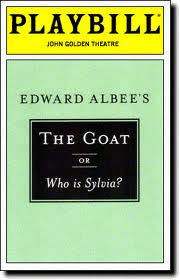
Having learned of high schools terminating productions and firing teachers over everything from Legally Blonde to The Laramie Project, it hardly comes as a surprise that Edward Albee’s Tony Award-winning play The Goat, or Who Is Sylvia? came under fire last week at Cactus Shadows High School in Scottsdale, Arizona. Where surprise comes into play is that the sentinels of censorship sprang to action not over a production of the work, but over it being read in an advanced drama course for which students could receive college credit.

I’d have to admit that The Goat probably isn’t typical high school fare, and shouldn’t necessarily be in the general reading for all students. But for students prepared to work at a college level, Albee’s writing is important if not essential. I happen to be a particular fan of the play, finding it so compelling in its original Broadway production that I took the unprecedented step (for me) of paying box office rates to see it twice. In my personal hierarchy of Albee plays, it is second only to Who’s Afraid Of Virginia Woolf?, with which it shares many characteristics. Is there “vulgar” language? Yes. Does it invoke (but not portray) bestiality and touch upon incest and pedophilia? Yes. But it does not advocate those taboos; it deploys them in service of a deeper meaning. Serious acting students working at a college level should be prepared to grapple with such material.

the goat book cover001Upon reading and watching press accounts of the Scottsdale challenge to The Goat, they at first appear similar to other protests against certain works in high school theatre, but the situation at Cactus Shadows escalates to a whole new level.  Even though students admit to being offered alternative material, a preemptive acknowledgement that some might wish to opt out of The Goat, complaints arose from some who didn’t exercise that option. When school board members advised concerned parents to express their dismay to the principal and the teacher, they instead brought in the police. In turn, the police allowed the irate parents making the complaint to directly confront students about the teacher and the play, which I can’t help but think is a violation of any sensible school policy, let alone due process. Yet the Scottsdale Police Department says there is no complaint on file. What gives?

The school superintendent, quickly distancing herself from the teacher, says that she’s investigating how the play was brought into the classroom, as if it was smuggled in under cover of night. To the contrary: the play was on a list of works submitted in advance to parents, for their signature. Could the parents have all been expected to know the material and judge their comfort accordingly? Of course not, even if you accept the concept that parents have the right to individually approve curricula. But the teacher, who has been placed on paid administrative leave, could hardly be accused of subterfuge. While certainly the superintendent doesn’t check every lesson plan, is it possible that the teacher of the course submitted the reading list to parents for sign off without passing it by any other member of the faculty? I’d be surprised.

I’m really stunned that the school’s policy is apparently to take a teacher out of the classroom over any complaint until it’s investigated. This is an intellectual issue, not a student safety one. How is such a matter investigated and how long should it take? How does it rise to being a police matter?

The language of press reports from KPHO TV and The Arizona Republic have no doubt inflamed the situation, since they elide the gap between discussing hot button topics and portraying, let alone endorsing, them; certainly any metaphorical meaning is cast aside in the rush to grab eyeballs. Clearly neither reporter knows much about Albee (and to be fair, can’t be expected to) but they take far too much at face value from the conversations they have had about the controversy. Regretfully, the teacher sold Albee short by saying The Goat is an absurdist play; it may be harsh and posit extreme situations, but it is rooted in reality. The Goat is not Ubu Roi or The Bald Soprano.

playbill cover 2 the goatRead the comments on the news stories linked here, because they suggest that the complaints are far outweighed by supporters of the teacher and the class. But that’s not evident from the stories themselves, especially the video segments, which emphasize the dissenters, not those who think the situation has been precipitated by a vocal minority. Editorial balance is one thing, but misrepresenting the balance of public opinion is another.

As I read The Goat again, I was struck by how much of the dialogue in the play resembles an interview – or even a conversation – with Edward Albee, a daunting experience I’ve had the challenge and pleasure of undertaking. For Albee, there are no easy answers; he actually seems to delight in not providing any, despite writing some of the most probing theatrical work of the past half-century. Ask Edward what The Goat is about and I’d lay odds that his answer would be, “About two hours.” This only deepens the mysteries of the play.

The study and practice of theatre is not about easy answers. What a shame that a teacher in Scottsdale challenged his advanced students with some difficult questions and was taken out of the classroom as a result, and both he and Edward Albee are presumed guilty unless proven innocent.

P.S. When I attended high school in the late 70s, Albee’s The Zoo Story was on the reading list for English class, not for a drama or advanced placement course. When I saw the play again, for the first time in many years, at Second Stage in 2007, I was struck by the darkness and complexity of the material and marveled that it had been studied in a suburban high school classroom – without opposition – almost 30 years earlier. I am also indebted to everyone who had a hand in making that happen.

Update, October 15, 3 p.m. eastern time: I am pleased to report that the teacher suspended for teaching The Goat, Andrew Cupo, has been returned to the classroom, as reported in the Arizona Republic. But this is far from a victory, as from now on, Cupo will be required to clear every text he uses with the principal, bypassing (it would seem) a departmental chair, who I imagine normally has that responsibility. I believe in proper approvals, but has a special status been carved out for Cupo? In addition, superintendent Debbi Burdick has said that, “no plays that include suggestive sexual information, excessive profanity, suggestive sexual undertones, or that would be considered controversial in a high-school setting will be used for any reason.” I wonder: is this content policy in place solely for Cupo and drama, or for all literature taught at Cactus Shadows? Regardless, the long shadow of censorship has been strengthened at the school, forcing Cupo to seek approval for and second guess his every decision and depriving students of some of the greatest works of drama.

My thanks to Linda Essig for bringing this situation to my attention and for sharing the local news accounts. An Arizona resident, she has also written “An Open Letter To The Cave Creek School District,” which includes Cactus Shadows High School.


Romeo And Juliet Are Dead

October 14th, 2013 § 0 comments § permalink

This year's cinematic Romeo and Juliet

This year’s cinematic Romeo and Juliet

Oh, please. The headline is not a spoiler. More than 400 years after the play was written, “young doomed love” is the Romeo and Juliet brand, and I suspect that most anyone coming to see something with that title on it would actually be disappointed with a happy ending. True, they did such things in the 1800s, but it proved a passing phase.

Odds are that those kooky kids from Verona are dying somewhere in the world every night. However, movies about them, while not infrequent, only come along every so often. The newest appeared this past weekend and made a spectacular belly flop at the box office, averaging just over $1,100 per theatre, meaning that based on the average U.S. movie ticket price from 2012, about 136 people saw it per theatre between Friday and Sunday. A dud by any other name would smell as bad.

Some will say the film died due to lack of stars: Hallie Steinfeld was impeccable in True Grit but she didn’t become a teen queen as a result; Douglas Booth was entirely unknown to me, as were his prior film and TV credits. Ed Westwick brought some Gossip Girl capital as Tybalt, but apparently not enough; fine actors such as Damian Lewis, Stellan Skarsgard, Natascha McElhone and Paul Giamatti have been in some great movies, but no one buys tickets for R & J to see the adults, do they?

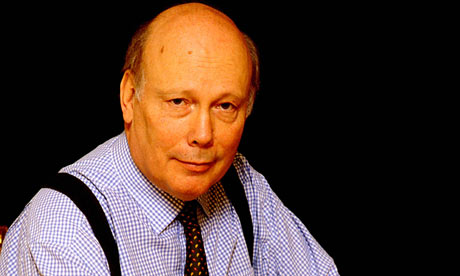
The fact is, while staying true to the R & J brand in storyline, period design and almost all things, the film’s producer and creator failed to attend to one of the world’s most powerful brands: William Shakespeare.  That’s why their film seemed a folly as soon as we started hearing snippets of airy language that sounded old-timey but not Shakespearean in the trailers, and accelerated when screenwriter Julian Fellowes, ostensibly promoting the film, pompously informed us mere mortals that most people can’t understand Shakespeare and that thanks to his own highly expensive education, he was well suited to dumb down old Will for the rest of us. Yes, this new R & J offered up the sure-fire marketing lure of simplified language for all the dolts who like their Shakespeare de-caf.

A Klingon Shakespeare buff

A Klingon Shakespeare buff

To be fair, only a handful of countries of the world actually hear Shakespeare in its original language; he is a foreign playwright on most continents and so we don’t know what is actually being spoken in countless productions. His stories take priority, not the precise words. This gives weight to a brilliant joke in Star Trek VI when an alien character urges that Shakespeare is best heard “in the original Klingon.”  But it is an act of perversity to translate Shakespeare from English to English, one even odder than English language operas in North America that still feel compelled to provide supertitles.

I’ll be the first to acknowledge that the Shakespeare brand carries a mixed message. On the one hand: greatest playwright in history, profound insights, timeless plots, stunning language. On the other: the language does in fact stun some people into incomprehension, and years of bad English teachers and ill-advised productions have made Shakespeare seem a daunting experience for so many who might enjoy his work if they weren’t so afraid of it.

I am not Shakespeare, nor was meant to be.

I am not Shakespeare, nor was meant to be.

Even though this new R & J film wasn’t a studio production, it summons visions of pitch meetings out of What Makes Sammy Run: “I’m giving you the straight dope. Shakespeare – great story man, little wordy though, language a little dusty. Here’s what we do: we keep absolutely everything that makes his stuff sell year after century, but we put it in language everyone can understand. But let’s keep it British. Maybe we can get that Downton Abbey guy to do a rewrite.”

The result was a product which tried to exploit the Shakespeare brand at the same time as it was draining it of its appeal. For people who find the word Shakespeare daunting, just the mention of his name can be a a turn-off; for those whose hearts flutter when they hear it, bowdlerizing the language eliminates any interest in seeing it. That’s not to suggest that reinventions of Shakespeare aren’t fair game: it’s been done in everything from Joe Macbeth to West Side Story to 10 Things I Hate About You. Even Sons of Anarchy is rooted in Hamlet. Heck, in Washington DC, there’s the Synetic Theatre, which is acclaimed for wordless Shakespeare. But Synetic isn’t foolish enough to sell their work as the same old Will and just get by with a program insert saying,” At this evening’s performance, the actors will be mute.”

I’m no Shakespeare scholar any more than I am a movie box office prognosticator, but having seen two stage Romeo and Juliets in the past two weeks, I admit to schadenfreude at the film’s failure, since it was such a foolish business move from the moment Fellowes’ agent got the call (surely after Tom Stoppard fell over laughing) and because I could have called it the moment that first trailer came to light. Our lovers will live to die another day on stage and screen; the IBDB alerts me to a Romeo and Juliet in Harlem due out next year. Using the original language. As for this version, its failure is no tragedy – and certainly not a Shakespearean one.