It’s a funny thing about milestones, the way certain thresholds get set in our minds. If you follow reporting on the movie industry, breaking the $100 million gross barrier is a major achievement (and for those of us in the arts, an astronomical figure), although its not always connected to the cost of the film under discussion. But that number has been a yardstick for years, once cause for double page ads in Variety whenever it was reached, regardless of whether the movie that achieved it was released in the 60s, 70s, 80s or today – despite inflation making the success happen a little faster with every passing year. To be sure, plenty of movies still don’t make it, but it’s a less rarified club than it was in the days of The Sound of Music or Star Wars.
Once upon a time, when people still spoke of the price of a loaf of bread as an economic indicator, gas prices crossed a big threshold when a gallon broke over the $1.00 price point. People under 40 may not even remember this being breached. This was a big deal in those non-digital days, when prices couldn’t simply be altered with a tiny bit typing; I happened to be in England a few years back when the price of a liter of petrol broke the £1 mark, resulting in some creative solutions to signage that never anticipated announcing such a sum.
But it should be noted that the $100 price was the theatre equivalent of a hotel’s “rack rate,” the stated top price for rooms which were in reality variable and negotiable. In theatre, through group sales, discount offers, the beloved TKTS booth and day of show lotteries you could still see a Broadway show for much less than that. As a result, over the past decade, while regular prices have risen, especially at the most successful shows, the average price paid on Broadway stayed under $100 per seat. That is, until last year, the just-completed 2013-14 Broadway season, when the average ticket was $103.92, up $5.50 over the year before.
So while articles may be trumpeting record revenues and record attendance, they’re either downplaying, avoiding or ignoring the true breaking of the $100 threshold, preferring to lead with the allure of numbers in the millions (attendance) or billions (dollars). That’s a shame, because in terms of what matters to the average audience member, the average ticket price seems much more essential news. To me, that’s the headline.
I don’t have the resources to analyze all of the factors contributing to that jump, beyond the prevalence of premium or VIP seating, along with hit shows with higher prices that don’t need to discount (The Book of Mormon and Wicked) and superior supply and demand management (The Lion King). Maybe Nate Silver and his Five Thirty Eight team could work on this and tell us whether there’s a valid economic underpinning, or whether its just naked supply and demand having its day.
But surely if Broadway price hikes outstrip the economy and even other entertainment options, Broadway will eventually reach a tipping point that could have an impact on the already dicey economics of producing and running shows. Purchasing decisions based on price could put even more shows at risk for sustaining an economically viable run, whether in theory, as a Broadway engagement is contemplated, or even once it’s up and running.
So I want to call out this pricing milestone for all to see, and wonder where it will lead our commercial theatre yet a few more years down the line. If price resistance takes hold, if the Broadway price-value equation tips too far with the former outweighing the latter, will it be a place where shows can only be smash hits and utter flops, with no mid-level performers managing to run? If that happens, I hope it will prompt more people to sample institutional and independent theatre, here in New York and elsewhere. But on Broadway, and indeed at every level in the arts, ticket pricing is our global warming crisis, steadily rising year after year without raising true alarm and provoking meaningful action, until it threatens to swamp us all.
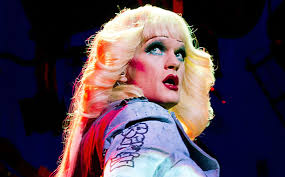
“Saturday at 10? It’s a date!” Neil Patrick Harris in Hedwig and the Angry Inch
Imagine my surprise when I discovered that Broadway’s 7 pm curtain on Tuesdays was introduced more than 11 years ago. I thought it a somewhat more recent innovation, especially since I still regularly attend shows where audience members enter at about 7:50, usually far into the first act, looking embarrassed, angry or both.
Of course, this curtain time is no longer limited to Tuesdays, as many shows also play on Thursdays at 7, and shorter shows that can still give their company an appropriate break between matinee and evening even manage it on Wednesdays.
I remember the doomsayers when the Tuesday plan began: people wouldn’t be able to eat dinner, restaurant business in the theatre district would suffer, suburban patrons would be deterred from coming in for a show given the compressed travel time. That doesn’t seem to be the case, because while overall seasonal attendance has fluctuated between 11.5 and 12.5 million in the past 10 years on Broadway, there’s no evidence that the change in curtain times hurt business and it’s entirely possible that the adjustment helped to stave off declines by introducing flexibility.
Of course, that flexibility has gone far beyond the 7 or 8 pm curtain options. There are also shows with 7:30 weeknight performances, matinees variously at 1 pm, 2 pm, 2:30 pm, and 3 pm, and family oriented shows may well play two shows on Saturday and two on Sunday. (I remember the 1999 Broadway revival of You’re A Good Man, Charlie Brown experimenting with three show Saturdays, though that was short lived and, to my knowledge, never repeated.). At long last, the Thursday matinee (long seen in London) has been added. Right now, Hedwig and the Angry Inch, perhaps to retain a connection with its downtown roots, has 7 pm and 10 pm shows on Saturdays, a performance schedule that was once commonplace in the Off-Broadway of my younger days. I’m probably leaving a few options out.
I recount all these variants because I think it’s worth recognizing that Broadway producers and theatre owners, no doubt in collaboration with the theatrical unions, have proven that by being responsive to the changing needs of audiences, they can break out of habits for which the rationale may be long forgotten. For tourists, this means there are more possibilities of catching a show; for die-hard theatregoers, it means their binge weekends can be even more packed, in that eternal quest to see as many shows as possible in a limited number of days. For local audiences, it means they may have plenty of evening ahead of them post-show, or the opportunity to get to bed earlier on theatre nights.
I will say that this proliferation of performance times doesn’t surprise me in the least. Growing up in Connecticut, many theatres there had 4 pm Saturday matinees (followed by 8:30 or 9 pm evening shows) and the 4 pm shows were usually the fastest to sell out, no matter what was on stage. 4 pm shows also yielded the most geographically diverse audience, since the schedule allowed for day-trips with the greatest options of complementary activities – even plenty of time to sit by a pool or at the beach before heading to the theatre. And it was in 1985 that we surveyed our audience at Hartford Stage about their weeknight performance preferences, finding that by a 2 to 1 margin, they wanted 7:30 instead of 8 pm. It was implemented with nary a complaint.
All of this is merely a reminder that, as we search for ways to retain or develop audiences, the most simple tried and true elements of past patterns may not be something to cling to, just as abandoned practices may yet come into vogue once again. What may have been just fine five years ago may not hold today. We’ll only know for sure by experimenting – and by asking our audiences for their input whenever possible. We’re never going to be Netflix when it comes to entertainment on demand, but we might find there are some demands we can easily meet, if we’d just listen, and give things a try.
Note: I fear the headline that ran with this piece was misleading, since the column focused more on how companies not known for traditional musical theatre were making it a part of their producing mix. That said, if the resources expended on opera were allocated to new musicals then, well, wouldn’t it be loverly?
Bryn Terfel and Emma Thompson in Sweeney Todd. Nathan Lane reprising his career-making role in Guys and Dolls. Film actor Billy Zane and musical veteran Jenn Gambatese in The Sound of Music. Three intriguing stage productions with one common thread: none was produced by a theatre company.
Respectively, they were mounted by the New York Philharmonic, Carnegie Hall and Chicago Lyric Opera. They drew upon Broadway artists, but none were on Broadway.
It seems that when non-theatre companies want a sure thing they turn to musicals. While theatre companies, subsidized and commercial alike, seek to sustain audiences amid an array of entertainment options and ever-escalating price barriers, musicals are offered as budget balancers by symphonies and opera companies, with ever greater frequency. That’s on top of theatre companies which were once devoted solely to dramatic works having made an annual musical de rigeur. And when it comes to the big halls, it’s big names, both for titles and performers.
These events owe a great deal to the Encores! series at City Center, which has proven the significant audience for limited run versions of great musicals, some rarely seen. But they also attest to the broad appeal of musicals when companies step outside their own repertoire.
Thirty years ago, it was considered startling when the late New York City Opera embraced Sweeney Todd. Theatre only seems to attempt opera perhaps once every decade or so, notably with Baz Luhrman’s La Bohème and Peter Brook’s La Tragédie de Carmen. It seems that when it comes to producing across disciplines, for theatres it’s primarily a one-way street.
With the English National Opera’s announcement of plans to produce commercial musicals, it’s not quite the “unique” venture cited in their announcement. In their efforts to “embrace the new climate where audiences seem to enjoy the blurring of boundaries between opera, theatre and musicals,” one cannot help but wonder how the balance will play out if a West End berth, as stated, is a goal for these projects. Several years ago, the Metropolitan Opera announced a joint venture with its neighbor Lincoln Center Theater to develop works along such lines, but it has yielded little.
Given the budgets for major operas, or the musical richness of a full symphony, it’s easy to see why musical theatre artists would be eager to work outside their usual sphere. But so long as musicals are viewed as cash cows, economic pressure will dictate reliance on the tried and true, with the same repertoire being repeatedly mined by ever more groups. What musical theatre really needs is more resources and new models for sustaining new works beyond the hit or flop reality of Broadway and the West End. If only the symphonies and opera companies could help out there.
Broadway dreams being immediately blown up into pending productions is something that really gets my goat. Why? Because it’s a case of hyperbole becoming ostensible fact in the press, and the only people it serves are those trying to make a nascent production into reality.
When I last wrote about this phenomenon about nine months ago (it really makes me cranky), I suggested that it makes an argument for why paid professional arts journalism is so essential – to separate real news from puffery. I regret to say that I’ve been proven wrong in that regard.
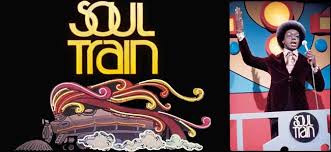
Here’s the problem. There is no Soul Train musical. No writers. No director. It’s unclear if any music rights have been acquired. All there is, right now, is a producer who has licensed the trademark and plans to develop a show.
Every article I saw actually makes note of this fact in some way, but it’s buried at least a few paragraphs in. One of the examples cited above makes it the very last sentence. But I’d be willing to bet that the vast majority of people who glanced at this story (with 120 Google News citations and climbing) thinks it’s a done deal.
Mind you, I take no pleasure in pointing this out, because I know three out of the four journalists involved in these stories pretty well, and I may get some grief from them. It’s certainly worth pointing out that journalists rarely write their own headlines, so the majority of the responsibility may not lie with the writers. In our clickbait world of online news, “happening” is much stronger than “may happen,” although such a distinction can be quickly elided by aggregators. But somewhere along the way, accuracy is sacrificed.
But I should in all fairness note that headlines more reflective of reality did appear: “Soul Train Aims To Pull Into Broadway Station” (Variety), “Soul Train May Boogie To Broadway” (The Grio, running an Associated Press story), and “Soul Train Making Tracks To Broadway?” (San Diego Union Tribune) are examples. Jim Hebert at the Union Tribune struck a strong note of skepticism in his copy, going so far as to say “don’t hold your breath on this one…” The cause is not lost.
I suppose if I were the producer and publicist for the show – and keep in mind I was a publicist for more than a decade – I’d be thrilled by the amount of attention garnered by the existence of a legal agreement. But when I see so many worthy arts activities that actually exist, eager and even desperate for media attention, this inflation of intentions is really rather depressing. I assume anyone who has a show that has already been written feels much the same way. But clearly the retro lure of a famous brand, with photos ready to run, holds greater sway than what’s happening now (those last three words actually being connected to a property someone may option any day).
In the film The Man Who Shot Liberty Valance, there’s a famous quote: “When the legend becomes fact, print the legend.” Fifty years later, it’s been simplified in a way that would make Jimmy Stewart, John Wayne and perhaps even Lee Marvin blanch, since we no longer wait for something to become legend: “Print the hype, with a great headline.”
A star being replaced early in a Broadway show’s run is usually a sign of trouble. They’re unhappy with their role, perhaps, and getting out at the earliest opportunity. Maybe they’ve been offered a better paying gig, and it’s worth it to them to buy out their contract and move onto greener pastures. So what does it mean when even before a show opens, the star’s replacement has already been announced?
In the case of the recently opened revue After Midnight (which boasts renowned trumpeter Wynton Marsalis as artistic director), it means the producers have deployed a whole new strategy, in which the show is designed to accommodate a rotating roster of headliners. While Fantasia Barrino, an American Idol runner up who has gone on to a successful recording career and who previously appeared on Broadway in The Color Purple, will steer the show through its first four months, she’ll be succeeded in February by KD Lang, who, after one month will in turn yield the stage to Babyface and Toni Braxton who will appear for just two weeks.
The producers have given Barrino top billing as ‘special guest star’ to indicate the transient status of the position, and she performs only four numbers in the show, which like most revues is essentially modular. It will be fascinating to learn what the producers have in store for those who follow in her footsteps, since their individual style may not naturally mesh with the same material.
Obviously, for people who enjoy the show, return visits will yield partially different rewards, since a handful of numbers in the 90-minute piece will at least vary in style and might, perhaps, be swapped for different songs. For members of the public less engaged with Broadway, they may be lured in by these pop performers appearing in an intimate venue. Without any pejorative connotation, After Midnight – modeled on revues at legendary nightspots like The Cotton Club – even evokes memories of vaudeville. If you don’t like this week’s bill, come back in two weeks.
This approach is a logical progression from similar efforts on the Great White Way. The producers of the long running production of Chicago have made a specialty of rotating stars of varying fame in and out on a regular basis, generating new waves of press every time a ‘bold-faced name’ steps in as Roxie, Velma, or Billy Flynn. Once again, the vaudeville style of the show itself ends itself to easy transitions; it’s not as if a new Lear was joining an acting troupe every four weeks. The Play What I Wrote also employed weekly mystery guest stars, and, as an aside, it’s worth noting that this Morecambe and Wise-derived show marks the only time Kenneth Branagh has performed on stage in the US to date.
Another precursor to this format was the series of post-show guests employed by Million Dollar Quartet, a largely fictionalised retelling of the one-time recording session of Elvis Presley, Johnny Cash, Carl Perkins and Jerry Lee Lewis. To bolster its sales, the show began offering two or three song mini-concerts after the final curtain to add to its marketing draw. Though I’d seen the show early in its run, I arranged to sneak in at the tail-end one night to see the real Jerry Lee Lewis duet at the piano with his Tony-winning doppelgänger Levi Kreis. It was, I have to say, a thrill.
I’m not advocating a parade of stunt casting. The risk is too great, even if, upon seeing stage novice Melanie Griffith in Chicago, New York Times critic Ben Brantley wrote: “Ms Griffith has only minimal command of the skills traditionally associated with musical comedy. She dances very little, and her well-known baby-doll voice has only a casual relationship with melody. Yet she is a sensational Roxie.” But that rave shocked even the show’s producers.
In this era of star appearances in theatre that run for only 12 to 16 weeks, perhaps this is a new paradigm which recognises that many stars can’t commit for long runs, and creates a way to deploy their drawing power in a manner totally organic to the show, for the benefit of audiences and investors. I for one can’t wait to see Madonna in After Midnight in 2017.
Outside of the annual Tony Awards broadcast, theatre is not a subject frequently dealt with on national television. So the next six days might be one of the richest confluences of theatre-related programming in recent memory, with three separate programs with roots in the theatre coming through America’s cable boxes between now and Monday night.
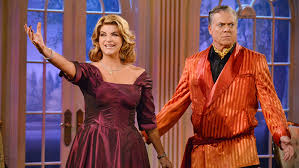
That said, I must immediately dash any expectations that the first of these programs in any way proves of benefit to theatre in America. Premiering tonight on TV Land, the series Kirstie features Cheers alumnus Kirstie Alley as the veteran star of 14 Broadway plays who, in the first episode, is reunited with the now-adult son she gave up for adoption in his infancy. That the show is a poor excuse for a sitcom is beyond my declared expertise, so I’ll contain my comments to its representation of theatrical life.
Kirstie is a show that seems to have been made by people who have watched movies about the theatre, and their creative liberties have been magnified into absurdity. Alley’s character lives in an apartment that seems sprung from 30s or 40s plays like The Royal Family, Accent On Youth or Old Acquaintance. Her career supports a full time personal assistant as well as a driver; there’s a chef in the pilot but he has disappeared in the three subsequent episodes available for review. How many stage stars can manage that? Could she have family money that would explain the largesse? Perhaps. But there’s no excuse for her decision, in the final moments of the opening night performance of her newest play, to delay the final curtain by adding dialogue meant as a declaration of affection for her once-abandoned son. It is patently absurd.
It’s worth noting that the series’ creator, Marco Pennette, has exercised his love of theatre on TV before, albeit through a supporting character. On the late 90s sitcom Caroline in the City, Amy Pietz played an actress who was appearing in the musical Cats, late in its long Broadway run. This afforded many sly and knowing digs at tired Broadway musicals that may well have been lost on much of the audience, but which jollied along those of us who watched primarily for Malcolm Gets’ performance. Kirstie offers little that sly beyond naming Rhea Perlman’s personal assistant character Thelma, a nod to the role played by Thelma Ritter in All About Eve. The only saving grace is that after the first two episodes, Kirstie’s depiction of theatre seems to become a footnote in the series, although Kristin Chenoweth’s cameo as an Eve Harrington type in the second show carries a bit of welcome snap that elevates the leaden comedy as much as possible (there’s also a terrific guest shot by Cloris Leachman as Alley’s estranged mother). But, in short, Kirstie makes Smash look like a documentary.
The second offering is the much promoted live broadcast of The Sound of Music, with Carrie Underwood leading the cast as Maria. Because it will be done live, it’s impossible to make any judgments, though I’m sure the commentary will be flying fast and furious during and after the broadcast on social media; I have already seen critiques of the cast recording, which was being streamed by Spotify yesterday.
Unlike almost everyone in the country, apparently, I am one of the very few who has never seen The Sound of Music, so I’ll be able to take the broadcast on its own terms. Yes, you read that right: I’ve never seen the show on stage and I’ve only seen snippets of the film (specifically Julie Andrews’ opening mountaintop twirl, the “Do Re Mi” and “16 Going on 17” numbers, and the final sequence with Von Trapp singing Edelweiss and the family’s subsequent escape). But I’m very pleased that there will be a version of the stage show to sit alongside the film for posterity, allowing fans and musical theatre students to get a sense of how a show can be altered for its screen incarnation (it joins Rent in this category). While the NBC presentation will be a peculiar hybrid of TV and theatre (it’s being produced for TV as if it were a stage production, though it is a one night only event that will play in person only for technicians, sans audience and audience reactions), I suspect it will prompt me to see the movie at long last, to make my own comparisons.
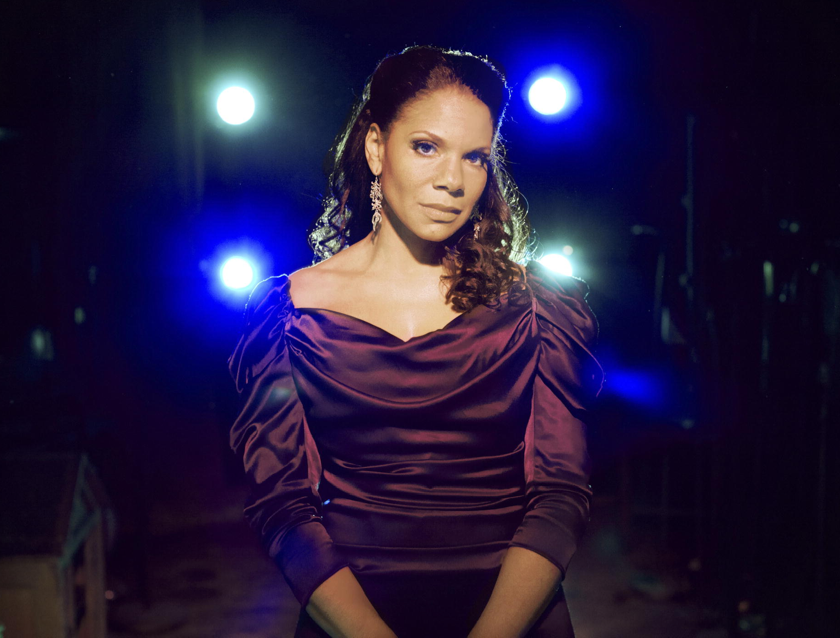
Audra McDonald in Six By Sondheim
Capping this trilogy, on Monday night, is the HBO documentary Six By Sondheim, directed by James Lapine and produced by (among others) former New York Times drama critic and lifelong musical theatre buff and expert Frank Rich. While the roughly 80 minute program makes the shrewd decision to focus musically on only six significant Sondheim songs, it casts a much wider net over the composer’s life and process than the title might suggest. It admirably features but a single talking head (in contrast to so many documentaries): that of Sondheim himself, drawn from a wide range of interviews over several decades. I was impressed to hear Sondheim, ever the wordsmith, drop “concatenate” and “serendipity” into a single sentence – no wonder this guy is the eminence grise of composer-lyricists, perhaps never to be equaled.
While his interrogators are mostly excised, there’s really something to be said for any show which manages to embrace moderators as diverse as Diane Sawyer, Tony Kushner and Mike Douglas and which squeezes in clips of performers like Cher and Patti LaBelle singing “Send In The Clowns” (LaBelle proves that, unlike Glynis Johns, she really knows how to hold a note). Another asset of the show is the newly produced performances of, among others, “I’m Still Here” (by Jarvis Cocker) and “Opening Doors” (with Jeremy Jordan, America Ferrara, Darren Criss, Laura Osnes and Sondheim himself as the producer seeking a “hummable melody”) which vary greatly in visual style thanks to contributions by different directors for each, most notably Todd Haynes.
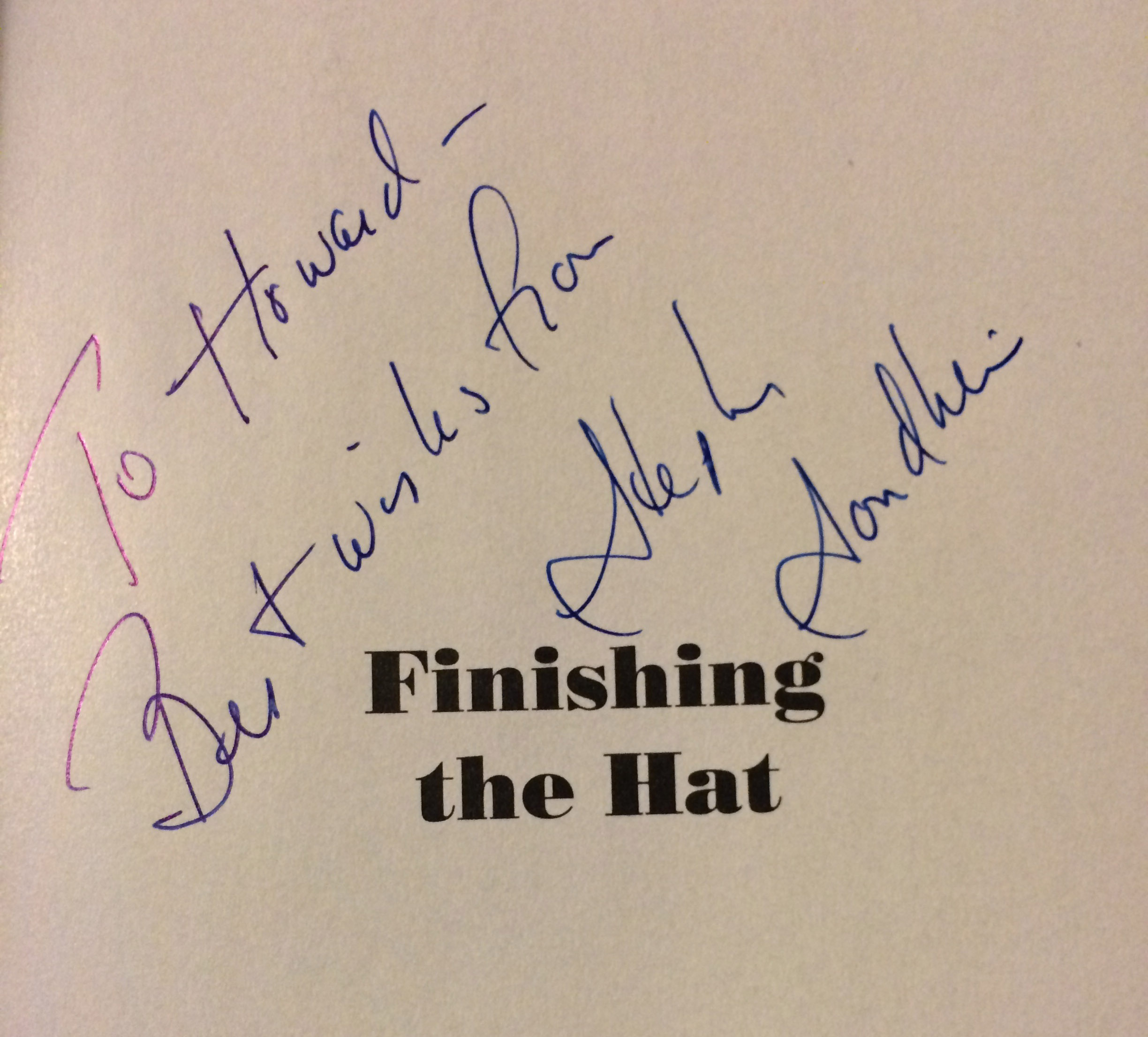
A prized personal possession
As a big fan of Sondheim, but something short of a rabid one, the program certainly includes tales and tidbits I’d heard before, but packaged as elegantly as one could ask; I was certainly startled when the composer recommended liquor as an indispensable aid to writing a musical. Whatever one’s familiarity with Stephen Sondheim and his work, Six By Sondheim is a indispensable record that speeds by in a flash, and its presence on the dominant pay cable service puts other outlets like Ovation to shame. It would be naïve to expect a series of such programs from HBO, but Sondheim has many more memorable songs worth exploring; we can only hope that we may yet see more documentaries on his life and work as expert as this one, whatever the forum.
So gather around your viewing screen, set your DVR, or get ready to buy a couple of DVDs very shortly (definitely for Six By Sondheim; possibly for The Sound of Music). As for Kirstie, please stay away, so its travesty of theatre fails to make much of a mark anywhere. And, in the meantime, I hope you’ll join me in my daily prayer for season four of Slings and Arrows.
When it comes to Shakespeare, not all plays are created equal. That’s far from a surprise to anyone who pays attention; Hamlet certainly ranks far ahead of King John in the canon, and even Coriolanus and Timon of Athens get more attention than Pericles. A great deal of this situation in recent years, at least in the U.S., is attributable to the educational curriculum, which has a strong hand in creating the “greatest hits.” The hierarchy is also a product of performers’ aspirations, and I daresay that when asked what Shakespeare roles they’d like to play, actors respond more frequently with Lear and Rosalind than Henry VIII and the Countess of Roussillon.
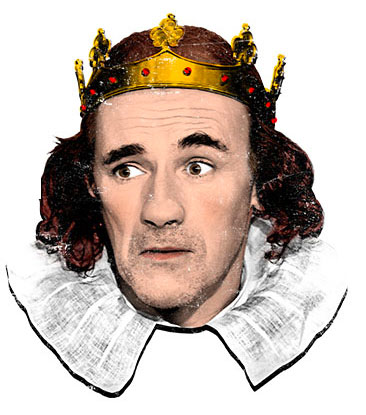
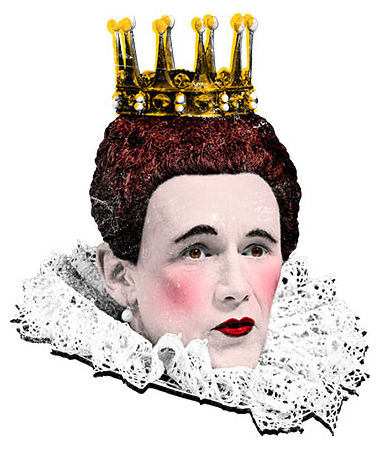
Rylance in Twelfth Night
The choices for the current Shakespeare plays in repertory on Broadway are among the more familiar titles, but they take on novelty for being all-male casts and indeed for being in rotating rep. Had it not been for the coincidence of a competing rep of Waiting For Godot and No Man’s Land in the same season, the Shakespeares would have been the only shows in rep on Broadway since the mid-90s. A key selling point in the Shakespeare rep is actor Mark Rylance, playing Olivia in Twelfth Night (or Twelfe Night as they’re spelling it in ads) and the title role in King Richard The Third. After his triumphs in Boeing Boeing, La Bête and Jerusalem, one suspects the audiences would flock to anything Rylance chose to perform, except perhaps those poems he reads as award acceptance speeches.
The January calendar of Twelfth Night and Richard III
So while it’s hardly the discovery of a shocking secret, I was surprised today to discover that the Shakespeare rep doesn’t treat its productions as equals: in general there are six weekly performances of Twelfth Night and only two of Richard III. The producers (and perhaps Mr. Rylance) have decided that the market will bear plenty of comedy and not so much tragedy, with the added bonus that Stephen Fry appears only in the comedy, and for some of us, he’s a big draw too. They also may be saving a few dollars by making fewer set changeovers, since labor costs money.
I can’t say that I wouldn’t have lobbied for the same balance, if I’d had a say in the matter. I happen to have a great love for Twelfth Night, due to it having been the first play I worked on when I started at Hartford Stage in 1985. As for Richard III, even though I’ve seen terrific productions with Ian McKellen and Richard Thomas, among others, I always feel a bit lost in the constant realignment of loyalties throughout the play, and I rarely walk away having had an emotional experience, even as I might appreciate the talent on stage. Indeed, my college roommate, who has been my Shakespeare wingman for some three decades, was befuddled when I refused to see Richard III at BAM last year; I just didn’t feel like it and he wasn’t going to change my mind (he took his mother-in-law). By the way, I should note I have not yet seen the current Broadway shows.
Shakespeare scholars and Rylance buffs may be dismayed to learn of this programming imbalance. The former might not cotton to the elevation of a comedy over a history, but the latter may just be realizing that if they wish to be Rylance completists, they’d better hustle up on getting tickets, because the Richard III inventory is much scarcer than the seats for Twelfth Night. As for whether there’s a deeper meaning to favoring one play over the other beyond gauging the marketplace, I leave that for the academics to debate.
P.S. Waiting for Godot and No Man’s Land each play four shows a week. Make of that, you should pardon the expression, What You Will.
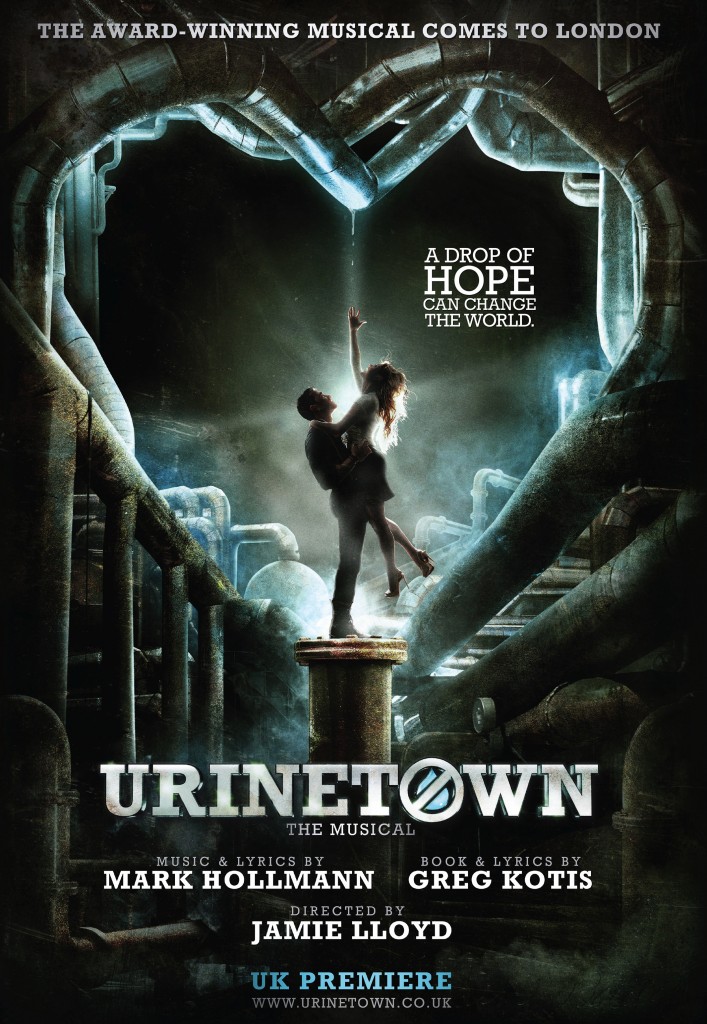
When I saw it for the first time last week, I was really struck by the poster for the West End debut of the musical Urinetown. Why? Because it didn’t look like a theatre poster. It looked like a movie poster.
In point of fact, it looked to a certain degree like the poster for Star Trek: Into Darkness, which owed a debt to the poster for The Dark Knight Rises. Many movie posters are endlessly iterative and imitative, as they want to subtly remind you of other successful films in the same genre. I give points to Urinetown UK for evoking dark futures with humanity under threat – completely consistent with the world conjured in the show. Equally apt, it counters the darkness by placing a young attractive couple, reaching for a drop of water, at the center of a spaghetti-tangle of (empty) pipes, and they added a tagline: “A drop of hope can change the world.”
It has taken almost a decade since Urinetown’s Broadway closing for it to reach England, so the opportunity to capitalize on Broadway buzz has long since faded, That certainly suggests one reason why the graphic bears no relationship to the Broadway marketing material, unlike The Producers, The Book of Mormon, Jersey Boys and so many other US to UK transfers. That works in two directions as well, since Mamma Mia! and Matilda ads look the same in both countries, having started in London.
As I pondered the Urinetown UK art, it struck me that one reason the vast majority of theatre ad design looks so different from movie ad design is that while a movie is trying to simply drive sales and pique interest, theatre designs, more often than not, are trying to build a brand. If theatre images emphasize a star, they could be undermining a long run, since eventually stars leave; movies have no such problem. Think of the image of Les Mis’ Cosette: as the show ran and ran, the image became so ubiquitous that they could run ads without the show’s title and you would know what the ad was for. Producer Cameron Mackintosh’s team even could play with the image, running variations on Cosette that honored holidays or welcomed other shows to Broadway. And it was hardly the only show to do that: think of the Phantom’s mask, the eyes of Cats, the Chagall-esque Fiddler on the Roof, Larry Kert running after Carol Lawrence for West Side Story (though that would eventually be supplanted by Saul Bass’ fire escape logo for the film). Colleges, high schools and community theatres use knock-offs of these designs for years and years.
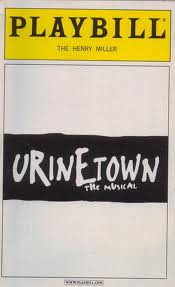
As I’ve said, it’s the lapse in time that has afforded Urinetown UK the chance to go in another direction, since given the relative age of the show, it doesn’t undermine a worldwide branding effort. The other reason they have that opportunity: in my opinion, the original Urinetown graphic never became iconic. Do you remember it? Perhaps only vaguely, and I suggest that’s because it was only a type treatment, as opposed to an image, a true logo, a brand.
To digress for a moment: when I worked at Hartford Stage, one of my responsibilities was to work with a range of local designers to secure pro bono graphic designs for each of our shows. In addition to keeping expenses down, it insured that each show would have its own feel and look, with the ads held together by a very solid, strong and consistently utilized company logo. In this process, the artistic director had only one edict – there must be some representation of the human in every graphic. He believed that people are at the center of theatre, that audiences come to watch people on stage, and so the human element – sometimes nothing more than an eye or a hand – was a reminder of the unique nature of live theatre. In hindsight, thinking back over 50 shows, I believe he was right and I’ve advocated for this approach ever since. To be fair, not every design was perfect, and some worked better as art than as marketing, but the best remain those that followed the artistic director’s dictum. If you think of great theatre graphics, I’d be willing to bet that you’ll find the majority do so as well. That’s why, at least in my estimation, there’s not a graphic image from the Broadway Urinetown that lingers in memory.
But turning back to Urinetown UK, as I have often this week, I continue to applaud the complexity and sophistication of its imagery, which come to think of it also recalls that used for Terry Gilliam’s film Brazil. I was so intrigued, that I took the time to watch a three-minute promo video for the show and, to be honest, it ended up showing me what I think is missing from the Urinetown campaign. A barrage of words flew at me from a variety of speakers, all describing the experience of the show: epic, wackadoo, eco-friendly, apocalyptic, daring, exciting, entertainment, political, adventurous and satirical wit. Director Jamie Lloyd said he hoped it would advance “conversations about climate change, environmental disaster, the moral responsibility of big business.”
But looking at the poster and watching this video, I realized that something has been, if not forgotten, downplayed for this Urinetown, at least as I know the show.
It’s very, very funny. I laughed a lot.
Not only that, it is especially funny to those who know and love musicals, since it’s “satirical wit” is focused, in part, on previous, iconic musicals.
Now if it is Lloyd’s intention to lean heavily on the show’s Brechtian overtones and downplay the humor, then you can probably ignore everything from here on in. But if Urinetown UK– with all of its topical, political and social overtones – is to retain its irreverent take on both a world without water and its stance as a love letter to musical comedy, then I’d urge the powers that be to tweak the tone of their rhetoric and their imagery, lest they mislead their potential audience – and those who buy. Remember, you’re fighting a title that, for some, carries a whiff of something distasteful, even while it becomes a memorable point of distinction from most other musical theatre.
I’ve heard it said many times that if a show is a hit, its logo – whatever it is – looks brilliant. And perhaps in the long run, if there is in the long run, that becomes a self-fulfilling prophecy. But when you’re trying to set expectations and lure audiences, every communication is freighted with meaning (it can even effect the advance perception of critics who were previously unfamiliar with the material), and what I remember most of Urinetown was having a darned good time.
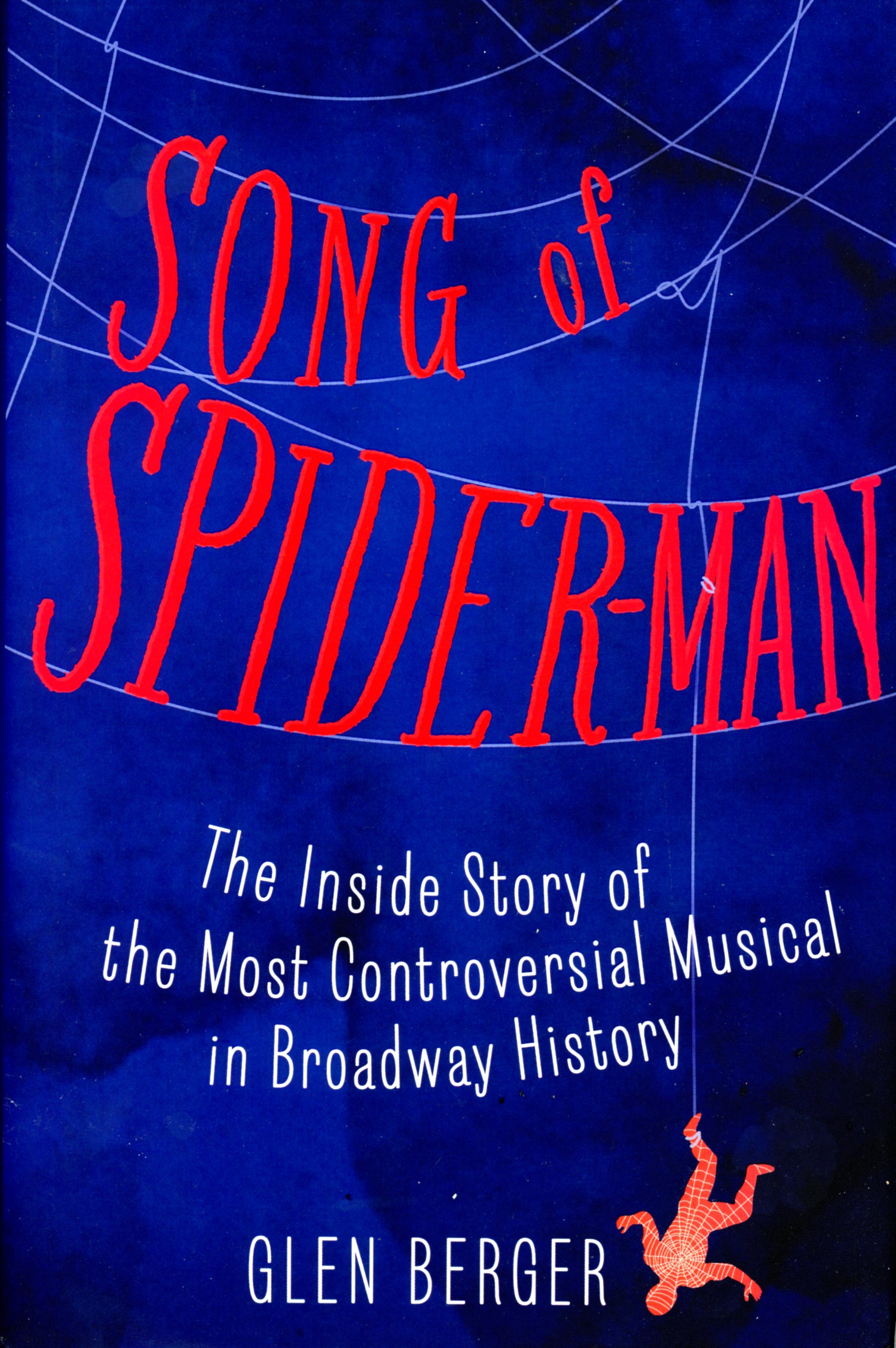
It’s not unusual for book releases to be coordinated with a related event taking place elsewhere in the media circus: the autobiography that appears just as a star’s major film is coming out, the personal memoir that primes the public for a political campaign. However, no one can accuse Julie Taymor of engaging in such wanton promotion – she certainly can’t be pleased that Glen Berger’s Song of Spider-Man: The Inside Story of the Most Controversial Musical in Broadway History (Simon & Schuster, $25) debuts just as she returns to the stage with A Midsummer Night’s Dream at Theatre for a New Audience in Brooklyn. One imagines she’d have been happier if there were no book at all.
Countless people are reading and writing about the book as another chapter in the seemingly never-ending saga of Spider-Man: Turn Off The Dark, the headline generating musical that has been the target of brickbats from arts journalists virtually since the show was first announced. Spider-Man: TOTD seemed to throw raw meat to the media at every turn, ranging from fundraising challenges and production delays to several highly publicized cast injuries which seemed to turn the show into a latter-day Roman arena. It kept Patrick Healy of the Times and Michael Riedel of the Post in competition for breaking tidbits in a manner rarely seen before.
I didn’t find Berger’s book particularly revealing, largely because it covers ground that had been extensively reported elsewhere, and I confess to having consumed the events as they happened. In fact, I made a point of seeing the very final performance of the Taymor version and the opening night of the version reworked without her – and, for the most part, Berger’s – consent, after they had been supplanted by Philip William McKinley and Roberto Aguirre-Sacasa respectively. Yes, I watched the show’s travails, as most did, as a theatrical car wreck in slow motion, a modern-day tragedy of creative hubris played played out in benday dots and rock chords.
For all that Berger recounts, the book constantly reminds the reader that it is the story of Spider-Man: TOTD as viewed through one person’s biased eyes – rather than the whole story. Berger goes out of his way to paint himself as a innocent caught up in the maelstrom of vastly more famous, and vastly wealthier, artists than himself. His emphasis on being separated from his family, of his personal financial troubles, of how different his world is from that of his acclaimed and wealthy collaborators Bono and Taymor – they grow tiresome, as if Berger deserves some sympathy or absolution for his role in the debacle by virtue of his less lofty perch. But he’s not exactly Nick Carraway observing the actions of Gatsby and the Buchanans – he’s a willing participant until his own calculations backfire on him, severing his ties forever with Taymor, who he has built up as his own artistic Daisy. To compare him to Faust conveys a grandeur I decline to confer.
The fact is, reading Berger’s book is like watching only one viewpoint from Rashomon, and one is all too aware that others undoubtedly have very different versions of the same events. I can’t help but suspect that the musical might at best be a page or two should Bono write his life story; producer Michael Cohl would no doubt recount the saga as a story of how he rescued a damaged show that most believed was dead on arrival; should Taymor tell her version, it will be of an artist (herself) persecuted by greedy philistines. Whether anyone will care to follow the tale repeatedly refracted through varying prisms is anyone’s guess, though that might be the only way to get the real story.
All of this should not suggest that Berger’s book has no value. It is, at the very least, a superb answer to the perennial question about troubled or failed shows: “Didn’t anyone realize how bad it was going to be?” The book is an encyclopedia of ignorance, ego and self-delusion, a look at how a theatrical property, especially one with such a high profile, almost becomes unstoppable, and the many ways in which it can go wrong, of how perspective is lost when you are so close to the work for so long. Aspiring producers should read it as a cautionary tale – not about a one-off disaster, but rather about when it pays to just say no, shut a show down, and move on, since Spider-Man may be the most expensive show to date, but there are plenty of complete flops that followed much the same misguided path.
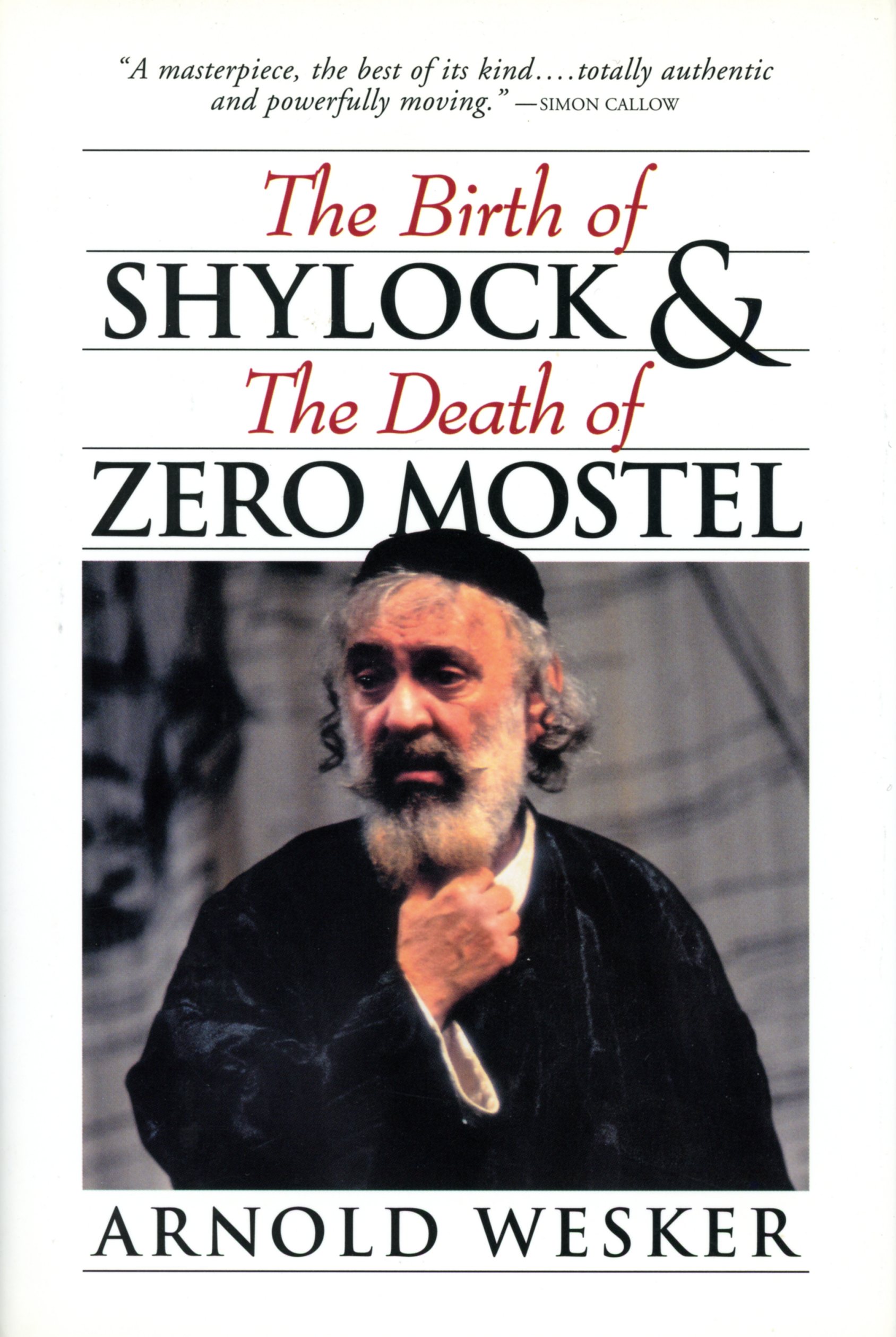
Inevitably, Berger’s book will find its way onto many a theatrical bookshelf, even if it doesn’t have the elegance or educational value of many other books with which it shares conceptual and theatrical DNA. As I read it, I was reminded of a book about a vastly less well known disaster: playwright Arnold Wesker’s The Birth of Shylock, The Death of Zero Mostel, a chronicle of a quick Broadway flop notable mostly for the death of Mostel, its leading actor, who died while the show was trying out in Philadelphia. Like Berger, Wesker seems almost entirely unaware of his own complicity in the show’s failure, even as he repeatedly tells about his taking aside actors to countermand the edicts of the show’s director, John Dexter. Shylock the show is in the dustbin of Broadway history, whereas the legend of Spider-Man will surely go on; however, the author’s account of the production of Shylock makes for better literature than Song of Spider-Man.
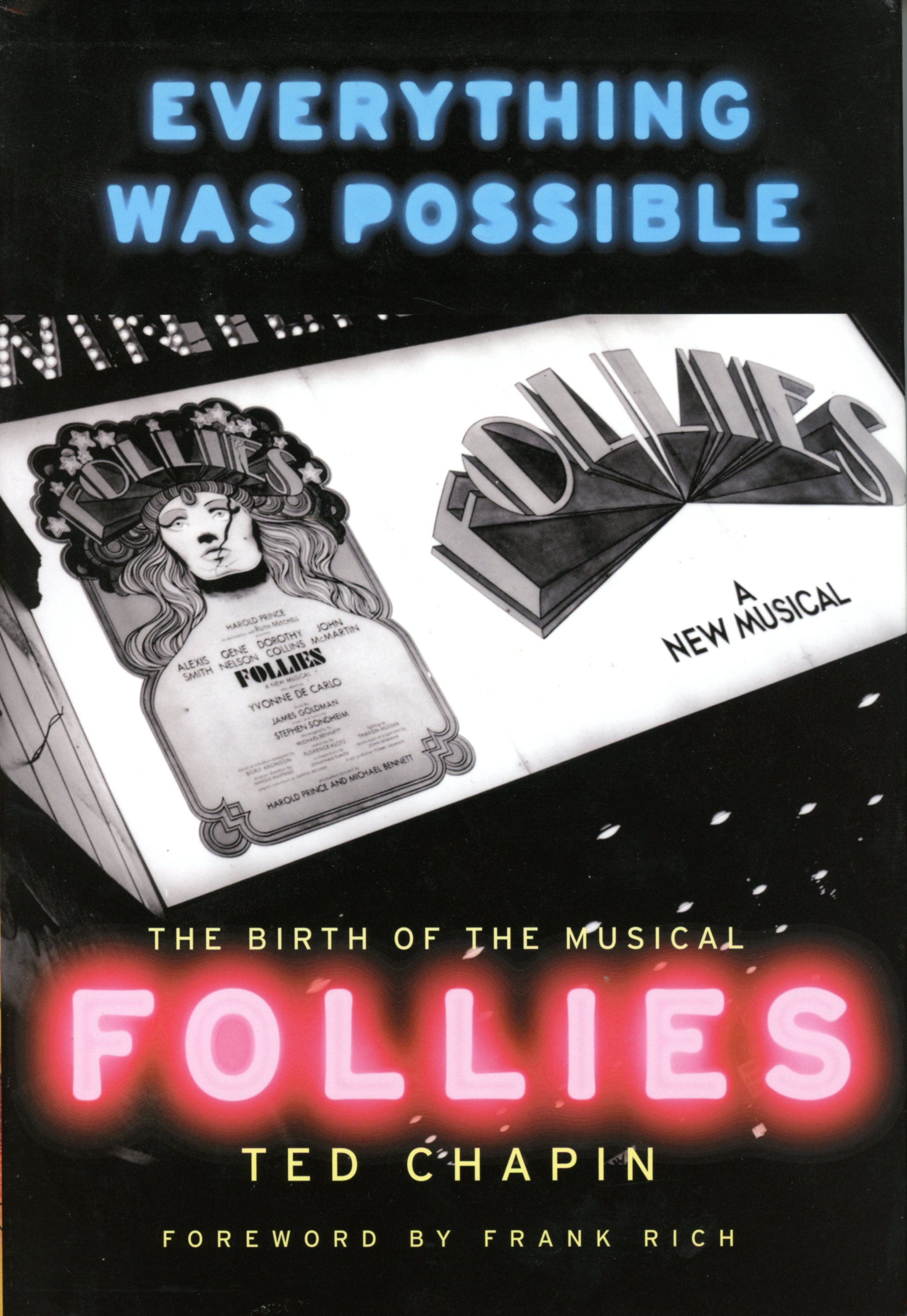
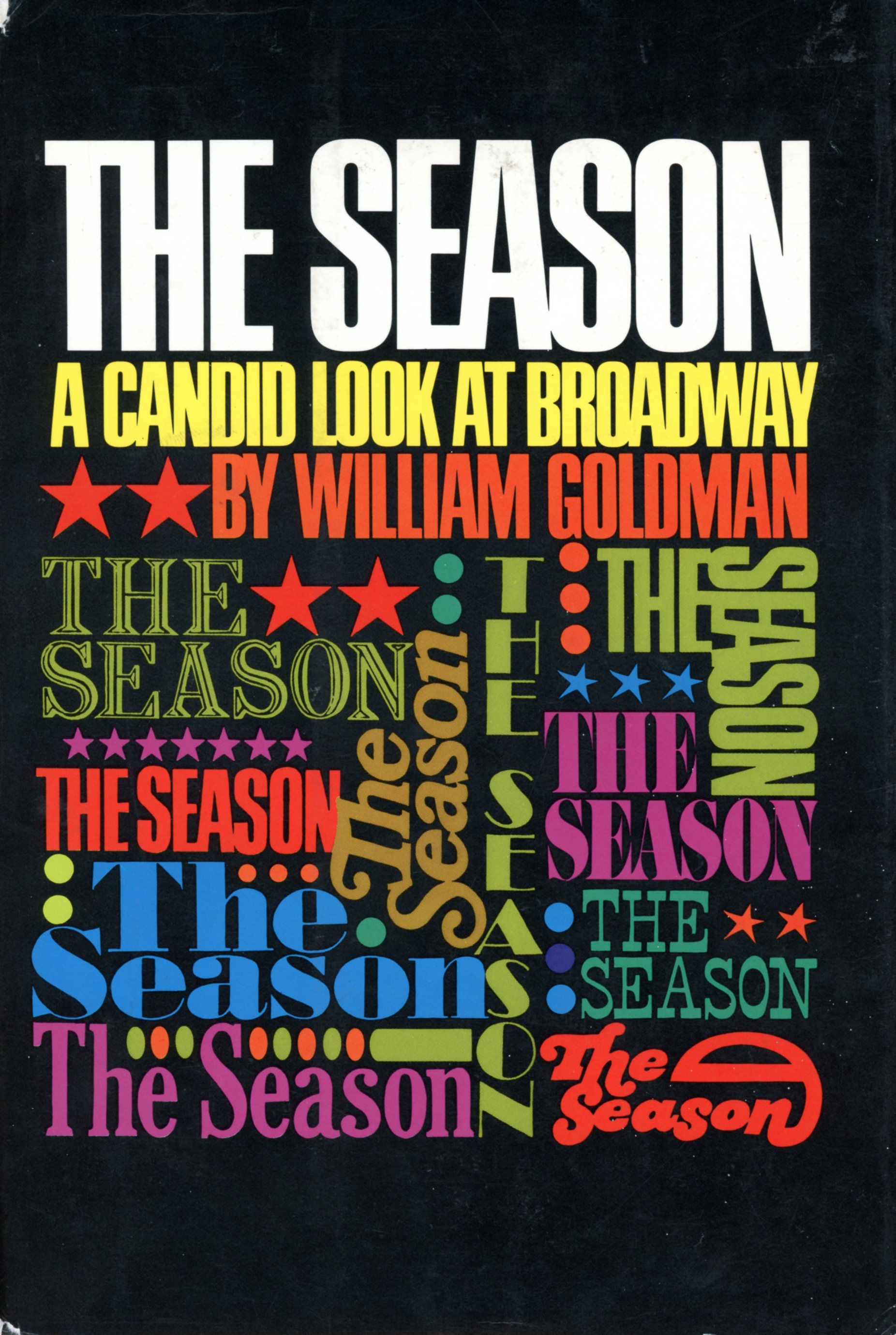
While there are certainly great Broadway books of autobiography (Moss Hart’s Act One is an exemplar of the kind), more often than not the best chroniclers are those on the fringes or outside of a production entirely. Ted Chapin’s Everything Was Possible: The Birth of the Musical ‘Follies’ is an impeccable recent example of the former, derived from Chapin’s own notes as a production assistant on the original Follies; William Goldman’s The Season: A Candid Look At Broadway has long stood as a grand achievement of the latter. Of course, in both cases, the authors were given rare access, which seems almost impossible in the more media savvy world of today; the film industry was reminded about the danger of giving journalism too much access when critic Julie Solomon roamed free on the set of a Brian DePalma film, resulting in The Devil’s Candy: Anatomy of a Hollywood Fiasco, a detailed chronicle of the famous flop The Bonfire of the Vanities.
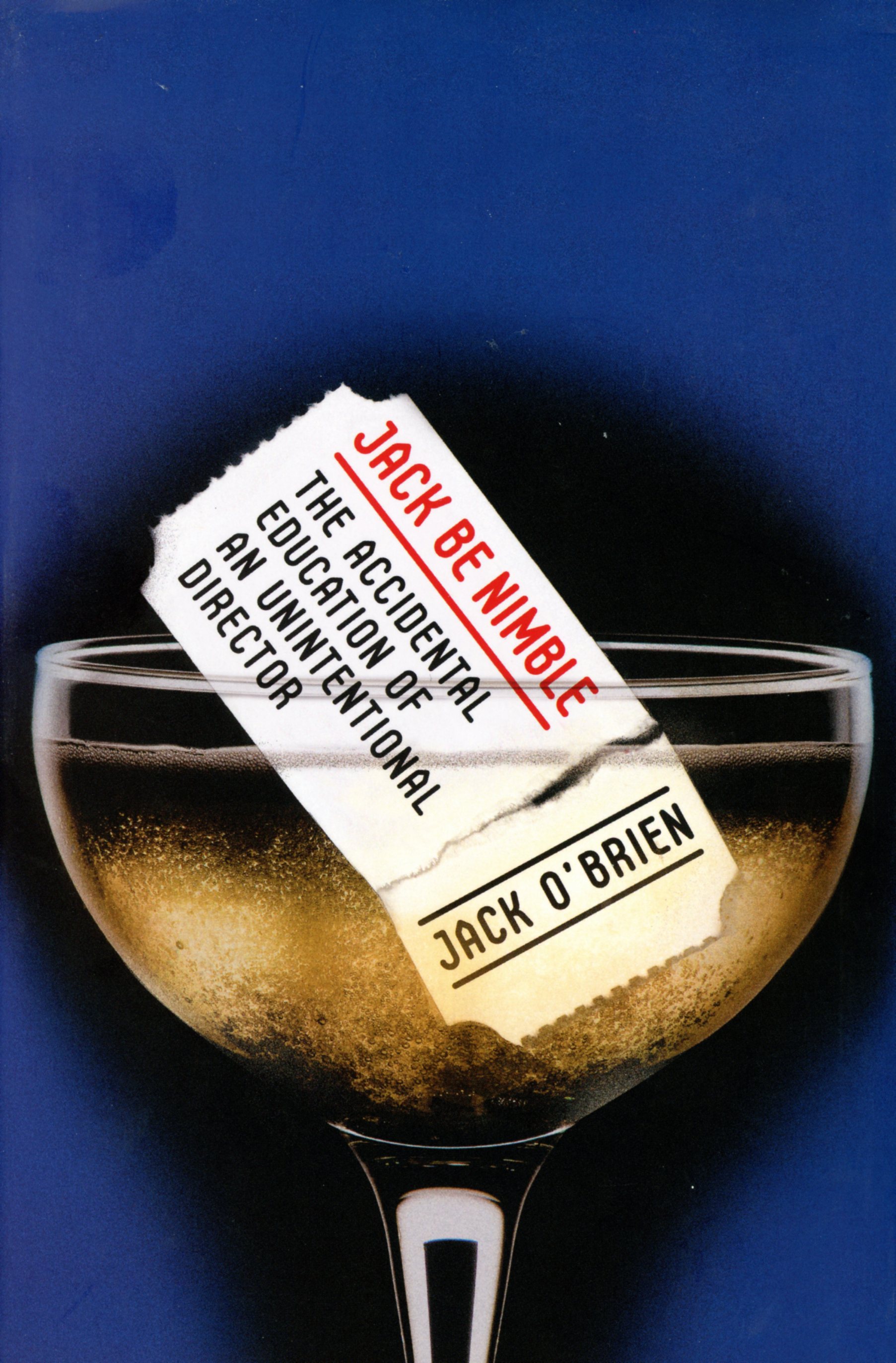
Though it covers work which is vastly less infamous and some 50 years in the past, I daresay that Jack O’Brien’s recent Jack Be Nimble: The Accidental Education of an Unintentional Director (Farrar Straus and Giroux, $35) is the more worthy, entertaining and educational insider theatre book of the year. While O’Brien could have easily produced a standard memoir, given his own considerable achievements as a director, he followed Chapin’s lead and instead opted to write about the access he had as a young man to a remarkable confluence of talents: the members of the APA and later the APA-Phoenix theatre companies, which included Richard Easton, Rosemary Harris and above all the now little-remembered Ellis Rabb. I know firsthand what a wealth of stories Jack can tell about his own exploits, but by deciding to honor the artists who formed his own aesthetic, he has written a work of history and memoir that is ultimately more important and informative than Berger’s attempt to make a few more dollars off the Spider-Man debacle.
Perhaps, one day, a young PA on Spider-Man: TOTD will emerge with his or her own book, to draw the truest picture of what went on as the web collapsed. Until then, we’re left with a lopsided recap of a story that we mostly know, told by what is called, in literary circles, an unreliable narrator.
Position 1: a stage production that is recorded, filmed or actually broadcast live ceases to be theatre. It may be considered television or film, but it is a record of theatre, not the thing itself. True theatre is experienced in the flesh, so to speak.
Position 2: for people who have no means to see any theatre, or a specific production, a recording or live transmission of the event, whether it occurs in a movie theatre or on a computer, is better than not seeing it at all, provided it is at least competently produced.
Position 3: even though it means I don’t get to see some things that really interest me, I don’t enjoy recorded theatre, no matter how artfully done, and I’m lucky enough to have access to lots of great theatre live, so after a few tries, I now don’t go. But that shouldn’t stop anyone else.
Why have I laid out these positions so baldly, rather than making a case for them? Because I want to talk about an aspect of the growing appetite for cinecasts, NT Live, the home delivery Digital Theatre and the like that isn’t about the viewing experience at all. That’s a matter of opportunity and preference and I leave it to everyone else to hash out those issues. My interest in this trend is about how it is branding certain cultural events and producers – and how U.S. theatre is quickly losing ground.
In general, people attend commercial theatre based upon the appeal of a production – cast, creative team, author, reviews, word of mouth, etc. Who produced a show is pretty much irrelevant, and only theatre insiders can usually tell you who produced any given work. In institutional theatre, the producer has more impact, as people may attend because they have enjoyed a company’s work previously, because it conveys a certain level of quality. This is true in major cities and regionally, and while the name of the theatre alone isn’t sufficient for sales, it is a factor in a way it isn’t in the West End or on Broadway.
As a result, what is happening with theatrecasts is that the reach of the companies utilizing this opportunity is vastly extended, and the brands of the companies travel far beyond those who sit in their seats or regularly read or hear about their work. There’s long been prestige attached to The Royal Shakespeare Company, the Metropolitan Opera and the National Theatre; now their presence in movie theatres has served to increase access and awareness. These longstanding brands are being burnished anew now that more people can actually see their work. The relatively young Shakespeare’s Globe, even as it makes its Broadway debut, is also gaining recognition thanks to recordings of their shows.
It should be noted that for UK companies, “live” is a misnomer when it comes to North American showings. We’re always seeing the work after the fact, given the time difference, so in many ways it’s no different than a pre-recorded stage work on PBS. But the connotation of live is a valuable imprimatur, and few seem to mind it, even when there are “encore” presentations of shows from prior years. The scale of a movie screen, the quality of a cinema sound system appear to be the true lure, along with the fact that these are not extended engagements, but carefully limited opportunities that don’t compete with actual movie releases.
MEMPHIS, one of the rare U.S. originated cinecasts
Regretfully, by and large, American theatre (and theatres) are missing the boat on this great opportunity for exposure, for revenue, for branding. There have been the occasional cinecasts (Memphis The Musical; Roundabout’s Importance of Being Earnest, imported from Canada’s Stratford Festival) but they’re few and far between. We’re about to get a live national television broadcast of the stage version of The Sound of Music, but it’s an original production for television, not a stage work being shared beyond its geographic limitations. Long gone are the days when Joseph Papp productions of Much Ado About Nothing and Sticks And Bones were seen in primetime on CBS; when Bernard Pomerance’s The Elephant Man was produced for ABC with much of the original Broadway cast; when Nicholas Nickleby ran in its entirety on broadcast TV; when PBS produced Theatre in America, showcasing regional productions, when Richard Burton’s Hamlet was filmed on Broadway for movie theatre showings 50 years ago.
London MERRILY rolled across the Atlantic
Most often, when this topic comes up in conversations I’ve been party to, there’s grumbling about prohibitive union costs as a roadblock. Perhaps the costs have changed since the days of many of the examples I just cited, yet somehow Memphis and Earnest surmounted them. Even as someone who doesn’t particularly care to see these recorded stage works, I worry that American theatre is lagging our British counterparts in showcasing work nationally and internationally, in taking advantage of technology to advance the awareness of our many achievements. Seeing an NT Live screening has become an event unto itself – this week the National’s Frankenstein is back just in time for Halloween; the enthusiasm last week for the cinecast of Merrily We Roll Along (from the West End by way of the Menier Chocolate Factory) was significant, at least according to my Twitter and Facebook feeds. The appetite is also attested to by an online poll from The Telegraph in London, with 90% of respondents favoring theatre at the movies (concurrent with an article about the successful British efforts in this area). I’d like to see this same enthusiasm used not just to bring U.S. theatre overseas, but to bring Los Angeles theatre to Chicago, Philadelphia theatre to San Francisco, Seattle theatre to New York, and so on – and not just when a show is deemed commercially viable for a Broadway transfer or national tour.
I’m not trying to position this as a competition, because I think there’s room for theatre to travel in all directions, both at home and abroad. But without viable and consistent American participation in the burgeoning world of theatre on screen, we run the risk of failing to build both individual brands and our national theatre brand, of having our work diminished as other theatre proliferates in our backyards, while ours remains contained within the same four walls that have always been its boundaries and its limitations. Somebody needs to start removing the obstacles, or we’re going to be left behind.

 It’s a funny thing about milestones, the way certain thresholds get set in our minds. If you follow reporting on the movie industry, breaking the $100 million gross barrier is a major achievement (and for those of us in the arts, an astronomical figure), although its not always connected to the cost of the film under discussion. But that number has been a yardstick for years, once cause for double page ads in Variety whenever it was reached, regardless of whether the movie that achieved it was released in the 60s, 70s, 80s or today – despite inflation making the success happen a little faster with every passing year. To be sure, plenty of movies still don’t make it, but it’s a less rarified club than it was in the days of The Sound of Music or Star Wars.
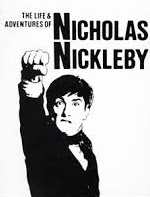 In theatre, in my lifetime, the big round number that sticks in my memory was the $100 ticket for The Life and Adventures of Nicholas Nickleby, though it could be explained away by the massive physical production, cast size and length. It seemed a one-off as opposed to a trend-setter. Miss Saigon had $100 tickets at the start of its run, but didn’t sustain them, dropping back to the then more typical $65. The $100 price cropped up again for the 1999 revival of The Iceman Cometh, which by virtue of its length, simply couldn’t give enough performances in a week to make economic sense otherwise. You may know of other isolated instances.
 We didn’t truly reach the $100 asking price per ticket milestone until The Producers introduced the $100 ticket in the wake of rave reviews, also giving us the innovation of the VIP ticket at the extraordinary price of $480. This was in 2001, just 13 years ago. At the time, other hits were quick to match The Producers, with Mamma Mia! jumping to $100 per ticket just two months later.
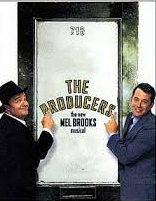 It’s always important when discussing prices over time to acknowledge overall price changes in comparable fields or the economy as a whole. So let me point out that in the period since The Producers in 2001, the Consumer Price Index has risen from 177 to 233, an increase of 32%. The average movie ticket price nationally has gone from $5.65 to $8.13, a jump of 44%. But the Broadway jump from $58.72 to $103.92? That’s an increase of 77%.