Verbally Attacking ‘Shakespeare Without Words’

July 15th, 2015 § 2 comments § permalink

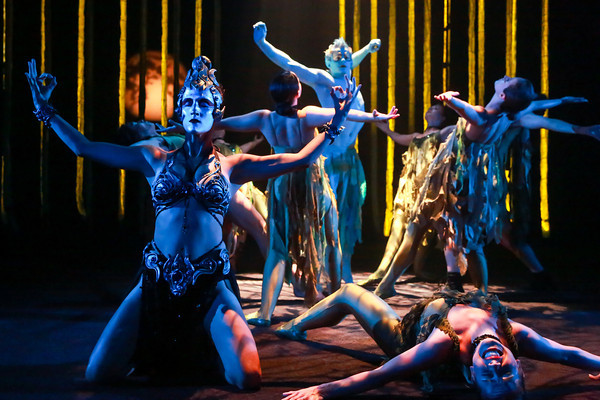
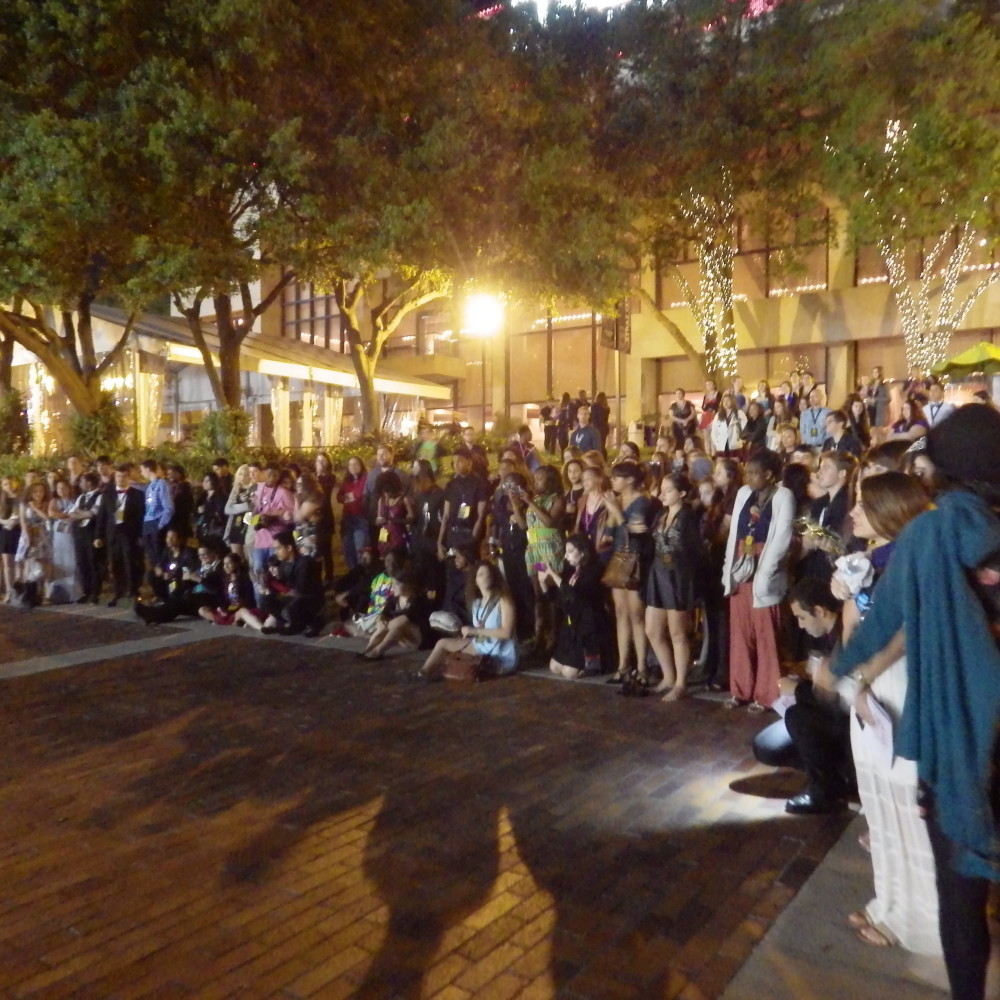
Synoptic Theater's A Midsummer Night’s Dream

Synetic Theater’s A Midsummer Night’s Dream

Seemingly out of nowhere, The Wall Street Journal published a column yesterday, “A Silenced Shakespeare in Washington: Shakespeare without puns is like French cooking without butter,” which slams the work of Washington D.C.’s Synetic Theater for their movement-based productions of Shakespeare, productions which have garnered critical and popular acclaim for more than a decade. What’s curious about this op-ed cum review, written by a contributor who is not a member of the paper’s arts staff, and certainly not their widely-traveled critic Terry Teachout, is that not only does it seek to demolish Synetic’s work, but to trash anyone who might enjoy or support that work. The author is James Bovard, identified as “the author of ‘Public Policy Hooligan’ and a member of the USA Today Editorial Page Board of Contributors.”

Here’s a few samples:

The latest Shakespeare fashion, at least in the Washington area, is to invite people to a feast of language and serve nothing but grunts, grimaces and grins—with a few gyrations thrown in for dessert…

The company has received numerous grants from the National Endowment for the Arts and its state affiliate, the Virginia Commission for the Arts. Synetic is known for high-energy performances relying on acrobatics, pantomime and special effects. But flips and twists cannot suffice for nouns and verbs….

Silent Shakespeare is akin to mental nouveau cuisine with more flourishes than calories. The fact that many Washingtonians consider Silent Shakespeare an improvement rather than an oxymoron reflects unkindly on the capital’s cultural pretensions. But perhaps we should not be surprised that the city that pioneered obfuscation is now exalting expunging English altogether.

Synetic responded to Bovard’s assault on a blog, but inevitably that will be seen by fewer people than those who read the Journal, one of the country’s largest newspapers in print and online. Here’s a bit of their riposte:

It is unclear to us from The Wall Street Journal’s latest opinion piece whether or not the writer James Bovard has seen a Synetic production, or whether his opinion has been formed from YouTube videos and editorial content from other publications….

Synetic’s wordless Shakespeare has never been recommended as improving upon or replacing his plays produced in the traditional way, focusing on and emphasizing the richness of the prose and poetry as it appears in English (however many a mewling schoolboy would contest that Shakespeare’s language is not English). At Synetic, his words are translated into physical language and visual poetry, just as they have been translated into countless other languages and art forms throughout history….

Perhaps the most contradictory paragraph involves Mr. Bovard’s comparison to Prokofiev’s Romeo and Juliet. He states, “…that presentation succeeds thanks to magnificent music and viewers’ familiarity with the characters and storyline.” None of those elements are absent from Synetic productions as audiences at Synetic are just as familiar with Shakespeare’s characters and story lines…

On reading Bovard’s piece, it was unclear to me as well as to whether he had actually seen the work itself (incidentally, I haven’t, which is why I offer no opinion of it). To that point, it’s worth noting that while Bovard took to his blog to write about the responses to his piece, and to take on certain points in Synetic’s response, he was mum on the issue of whether he has ever attended a show by the company.

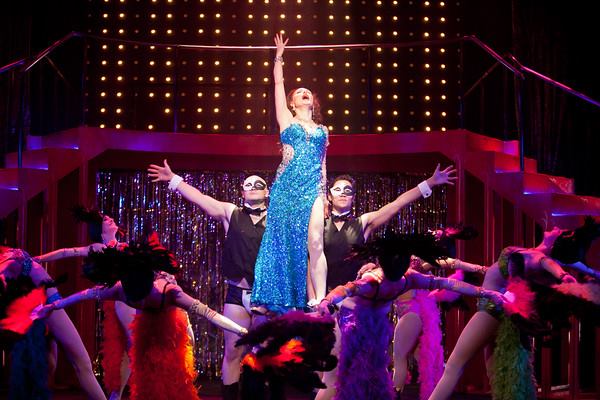
Synoptic Theater's Much Ado About Nothing

Synetic Theater’s Much Ado About Nothing

As always, I believe critics are entitled to their opinion. However, if the editors at the Journal have given Bovard a platform to opine about the idea of Synetic’s work, rather than the work itself, they have abdicated basic journalism tenets, even for opinion pieces. That Bovard fails to understand that in decrying “wordless Shakespeare,” yet appreciating Shakespearean ballet, he’s really just taking issue with nomenclature, not art form, rather amuses me, as it should anyone taking him too seriously.

On his blog, Bovard even tries to take apart Synetic’s response, as if his broadside in the Journal was insufficient. I wonder, however, if in calling Synetic’s mention of their work’s accessibility to the Deaf and hard of hearing “patronizing,” he understands that while sign language interpretation has indeed been provided for theatrical productions for years, American Sign Language is not English, but its own language with its own unique syntax. This means that ASL has already shifted Shakespeare’s language into a new form, altered from the words that Bovard holds dear – and that ASL is in and of itself a visually based form, one with a particular beauty of its own, even to those who don’t know it.

If it is becoming the Journal’s policy to allow contributors to randomly allow contributors to slam the work of art, artists and companies they don’t like, I trust they will also begin publishing pieces on work that contributors particularly enjoy, even if both seem to supersede the purview of their own critics. That said, I suspect the WSJ critics and arts writers might have their own feeling about such usurpers, and the editors might reconsider such pieces in the future.

From this single essay, which serves as my introduction to Bovard’s writing and thinking, I make the assumption that he is a Shakespeare purist. He’s welcome to that view of works which I too enjoy enormously, though I happen to think they can be performed, interpreted, altered and reconstructed in countless worthwhile ways while never harming the original texts, remaining available to all who seek them or stage them. In fact, just last night I saw the Druid Theatre’s radically cut versions of Richard II and Henry IV, Part i, in which both Henry IV and Prince Hal were played by women, which might also make Bovard apoplectic.

In Bovard’s slash and burn approach to Synetic, I can only imagine that, metaphorically, the theater company somehow killed his father and married his mother, and after interminable dithering, he decided to seek revenge. As we all know, that doesn’t work out too well for all concerned.


Preparing For Anti-“Rent” Messages From Tennessee Pulpits

July 3rd, 2015 § 18 comments § permalink

PACT Rent posterIf you are a musical theatre fan in general, and a Rent fan in particular, and you’re going to church in or around Tullahoma, Tennessee this Sunday, there’s a chance you may not like a bit of what you hear said from the pulpit. That’s because there’s an e-mail circulating among the area’s religious leaders alerting them about Jonathan Larson’s Rent, the Tony Award and Pulitzer Prize-winning musical about young lives in the East Village of New York City a few decades ago. Some of the clergy may want to talk about it.

A Tullahoma production of Rent is scheduled to open next Friday, presented by the community company PACT at the South Jackson Civic Center. It’s set for six performances over two weekends and it’s the third time that PACT, which is primarily focused on arts activities for youth (the acronym stands for “Performing Arts for Children and Teens”) has done a show which reaches beyond their usual age group, in this case working primarily with performers aged 18 to 20, but with one as old as 55. Only two performers are under 18, and the parents of both have signed permission slips approving of their children’s participation; those under 18 even needed permission slips just to audition. No one under 18 will be admitted to performances without a parent or guardian present.

Since preparations for the production got underway several months ago, those leading the company say that there have been some minor skirmishes around the show. During the winter, a member of the community circulated an e-mail speaking out against Rent and the leadership and artists of PACT in general, but I’m told it didn’t get much traction. Later, after the show was cast, the actor who was originally to play the character of Angel had to withdraw due to his father’s ire over his participation in the show. But of late, everything was proceeding smoothly for the show, including the recent decision to welcome the company of another Tennessee Rent production, which just closed last weekend in Johnson City, into the Tullahoma ensemble.

*   *   *

Highland Church HighlanderHowever, a few days ago, an e-mail was circulated to church leaders throughout the Tullahoma area. In a communication to his congregation, Pastor L. Wayne Wester of Highland Baptist Church quoted from that original e-mail, identifying the author as “a fellow Tullahoma Pastor”:

I want you to be aware that on July 10, 11, 12 and 17, 18, 19 a theater group in Tullahoma will be performing RENT. You can do your own research on RENT or visit the PACT site on Facebook for a brief description. In short it is a musical about a group of college age students who choose to live a “bohemian” (sexually, morally, and legally permissive lifestyle in New York City. The cast of characters include a stripper, transgender individuals, drug addicts, and many who are battling HIV due to their “bohemian” lifestyle. Several scenes take place in a strip club. While I have no objection to a theater group selecting and performing any musical or play they choose, this is our own (Tullahoma) theater group! What is worse is that this play was selected for PACT. The acronym stands for “Performing Arts for Children and Teens.”

Pastor Wayne, as he signed his communication, added his own thoughts after the quote:

Really? Do you agree with me and many of my fellow Pastors and concerned parents that this is inappropriate for such a group? If you do…speak up about it! If you don’t…shame on you. Jesus should be our moral compass, especially for our young people to see from adults. I would like to know your opinion…one way or the other. Really!

At the top of the message, in red ink, was the phrase “Bus Ministry Possibility – vote on Sunday in PM Service.”

Dr. Wester did not name the pastor who wrote the original e-mail. However, I spoke with Zac Collins, the stage manager for Rent, whose uncle and grandfather are also pastors in the community, who told him that they had both received the original e-mail and said that other pastor friends had received it as well. They told him that it was sent by Jim Zidan, Senior Pastor of Christ Community Church in Tullahoma.

Coleen Saunders and Melissa Shuran, the President and Vice-President, respectively, of the South Jackson Civic Center and co-founders of PACT, told me that while Pastor Zidan had twice visited the civic center seeking e-mail addresses for the leadership, no e-mail or letter expressing concern about or opposition to Rent had ever been received.

*   *   *

I wrote to Pastor Zidan with questions about Rent and his e-mail. Here’s part of his response, verbatim:

I don’t believe or community has an interest or appetite for such fare; particularly for our children.  Our previous PACT productions have been Oliver, Big River, Pinnochio, and Peter Pan.  This is a pretty big deviation from those family friendly productions.  I have attempted to speak to all the leaders of our theater community, including the current leaders of PACT. I even offered to speak on our local community television show to express my concerns and inform the public.  No one seems interested in having this discussion so I have decided to sit and wait.  I may write an editorial for our local paper, but I think I well wait until after the production.  It is not my desire to sabotage this performance.  I think it will fail financially.  We’re it not for PACT money and the accompanying grants (for children’s theater) I don’t think they could even have produced this show.  Ultimately it is up to our parents and local theater leadership; and apparently they are all asleep at the wheel.

I had asked Pastor Zidan whether he had ever seen or read Rent, but nothing in his response to me answered that question. He also did not respond to my question about what he hoped to achieve with his e-mail to his colleagues, or directly acknowledge it.

*   *   *

It’s impossible to know how pastors in the Tullahoma area are responding to Pastor Zidan’s message. Some may choose to speak against the show at services this weekend (or vote about it, in Pastor Wester’s case); others may wish to speak in support of Rent. It’s impossible to know whether any of them are personally familiar with the show itself. Consequently, in the hope that this essay might find its way into the Tullahoma community and beyond, a few words in support of Rent, PACT and the cast and team behind the upcoming production – or any production, for that matter – seem warranted.

Rent is a modern classic  Rent premiered in New York in 1996 at the Off-Broadway New York Theatre Workshop, where it was such an immediate sensation that it moved to Broadway only a few months later, where it won, as mentioned above, the Tony Award and the Pulitzer Prize, the highest honors in American theatre. It’s notable that the Pulitzer is rarely awarded to musicals; it occurs roughly once every 10 years. Rent ran for over 11 years on Broadway, playing to an audience of over 5 million people, and untold millions more on tour and in regional, amateur and school productions since then. It was made into a film and its final Broadway performance was recorded widely sold on DVD.

Rent is universal  The reason Rent is still being performed almost 20 years after it was first produced is because while it is set very specifically at a moment in time and a particular place among a small group of young people in New York, it speaks to people from around the world. Every community is a mix of different races, ethnicities, sexualities, religions, strengths and weaknesses; Rent’s success is because so many people can find themselves or their own families and friends on that stage. It can simply be embraced for what it is, exuberant and moving entertainment, or it can be used as a point of departure for conversations about ambition, family, illness, acceptance and loss.

Rent was born amidst tragedy  Rent was the breakthrough work by the talented young writer Jonathan Larson – who didn’t live to see its success. Jonathan died suddenly of a rare heart condition just after seeing the final dress rehearsal of the show. He never saw it with an audience and was never able to experience its success. Rent was Jonathan’s gift to a world he left prematurely, at the age of 35.

Rent is about love  Rent is the story of people who gather together to create, to share and to form their own family born of love and care for one another. Musician or stripper, performance artist or filmmaker, they travel the journey that so many young people travel, as they find themselves and their place in the world. Some are lost along the way, and we never know what happens to others after the play stops, but it is a show about seeing people lovingly for who they are, not judging them for their choices or even failings.

Creative artists deserve the opportunity to grow  While PACT was begun with a focus on those under 18, it’s not unusual to find artists wanting to spread their wings beyond a previously defined mission, which most recently at PACT included a version of Robin Hood this spring. With the majority of the current cast between 18 and 20, PACT is giving young adults an opportunity to stay involved in the arts, and the leadership of the group the opportunity to explore even more of the theatrical canon. They have made it very clear that this is not their typical fare, so no one is surprised, with their intentions reinforced in the local press. As an independent organization, they have they right to determine their creative direction, with the ultimate arbiters of their work being their audience.

There are no scenes set in a strip club  Just FYI.

*   *   *

That the message from Pastor Zidan came out only this week would seem rather late in the game, with the show starting performances next week. In any event, I think it’s important to say that of course the pastors in Tullahoma have the right to communicate with one another and to preach as they see fit. I hope and trust that their messages are of love, acceptance, and understanding, not just for their parishioners, but for all people, including those who might mirror the characters in Rent, as well as those who want to see it or participate in it.

I also hope that those who might hear or read pastoral messages against Rent will take the time to read more about it, to listen to its songs, to consider its words as well, should they be pressed to judge it in advance. Most importantly, I hope everyone will remember that they have the absolute right to speak their minds, but that should the situation rise to the level of trying to stop Rent, which Pastor Zidan says is not his intent, they might keep in mind that those creating and participating in the show have the right to tell that story and to sing those songs for those who wish to experience it. Before any of us begin thinking to try to silence any voices, we must think about how we would feel if someone attempted to silence our own.

Rent may have, to some, a squalid setting, but is about struggle, friendship, community, equality, love, sacrifice, life and death, and even redemption. Those seem like themes worth exploring and embracing in every city and town, every day, in places of worship, in theatres and beyond.

*   *   *

Disclosure: as I have noted in my writing in the past, I did not know Jonathan Larson, but came to know his parents and sister through my work at the American Theatre Wing and its assumption of the grant programs originally undertaken by the Jonathan Larson Foundation.

Note: I welcome respectful dialogue about this in the comments section of this site, however I will remove any personal attacks or rude remarks. This is not censorship; it is my right as the author of this post and the operator of this website to insure that dialogue remains constructive.

Howard Sherman is director of the Arts Integrity Initiative at the New School for Drama.


In The UK and US, Bias Infects Theatre Reviews

June 22nd, 2015 § 12 comments § permalink

“You can’t draw sweet water from a foul well,” critic Brooks Atkinson wrote of his initial reaction to the musical Pal Joey. I don’t know whether Christopher Hart of The Sunday Times in London knows this famous quote, but it certainly seems to summarize his approach to reviewing the London premiere of Stephen Adly Guirgis’s The Motherfucker With The Hat, which one can safely say is light years more profane than the Rodgers and Hart musical.

Alec Newman, Ricardo Chavira & Yul Vázquez in The Motherfucker With The Hat at the National Theatre

Alec Newman, Ricardo Chavira & Yul Vázquez in The Motherfucker With The Hat at the National Theatre

“A desperately boring play,” “an absolute stinker of a play,” “untrammelled by such boring bourgeois virtues as self-restraint or good manners,” “turgid tripe,” and “a pile of steaming offal,” are among the phrases Hart deploys about Guirgis’s Hat. While I happen to not agree with him (and admittedly I saw the Broadway production, not the one on at the National Theatre), he is entitled to these opinions. It may not be particularly nuanced criticism, but it’s his reaction. There are other British critics with opposing views (The Guardian and The Independent), and some who agree (Daily Mail), so there’s no consensus among his colleagues. But within his flaying of the play, Hart reveals classist, racist and nationalist sentiments that, however honestly he may be expressing them, prove why he is unable to assess the play on its own terms, empathizing with its flawed characters, as any good critic should endeavor to do.

Take this example: “Like the white working class in this country, the PRs in America have picked up a lot of black patois.” Even allowing for differences in language between England and the U.S., referring to residents of Puerto Rico and “the PRs” is patently offensive, and also hopelessly out of date, all at once. The statement also suggests that Puerto Ricans are in some way foreign, when the island itself has been part of America for more than a century; it’s perhaps akin to saying “the Welsh in Great Britain” as if they’re alien. When he parses “black patois” as the difference between saying “ax instead of ask,” Hart presents himself as Henry Higgins of American pronunciations, which I strongly suspect he picked up from watching American television and film, without any real understanding of racial culture or linguistics here – and he generalizes condescendingly about a huge swath of the British populace for good measure.

Hart also refers to the “very brief entertainment to be had in trying to work out” the ethnic background of the character Veronica, first musing that she might be “mixed race African American” but acknowledging her as Puerto Rican “when her boyfriend calls her his ‘little taino mamacita’.” I don’t know why he was fixated on this issue, presumably based on a parsing of the skin color of the actress in the role, especially since the play provided him with the answer (though the same problem has afflicted U.S. critics encountering Puerto Rican characters as well). Would that he were more focused on the character and story. He briefly describes the plot as being about “one Veronica, who lives in a scuzzy apartment off Times Square, snorts coke and sleeps around. Oh, and she shouts a lot.” In point of the fact, the play is an ensemble piece, and if any one character dominates, it’s Jackie, the ex-con struggling to fight his addictions and set his life straight.

After going off on a tear about the play’s profanity, Hart makes a comment about the play’s dialogue, saying, “A lot of it is ass-centred, in that distinctive American way.” As an American, I have to say that I’m unfamiliar with our bum-centric obsession, outside of certain pop and rap songs, even if Meghan Trainor is all about that bass. But hey, I’ve only lived here my whole life, and spent 13 of those years living and working in New York, a melting pot of culture and idiom. What do I know?

I don’t happen to read Hart with any regularity, but my colleague at The Stage, Mark Shenton, has noted his tendency to antagonistic hyperbole in the past, having called Hart out for separate reviews of Cabaret and Bent which both seem puritanical and, in the latter case, homophobic. While I peruse a number of UK papers online, both via subscription and free access, even my limited exposure to Hart’s rhetoric suggests that The Sunday Times is an outlet whose paywall I shall happily leave unbreached.

I was actually going to shrug off the ugliness of the Hat review, but only about an hour after I read it, I came across some letters to the editor in The Boston Globe, responding to a review of A. Rey Pamatmat’s Edith Can Shoot Things and Hit Them at Company One Theatre. While I don’t think the critic in this case, Jeffrey Gantz, was trying to be inflammatory (as I’m fairly certain Hart was), he revealed his own biases in seemingly casual remarks. Noting that two of the characters are Filipino-American, he wrote:

They make the occasional reference to their favorite Filipino dishes, but I wish more of their culture was on display, and it seems odd that they have no racial problems at school.

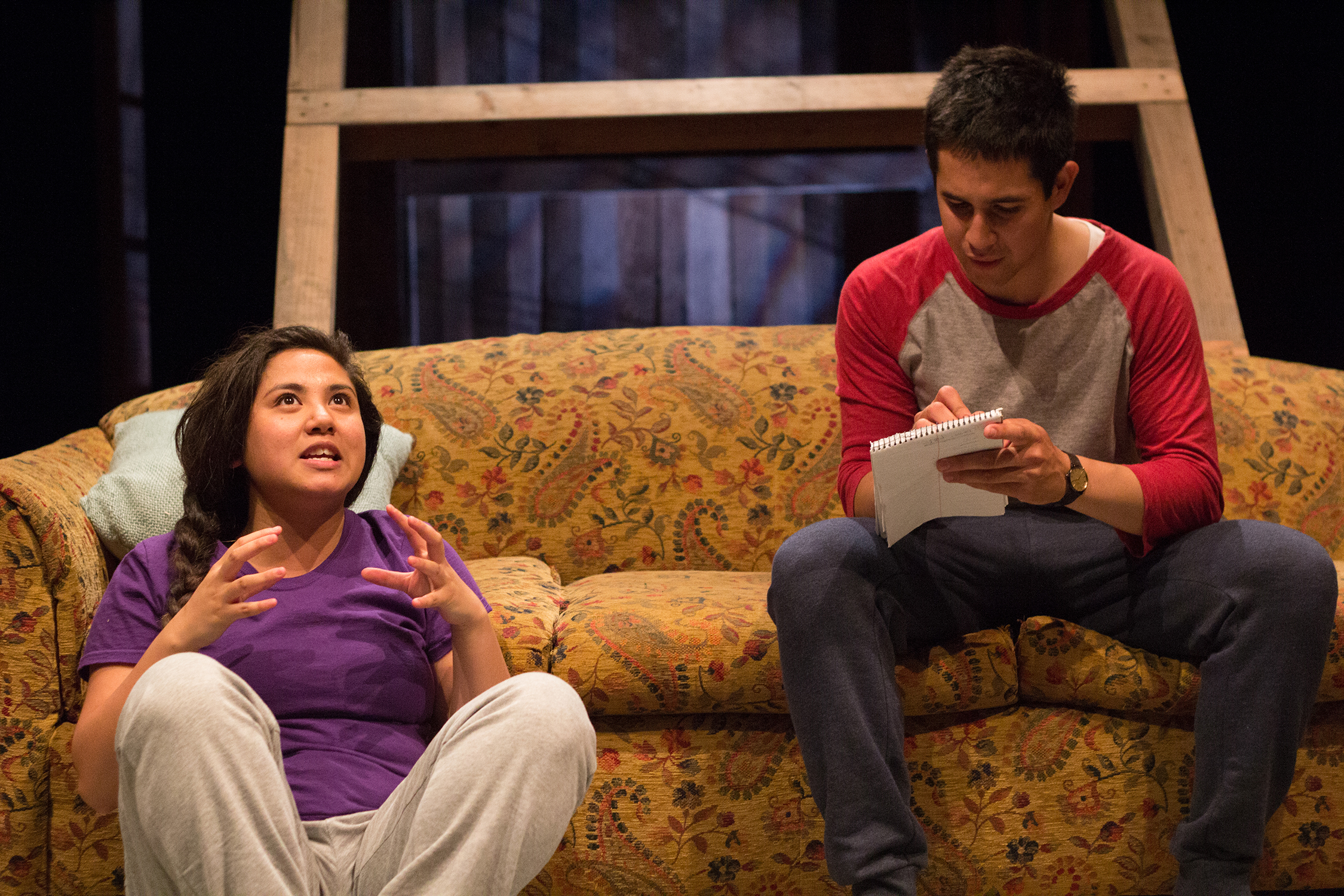
Maria Jan Carreon and Gideon Bautista in Edith Can Shoot Things and Hit Them at Company One Theatre

Maria Jan Carreon and Gideon Bautista in Edith Can Shoot Things and Hit Them at Company One Theatre

Not every character with a specific racial or ethnic origin need demonstrate it for our consumption on stage; it may not be germane to the play or perhaps the characters created by Pamatmat are more steeped in American culture than Filipino. The statement is the equivalent of saying about me, were I a character, that though I mention matzoh ball soup and pastrami, it would be nice if I spoke more Yiddish, wore a yarmulke, or waxed rhapsodic about my bar mitzvah. My grandparents were all immigrants to the U.S., so I’m only second generation American, not so far removed from another culture and schooled at length in my religion, but I don’t constantly remind people of those facts.

As for not experiencing intolerance at school, Gantz must have a singular idea of what every young person who is not white experiences on a daily basis. That’s not to say that there isn’t ugliness and ignorance directed at people of color far too regularly at every level of American life, but perhaps that isn’t germane to the story Pamatmat wants to tell or part of the personal experience he draws upon (he’s from Michigan, incidentally). It’s not as if “racial problems” for students of color are an absolute rule of dramaturgy that must be obeyed.

That said, it’s ironic that Gantz criticizes the play for taking on “easy targets, notably bigotry and bad parents.” The fraught relationship between parents and children has been the fodder of drama since the Greeks, and it seems an endlessly revelatory subject; as for bigotry, if it is perceived as an “easy” subject, then perhaps Gantz, despite wishing “racial problems” on the characters, has no real understanding of the complexity of race in America and the many forms bigotry can take, enough to fuel 1,000 plays and playwrights or more. But he’s complaining that Pamatmat hasn’t written the play that Gantz wants to see, rather than assessing the one that was written.

I can’t speak to the general editorial slant of The Sunday Times, so while Hart’s recent rant may be in keeping with the paper’s character, I don’t think the implicit racial commentary of Gantz’s review is consistent with the social perspective of The Boston Globe. That leads me to wonder, as I have before, what role editors play when racial bias appears in reviews, such as in a Chicago Sun-Times review that appeared to endorse racial profiling. Yes, these reviews are each expressions of one person’s opinion, but they are also, by default, opinions which are tacitly endorsed by the paper itself. Reading these reviews just after following reports from the Americans in the Arts and Theatre Communications Group conferences, which demonstrated a genuine desire on the part of arts institutions to address diversity and inclusion, I worry that if the arbiters of art continue to judge work based on retrograde social views, it will only slow progress in the field that, as it is, has already been too long in coming.

 Howard Sherman is director of the Arts Integrity Initiative at The New School College of Performing Arts School of Drama and senior strategy consultant at the Alliance for Inclusion in the Arts.


If The Arts Were Reported Like Sports

June 9th, 2015 § 8 comments § permalink

If you’re like me, someone deeply committed to the arts – in practice, in education, in media coverage, in every aspect of life – you’ve probably had the same fantasy I’ve had over the years. What, I often wonder, would the scenario for the arts be like if they had the same attention and resources as those afforded to sports, especially in high schools and colleges?

That scenario can be played out with serious thought, especially as we watch school arts programs being cut – just last week the Atlanta school system cut music teachers at the elementary level. But it can also lead to some laugh-worthy imaginings  – performance enhancing drugs for actors, anyone?

In the most sustained flight of fantasy I’ve seen surrounding this daydream, comedian Owen Weber has just released a video imagining The “thESPiaN” Network, covering theatre as if it was sports television. It’s executed with striking verisimilitude and real professionalism. That’s right, guys in suits at a desk saying things like, “You can’t blow opening night – the critics don’t give redos,” mentioning that a drama program gave up a “sixth round Fortinbras,” and declaring, “We’re getting wild now – Oscar Wilde!” I’m very amused.

Remarkably, Weber has released the video in four and eight minute version, and the it’s the long version that has my favorite sight gag, regarding a production of the Scottish play.

There are a couple of small things that bothered me as I watched the videos. Now I don’t know Weber’s other work (though clearly I’ll be checking it out), so I have no idea whether these are characteristic or anomalies. One is very likely intentional, and it’s a moment when an actress being discussed is briefly, fleetingly objectified not for her talent but for her looks. It’s very likely that this was meant to emphasize the “bro” culture of sports, even though, let’s face it, even ESPN has female sportscasters who would be very quick to shut down that sort of conversation about a female athlete.

My second observation is that the video is completely cast with Caucasians, and while everyone may have worked for nothing and Weber’s friends who were available for the shoot on any given day may have left him few options, I do wish that a video that will surely be making the rounds of theatre programs and theatre offices everywhere – and I’m contributing to that dissemination – better represented the diversity and inclusiveness of the arts. Quoting Jeanine Tesori at the Tony Awards, though she was speaking specifically to women at that moment, “You have to see it to be it.” Look, I know: comedy is no fun when it’s picked apart, but I can’t share these without mentioning that.

I wouldn’t be sharing these videos if they weren’t well-executed, consistently clever and at a few moments, laugh out loud funny. And the bottom line is, if there was a “Stage Center” on TV every night, I’d be watching it. And maybe some new ways of talking about the arts wouldn’t be such a bad idea at all.


You’d Like Your Show Reviewed? $150 Please

June 5th, 2015 § 16 comments § permalink

Lemon‘You give us $150 dollars and we’ll review your show.’ It sounds like a bizarro-world version of ‘You give us 22 minutes, we’ll give you the world.’

But that is, boiled to its essence, what the Los Angeles theatre website Bitter Lemons has just proposed to the southern California theatre community. Citing the general reduction in theatre reviews both nationally and locally, the site has laid out a plan whereby theatres (or individuals) can pay $150 and be assured of a review of at least 300 words, but one which is wholly independent and will be solely the opinion of the site’s critics, not a pandering paean to whatever show or patron has ponied up the bucks.

While I’m prepared to take Bitter Lemons at their word about protecting the independence of their critics [full disclosure: I know one of their critics, Katie Buenneke, largely from Twitter], the optics of this proposal, as well as many practical elements, seem hugely problematic. The moment money changes hands between a producer (or producing organization) and a media outlet (be it vast or grass-roots), the necessary divide between both parties starts to break down. No matter how strong any “walls” may be, when editorial choices are determined by outside dollars, and when the economic viability of a media outlet may be dependent upon those covered, the opportunities for ethical compromise are rife.

Bitter Lemons became almost compulsory reading for me this year as the site was a central disseminator of information, inquiry and invective during the heated debate over Actors Equity Association’s promulgation of new guidelines for the 99 seat and under plan that had been used in Los Angeles over the past 25 years. In passionate and at times exhaustive detail, Bitter Lemons has been a champion of retaining the 99-seat plan as is, and I fully expect the site to continue to fight for that cause so long as supporters in the Los Angeles AEA community seek to make their case.

That’s why I bring up the optics: here is a theatre site, arguing for the right of union actors to work for notably less than AEA actors elsewhere in the country, that is saying their theatre coverage is dependent on being paid to cover that same community. To be sure, there are some apples to oranges issues in this comparison, but as I say, I’m referring simply to how it looks, not the particulars.

So let’s go to practical issues. “The Bitter Lemons Imperative,” as it’s called, suggests that it’s easy for companies to shoulder the expense. “Most producing companies already have it in their budgets, if they have any budget at all.” While I cannot be definitive, I strongly doubt that’s an accurate statement; I’m unfamiliar with any theatre company that has a budget line for reviews. What they may have, as the policy statement on Bitter Lemons sets out a bit further on, is “thousands of dollars for mailings, postcards, advertising, many companies even pay anywhere from $500 to $2k for a publicist.” But equating marketing with criticism is a comparison with which I suspect few critics would feel comfortable. When a company pays for an ad or a brochure, it explicitly controls the content; when it pays for a publicist, it’s engaging someone to work with the media, but in a manner where there’s no quid pro quo, explicit or implied.

I find myself wondering about where this plan might leave the very newest theatre companies in Los Angeles, which may have budgets so low that the $150 fee to Bitter Lemons is beyond thinly stretched means, and which are already providing (presumably) a pair of complimentary tickets as well, which have their own dollar value. Does this mean that they will go unnoticed by Bitter Lemons? I fear this will only reinforce an economic stratification insofar as the site’s coverage goes, where only companies with sufficient means become worthy of the site’s attention, instead of decisions being made according to editorial choices and interests. If Bitter Lemons learns of an intriguing show that doesn’t write a check, will that show in essence be the proverbial tree falling in an empty lemon grove?

There’s no question that theatre coverage, arts coverage and frankly all manner of paid journalism are under vast pressure right now (take note of an impending newswriters’ strike in Philadelphia or the new round of buyouts at The Denver Post). But those who have set out to offer independent arts coverage have done so by soliciting general support that isn’t tied to an editorial imperative (you pay us, we cover you). Their efforts are more akin to public radio and television campaigns; offhand I think of campaigns by The Arts Fuse in Boston and New York’s The Clyde Fitch Report. Ad sales, already in evidence on Bitter Lemons, are another revenue source; if the site incorporates as a not-for-profit (if it isn’t already), contributions may be further advantaged, particularly with foundations that support new media journalism and the arts, separately or together.

I’ll say again that I’ve found Bitter Lemons invaluable in my education about the 99 seat debate. I am also repeatedly on record as arguing on behalf of paying arts writers and reporters for their work and I applaud new models for sustaining them (and worry about others). But linking coverage to cash on the barrelhead smacks too much of payola, of pay for play, even if it’s out in the open. I think it can only serve to diminish the site’s credibility, and may well, in the long run, result in a diminished Bitter Lemons, which would be a shame. After all, can this model hold up if paying companies start receiving blistering pans, or simply indifference?

As someone who believes deeply in theatre and in theatre journalism, I have to say that if I had to choose where to allocate $150 in the Los Angeles theatre community right now, I’d probably use it to pay an actor before a critic. No bitterness intended or implied.

Update: June 5, 4:45 pm: In writing this post early this morning, I hadn’t yet seen a corollary piece by Colin Mitchell of Bitter Lemons about the early response to the Bitter Lemons Imperative. It reads, in part:

“On the eve of opening night for previews at the 2015 Hollywood Fringe Festival, Bitter Lemons has over 30 exclusive Bitter Lemons Reviews ordered and purchased – that’s right pre-purchased – and those top quality works of theater criticism will be rolling out over the next couple of weeks. . .

We offered a deeply discounted 50% off our regular price of $150 just because we love the Fringe community so much and understand how important it is for them to get quality coverage from a truly experienced, savvy, historian of the ephemeral arts, plus we saw this as the perfect opportunity to introduce the Los Angeles Theater Community to our new business model for theater criticism.”

Is this an arts journalism post or a post about Bitter Lemons’s own business acumen, one that that also essentially functions as a sales tool? The lines seems to be blurring very fast.

Update: June 6, 5:15 pm: In expressing my concerns about the “pay for review” practice at Bitter Lemons, I attempted to address the issue with respect for the site and and shared concern over the dire economic models for arts journalism. Some responded saying it should be given a chance, and time will tell. So now that I’ve seen one of the “paid for” reviews on the site, I want to share with you a bit of what one fringe production has gotten for their $150:

I don’t know about the rest of you people, but if someone pays me to write about them, I suck them off with such vigor that their ejaculate explodes into the back of my skull with such force that I feel like the bells of Notre Dame pounded by Quasimodo on a Keith Moon bender.

So, since I’m only in this for the money, and the bloodthirsty mercenary in me trumps any pretense of integrity and balance, the rest of what follows in this review of Scott Claus’ “Sin: A Pop Opera,” at the iconic Three Clubs bar—a review he or someone else associated with him paid for—will be a bunch of positive, compromised hokum.

Perhaps this is merely showing off in the wake of comments and blog posts about the new policy, or perhaps as Isaac Butler posited in his post “Startling Chutzpah In The 99-Seat Arena,” we’re all just being punked. But regardless of Bitter Lemons’s motivation and intent, I think they’re doing serious damage to their credibility. I would really urge all makers of theatre in Los Angeles to put their money back in their pockets and, if they paid by check, they might want to stop payment now.

Update: June 12, 6:00 pm: The American Theatre Critics Association has issued a statement regarding the Bitter Lemons review policy. It reads:

The American Theatre Critics’ Association, the only national organization of professional theater critics, is concerned with the model started by Bitter Lemons. While it does not guarantee a favorable review or allow theater companies to choose the reviewer, this pay-for-play arrangement creates a clear appearance of a conflict of interest. That appearance, even if spurious, undermines the crucial credibility of not only Bitter Lemons’ critics, but all critics.

Our profession has fought for decades to preserve the image of independence. When our work is put out for sale to those we cover, we are concerned not just for the criticism itself but for the bypassing of editorial judgment in deciding what to cover and what not to cover.

Additionally, Steven Leigh Morris, editor of Stage Raw, another significant Los Angeles theatre site, made the following statement to me regarding his site’s selection of critics in the wake of the Bitter Lemons Imperative:

It is Stage Raw’s policy that any  reviewer who has accepted remuneration from a theater as quid pro quo for a review of that theater is ineligible to write reviews for Stage Raw.
Also, last weekend, one of the 11 critics announced as participating in the Bitter Lemons pay for review plan, Travis Michael Holder, posted on Facebook that he would be withdrawing from it immediately. Because of the fluid protocols of quoting from Facebook posts, I have chosen not to cite him directly, but will say that he expressed the feeling that legitimate points had been raised about the Bitter Lemons plan that he had not previously considered. In fact, as I write, only eight critics now have bios listed on the Bitter Lemons Imperative website page, indicating additional defections.
Finally, some have suggested to me that people outside Los Angeles have taken the Bitter Lemons contretemps, and in part my writing about it, as an opportunity to generalize online negatively about the state of L.A. theatre. In chronicling this situation, my only intention was to bring to light an ethically questionable practice in arts coverage, not to cast any aspersions on the committed and diverse Los Angeles theatre community and its work.
Update, June 15, 12:15 pm: Over the weekend, the Los Angeles Times wrote about the new Bitter Lemons review policy, in an article entitled, “L.A. stage website causes a stir by asking theaters to buy reviews.” It quotes a flip flop from a professor of journalism on the matter:

Joe Saltzman, a professor of journalism and communications at USC, said that words such as “appalled” and “atrocity” flashed in his mind when he first heard what Bitter Lemons was up to.

Then he checked out the website, saw Mitchell’s explanations, and read some of the reviews.

On further reflection, Saltzman said, “I think it’s not that bad a deal. It’s a fascinating way to try to solve a very difficult problem I thought was unsolvable. They don’t have money to hire critics, so how else do they keep a pool of talented, freelance critics? As long as it’s transparent, as long as the audience isn’t being fooled, I don’t have a problem with it.

An article published this morning by the L.A. Weekly, “A New Scheme To Have Shows Pay $150 For A Review Will Hurt L.A. Theater” is by Steven Leigh Morris, editor of Stage Raw, who does not cite his own site’s policy regarding critics who work under the Bitter Lemons plan. But his summary of the problems with the plan are specific and concise:

Mitchell’s market-based initiative puts this all backwards: It places the primary relationship of the critic with the theater rather than the reader. It entails a contract by which the critic is paid by the theater to write something in public as an ostensibly neutral observer, while the theater is banking that the critic will entice audiences. Meanwhile, the critic becomes the servant of two masters — the theater-as-employer and the readers, who have a rightful expectation of candor. This is why traditional print media have always insisted on a separation between critics and the theaters they review.

Howard Sherman is the director of the Arts Integrity Initiative at The New School for Drama.


Etcetera: David Letterman & Warren Zevon

May 20th, 2015 § 0 comments § permalink

zevon & lettermanI can’t compete with the literally hundreds of online tributes that are proliferating in advance of David Letterman’s final show this evening, except to say that I’ve been watching him since he debuted on NBC and now expect I will be getting to sleep even earlier, albeit less happily, after tonight’s show.

For the last several weeks, there has been a parade of frequent and favorite Letterman guests returning to the program for one last visit, but there’s one Letterman regular who won’t appear: Warren Zevon, the highly distinctive rock performer and writer who passed away in 2003.

Zevon appeared many times on both the NBC and CBS programs, famously making his last appearance in 2002, already diagnosed with the cancer that would take his life, as the sole program guest, the only person afforded that honor. It showed that Dave, who cultivated a curmudgeonly, ironic distance, was also fiercely loyal to those he cared about.

Though I’ve seen many of my musical idols live, I never got to see Zevon perform. So his appearances with Letterman were a particular gift, along with the Velcro Suit, the Stupid Pet Tricks, the Top Ten Lists, and so on, that everyone else is writing about this week. Below is a selection of Zevon’s appearances and performances. I miss Warren and, unless he surprises us by turning up on the air on some other program, I’ll miss Dave too, even though he’ll just be holed up in Connecticut or Montana somewhere, watching Harry grow up..

1982

https://www.youtube.com/watch?v=akm7epcJduU

1987

https://www.youtube.com/watch?v=Qne0iow7Hts

1988

https://www.youtube.com/watch?v=-1BxGded604

1989

https://www.youtube.com/watch?v=xea77QbAqxo

1991

https://www.youtube.com/watch?v=gXSJn_NHEfk

1992

https://www.youtube.com/watch?v=DhetQvbOV6w

1995

https://www.youtube.com/watch?v=1cDUUuwGSK8

2000

https://www.youtube.com/watch?v=_NyMfZnkLpk

2001

https://www.youtube.com/watch?v=ufEtQcisrgg

2002

https://www.youtube.com/watch?v=dIC4j6Rn9s4

2003

https://www.youtube.com/watch?v=xZ8xO6BrZRU

2004


Looking Closely At The Cancellation Of An Anti-Censorship Event

May 19th, 2015 § 1 comment § permalink

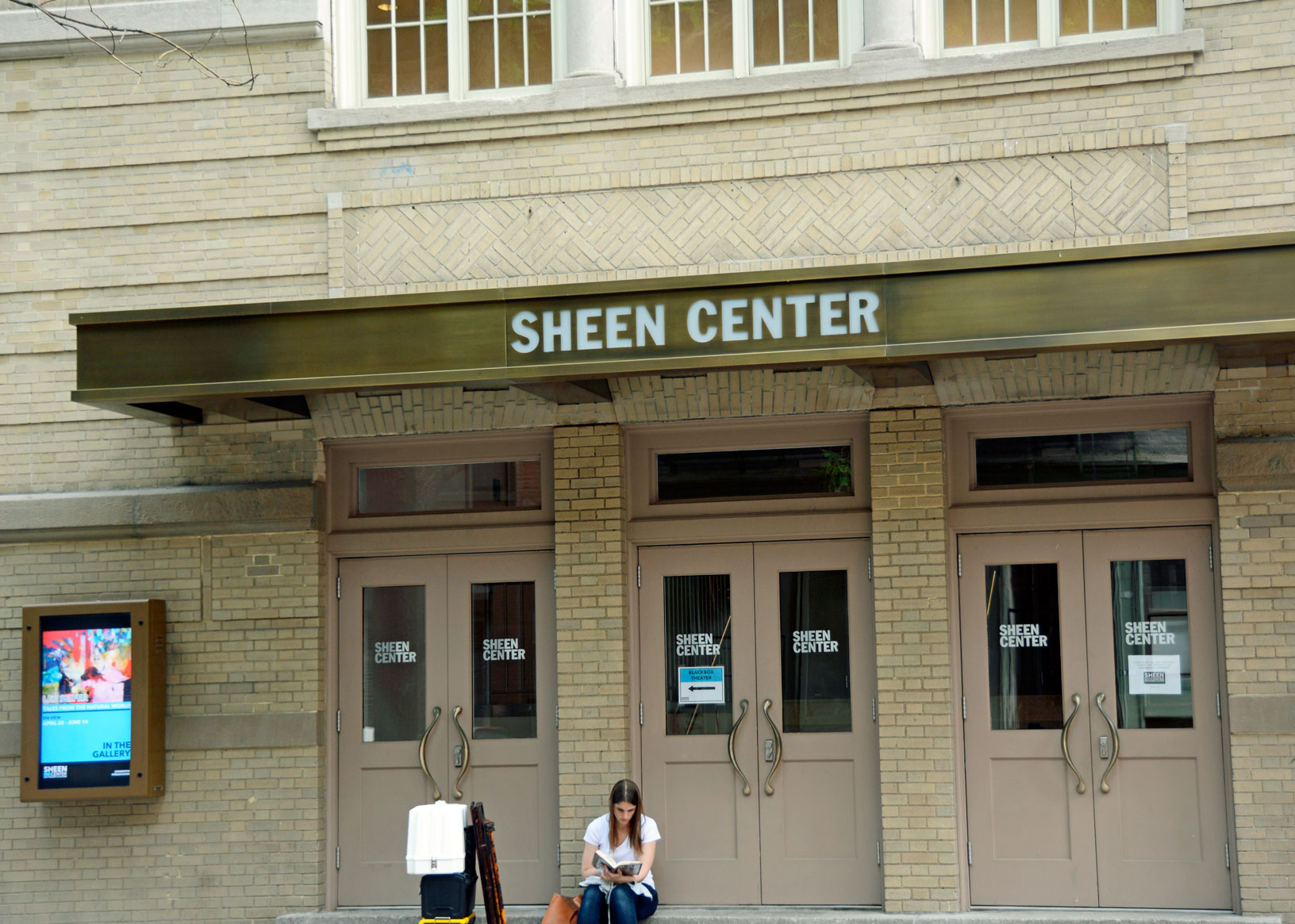
Playwrights for a CauseThe story practically writes itself: fundraiser for anti-censorship group gets censored. Ironic headline, attention-grabbing tweet, you name it. That’s exactly what appears to have happened in the past few days as the Sheen Center for Thought and Culture’s decision to cancel a rental contract with the theatre group Planet Connections Theatre Festivity has been made public. Planet Connections was producing a one-night event, “Playwrights for a Cause,” on the subject of censorship, which would in part benefit the National Coalition Against Censorship.

“Neil LaBute’s Anti-Censorship Play Is Censored, With Chilling ‘Charlie Hebdo’ Echoes,” was the headline of an article by Jeremy Gerard for Deadline. “Neil LaBute NYC Anti-Censorship Theater Event ‘Censored’ to Prevent Muslim Outrage,” topped a piece by Kipp Jones for Breitbart News. “Sheen Center Cancels Event Featuring Neil LaBute Play About ‘Mohammed’” was the title for Jennifer Scheussler’s story in The New York Times.

In the wake of the cancelation, the situation was described in a press release:

Playwrights For A Cause,” an evening of plays by award-winning playwrights Erik Ehn, Halley Feiffer, Israel Horovitz and Neil LaBute, and a panel discussion concerning censorship in climate science and more inclusion of LGBT, women, and minorities in the arts, originally scheduled for June 14, 2015 at The Sheen Center at 18 Bleecker Street, has been canceled by the management of The Sheen Center.

Although their management originally approved the event and accepted full payment for the venue, a recent change in management resulted in the Center’s decision that some of the speeches the panel speakers were going to make, along with Neil LaBute’s play Mohammed Gets A Boner, are not acceptable or compatible with their mission statement.  The diverse panel of speakers included Cecilia Copeland, speaking on the censorship of women in the arts; Kaela Mei-Shing Garvin, speaking on the censorship of environmentalists and climate scientists; Michael Hagins, speaking on the censorship & underrepresentation of minorities in the arts; and Mark Jason Williams, speaking on the censorship of LGBT artists.

On Tuesday, May 12, The Sheen Center canceled the entire event, including the Planet Connections opening night party which – ironically – was benefitting the National Coalition Against Censorship.

Upon my inquiry as to the cause of the cancelation, William Spencer Reilly, executive director of the Sheen Center, responded:

At the Sheen Center we are 100% for the right to free speech for every American, and always will be. However, when an artistic project maligns any faith group, that project clearly falls outside of our mission to highlight the good, the true, and the beautiful as they have been expressed throughout the ages.

We were disappointed to learn only a few days ago that one of the plays commissioned by Planet Connections Theater Festivity for the Playwrights For a Cause benefit event was called “Mohommad Gets a Boner” [sic].  We were totally unaware of this, and their Producing Artistic Director was fully cognizant that plays of this nature were unacceptable vis a vis our contract. (That contract, FYI, was with Planet Connections Theater Festivity, not with National Coalition Against Censorship.)

In light of this clear offense to Muslims, I decided to cancel the contract. Just as newspapers the world over have chosen not to publish cartoons offensive to Islam, I chose not to provide a forum for what could be incendiary material.  At the Sheen Center, we cannot and will not be a forum that mocks or satirizes another faith group.

I am confident that the programming at the Sheen Center will continue to demonstrate our commitment to meaningful conversation about important issues, and will do so in a respectful manner — to people of all faiths, or of no particular faith.

Reilly wrote, in a separate e-mail, that he learned of the content of “Playwrights for a Cause” from a staff member on May 11, saying that his staff knew of three of the plays prior to his start as executive director in late January, that he signed the contract on February 10, and that his staff only learned of the La Bute play on May 8, when they “discovered” it on the Planet Connections website.

*   *   *

Before continuing, I should note my pre-existing relationship with NCAC. I have worked collaboratively with them on several instances of school theatre censorship, most notably on the cancelation of a production of Almost, Maine in Maiden NC and most recently on a threat to student written plays in Aurora, CO. Last year, they named me as one of their “Top 40 Free Speech Defenders.” They first informed me of the cancelation of “Playwrights for a Cause” because they were seeking suggestions of where they might relocate the event, and they did not solicit me at any time to write about the situation.

*   *   *

In the wake of the cancelation, the NCAC indicated to me that the contract for the event, signed by Planet Connections, provided for cancelations pertaining to content concerns. The statement from the Sheen Center (“unacceptable vis a vis our contract”) seemed to confirm that proviso. However, when I asked Glory Kadigan, producing artistic curator of Planet Connections about provisions for cancelation in the contract, she responded,

It does say no abortions on the premises. And it does say it can’t be pornographic. However the Sheen did not cite pornography as the reason they were breaking contract. They cited religion. I do not see anything in the contract that states ‘religious differences’ as a reason they are allowed to break contract. I also can’t find a clause that states that ‘not upholding their mission’ is a reason they can break contract.

Kadigan reaffirmed this in a subsequent e-mail:

When breaking contract with us – [a Sheen staffer] stated in an email that they had a right to break contract for “religious differences/being offensive to a religion” and not upholding their mission statement. The contract does not state this anywhere that we can find. This was just something she said in an email when breaking contract but it is not actually in the contract.”

Kadigan also said there was no provision in the contract for review or approval of content. In a follow-up e-mail, after two prior exchanges, I asked Reilly if he could share the specific contract language that provided for cancelation due to material that might prove offensive to any religious group. I received no response. He also did not respond to my inquiry asking if the decision to cancel the contract based solely on the La Bute play or if the content by the featured speakers part of the decision.

*   *   *

Sheen CenterThe website of the Sheen Center for Thought and Culture doesn’t make explicit that it’s a project of New York’s Catholic Archdiocese, although it does so in a current job listing for a managing director position on the New York Foundation for the Arts website. However, there are clear public indications that the new arts center has a Catholic underpinning, via its mission statement:

The Sheen Center is a forum to highlight the true, the good, and the beautiful as they have been expressed throughout the ages. Cognizant of our creation in the image and likeness of God, the Sheen Center aspires to present the heights and depths of human expression in thought and culture, featuring humankind as fully alive. At the Sheen Center, we proclaim that life is worth living, especially when we seek to deepen, explore, challenge, and stimulate ourselves, Catholic and non-Catholic alike, intellectually, artistically, and spiritually.

“Sheen Center for Thought and Culture” is also not the complete name of the venue, since its letterhead notes that it is in fact “The Archbishop Fulton J. Sheen Center for Thought and Culture.” I wouldn’t begin to suggest that the Center is hiding its affiliation with the church, but it is inconsistent in making the relationship clear.

I think it would benefit the Sheen Center enormously to clarify this, because a religious organization certainly has the right to determine what activities are appropriate in its own facilities. In making its facility available to outside groups for rent, rather than relying solely on its own productions, it behooves the Center to make clear how they might choose to assert their prerogative.

In an article last year in the Wall Street Journal, Elena K. Holy, who runs the New York International Fringe Festival, an early tenant of the Center, discussed her conversations with the Center’s leadership about content, prior to Reilly’s tenure:

The new spaces appealed to Ms. Holy, whose festival typically includes shows that would raise the eyebrows of conservative churchgoers. “We’ve had conversations about it,” said Ms. Holy. “They approached us. And my initial response was ‘Are you sure?'”

Ms. Holy said she was given no restriction on style or content, with one caveat: “They wanted to avoid anything that is hateful about a one group of people. And that probably wouldn’t be accepted to Fringe NYC anyway.”

Of course, the Fringe has the benefit of playing in more than a dozen venues, so presumably it can program its work at the Center accordingly, to avoid running afoul of its content restrictions. From this year’s crop of upcoming productions at the Fringe, I would say we’re unlikely to see Van Gogh Fuck Yourself, Virgin Sacrifice, The God Gaffe, or Popesical at the Sheen Center. I have no idea what they would make of An Inconvenient Poop or I Want To Kill Lena Dunham.

I do find myself wondering about another booking at The Sheen Center, specifically The Public Theater’s Emerging Writers Group Spotlight series. Since the beginning of April, and concluding next week, The Public has presented two free readings of each of ten new plays. While the titles don’t indicate any potential controversy as La Bute’s did – they include Optimism, The Black Friend, The Good Ones and Pretty Hunger – it’s hard not to wonder whether ten new plays by young writers by sheer coincidence manage to not make any statements that could be perceived as contrary or insulting to any faith. Since it doesn’t appear that the Sheen Center requires script material to be submitted in advance, is it possible that if a Sheen staff member attended a 3 pm reading in The Public’s series and heard statements they deemed to be contrary to the center’s mission, the 7 pm reading of the same script might be prevented from going on?

*   *   *

Reilly stated that the Center is “100% for the right to free speech for every American.” However, truly free speech means that we have to allow for both words and ideas that may not be acceptable to everyone. As a project of the Catholic Church, the Sheen Center certainly has the absolute right, as do all religious institutions in the US, to assert its prerogative over what is said and performed on its premises – but that is not 100% free speech for their tenants during their stay, even if the goal of restrictions is to foster, in Reilly’s words, “meaningful conversation that reaches for understanding and not polarization.”

While Reilly’s comments were not shared with her, Kadigan, in her final e-mail to me, seemed to directly confront the idea that the event was meant to polarize. She wrote:

‘Playwrights For A Cause’ is a great event in which we are building bridges. We had two Muslim actors performing that evening who were going to be on our panel.   We also have African American artists performing and Asian American writers speaking.  Women playwrights and LGBT playwrights were also going to be on the panel. Erik Ehn (one of the other presenting writers) is a devout Catholic.  Israel Horovitz is Jewish. All of these people would be on the panel so we had a lot of different opinions/voices.

The events of the past week make it abundantly clear why the Sheen Center needs to be more transparent in its affiliation and restrictions. It should not enter into rental contracts which may be canceled for content concerns unless it makes explicitly clear what lines cannot be crossed in its facility – allowing arts organizations seeking to use the facility to consider whether they want their work subject to such scrutiny, or to work in a facility that imposes such content limitations on others. That way, all parties can be fully informed in their dealings at the very start, understanding that the Sheen Center, in the words of New York Times reporter David Gonzalez, “was envisioned as a vehicle for the church to evangelize through culture and art.”

As for “Playwrights for a Cause”? I’m told by the National Coalition Against Censorship that they and Planet Connections may have a line on a new venue. I hope they do (maybe even one I suggested), and that the result of this conflict will be to fill whatever theatre they end up performing in. After all, one of the results of silencing speech, even in those rare cases where the right exists to do so, usually has the effect of spreading the original message even further.

Update May 19, 2:45 pm: Planet Connections has announced that “Playwrights for a Cause” will take place as scheduled on June 14 at New York Theatre Workshop. However, the program will no longer include Neil LaBute’s piece. The playwright released a statement regarding his decision to withdraw the piece:

Unfortunately the event was starting to become all about my play and its title and not about the fine work that Erik Ehn, Halley Feiffer and Israel Horovitz were also presenting that evening, along with the accompanying speeches and the cause of the evening itself. “I had hoped my work would be viewed on its own merits rather than overshadow our message or become a beacon of controversy. I am honestly not interested in stirring hatred or merely being offensive; I wanted my play to provoke real thought and debate and I now feel like that opportunity has been lost and, therefore, it is best that I withdraw the play from “Playwrights For A Cause.”

Howard Sherman is the director of the Arts Integrity Initiative at the New School for Drama.


We Don’t Need No Stinking Quotes!

May 7th, 2015 § 2 comments § permalink

“You know, if we all agreed to stop putting critics’ quotes in our ads, they’d lose their power over us, and we could just sell our shows on what we think is best about them.”

I will confess to having made that statement, or something along those lines, more than once when I was the public relations director at Hartford Stage. Thinking back on it now, I can attribute it to a) youth, b) feistiness and c) naïveté. Remember, of course, that this was the pre-internet era, when reviews didn’t linger forever online, but genuinely became inaccessible 24 hours after they appeared in print. And of course, there was no persuading absolutely every  other theatre in the area that this was viable, and without unanimity, it would fail.

No one took me terribly seriously (though at the time, I certainly did). At the same time that I was attempting to jumpstart my radical approach to arts marketing, I was also guilty of some exceptionally creative “Frankensteining” of words from reviews for the express purpose of trumpeting them in ads. Because that was what was expected, I freely engaged in hypocritical acts because, well…paycheck.

More than two decades later, it seems that Broadway marketers may be moving towards my way of thinking after all. As evidence, I give you three screen captures from video advertising for three current Broadway shows:

Finding Neverland ad on Times Square video screen

Finding Neverland ad on Times Square video screen

Screen grab of Curious Incident ad

Screen grab of Curious Incident tv ad

Screen grab of Something Rotten! tv ad

Screen grab of Something Rotten! tv ad

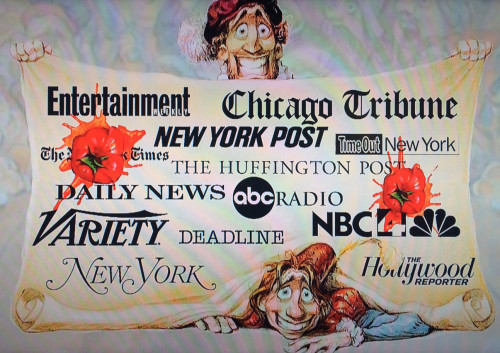
Look, ma, no quotes! Apparently it’s now enough simply to plaster the logos of media outlets on an ad to suggest that their critics have been positively disposed towards the show being sold. I’d say the truth is more variable.

Without going back and rereading the coverage in every outlet represented in these images, I’m willing to give The Curious Incident of the Dog in the Night-Time the benefit of the doubt, because the reviews were, as I recall, pretty terrific, and because the show has given equal weight to each outlet it represents. There’s a certain understatement at work.

I give the Something Rotten! ad credit for some subtle humor, because while it offers up The New York Times logo, a bit of animation that lobs a tomato at it, and obscures it, because the Times wasn’t actually all that keen on the show.

The Finding Neverland logo parade seems fairly disingenuous, because its New York Times review wasn’t positive, yet it dominates to screen. Did the Times write about the show? It certainly did. Does the screen say that they liked the show? In point of fact no. But I suspect that they’re trading on the fact that the presence of the Times logo might fool some people into thinking the show was endorsed by the paper, which may not be an absolute ethical lapse, but it’s certainly willfully misleading.

This isn’t to say that quotes have disappeared from ads, and even the examples above pull out some specific quotes on their own, separate from these logo parades. In the case of Fun Home, their ad is almost entirely glowing and attributed review quotes, with some award nominations thrown in as well. What they’re avoiding is any mention of what the show is actually about, which is a shame, but a sign of our still unenlightened times, in which the content of the show may be perceived as possibly limiting its commercial appeal.

https://www.youtube.com/watch?v=QlpNv60eGyU

I know of critics who will on occasion, when they think their writing has been inaccurately represented in ads, reach out to productions and make their feelings known. In such cases, especially with major critics, I would imagine those concerns receive due attention, since no one wants to be party to a souring relationship with a critic. But in these cases, the question is whether the folks who police trademark usage for each outlet have noticed these examples, and whether they are concerned enough to suggest – or enforce – that, in some cases, their logos may be getting used to imply an endorsement which doesn’t necessarily exist.

For those who decry the shrinking space for arts reviews, or who find star rating systems too reductive, it seems we’re in the process of moving on to the next iteration – exploring how to dispense with opinion entirely, in favor of implied endorsement, warranted or not. My youthful activism has come around to a more mature realism: we need as much writing as possible about the theatre, and that doesn’t mean just feature coverage, but criticism as well. If we work to marginalize critics through marketing, we may boost a show here or there, but at the end of the day we’ll be worse off for having done so.


Student-Written Plays Overcome Obstacles At Colorado High School

May 4th, 2015 § 0 comments § permalink

When it was all said and done, three student-written short plays, part of an evening of playlets, monologues and songs, went on as scheduled at Cherokee Trail High School in Aurora, Colorado. But in the 10 days leading up to that performance, the students claim they were told the plays and one student-written monologue were canceled. The students successfully garnered the attention of a local TV station, the National Coalition Against Censorship, and the Arts Integrity Initiative at the New School for Drama over the impending cancelation.

However, the school claimed the shows were never canceled and that the students misunderstood, but first delayed the performance of the pieces in question and then rescinded that delay, which would have pushed the plays to a later date. The school cited lack of proper process for approval, issued permission slips to the parents of all participating students and sent a broader memo to parents regarding the content of the pieces, defining them as “suitable for mature audiences.” Amidst this, rumors suggested that some contemporaneous school vandalism was the work of the drama kids. One student-written monologue was canceled entirely because the student’s parents reportedly denied approval for it to be performed.

What precisely triggered all of this activity around brief student-written plays? LGBTQ subject matter.

*   *   *   *

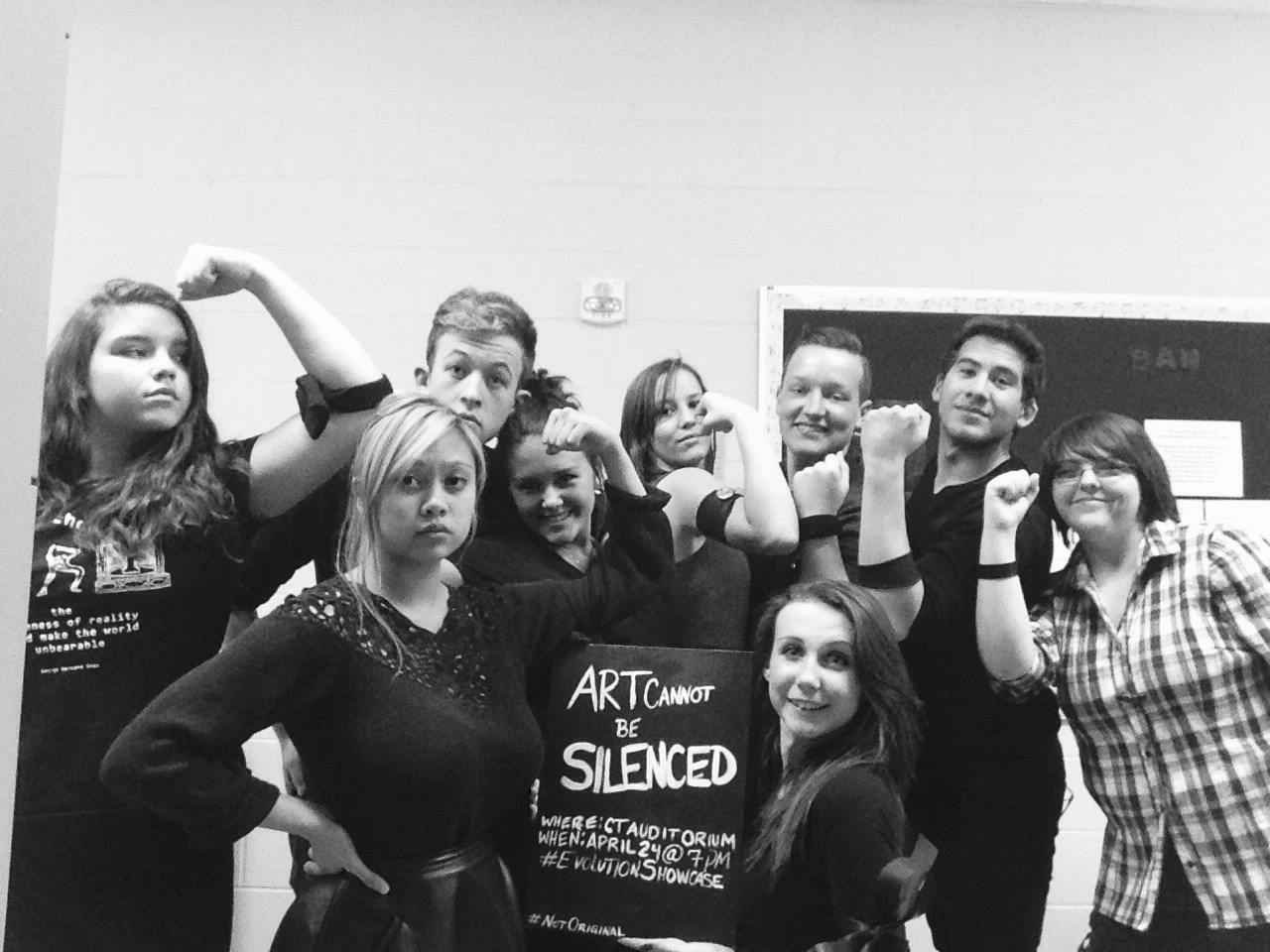
The cast and creators of “Evolution” at Cherokee Trail High School

The cast and creators of “Evolution” at Cherokee Trail High School

Students in Cherokee Trail’s Theatre 3 class developed the “Evolution” evening under the banner of their student-run Raw Works Studio, working on them both in class and after school for more than a month. According Theatre 3/Raw Works students – including Josette Axne, Kenzie Boyd, Brandon McEachern, Dyllan Moran, and Ayla Sullivan, with whom I shared phone calls, texts and e-mails at various times beginning April 16 – they were informed by the school’s Activities Director Christine Jones on April 15 that because of the LGBTQ content in the student written works, the pieces could not be performed and would be excised from the pending performance set for April 24.

The students immediately took action, reaching out to the local media, setting up a Facebook page called “Not Original,” contacting the National Coalition Against Censorship (which in turn contacted the Arts Integrity Initiative), all over their understanding that the plays were being cut from the performance. After first speaking with Axne, I spoke and corresponded primarily with Sullivan in the first few days.

By the time Channel 9 in Denver, NCAC and Arts Integrity made contact with the school’s administration on April 16, Principal Kim Rauh had prepared a response, which portrayed the situation in a different light. It read, in part:

The student written plays will be performed at Cherokee Trail High School. The decision that was made was to postpone the date of the performance to allow our theater process to be completed.  Students were invited to meet with us to work through the process and give the necessary time to work through all of the “what ifs” and attempt to be proactive as opposed to reactive and to plan for success. With every production there is an element of both directorial and administrative review and approval. The plays were submitted after the due date for final approval for the original performance date.  We have extended the process timeline to allow the plays to be performed at a later date at Cherokee Trail High School.

Channel 9’s account of the situation, the only significant local news story, was reported on the evening news on April 16, stating that the pieces would now be performed on May 9.

*   *   *   *

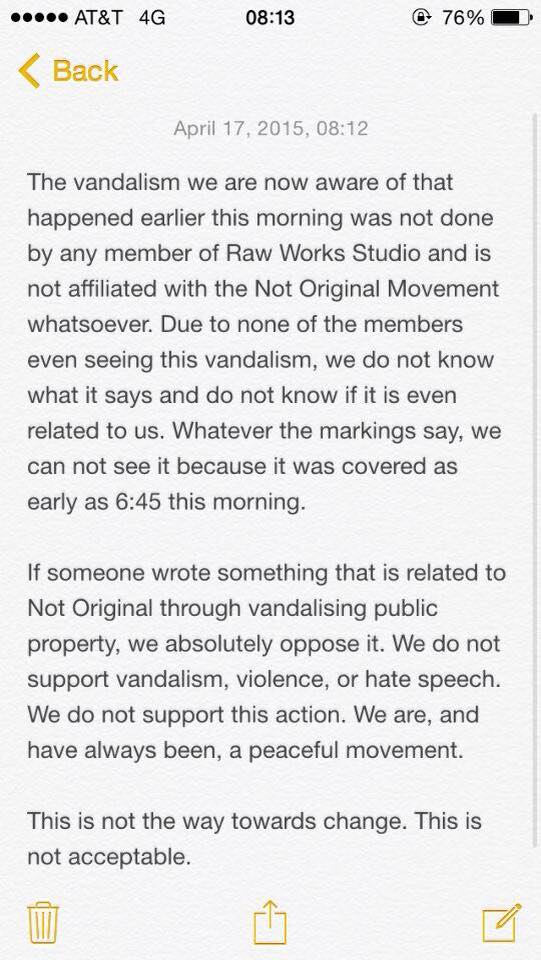
“Not Original”’s Facebook post about school vandalism

“Not Original”’s Facebook post about school vandalism

On Friday morning April 17, shortly before 8 am Colorado time, I received, in the space of ten minutes, an e-mail and phone call from Ayla Sullivan. She was deeply concerned that an act of vandalism at the school overnight was being attributed to the Theatre 3 students, even though she said it had been covered up before students arrived at the school that morning, so that not only were she and her classmates not involved, they didn’t even know the nature of the vandalism. Sullivan asked how the drama students should address this, and I advised them to tell the truth and make clear their position about whatever had occurred. Ten minutes later, the following message was posted, as a screenshot from a cellphone, to the “Not Original” Facebook page:

The vandalism we are now aware of that happened earlier this morning was not done by any member of Raw Works Studio and is not affiliated with the Not Original Movement whatsoever. Due to none of the members even seeing this vandalism, we do not know what it says and if it is even related to us. Whatever the markings say, we can not see it because it was covered as early as 6:45 this morning.

If someone wrote something that is related to Not Original through vandalizing public property, we absolutely oppose it. We do not support vandalism, violence, or hate speech. We do not support this action. We are, and have always been, a peaceful movement.

This is not the way towards change. This is not acceptable.

To date, the students say they haven’t heard anything more about the vandalism. It was a brief source of anxiety, but not central to the dispute.

*   *   *   *

On April 17, I sent a series of questions about the events of the past two days to Principal Rauh, copying Tustin Amole, the director of communications for the school district. It was Amole who responded, very promptly. Describing the reasons and process for what was happening with the plays, she explained:

All student performances are subject to administrative review prior to rehearsals beginning. The teacher is responsible for submitting material for consideration. I do not know how soon prior to that the students finished the plays. Regardless of when the materials are submitted, there is a long-standing process which must be followed.

In cases where the material may be mature or sensitive, the school meets with the parents of the students involved to make sure that they have permission to participate. We would then inform the broader community so that they are aware of the subject matter and can make a decision about whether they want to come and perhaps bring younger children.

Because I had pointed out that the new date set for the student written works (all of the other pieces were to be performed as originally scheduled) conflicted with tests for Advanced Placement and the International Baccalaureate, Amole wrote me:

In our effort to ensure that the students have the opportunity to perform the plays, we selected a date that allowed time for the process. We understand concerns about the timing, but this is the only available opportunity before school ends.

Following this exchange, I wrote again to Amole, inquiring as to the school’s specific concerns about the material, which had gone unmentioned. She replied:

The plays concern some issues around sexuality and gender identity. We would not censor the subject matter, but do work to ensure that all parents were informed and give consent for participation, and that attendees know the nature of the material. In other words you would not take children to a movie without knowing what it is about, nor are you likely to allow children to participate in an unknown activity. In the Cherry Creek School District, parents are given the option of reviewing activities, books and other materials and asking for alternatives if they object to what is assigned.

As for when the review process had begun, she responded:

The conversations with the students began when the material was submitted to administrators for review. We were looking for alternative dates to complete the review process when some of the students decided to call the media. Because they did not have that class yesterday, they were unaware that a new date had been determined. Had they waited to talk to their teacher during the next class, they would have been informed. They also always have the option of coming to the principal to express their concerns and they chose to call the news media instead. We regret that they chose not to work through our long established process.

That same day, the students told me, there were two meetings with Christine Jones, who outlined for them the plans for going forward.

*   *   *   *

After all of this, imagine my surprise when, just before 5 pm Colorado time on Monday, April 20, the NCAC and Arts Integrity Initiative received the following e-mail from Ayla Sullivan:

We have officially gotten our show back! Thank you so much for your help and support. Your belief in us is the only reason we have this. Thank you.

I wrote Rauh and Amole minutes later, to find out how the timetable had been restored to the original date. Amole replied two days later, sharing the communication that was going out to parents that day, which read in part:

I wanted to take this opportunity to communicate an update regarding the Theatre 3 production at Cherokee Trail High School, Evolution. Evolution contains a series of vignettes including songs, original student works and published scenes centered around the theme of love, some of which contain topics that may be considered best suited for mature audiences.

Because we are not putting topics on the stage, but rather actual students with actual feelings it was our desire to ensure that we had the time to adequately communicate the nature of the production with our parents and community members to help ensure the safety and well-being of all involved. The events of the past week have allowed us to do so and as such the administration, director and students have determined that we can perform the show on the originally scheduled date of April 24.

In response specifically to me, Amole added:

As of now, we do not have permission from all of the students’ parents to participate. While we continue to work to obtain the required permissions, we will honor the parent’s wishes, as per district policy. The performances of those students who do have parent permission will go forward.

*   *   *   *

Graphic design for “Evolution” at Cherokee Trail High School

Graphic design for “Evolution” at Cherokee Trail High School

On April 24, the following student written pieces were performed as part of “Evolution”: A Tale of Three Kisses by Kenzie Boyd and Brandon McEachern , Roots by Dyllan Moran, and Family: The Art of Residence by Ayla Sullivan and Brandon McEachern. The evening was, in the words of Dylan Moran, in an interview with KGNU Radio that he gave the day of the performance, about “how love evolves, both through time and within ourselves.”

On April 29, five days after the performance, I spoke with the students to ascertain how the performance had gone. They reported attendance in the neighborhood of 300 people, which while it only filled the orchestra section of their theatre, they said was comparable with other performances of this kind, and they seemed satisfied with the turnout. But had there been, when it was all said and done, any censorship of the work?

Brandon McEachern replied, “The only thing that was asked to be changed was certain curse words. There was no content change. It was just not having the word ‘shit’ or something like that. Those are the only changes they asked for the shows.”

“Certain words were allowed to fly in certain shows that weren’t allowed in others,” Moran continued. “It was very touch and go. There wasn’t any set rule. We’d be performing and it was like, ‘That one’s not OK,’ and we’d move on. Life Under Water did have changes, not as extensively as the original ones, probably because it had already been produced.”

I wondered, given the representations of Amole on behalf of the school district, whether the students had in fact misunderstood their conversation with Jones on April 15, given all that had transpired since. The unanimous reply of Boyd, McEachern, Moran, and Sullivan was that they hadn’t.

“It was very clear to us, on the day, that the show would not be happening,” said Moran. “There was no editing, there was no pushing it to a later date, there was no discussion about it. It was only when we got involved with the media that they changed their story and said, ‘No, we are going to push it back. We told them we were going to push it back, they just didn’t listen to us’.”

Sullivan continued, “There was also the sense of, when we were approached later, that Friday, which was April 17, by our activities director, that we were being guilt tripped, that we didn’t give her the benefit of the doubt and we immediately met with the media outlets and tried to make this a bigger thing than what it was – that it was our fault for misunderstanding, which never happened. It was very clear.”

When asked if it was made clear to them why there was concern over the material, Sullivan said there was a single reason given, that it was about “how the community would react to LGBT representation.” The students said it was on Friday that they were told by Jones that if they could meet all the necessary requirements by Monday, in terms of parental permission, the school leadership would reconsider the May 9 plan.

Had the students anticipated any pushback against the student written shows? “When we were going through the entire process,” McEachern said, “I didn’t think the school would tell us that these were controversial issues and it would make people uncomfortable. I just thought it would go on like a regular show. I didn’t think there would be any backlash.” Sullivan added that once the news broke, “there was nothing but support.”

Referring to sentiment within the school, Boyd said, “I think immediately, as soon as we found out, that there was an immediate buzz on Twitter, everyone from school and even from out of state, that were talking about this and how disappointed they were in the school. I think it was definitely at first – the whole situation is definitely a lesson for schools in general and even for society in general, to really look at people and look at what they’re saying versus what they’re doing. Because everybody’s always talking about equality, equality, equality but then when they actually get the opportunity, it gets shut down pretty fast. So I think it’s a big lesson, but I also think that in a positive manner other than just lessons, it really brought everyone together, because I’ve never seen this school so united.”

*   *   *   *

But what of the student-written monologue, Ever Since I Was A Kid? The students I spoke with, who explained that it had been cut because the parents of the student author had declined to give permission, spoke freely of the piece. They shared that it was a personal account of a teen who was in the process of gender transition. It suggests that this piece was, at least in part, what Amole referred to on April 22 when she wrote me that not all permission slips had been received.

I must note that I spoke to the author/performer of “Ever Since I Was A Kid” on April 20, before it was clear that  parental permission was being withheld and that the piece in question would not be performed. Because the situation had changed and I was not able to speak with this student again, I have withheld the content of our interview because, despite sending messages through the other students, I could not confirm whether the author was still comfortable with my using our conversation. The students I spoke with said their classmate was permitted to perform in other parts of “Evolution,” just not with the original monologue.

*   *   *   *

As much as I have tried to reconstruct the timeline of this incident, it is clear that the students’ account and that of the administration differ. The students say they were told originally, in no uncertain terms, that the student-written pieces were being cut. The school maintains that they simply needed time to put the work in context.

Missing from this report is any account of the circumstances from either the Theatre 3 teacher, Cindy Poinsett, or the Activities Director, Christine Jones. Because it is typical in most schools that faculty and staff do not speak to the press without approval, and because after the first response to my inquiry to the principal, all responses came from the school system’s spokesperson, I did not attempt to contact either Poinsett or Jones. Should either of them choose to contact me directly, I will amend this post to reflect their input.

I have to say that throughout this period, the students I spoke with were remarkably poised in their accounts of what took place. While as I noted, the school was very responsive to my inquiries, there is one notable shift in the timeline they created: on April 16 they said it would take three weeks to put everything in place in order to allow the student written pieces to be performed. Two business days later, everything had been accomplished that allowed the pieces to go forward as originally scheduled.

That the original “solution” would have excised these pieces from the April 24 performance and isolated them as their own event, that May 9 was initially the “only” possible date on which they could do so, suggests that the administration was responding on the fly, in response to external inquiries. If the students had misunderstood what they were originally told, why on April 15 didn’t the school simply say that all would go on as planned if the students brought in signed permission slips by April 20, as they ultimately did, instead of promulgating a new date?

I also have to wonder why, as has so often been the case when potential incidents of censorship arise in high schools, was the initial reason given for the action the assertion that an approval process had not been followed? The students say they had been working on the pieces for more than a month and were never given any deadline or reminded to get their materials in by a certain date. Is Principal Rauh suggesting that the students and their teacher had been keeping the work under wraps? Was there a disconnect between the teacher and the activities director, or between the activities director and the administration?

At the root of this incident remains the skittishness that schools have regarding any public representation of LGBTQ issues and lives to their community at large. While opinion polls show that six out of every ten Americans support marriage equality, that percentage jumps to 78 percent for people under 30. Presumably that is at least the same for the general acceptance of LGBTQ Americans overall, although to quote a New York Times editorial, “being transgender today remains unreasonably and unnecessarily hard.”

So it seems that whatever precisely took place at Cherokee Trail, it derives from the students having a more evolved attitude towards equality than the school fears the local adult community may hold. How long will students be required to get permission before they can tell true stories of their own lives and the lives of those around them? When will all schools stand up for student expression of their lives and concerns on the stage from the outset, and stand firm against those who continue to oppose the tidal wave of equality that will inevitably overtake them?

*   *   *   *

I asked several of the students what the ultimate takeaway was from their experience.

Sullivan said, “We got a lot of positive support and had a positive show, but my biggest concern is that now that our department has made a name for itself for doing original content, the administration is going to create a harder process, a new deadline. I’m concerned that student-written work will not be able to be performed the way it should, that now they will have something of a deadline process to fall back on and use that to censor other voices and censor experiences in that light. That kind of worries me, because we’ve already seen an attitude of they don’t want this to continue and they don’t want to have to deal with this again.

“I definitely feel that our principal and our activities director have found that this has created such a mess that they don’t want student-written work to continue, that they don’t want Raw Works, the studio itself, to be representative of the theatre department anymore and that they don’t want student-directed student works.”

Boyd picked up that thread, saying, “I don’t think it’s as much concern about it continuing, as much as they’re going to make it so hard to continue that we’re going to have to stop ourselves. I definitely think there’s been so much backlash on them now that they can’t just say no more original work, but I do think that the process next year is going to be a lot harder to the point that it may be impossible to put on original works.”

When I pressed the students on whether anything explicit had been said about the future for student written work, McEachern said, “Right now, it’s just a concern of ours. They have not said anything.”

In my last communication with Tustin Amole, I asked whether the events surrounding “Evolution” would have any impact on the Theatre 3 class, Raw Works or student written plays in the future, and received the following reply:

Our process will remain unchanged. As I have already explained, it is the standard process that has worked well for us for a long time.

The class also will be unchanged. Students will be able to write and perform their own work.

So for now, all we can do is watch and wait until next year, to see what stories get told at Cherokee Trail.


Howard Sherman is director of the Arts Integrity Initiative at The New School for Drama.


Dropping and Dodging F-Bombs at the Florida Thespian Festival

April 15th, 2015 § 10 comments § permalink

Students watching Judas Iscariot outside at the Florida Thespian Festival

Students watching The Last Days of Judas Iscariot outside at the Florida Thespian Festival

A theatre scene performed al fresco on a spring Florida evening sounds idyllic. But when Tomas Roldan and Matthew Ferro, juniors at New World School of the Arts High School, took their award-winning scene from Stephen Adly Guirgis’s The Last Days of Judas Iscariot to a plaza outside the Florida State Thespian Festival in Tampa on March 28, they weren’t doing so seeking charm or fresh air. They made the performance choice as a third option after being given two official choices by festival leadership: alter Guirgis’s words or don’t perform at all.

*   *   *

The Florida State Thespian Festival is the largest such gathering in the country. Over a long weekend, high school students gather for talks, workshops and competitions all focused on theatre; in Florida, there are more than 7,000 people in attendance from the large state’s 16 designated districts. This year’s festival included full productions of, among others, Ragtime, The Great Gatsby, Night of the Living Dead, The Threepenny Opera, Violet, Pippin, and Seascape; there was even a concert by The Skivvies, the musical theatre duo known for their talent, their wit and their commitment to performing in their underwear.

Woven throughout the festival are the competitions, where students from schools across the state perform short scenes from a wide range of shows, assembled into groups of competitors so that one set of adjudicators can make decisions on those competing in that defined grouping; the festival is simply too large, and too brief, to allow for an American Idol-type winnowing to a single champion, so each group produces its own winners. Ferro and Roldan received a Critic’s Choice honor for their scene between Jesus and Judas from Guirgis’s play, which Roldan said had been their goal from the time he and Ferro started working on their scene, nearly a year earlier.

Florida State Thespian logoThe winners of Critic’s Choice in each group are invited to perform in the Critic’s Choice Showcase on the final evening of the festival. Given the number of winners, it is held in segments (or acts) throughout Saturday night in the largest venue used by the festival, the Straz Center’s main hall, seating nearly 3,000. The audience is made up of students, teachers, parents and family. Because competitions are happening on a rolling basis throughout the weekend, the run of the evening is still coming together even as the first performers come to the stage at 6 pm.

*   *   *

It is the policy of the Educational Theatre Association, which runs the International Thespian Society, not to censor the work of writers. The director of the Florida chapter, Linday M. Warfield Painter, echoed that sentiment, saying, “I don’t condone the changing of a playwright’s language any more than the next person.”

In Florida, students competing with scenes that may have potentially controversial or even offensive content are asked to “asterisk” their scenes, noting what some might find problematic. This doesn’t preclude their competing, but serves as notice for those attending the competitive rounds that if they wish to avoid such material, they should step out before the scene is performed. Roldan and Ferro’s scene was duly asterisked for its language – the scene contains iterations of the word “fuck” some dozen times – and for its contemporary portrayal of religious figures Jesus and Judas. The Florida guidelines also require that school principals sign off on the choice of scenes to be performed by their students – except for schools in Miami-Dade County, where a teacher’s approval is sufficient. New World School of the Arts High School is part of the New World School of the Arts, an arts university in Miami affiliated with Miami-Dade College and the University of Florida.

The asterisk system, implemented less than a decade ago partly in response to consternation at the state capitol over content seen at the festival, apparently works well enough in the many small competition rooms, but it becomes problematic, and even irrelevant, at the critics choice showcase. Given the size of the theatre and the numerous brief scenes being performed, the policy is that the audience cannot come and go as they please, so there isn’t a steady attrition of audience once the students they come to see have completed their scenes. If an audience member exits at any point during one of the acts, there is no readmission. So it’s not feasible to offer the audience the opportunity to leave if a scene might offend them, leaving the asterisk process in the dust.

As a result, after winning in their group, the winners have to perform one more time, for adjudicators who will determine whether the scene is appropriate for the large audience. That’s where Roldan and Ferro said they were surprised.

judas iscariot script“They knew our piece was asterisked for religious content and for language,” recalls Roldan. “They asked us how severe the language was and we said we drop, we have a few f-bombs in there. Then they told us OK – well we’ll listen to it and tell you what we can do about the language. So we performed the scene again and they told us, ‘Wow, that’s a really great scene, except you guys curse way too much and there’s too many f-bombs in the piece. So you guys have to fully, completely clean it up or you wouldn’t be able to perform it’.”

Ferro, interviewed separately, described the process similarly, saying, “We performed it for the two people who were running the show, the Critics Choice show. And it was almost right then and there that they were like ‘We love the piece, we really do. But the language is an issue.’ From the get go, those two people, Ed and I think it was Amy, said ‘We’re going to fight for you. We want you guys to perform this, but we have to find a way.’ So originally they gave us options like changing the language; then it was how about we perform at the very end and we’re going to caution people about our content. Then it was like, ‘We’re going to roll the dice and we’re going to ask our bosses what they think we can do’.”

Both Ferro and Roldan say they were urged to get dinner while the issue was explored, which they did. “When we came back,” continued Ferro, “they had already spoken with their bosses, the person who was running the whole thing and they told me and Tomas that we could not perform with the language. We had to change it or just go on stage and tell them that we couldn’t.”

In response to an inquiry about what transpired, Painter said, “I wasn’t in the screening room for this event. I had entrusted other volunteers within the organization to do that for me and they had asked, ‘We’ve got 12 f-bombs dropped in the piece.’ I can see why the two teachers screening it said, ‘Guys, can we clean that up a little bit just for this one moment [the showcase].’ I don’t think that has been – I’m positive that’s not the first time that’s happened, that they’ve been asked to clean up language. As far as whether or not a piece – they weren’t asked not to perform. They were given the option, so it wasn’t like, ‘No, you have bad language, you may not perform.’ The option was there.”
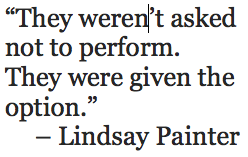
Lindsay Painter quoteAsked to clarify who is in attendance at the showcase, Painter explained that it is not a public event per se. “We have a mixed crowd as far as different communities from across the state,” she said. “We have Christian schools, we have private schools, we have different schools that are from more conservative communities across the state that are all packed into the 2800 people house. That’s really the reason that we do any kind of screening. And the screening is just, that’s all they’re looking for, if it is an asterisked piece, what is it asterisked for? If it’s something that it’s a simple matter of staging that we could restage really quickly without compromising the integrity of the acting and all that. This piece was probably, had I known ahead of time, that the judges did not give us an alternate, I probably would have suggested it not even necessarily be – just to save them the heartache of having to go through that moment. It’s just because of the content, there’s so much of the language issue with it.

“I can tell you that my community I’ve gotten away with all sorts of shows at my school, I’ve done Rent and Threepenny Opera and Cabaret, even my community wouldn’t be OK with a bunch of f-bombs being dropped on stage. It’s a tough one.” At another point, she said, “For that general audience, they were asked to remove at least a few of the f-bombs to take it down from a “rated R” to at least as PG or PG-13 for the general audience. And they refused to do so, which is their prerogative and their right as artists. I respect that, but we couldn’t out it on our stage in front of a general audience.”

Recalling the scene backstage, as she argued on behalf of the students, one of Ferro and Roldan’s teachers, Annie McAdams, recalls one of the adjudicators for the Showcase saying to her, “’Look, it’s just the word “fucking,” we can’t have “fucking” on this stage, it’s too big a house.’ I said, ‘That doesn’t make sense, how come we have asterisks? What if they say we can let the lights up and everyone can leave if they don’t like it?’ And they said, ‘No, we can’t do it. It’s OK in the little rooms, but it’s not OK in this big room.’ Oh, and they also said that the adjudicators know that and they are not supposed to advance material that will be offensive, they are not supposed to do this. Then I said, ‘Well why do we have that policy if it doesn’t matter? Why do we say that they can do this material if in fact they’re not going to get advanced, they’re not going to be considered?’ So how many other students haven’t been considered? And they never knew.”

*   *   *

Michael Higgins was the director of the Florida State Thespians for approximately 17 years (he didn’t recall exactly); his tenure concluded in 2010 and Lindsay Painter’s began in 2013. Last week, he spoke of what was happening with the language in competing scenes when he first took on his role. He had not attended the 2015 Festival.

“At the time it was not regulated as far as any kind of censorship issue,” said Higgins. “Then, as all things do, it became more and more of an issue as students were choosing that adult material and more than that it was getting inordinate positive response by the judges. My feeling at the time was since you were trying to get a monologue performed in two minutes, oddly enough the shock words gave you more punch and power in those two minutes and got you more notice than perhaps a much better written monologue, but it didn’t have such immediate punch that you could get in 90 seconds or two minutes. So unfortunately it moved a tide toward more adult language and away from what was much better material without that.”

After a staffer in the lieutenant governor’s office attended a showcase some 15 or so years ago and voiced language and content concerns to Higgins, as did some letters he received, he said the state board of the Thespians moved to address the issue.

Higgins explained, “At the state level we were told that we could not edit these Miami-Dade kids at all or offer any roadblock to their performing because if we did, that county, which was the biggest participator of the state festival would pull out. Then we thought we needed a merger of these ideas here, how could we accommodate what at that time was a quite liberal south Florida from what’s always been a quite conservative north Florida, especially northwest Florida.
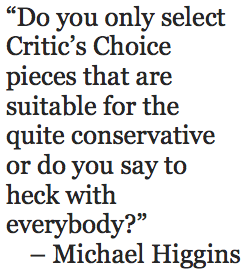
Michael Higgins quote“We weren’t going to get into that game of saying one word’s bad or another situation’s bad. What we were going to do was create an asterisk, essentially putting the responsibility back on the artists, saying, ‘Artist, you want to do something that may offend some people for whatever reason. You have a responsibility before your piece to inform your audience that there is something that maybe some would consider objectionable, give a very brief synopsis of what that may be and then allow time for anybody who chooses not to be part of that to get up and leave the space before you do your material,’ putting the onus on the actual performer.

“That worked well for many, many years. It became a bit of an issue when at big events like closing ceremonies, Critic’s Choice when all the winners were showcased and we were doing these in big theatres, 1,000 seats theatres and then on practical terms when Susie got up to do her monologue and said before it, ‘it contains objectionable material’ that the audience was in no way going to be able to make a choice to leave or stay. So we had to address that concern now. Do you only select Critic’s Choice pieces that are suitable for the quite conservative or do you say to heck with everybody and allow every piece to go and just field the complaints of those who are troubled by it?

“The solution that was found at that time was that I as state director took the responsibility on myself as head honcho and I would watch all of the pieces and I would let the piece know ‘this does contain some objectionable material.’ Do you want to edit out these couple of words or option two, not perform it but still get your notice, awards, prizes and mentions at the festival? But now you as the artists have got to understand that you have an audience that is mixed in their liberal/conservativeness, they do not have the option to exercise their right to exit and not participate in theatre, so in order to preserve the festival there is something greater than your free choice at this adolescent age and you must work for the greater good. That worked for quite a while with some groups deciding I don’t want to be censored, so they didn’t perform yet won all of their awards and bells and whistles, and others saying, ‘oh sure, if it’s a matter of getting rid of the word fuck twice I can say that is not really a big deal to me and I understand that the audience has changed from what happened in a small room of 30 people to an audience now that has 10,000 people with young children and families and all kinds of people.’ The switch is for the audience, just like good old theatre.”

*   *   *

The Guirgis scene was suggested to Ferro and Roldan by one of their teachers, Elena Maria Garcia, an adjunct at New World School with 14 years experience.

Stephen Adly Guirgis

Stephen Adly Guirgis

“I love [Guirgis’s] work,” said Garcia, “and I said to the boys, ‘If there’s anybody in this class who will really understand this piece, and just be able to play it, not for the shouting or any of that stuff, because it’s really easy to do that, but for the compassion and the struggle – really what that scene is about between Judas and Jesus. I said you guys can pull this off.’ They struggled a lot but they finally got it and it was just glorious. It was just one of those moments that you go ‘Wow, this is why I teach. This is why I sit in traffic ever day.’ When you see moments like that you go, ‘Damn’.”

Annie McAdams, a faculty member at NWSA, was new to the school and the world of Thespian competition at the start of the current school year. Asked whether she had any initial concerns about the scene being in competition, given the language, she said, “I was not worried about the content of their scene. I wondered if the Thespians would like the content of their scene, and it occurred to me that it might be a hard piece to win a festival with because of the content. Not only that it had profanity but also the subject matter – that it’s Jesus and Judas arguing. I moved to Florida from New Jersey which is a blue state. Everyone feels that Florida is liberal, but I’ll tell you, it’s not as liberal as the northeast. So yes, it occurred to me that they might not win with it, but I knew that they could compete.”

When asked about their awareness of any guidelines about content or performance, both Garcia and McAdams cited the asterisk rule. McAdams said she didn’t know of more, while Garcia said she knew there were some for the state festival, but deferred to McAdams as the official head of the troupe.

Asked about this, Painter cited the following guidance on the Florida Thespian website:

The board wishes to restate its position that the sponsor and student should choose material that they would feel comfortable sharing in front of their peers and their school.  The material chosen should match the community standards of your school district and your town!  There should NEVER be an attempt to choose material for competition that you would “never be able to do on your own stage.”   There is no shortage of prize-winning, world-class drama that would be acceptable in any high school in the state!

To this end, you will find the following statement in the registration for state.  Both you, the sponsor, and the principal* or his/her designee are asked to sign the following:

The board requests that you verify that each piece which will be performed representing your school has been screened by the sponsor and endorsed by the principal or his/her designee.  We ask you to certify that each piece meets your community standards and the standards set by your school and your school board. We also understand this caveat will not guarantee that all material presented will fit the guidelines of all schools. To that end, we will continue to use the asterisk as a further means of denoting material which might be considered sensitive for some viewers. 

*NOTE: In Dade County the teacher, not the principal will be asked to certify that the piece meets community standards.

Set off separately, the statement continues:

Florida State Thespians does not pre-approve the material which is presented at this conference. The individual director is the ultimate judge of what is suitable for his/her students to perform for their home school audience. They are also responsible for placing the asterisk on any of their entries which might be questionable in nature. All material performed at this conference has been approved by the principal of the originating school. That approval indicates that he/she attests that the pieces submitted from that school would be suitable for general audience presentation at the school from which it came.

Even with these warnings and precautions, we realize that some of the more mature material may trouble some of our audience.  We have endeavored to forewarn by the use of the asterisk and, at the Closing Ceremony, by identifying edgy material prior to its presentation. Should any member of our audience be offended by any performance, we encourage them to voice their concern to the State Director who has been directed by the State Thespian Board to forward those letters of complaint to the administrator involved. The administrator who approved the material in the first place is the person who should be able to defend his/her choice.

We cherish the right to free expression, but we also understand that, as educators, we have a responsibility to use that freedom wisely.  We have tried to differentiate between words which might offend and ideas which might make the audience uncomfortable. Theatre, at its highest, may create dissension and make people examine their beliefs. Blasphemy and blatant sexual references are not suited to this conference. We have encouraged everyone to be sensitive to them starting at the district level. Discussion of contemporary issues and problems are the stuff of real theatre and deserve a place on our stages. Community standards differ widely in our state and this is a thorny issue we do not take lightly. As theatre educators, we cannot solve the problems of society by refusing to give a platform where those problems can be examined in an intelligent and forthright manner. We feel giving audience members the opportunity to challenge some of the choices local administrators make will give a greater voice to everyone in our large and extremely diversified audience.

Julie Cohen Woffington, executive director of the Educational Theatre Association said that there are no such restrictions on the national festival. As for guidelines for each state group, she wrote, “We have suggested guidelines for the individual events program that are available online, but they do not refer to choice of material or language.” Asked about any policy regarding the alteration of texts for competition or performance at the national festival, Woffington replied, “We have a statement on Freedom of Expression on our website. We also have information in the individual events guidelines that require securing performance rights.”

*   *   *

Tomas Roldan quoteReturning to the night of the showcase, Roldan describes his reaction at the Sophie’s Choice he and Ferro had been given: remove the language or forego performing.

“At that moment, I was kind of disappointed,” Roldan said. “I was pretty sad. It was heartbreaking to hear that we would have to clean it up or not perform. The thing is, we always thought that the words were put in there for a purpose and they do have a meaning in the piece. So you might be able to change a few but even if you do the piece might lose some of its importance and some of its value.”

Asked if they had given any thought to changing the piece, Ferro said, “I was considering it. Tomas was calling Garcia – we were both shocked a little bit. So he called Garcia and I was thinking maybe we should change it. I just wanted to perform it. It was Tomas, who after he hung up with Garcia, who turned to me and said I guess we can’t perform it. He had already kind of made the decision. That’s how me and Tomas work, we kind of take turns making big things like that and I agreed with him completely. I don’t even know what I was thinking. You’re right, we shouldn’t perform it.”

McAdams recalls asking the students, “Are you sure you don’t want to just change the language? So that you can perform? I knew they were so proud, and I knew they had worked so hard, and honestly I didn’t think they had a chance of winning really because of Jesus and Judas, more than the profanity.  So I really wanted them to have that experience of performing in front of their peers on that big stage. They said absolutely not.”

With McAdams’s help, Roldan and Ferro crafted a brief statement, which they read from the stage during the Showcase instead of performing their scene. It said:

Today we will not be performing a duet scene from The Last Days of Judas Iscariot by Stephen Adly Guirgis. We were thrilled to be awarded the Critic’s Choice for our category. We chose a scene we love by an artist we respect. The scene is asterisked for language and content. Tonight Florida State Thespians is asking us to alter our scene by removing the offensive language. We feel as young artists that this language is an integral part of the author’s intention in the scene. Rather than censor our scene, we have chosen to perform our piece outside. In 15 minutes we will be outside by the steps to perform. Please join us to support Art.”

*   *   *

I’d like to make some observations about what transpired in Florida two weeks ago.

It is clear that the state organization does have guidelines for performances at the showcase which differ from the guidelines that apply to competing works. It is certainly unfortunate that Garcia and McAdams were either unaware or not fully aware of them. While Lindsay Painter admitted to me that, “I don’t think it’s terribly easy to find and obviously after this conversation and this issue this year, we will make sure that’s easier to locate,” the way events unfolded for Roldan and Ferro might have been anticipated had they seen that language or been advised of it. That said, it’s worth noting that according to the young men, at no point in the adjudication process, either at their district level (where they did not receive an award and so were not eligible to perform) or the state level did anyone affiliated with the competitions make Roldan and Ferro aware of the potential restrictions on their performance until after they’d won and were at the final screening.
Sherman quoteBut perhaps it’s a good thing that things fell this way, because it reveals the strain of censorship that does affect the public performances at the Festival. Deploying language about “blasphemy and blatant sexual references” in performance, it is clear that the Florida festival is exercising judgment over what is permissible and what isn’t, and doing so rather late in the game to boot. There is no way of deciding definitively what is or is not blasphemy or blatant sexuality, even if you’re willing to grant that such a restriction is appropriate; it’s always going to be a judgement call. It’s worth noting that while a synonym for “blasphemy” is “obscenity,” “blasphemy” in its primary usage refers to “impiety” and in some cases irreverent behavior towards anything held sacred, not simple cursing. In the scene from Guirgis’s play, the word “fuck” or “fucking” is used as an interjection or adjective; at no time does it refer to a sexual act.

If in fact scenes that aren’t “appropriate” for the final showcase are being scored poorly to avoid the sort of conflict that arose over the scene from Judas Iscariot, that’s a black mark on the entire adjudication process. Not only did McAdams say that she had been told this was the case, but let’s also recall Painter’s slightly ambiguous, halting, “This piece was probably, had I known ahead of time, that the judges did not give us an alternate, I probably would have suggested it not even necessarily be – just to save them the heartache of having to go through that moment.” That can be construed to corroborate what McAdams heard about judging, although it stops short of being explicit.  [Updated: please see addendum below with Lindsay Painter’s clarification of position on the issue of instructions and process for adjudication.]

I should note that late in our conversation, Painter introduced the idea that the reason Ferro and Roldan were not permitted to perform was because of how they behaved when given their choice, suggesting they had “started harassing other troupes and other humans.” I suspect that teenagers hearing such news for the first time may well have acted out in some way, though Ferro denied it and McAdams said she saw no such behavior and was told of no such behavior when she arrived backstage. I was surprised when Painter raised it 22 minutes into a 29 minute conversation; if it was central to the decision, it seems it should have been brought up as a factor much sooner.

Because of the Festival’s policy of placing the responsibility for the scenes chosen on school officials, with Miami-Dade having a different policy than the other districts, there has always been the potential for crossing some invisible line as Ferro and Roldan did. But by actively urging them to alter the author’s language, the festival applies censorship pressure as a prerequisite for performing some winning “asterisked” work, and based on the accounts from both Painter and Higgins, this is common practice. That is a poor example to set for students, teachers or parents – the work of authors cannot and should not be altered to meet the perceived need of an audience. That the festival has codified such actions in order to defend the festival against those who would dictate content to all is troubling, to say the least.

I will acknowledge that the State Festival organizers have challenges, not least the huge scale and popularity of their successful event. More importantly, they grapple with the reality that few states or even individual towns have unanimity about what is blasphemous, blatantly sexual, or obscene, and they’re trying to maintain an event statewide. But I think it’s fair to say that even the most liberal school has a sense of what is appropriate for their students, and by leaving the content, and quite explicitly any blame for that content, to the schools, the Florida festival must find a better solution to its current practice of altering content and staging to suit a homogeneous audience in an effort to minimize complaints. Perhaps “asterisked” scenes should be adjudicated together and have a defined portion of the showcase evening, while the self-identified inoffensive material is gathered separately at all stages. In that way, students whose schools permit them more latitude will be assured of both fair judging and the opportunity to perform. But altering a playwright’s words violates copyright law, and doing so in order to placate sensibilities remains censorship, no matter how it is rationalized.

I have written before that I believe that school theatre is first and foremost for the students – not for their parents, their siblings or the general public. Students should have the opportunity to take on challenging work, contemporary as well as classic work. If that work contains “strong” language but is within the education parameters of their school, so be it. “Protecting” the students, or an audience, from words or ideas should not drive education or school-related activities.

*   *   *
Matthew Ferro quoteFerro and Roldan both cite the idea of performing their scene outside as having come from one of the same adjudicators who gave them the “censor or don’t perform” ultimatum, saying he seemed genuinely sympathetic to the decision they faced. I asked them both how the impromptu performance went.

Roldan said, “Well at that point we were all adrenaline, I would say, especially Matthew. He really got on board and once he got on board he was completely on the bull and he was just going at it. We just performed it, a whole lot of people came and it was a great experience. The scene itself, I felt that while we did it outside, it wasn’t the best we did it, because at that point we were doing it now out of frustration and we had all those emotions inside of us, so I felt that maybe made us deviate from the scene. It still came out great, but not as good as it came out when we showed the piece for the first time in the competition.”

Ferro also felt the scene lost something. “I gotta be honest, it wasn’t the same,” he said. “For myself, I wish it hadn’t gone down that way because I feel like the whole point was kind of lost, the whole point of just doing the scene, the beautiful scene, was lost. I wouldn’t say it was because of Tomas. I kind of blame myself because I was so amped up on trying to get the crowd to listen to me and I was very energetic, I don’t think I was able to calm down and perform the piece like we’d rehearsed a thousand times. I don’t know. For me, it’s sad that the piece wasn’t as good as we had done it a million times before.”

Garcia viewed it very differently. “I’m thinking, OK, because there’s a massive dance where these teens go to right afterwards to celebrate the end, I said to them, I think you might get a few [people to watch]. I don’t think you’ll get that many kids because they’ll want to go to the dance. How wrong was I? There were over 200 kids standing on the lawn in their beautiful gowns and high heels going into the soil. They didn’t care, they were all there in silence watching these boys do their piece. It was right out of a movie. I was like, I can’t believe, they will never forget this. This is such a wonderful moment right now. I just thought Guirgis would be, ‘My god, they’re still hearing my work.’ These kids are anti-censorship and they kept hugging the boys and saying, ‘Thank you so much for doing the right thing. This is what its about – we’re artists and we shouldn’t have to change our work.’ It was beautiful.”

A McAdams quoteThough the young men refused their achievement prizes that night, McAdams brought them home, suspecting they’d ultimately want them, and both Ferro and Roldan expressed regret that they hadn’t ultimately accepted the recognition that evening, that they hadn’t respected the Festival more even at a moment of crisis.

When asked whether she might recommend different material for students in the future as a result of what transpired, McAdams said, “I guess there would be a discussion I would have with the kids: ‘Look, if you want to win, here are the parameters you need to be in.’ But as a teacher, I would say, ‘Pick material you respond to, pick material that you are passionate about. Pick writing that’s good’.”

Ferro, asked if he had known all that was going to happen, would he have chosen a different scene, said simply, “No, I really wouldn’t have.”

I’m pleased that Ferro and Roldan are juniors, not only because they will have the opportunity to compete and perhaps win one more time (Garcia says she’s pointed them towards True West) but because it gives the Florida Thespian Festival the opportunity to right a wrong – and I believe it is a wrong, regardless of the forewarning on their website. Roldan and Ferro should be given the opportunity to perform their scene from The Last Days of Judas Iscariot on the main festival stage next year, all “fucks” intact.

And, of course, they still have a shot at the National Festival in June. I’m rooting for them.

*   *   *

Addendum, April 15, 3:50 pm: Upon reading this post, Lindsay Painter asked me to include the following information regarding the adjudication process.

The judges are not encouraged or told to be concerned about the asterisks when providing a score and feedback. In fact, when I meet with them each morning of the festival, it is one of my main points I make. The students of Florida should be receiving honest non-bias feedback from the professionals we hire to adjudicate. To suggest otherwise, in regards to how our organization has been handling the showcase is faulty. The judges have nothing to do with the showcase. They give us their picks for who the best in the room was, (all regards to content aside) and that makes-up the list for showcase. But, they have nothing to do with our asterisks system or the system we’ve had in place for preparing the showcase presentations.

Painter further requested that the following distinction be made, and because I write in the interest of constructive dialogue on these issues, I share it as well:

This is a Theatre Festival, not a competition. There is no prize, no winner. Each performance is provided an assessment. We showcase one piece from each room as a way to celebrate the work the students of Florida have brought to the festival. It’s not a thing to win or not win. And if they are not able to perform, an alternate does. This is the spirit of the festival. There is no placing or winning of the Florida State Thespian Festival. Only of presenting, receiving valuable feedback, and celebrating the work of the student artists. These students were not impacted in any way in the feedback or rating they received by the judges. They were given their superior. That is the highest honor they, or any student at the festival, can hope to achieve.

Correction, April 15 3:45 pm: This post originally stated that Michael Higgins was Lindsay Painter’s direct predecessor. That was incorrect, and is now accurately reflected above.

Correction, April 16, 11:30 pm: This post has been corrected to reflect that New World School of the Arts is affiliated with the University of Florida, not Florida State University, as previously stated.


Full disclosure: I delivered a keynote and conducted a workshop on the subject of school theatre censorship last summer at the Educational Theatre Association’s annual teacher’s conference. EdTA paid me an honorarium and provided me with round-trip travel to Cincinnati and accommodations while there.


Howard Sherman is director of the Arts Integrity Initiative at The New School for the Arts.