Are you still grumbling about “tweet seats”? Oh, that is so 2013. Time to get with the program and start worrying about the newest development in mobile tech, which could have a vastly more significant impact on the live performing arts.
At this year’s SXSW Festival, a new app, Meerkat, saw a frenzy of adoption by attendees, so much so that Twitter moved to quickly curtail the app’s access to Twitter data. The reason for that draconian move came clearer yesterday when the app Periscope, which is owned by Twitter, was launched as a direct competitor to Meerkat.
So what do they do? Both apps allow you to stream live video from your phone. Now, instead of taking something so pedestrian as a photograph via Instagram, or so cumbersome as shooting a video and then uploading it to YouTube, anyone with an iPhone and a dream can relay what they’re seeing in real time to their connections on these services. This will of course result in streams from countless teens doing teen oriented things for the entertainment of other teens, but it will also turn everyone who wishes to be into an instant broadcaster into one. Yesterday, Periscope immediately became a source for realtime video of the tragic explosion and fire in New York’s East Village.
Of course, as I experimented with Periscope (I’ve loaded Meerkat, but not tried it yet), I realized how significantly this could have an effect on live entertainment. Now, anyone adept enough at manipulating a smartphone from an audience seat might well be streaming your show, your concert, your opera to their friends and followers. If they can do so with a darkened screen and sufficient circulation to keep the blood from leaving their upraised hand and arm, the only thing stopping them would be vigilant ushers, chastising nearby patrons and battery life. For however long they sustain their stream, your content is on the air – and unlike YouTube, where if you find it, you can seek to have it removed, this is instantaneous and so there’s no taking it back.
I should say that I’m not endorsing this practice, any more than say, a play about graffiti artists is exhorting its audience to go out and start marring buildings with graffiti. I’m just pointing out that there’s a big new step in technology which could serve to let your content leak out into the world in a way that’s much harder to control than before (while also offering many new creative opportunities for communication) – and since these apps are just the first of their kind, they and competing apps will be rolling out ever more effective tools to stream what’s happening right in front of you, just as cell phone cameras and video will continue to improve their quality and versatility.
Scared yet?
Some will quickly say, as they have from the moment cell phones started ringing during soliloquies and operas, that there should be some way to simply jam signals inside entertainment venues. But the answer to that remains the same: private entities like theatre owners cannot employ such technology (which does exist) because they would be breaking the law by interfering with the public airwaves. No matter that the photos, video and streams may be violating copyright. That kind of widespread tampering with communications wouldn’t be allowed – and if it ever were, it could very well have a negative effect on patrons’ willingness to attend.
The quality of streams via these apps would leave much to be desired (think of your stream also capturing the heads of those in front of you, and the couple on your left whispering about their dinner plans). They’d hardly capture the work on stage at its best, but if your choice is $400 a ticket for Fish in the Dark or a free, erratic stream, you just might choose the latter.
Movie companies have been fighting in-theatre bootlegging since the advent of small video cameras, and one hears stories about advance screenings with ushers continually patrolling the aisles in search of telltale red lights (sometimes wearing night vision goggles) and assorted laser and infrared technologies designed to mar the surreptitious image capturing. But does that seem desirable or even feasible at live theatres?
I’m not shrieking about this problem because I expect plenty of others will. That said, I’m also not about to just instill fear in your hearts and run away. Having just chastised others for enumerating arts problems without offering ideas on how to address them, here’s my thought on how to try to stave off the onslaught of Meerkat and Periscope and their ilk: we have to solve the issues that are preventing U.S. based organizations from cinecasting on the model of NT Live.
Yes, the Metropolitan Opera has built a strong following for their Met Opera Live series. But we’re not seeing that success translate to other performing arts in a significant way, with theatre the most backward of all. I know it may seem counterintuitive, but if people have the opportunity to access high quality, low cost video of stage performances, they’re going to be considerably less interested in cheap live bootlegs in real time. It won’t stop the progression, but it will offer a more appealing alternative.
Video is now in the hands of virtually every person who attends the theatre, the opera, the ballet and so on. Short of frisking or wanding people for phones and having them secured in lockers at every performance space (can you imagine?), the genie is out of the bottle. Don’t get me wrong, I’m not keen on the ramifications of these advances either, but there’s no point in damning reality. The question now is how do the arts respond – by seeking to police its audiences as if attending a performance resembled an ongoing TSA checkpoint, or by offering alternatives that just might make the newest developments unappealing or irrelevant?
But the field, commercial and not-for-profit alike, needs to get a move on, because even if this is the first you’ve heard of Periscope and Meerkat, it won’t be the last. Just wait until smartphones can record and stream in 3D.
P.S. Last week when I saw the Radio City Spring Spectacular, there was a caution against flash photography – not all photography, just flash. There may well have been a warning about video, but all it would have taken was a fake Twitter account and one of these apps to start sharing parts of the show with you as an untraceable scofflaw. Just imagine if I had activated Meerkat a bit sooner.
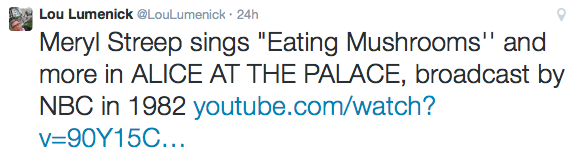
One of the great pleasures of a long holiday period, with one’s office is closed for an extended time, is the freedom to go exploring, be it in life or online, guilt-free (or at least relatively so). That’s exactly what happened when I spotted a single tweet from the New York Post’s film critic, Lou Lumenick, who I’ve found to be a terrific and entertaining source of film knowledge and trivia. Lumenick’s timing, of course, is particularly apt, as the tweet led to a complete online video of Meryl Streep as Alice (of Lewis Carroll’s invention), just as Streep is onscreen right now in another updating and revision of children’s tales, Into The Woods.
https://www.youtube.com/watch?v=90Y15Crljk4
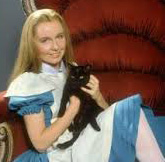
This particular Alice in Wonderland adaptation, written by Elizabeth Swados and produced by Joseph Papp and the New York Shakespeare Festival, was far from unknown to me (though I’d not seen it onstage), but I had long forgotten that it had been recorded for television. Now this isn’t some obscurity from Streep’s pre-stardom days, but rather part of her initial rush of fame, following (among others) Manhattan, The French Lieutenant’s Woman, The Deer Hunter and Kramer vs. Kramer. But in addition to preserving one of Streep’s early stage performances, it saved those of a number of up-and-coming actors, including Deborah Rush (sexy and hilarious the following year in Noises Off), Mark Linn-Baker (who I had first seen in his student days at Yale), Debbie Allen (already seen in the films Fame and Ragtime) and the great, lost-too-soon Michael Jeter. How wonderful that the whole program is online (legally, I hope).
For once, the column of suggested videos that came up alongside the main screen on YouTube was actually a great predictor, because it tipped me that another Alice in Wonderland which had originated on stage was also online. Though it had lasted only weeks on Broadway in 1982-83, a revival of Eva Le Gallienne and Florida Friebus’s 1932 Alice version made it to TV as well, starring its original stage Alice, the then little-known Kate Burton, in the title role. While one can look back at the stage cast and be impressed – it included Edward Hibbert, Nicholas Martin, a young Mary Stuart Masterson and Le Gallienne herself – the TV cast was even more remarkable. Eve Arden, Kaye Ballard, James Coco, Andre de Shields, Colleen Dewhurst, Andre Gregory, Geoffrey Holder, Nathan Lane, Donald O’Connor, Maureen Stapleton and, most significantly and poignantly, Richard Burton, were all in the PBS version.
As it turns out, there was something in the air in the early 80s when it came to Alice in Wonderland, because yet another adaptation, this one wholly original to TV, turned up in 1985, melding stage and screen stars in a production that may have been made for TV, but still felt very theatrical. The cast included Red Buttons, Sid Caesar, Carol Channing, Imogene Coca, Sammy Davis Jr., Sherman Hemsley, Roddy McDowell, Robert Morley, Anthony Newley, Donald O’Connor (again, albeit in a different role) and Martha Raye; Scott Baio, Telly Savalas, Ringo Starr and Ringo Starr were also along for the ride. The musical staging was by Gillian Lynne (perhaps best known for her choreography of Cats), with songs by Steve Allen; the script was by playwright Paul Zindel and, curiouser and curiouser, it was produced by the master of disaster Irwin Allen.
https://www.youtube.com/watch?v=lhXNgdlpegA
https://www.youtube.com/watch?v=cufnyyEXX9g
Once my explorations had begun, I couldn’t stop. I was quickly led to a 1972 film version of which I was unaware, from England, which had yet another heavyweight roster of stars, with that special British cachet and, yet again, significant stage credits, as well serious comedy chops. Among those appearing in Alice’s Adventures in Wonderland were Michael Crawford, Michael Hordern, Roy Kinnear, Spike Milligan, Dudley Moore, and Peter Sellers. The production looks, once again, rather stagey and the transfer to video is decidedly shaky; though the IMDB notes it as a film, I can’t help but think that it might have had TV roots in the UK, given the look of the production.
https://www.youtube.com/watch?v=aT6BLVBta9Q
Rather more recent was the 1999 Alice in Wonderland, produced by Robert Halmi Sr. and Jr., part of a series of big fantasy TV movies they were creating at that time. While I recall not being too fond of it, having found all of the Halmi projects overblown, it has another noteworthy, largely British cast, and a screenplay by the great and too-often overlooked playwright Peter Barnes. In this fantasy mix were, among others, Simon Russell Beale, Robbie Coltrane, Whoopi Goldberg, Ben Kingsley, Christopher Lloyd, Miranda Richardson, Martin Short, Peter Ustinov, and Gene Wilder.
https://www.youtube.com/watch?v=UKVlqQnkzok
There are, frankly, countless adaptations of Alice in Wonderland, for the stage, for film and for television, both live action and animated, and sometimes a mix of both; this foray is hardly comprehensive. But as one more demonstration of how Lewis Carroll’s tale proved to be (Cheshire) catnip for television, here’s an example from the very early days of the medium – even though in 1954 it comes from the seventh annual presentation of this particular version. With a cast including Edgar Bergen and Charlie McCarthy, Art Carney, and Arthur Treacher, it’s very primitive, and I can’t help but wonder who appeared in the earlier versions, since technology allowing for “repeats” had yet to come into vogue.
For all that I found in my admittedly cursory search, there’s one more TV Alice in Wonderland that YouTube didn’t serve up to me – a 1955 Hallmark Hall of Fame version of the LeGallienne and Friebus script for NBC, with Le Gallienne, Tom Bosley, Maurice Evans and Elsa Lanchester, among others. If you happen to find it, do let me know. In the meantime, I trust the various incarnations above will be more than enough for a satisfying journey, like mine, down the rabbit hole. Happy new year to all!
Hands on a Hardbody at Houston’s Theatre Under The Stars
Are these my “best” blog posts of 2014? I couldn’t say. All I know is that they’re my most read, from a year in which page views on my site more than doubled over 2013.
Certainly 2014 was a year in which my writing found more focus, and whether the most-read posts bear out readers’ interest in that focus, or are simply a byproduct of a somewhat narrower range of subjects, I also don’t know. But if you’ve only discovered me part way through the year, or only read me sporadically, maybe there are a few posts here that escaped your attention, and if you’re interested, this will save you some scrolling and clicking.
Curtain call for Little Shop of Horrors at Jonathan Law High School
Before I start the official list, I want to bring your attention to a post which finished just out of the Top 10, the sad and yet remarkable story which bears out the sentiment “the show must go,” even when the show is a high school musical and when one of the cast members is murdered. To me, this story encapsulates so much about what theatre can offer, even at the worst times.
Here’s the full rundown of the Top 10, in publication order, with some related posts included in my comments so as not to be too repetitive. Clicking on the titles will take you to the individual pieces.
Was I surprised by this instance of unauthorized text alterations to a Brian Friel play at the Asolo Rep? Yes. But this turned out to merely be the precursor to a more widely-known incident yet to come, in Texas in June. Still, it was evidence that the issue of copyright and author’s rights isn’t just about high schools tinkering with “inappropriate” content – it can happen anywhere.
It’s not usually fair to criticize a critic for a review of a production, since it’s their opinion, so when I wrote this piece taking a Philadelphia critic to task, I tried to do so on the basis of text and fact, not opinion. I received a lot of response about this piece, a great deal of it privately.
Some found my stated “solution” overly simplistic, so either I failed to make, or they failed to recognize, my point about arts journalism lasting only as long as the metrics bear out an interest on the part of readers.
If you find me rather grouchy every Monday at 3 pm, it’s because that’s when the Broadway grosses are released, with one or more shows variously pronouncing the achievement of a new “sales record.” A number of outlets report these figures week in and week out, even though there’s usually a limited amount of actual news that matters to anyone outside the business. The “season” and “annual” compilation figures tend to provoke me even more, due to the perpetually positive spin even when the real story can be found by looking just a bit more carefully at the numbers.
I was a bit surprised that this piece got the attention it did, as I wrote it after several West Coast outlets had already reported on this incident. Why my account drew lots of eyes I’ll never know, but I do hope it’s used in many arts management classrooms to speak to the essential nature of a well-trained front of house staff, no matter what size your theatre may be.
The movie’s out. Now people can like the changes or not, but at least they’re judging the complete work, not stray accounts (which even Sondheim ended up disavowing). I’m seeing it on New Year’s Eve, FYI.
I remain the only writer to interview Theater Under the Stars artistic director Bruce Lumpkin about his reworking of the text and score of the musical Hands On A Hardbody. The theatre pretty much circled the wagons as soon as my piece came out, even declining to speak with American Theatre magazine when Isaac Butler looked at the incident and the issue a few months later.
Let’s hear it for anonymous tips! I was the first to report this story, an unpleasant account of the ousting of an artistic leader by a board that sought to portray it as a voluntary separation (foreshadowing the scenario between Ari Roth and Theater J just this month). I do find myself wondering why the outcry over Theater J has been so much greater, when the Women’s Project situation had some notable similarities.
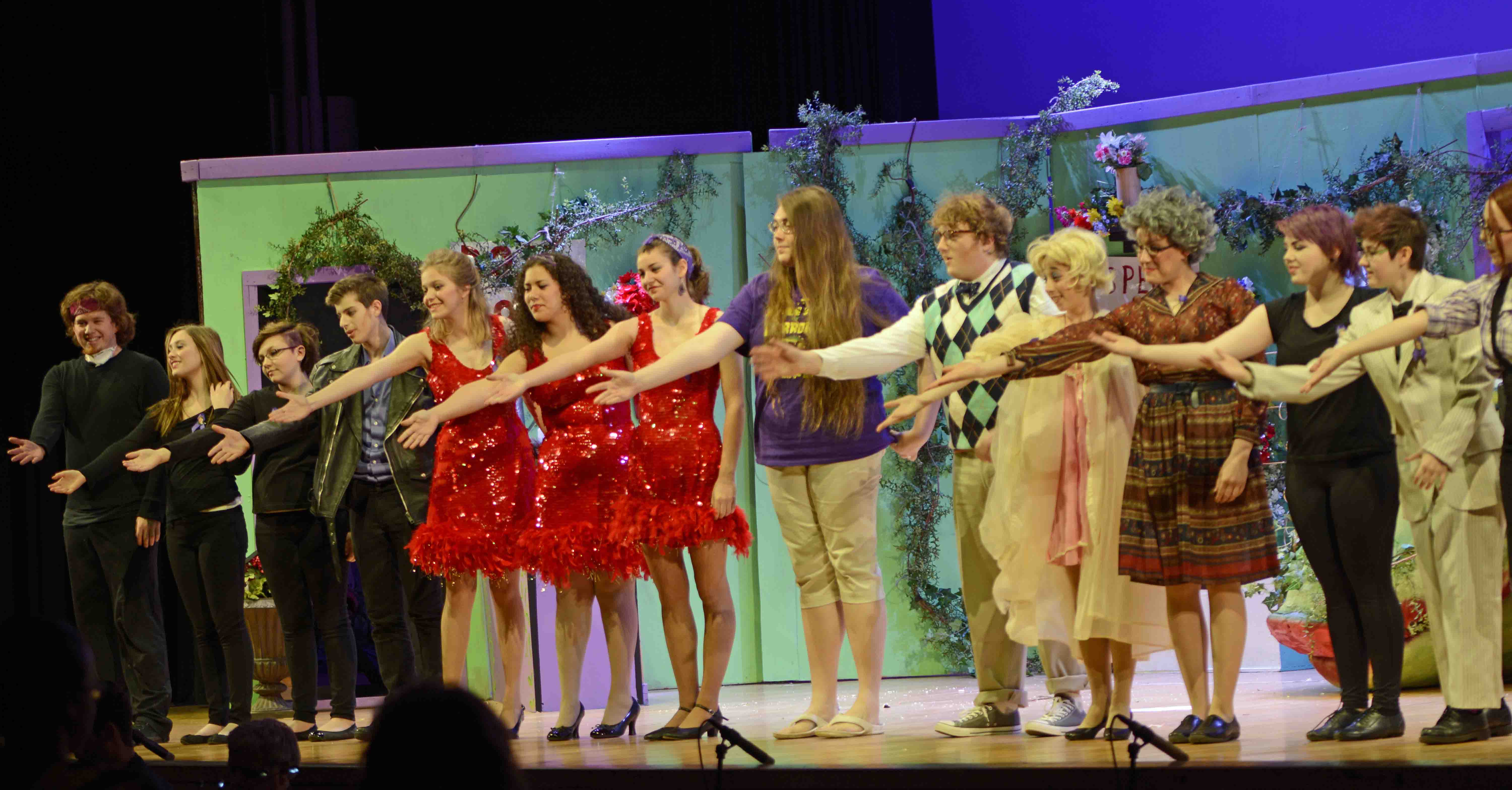
This was certainly the biggest school theatre censorship story of the year that I covered, as it played out over the course of nearly four months, from when it was first reported in the local Pennsylvania media. It was the final, unfortunate post that received the most attention, but for those who don’t want to start at the end, two other highly read posts on the situation in South Williamsport PA were “Trying To Find Out A Lot About A Canceled Spamalot” (July 15) and “Facts Emerge About School ‘Spamalot’ Struck Out Over Gay Content” (August 21). I wish I had written a blunter headline for the latter story, because it revealed that school officials had indeed lied about the reasons behind the cancelation of the show, and I regret not calling them out as strongly as possible. To my knowledge, they have not been held to account for spreading disinformation.
While the school was let off the hook for buckling under to outside pressure because the students took matters into their own hands, it’s encouraging to know that their production of Almost, Maine is only weeks away, as detailed in “Falling For ‘Almost, Maine’ in North Carolina in January.”
Though I don’t place it in the official Top 10, because it’s a compilation rather than something I actually “wrote,” my piece chronicling the censorship and restoration of work by my friends at the Reduced Shakespeare Company as they embarked on a tour starting in Northern Ireland is also one of my most read for 2014.
Finally, my thanks to you for reading, clicking, liking, favoriting and sharing, and for your comments on the posts themselves, on Twitter and on Facebook. It’s truly appreciated.
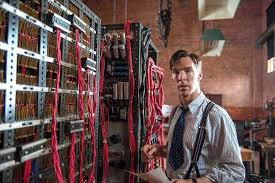
As prestige movies open pell-mell in the next few weeks, and Oscar campaigns already underway blaze into full public awareness, one of the contenders will surely be The Imitation Game, starring Benedict Cumberbatch and Keira Knightley. It tells the story of Alan Turing, the British mathematician who is widely credited with breaking the Nazi’s “Enigma” code and whose name is regularly invoked in discussions of artificial intelligence, specifically over how or whether we might one day create a machine whose thoughts are indistinguishable from those of a human.
Alan Turing
As with any major film, especially one with Oscar hopes, there will be a near-avalanche of stories about the film: its director, its stars, its writer – and the man who inspired it. I don’t want to give much away for those unfamiliar with the tale, but Turing’s life truly encompassed World War II intrigue, intellectual triumph, reprehensible bias, persecution and injustice, and great tragedy. There’s going to be a cottage industry of stories on Turing – paeans, revisionist history, alternative views, and so on, right up through Oscar night.
For many, this may be their first encounter with the Turing story and they’ll be drawn in by the considerable glamour and talent of Cumberbatch and Knightley (I haven’t seen it yet, so I’m going solely on the advance word and promotion). There’s a cautionary part of the story that’s well worth being told many times over.
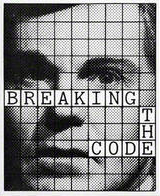
Broadway logo for Derek Jacobi in Breaking The Code
But for theatregoers with moderately long memories (I count myself among them), The Imitation Game will come as something less than a revelation historically, because the West End and Broadway beat the movies to the punch almost 30 years ago, with Derek Jacobi as Turing in Hugh Whitemore’s play Breaking The Code. Like The Imitation Game, it was based on Andrew Hodges’s book Alan Turing: The Enigma.
Breaking The Code played for six months in New York 1987-88, following on the heels of Jacobi’s triumphant performances in the Royal Shakespeare Company’s repertory of Cyrano de Bergerac and Much Ado About Nothing (both opposite Sinead Cusack); I was fortunate enough to have seen all three, and it cemented my deep admiration for Jacobi as one of the finest actors of his generation. As for the play, while I long believed that it was Jacobi who truly made the experience remarkable, and unrepeatable, I saw the show years later at the Berkshire Theatre Festival with Jamey Sheridan in the Turing role, and to my surprise I was once again fascinated and deeply moved.
Now of course vastly more people see most movies than see a play, but as Imitation Game launches, I was thrilled to discover that Jacobi’s performance has been preserved, in a 1996 BBC adaptation of the play by Hugh Whitemore, available online in its entirety.
https://www.youtube.com/watch?v=S23yie-779k
While it is an adaptation, not simply a film of the play, the TV version will give us a chance to see two portrayals of one man by two superb actors, refracted through the views of different writers and directors – and societal growth and change regarding LGBTQ life and rights – at an interval of 30 years.
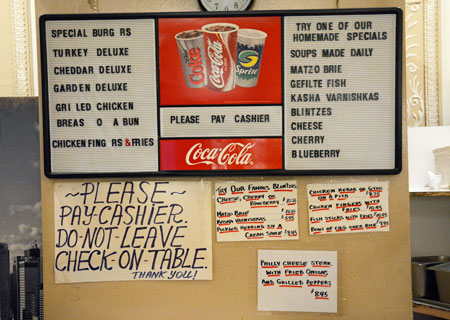
When the news hit on Thursday, it flew around the New York theatre community as quickly as the unexpected closing of a Broadway show.
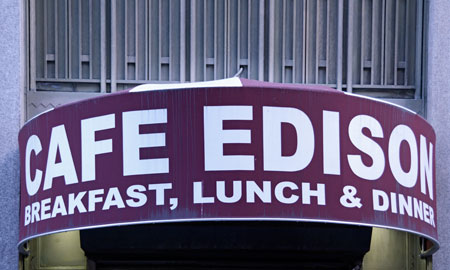
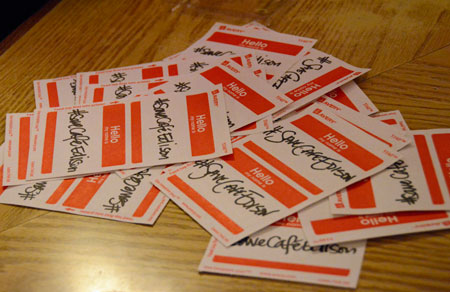
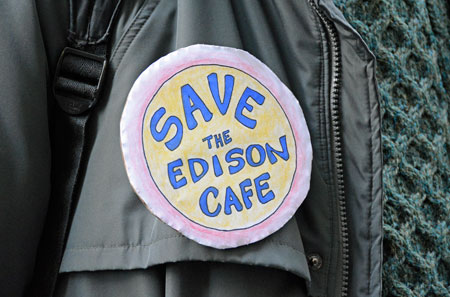
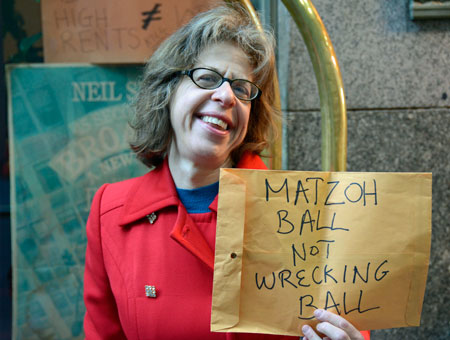
The Cafe Edison on 47th Street is a fixture, one that opened in 1980, but seems as if it has been there much, much longer. From the moment people heard it was being evicted to make way for an upscale restaurant, mourning began (even though it will be around for another month or so), with theatre district denizens eulogizing it as one of the last vestiges of the “old” Times Square, more of a piece with Colony Records and Howard Johnson’s than American Eagle and the Build-a-Bear Workshop.
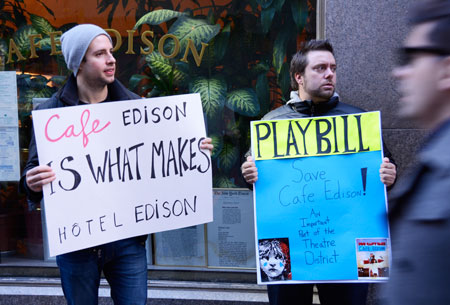
Others have written eloquent commemorations of a place not yet quite gone (Julie Klausner’s is startlingly similar to my own thoughts on both the restaurant and the announcement), so I won’t attempt to top any of them (I am on record in the New York Daily News). However, as some stalwarts organized before today’s matinee to rally against the decision by the owners of the space, which is part of the Edison Hotel, I felt the least I could do was to commemorate their demonstration of support.
If you’d like to sign a petition in support of the Cafe Edison, in hope of persuading the craven property owners to reverse their edict, click here for the official effort.
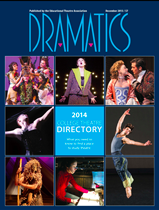
Aside from being the month of copious pumpkin flavored foodstuffs, October also brings two perennial theatrical top ten lists that are worthy of note: American Theatre magazine’s list of the most produced plays in Theatre Communications Group theatres for the coming season and Dramatics magazine’s lists of the most produced plays, musicals and one-acts in high school theatre for the prior year. They both say a great deal about the state of theatre in their respective spheres of production, both by what’s listed explicitly, as well as by what doesn’t appear.
In the broadest sense, both lists are startlingly predictable, although for different reasons. If you happen to find a bookie willing to give you odds on predicting the lists, here’s the trick for each: for the American Theatre list, bet heavily on plays which appeared on Broadway, or had acclaimed Off-Broadway runs, in the past year or two. For the Dramatics list, bet heavily on the plays that appeared on the prior year’s list.
But in the interest of learning, let’s unpack each list not quite so reductively.
American Theatre
As I’ve written in the past, what happens in New York theatre is a superb predictor of what will happen in regional theatre in the coming seasons, especially when it comes to plays. Any play that makes it to Broadway, or gets a great New York Times review, is going to grab the attention of regional producers. Throw in Tony nominations, let alone a Tony win – or the Pulitzer – and those are the plays that will quickly crop up on regional theatre schedules.
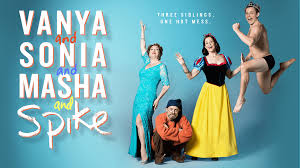
Anyone who follows the pattern of production would have easily guessed that Christopher Durang’s Vanya and Sonia and Masha and Spike would proliferate this year, being a thoughtful, literary based comedy with a cast of only six. That American Theatre lists 27 productions doesn’t even take into account the 11 theatres that did the show in 2013-14, and certainly there are non-TCG theatres which are doing the show as well. It’s no surprise that Durang has said he made more money this past year than in any other year of his career; it’s a shame that financial success has taken so long for such a prodigiously gifted writer and teacher.
In general, shows on the American Theatre list have about a three year stay, typically peaking in their second year on the list, but this can vary depending upon when titles are released by licensing houses and agents to regional theatres. 25 years ago (and more significantly years before that) theatres might have had to compete with commercial tours, but play tours are exceedingly rare birds these days, if not extinct.
Perhaps this rush to the familiar and popular and NYC-annointed is disheartening, but it’s worth observing that the American Theatre list notes how many productions each title gets, and that after the first couple of slots, we’re usually looking at plays that are getting 7 or 8 productions in a given season, across TCG’s current universe of 474 member companies (404 of which were included in this year’s figures). Since the magazine notes a universe of 1,876 productions, suddenly 27 stagings of a single show doesn’t seem so dominant after all. Granted, TCG drops Shakespeare from their calculations, but even he only counted for 77 productions of all of his plays across this field. So reading between the lines, the American Theatre list suggests there’s very little unanimity about what’s done at TCG member theatres in any given year, a less quantifiable achievement but an important one.
Dramatics
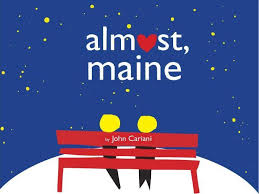
While titles come and go on the American Theatre list, stasis is the best word to describe the lists of most produced high school plays (it’s somewhat less true for musicals). Nine of the plays on the 2014 list were on the 2013 list; 2014 was topped by John Cariani’s Almost, Maine, followed by A Midsummer Night’s Dream and the two titles were in reverse order the prior year. The other duplicated titles were Our Town, 12 Angry Men (Jurors), You Can’t Take It With You, Romeo and Juliet, The Crucible, Harvey and The Importance of Being Earnest.
Like the American Theatre list, the Dramatics survey doesn’t cover the entirety of high school theatre production; only those schools that are members of the Educational Theatre Association’s International Thespian Society have the opportunity to participate, representing more than 4,000 high schools out of a universe of 28,500 public, private and parochial secondary schools in the country. Unlike the Dramatics list, there are no hard numbers about how many productions each show receives, so one can only judge relative popularity.
Almost, Maine’s swift ascension to the top rungs of the list is extraordinary, but it’s due in no small part to its construction as a series of thematically linked scenes, originally played by just four actors but easily expandable for casts where actor salaries aren’t an issue. Looking at recent American Theatre lists, they tend to be topped by plays with small casts (Venus in Fur, Red, Good People and The 39 Steps), while the Dramatics list is the reverse, with larger cast plays dominating, in order to be inclusive of more students (though paling next to musicals where casts in school shows might expand to 50 or more).
The most important trend on the Dramatics list (which has been produced since 1938) is the lack of trends. Though a full assessment of the history of top high school plays would take considerable effort, it’s worth noting that Our Town was on the list not only in 2014 and 2013, but also in 2009, 1999 and 1989; the same is true for You Can’t Take It With You. Other frequently appearing titles are Arsenic and Old Lace, various adaptations of Alice in Wonderland, Harvey, and The Miracle Worker.
No doubt the lack of newer plays with large casts is a significant reason why older classic tend to rule this list; certainly the classic nature of these works and their relative lack of controversial elements play into it as well. But as I watched Sheri Wilner’s play Kingdom City at the La Jolla Playhouse a few weeks ago, in which a drama director is compelled to choose a play from the Dramatics list, I wondered: is the list self-perpetuating? Are there numerous schools that seek what’s mainstream and accepted at other schools, and so do the same plays propagate themselves because administrators see the Dramatics list as having an implied educational seal of approval?
That may well be, and if it’s true, it’s an unfortunate side effect of a quantitative survey. But it’s also worth noting that many of these plays, vintage though they may be, have common themes, chief among them exhortations to march to your own drummer, to matter how out of step you may be to the conventional wisdom. They may be artistic expressions from other eras about the importance of individuality, but in the hands of teachers thinking about more than just placating parents, they are also opportunities to celebrate those among us who may seem different or unique, and for fighting for what you believe in against prevailing sentiment or structures.
* * *
Looking at musicals on the American Theatre list is a challenge, because their list is an aggregate of plays and musicals, and while many regional companies now do a musical or two, it’s much harder for any groundswell to emerge. In the last five years, only three musicals have made it onto the TCG lists, each for one year only: Into The Woods, Spring Awakening and The 25th Annual Putnam County Spelling Bee. That doesn’t mean there’s a dearth of musical production, it simply shows that the work is being done by companies outside of the TCG universe.
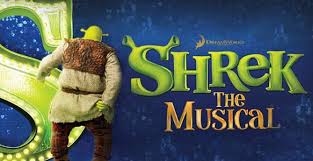
Musicals are of course a staple of high school theatre, but the top ten lists from Dramatics are somewhat more fluid. While staples like Guys and Dolls, Grease, Once Upon a Mattress, You’re A Good Man Charlie Brown and Little Shop of Horrors maintain their presence, newer musicals arrive every year or two, with works like Seussical, Legally Blonde, Spelling Bee, and Thoroughly Modern Millie appearing frequently in recent years. At the peak spot, after a six-year run, Beauty and the Beast was bested this year by Shrek; as with professional companies, when popular new works are released into the market, they quickly rise to the top. How long they’ll stay is anyone’s guess, but I have little doubt that we’ll one day see Aladdin and Wicked settle in for long tenures.
* * *
When I looked at both the American Theatre and Dramatics lists over a span of time, the distinct predictability of each was troubling. Coming out when they do, before most theatrical production for the next theatre season is set, I’d like to see them looked at not as any manner of affirmation, but as a challenge – whether to professional companies or school schedules. I admire and enjoy the plays that are listed here, and nothing herein should be construed as critical of any of these shows; audiences around the country deserve the opportunity to see them. While I do have the benefit of living in New York and seeing most of these popular shows there, I must confess that I am most intrigued by the theatre companies and school groups that might just say to themselves, ‘Let’s not do the shows, or too many of the shows, that appear on these lists. Let’s find something else.’ Those plays may never appear as part of any aggregation, but I suspect the groups’ work will be all the more interesting for it, benefiting both artists and audiences.
I created the fortnightly “American Stages” column for The Stage in London in 2013 with the mandate to cover news of American theatre news that didn’t necessarily warrant a standalone story and wasn’t being widely covered in other UK media. It gave me the ongoing opportunity to mix commercial with not-for-profit, Broadway with regional, as I saw fit, all targeted primarily at a readership of theatre professionals in the UK. Beginning in October 2014, the column became a weekly feature. Given the relatively tricky formatting of the original pieces, this pages serves as an index that will take you to each column as it appears on The Stage’s website, and will be updated on a rolling (and somewhat erratic) basis.
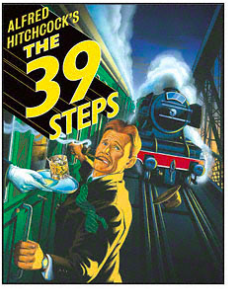
There was a time, children, not so very long ago, when hit plays ran much longer than than 131 performances. Why 131? Because in the last ten complete Broadway seasons, that’s the average of how long a play – new or revival – ran. Yet, out of 313 plays in that decade, only 21 plays ran for 200 performances or more, and only seven ran for 300 performances or more. No play in the past decade topped 800 performances, as The 39 Steps stopped climbing at 794 performances and War Horse headed for the stables at 741.
Going back 40 years ago, specifically to the 1974-75 season, out of the 42 plays produced on Broadway that year alone, four plays ran over 200 performances, three ran over 400 performances, one ran a hair under 600 performances, and two ran well past 1,000 performances. Those last two plays, FYI, were Same Time Next Year and Equus.
For perspective, a year of performances, assuming 52 weeks at eight shows a week, is 416 performances. So that means in the past 10 years, only five shows ran for more than a year. In 1974-75 alone, four did. What happened?
Well, based on studying the past decade, and then looking at the prior 25 years at five year intervals, it seems the average length of runs for a play hasn’t changed much: from 146 then to 131 now, all of two weeks variance. As Ken Davenport pointed out, new plays run longer than revivals; on average, the difference between them over the past 10 years is about five weeks.
One key factor is that when you go back to the days when plays ran for a year or two or more, there were many more shows that ran only a handful of performances. It wasn’t uncommon for show to play two or three previews, open, and shutter almost instantly. The long-runners were balanced by the fast-closers. With extended preview periods now, the idea of a show that doesn’t manage to play for at least a month is unheard of; even Elling performed 29 times and The Performers exposed themselves 30 times.
Today, when the solid base of fixed runs at Roundabout, Lincoln Center and Manhattan Theatre Club accounts for a significant amount of the dramatic activity on Broadway, relatively short runs are more common. Place them alongside the now common star-driven limited runs of 13 to 17 weeks, and the 131 performance average makes perfect sense. The average run per season only varied significantly once in the past decade, in the 2007-08 season, thanks primarily to The 39 Steps and August: Osage County (666), with assists from Boeing Boeing (296) and November (238).
So as much as we might want to complain about the brevity of plays’ runs on Broadway, the minor difference in average runs suggests that things haven’t really changed all that much. Even when we go back into the 1970s, when it wasn’t uncommon to find 40 or more new plays in a season, the average held.
In an era where hit musicals run longer than ever, why are hit plays running shorter? People are quick to blame the short, star-driven runs of plays, where brief runs can gross more than $1 million a week and generate profits without overstaying their welcome – and that’s not untrue. But the long-runners nowadays are plays that are launched without stars – The 39 Steps, War Horse, August: Osage County, Peter and The Starcatcher. Only one significant long-runner in the past decade was star-driven – God of Carnage – and therein lies a big catch.
Long-running plays are those which either aren’t conceived as star vehicles or, even when star driven, take the leap and make cast changes, or even introduce entirely new casts. There were three casts for Carnage, and while the presence of James Gandolfini undoubtedly was key to launching the play, it proved (not unlike playwright Yasmina Reza’s Art) that a play could become a hit even without maintaining its original cast. In the case of August: Osage County, cast replacements were actually better known than those who originated the roles: Deanna Dunagan may have won a Tony, but even regular theatregoers were probably more familiar with her successors, Estelle Parsons and Phylicia Rashad.
It would appear that long-running plays have fallen victim to the conventional wisdom that only stars are stars, that plays can’t be stars. But even if we were to accept that as true, look at what Equus managed: Anthony Hopkins (who was far from a star in those days) was succeeded by, among others, Anthony Perkins, Leonard Nimoy and Richard Burton. Yes, that’s right – Burton was a replacement. Though not in the years I selected, let’s also remember that The Elephant Man originally starred the unknown Philip Anglim, who was followed by, among others, David Bowie. I would put it to casting directors to answer the question of whether stars are no longer willing to succeed others on Broadway, at a time when ostensibly there are more name actors than ever seeking the professional credibility that a Broadway stint can bring. Or is it that profit margins are so low that producers aren’t willing to risk installing a new star or new cast?
With the kind of money at risk on Broadway these days – a play will cost $3 million or more – there is an understandable desire to minimize risk. But in the process, plays have been minimized as well. The length of plays’ runs, and the size of the theatres they play in, certainly explain why 80% of Broadway attendees see musicals. But the data, both old and new, bears out that once a play succeeds, provided the success is based on something more than just the celebrity of a cast member, plays can still be coaxed into longer runs, allowing non-musical pieces to perhaps claw back a bit more of Broadway. Maybe we’ll never return to the days when “the play’s the thing” on Broadway, but perhaps they can be more of a thing than they’ve been lately.
* * *
Note: The years cited prior to the 2004-2005 season are a sampling of the period, not complete (I have neither sufficient time nor any staff to research as much as I’d like). The plays cited from that period are not necessarily the longest runners ever (Gemini (1,819) and Deathtrap (1,793) are among the plays that outran them), but simply happened to fall within the years selected during the defined span of time. Even longer running plays date back to the days of Tobacco Road (3,182 performances) and Life With Father (3,224), but the fundamental changes in Broadway since that time render any comparison uninstructive. There have been changes since the 70s as well, but it is not so far in the past as to be invalid for comparison’s sake.
Almost as quickly as the Into The Woods trailer appeared, my social media feeds were filled with an anguished refrain: where are the songs? Yes, the core audience felt betrayed, even though I suspect every person who was moved to write already knows the score by heart.
What those of us who love theatre in general, musicals in particular, and Sondheim most of all have to remember is that, sadly, we are not representative of the majority of moviegoers, and movie marketers have to throw a wide net. Those of us who flock to watch the trailer of Into The Woods are already committed to seeing it, no matter how much we may want to grouse about it. The film studios are trying to reach a much wider crowd, for whom the sight of stars singing may be off-putting, strange as such a thought may be to those of us who are ready to belt out a show tune at the slighted prompting. It’s also possible that we’ll get a more representative trailer as the film draws closer.
Minimizing the musical theatre connection has certainly been true for movie musicals for some time. It’s almost as though marketers are trying to slip the fact that people sing past potential audiences. Unlike Into The Woods, which does seem more like a moody tour of the film’s production design than anything, music is prominently featured in countless trailers, even for non-musical films, and sometimes with music that isn’t ever heard in the film. But when it comes to seeing people sing, let’s keep that quiet, shall we? We can hear singing in trailers, and see people moving their lips, but not in sync. Take a look at the trailer for Hairspray as an example.
https://www.youtube.com/watch?v=iJ53mRO80c0
Dancing, apparently, isn’t so problematic. The Dancing with the Stars effect has probably only increased its appeal. Another example is Mamma Mia! which looked as if it was a romantic comedy with a bunch of Abba songs on the soundtrack, rather than a story told using Abba songs. One can understand why they wouldn’t have wanted anyone to see and hear Pierce Brosnan warbling, but the sight of master thespian Meryl Streep going to town on some Swedish pop might have added some appeal in its very incongruity.
Maybe Paramount knew the theatre purists were already on edge when they cut the trailer for Sweeney Todd, given the relative musical inexperience of the main cast (which many feel lived down to their expectations), which keeps vocals to a minimum. Despite that, more than most musical trailers, Sweeney actually gave us a real look at a bit of a song, “Epiphany,” spoke-sung by Johnny Depp (although we were halfway through the trailer before it was deployed). However that could easily be recognized as a fantasy sequence and seemingly not the style of the whole film. Overall the trailer hewed closer to the Hammer Films homage that director Tim Burton had appropriated for the Grand Guignol tale, and maybe a few Fangoria devotees were lured into a musical they’d have avoided otherwise.
It’s not that we don’t get a few glimpses of people singing in some trailers, but in the quick-cut style that brings them flash and energy, there is a certain “blink or you’ll miss it” quality, even when the making of music is central to the plot, as in the Dreamgirls trailer, where one would think performance footage of a superstar like Beyoncé would actually be a plus.
The incongruity of Eddie Murphy singing may be why we saw a bit of exactly that in Dreamgirls, and the same rationale may have applied to Depp in Sweeney, as well as Catherine Zeta-Jones and Renee Zellwger as the merry murderesses in the trailer of Chicago. For Zellweger, the singing was new; for Zeta-Jones it was part of her professional background, but before she became a star. Perhaps singing from people we least expect to sing has marketing value.
Mind you, this fear extends to movies that aren’t musicals but tell musical stories and in which the main characters are known to us precisely because they’re singers. The flash of the trailer for the just-released Get On Up, about James Brown, gives us glimpses of his energetic performances and we hear his music along with narration and dialogue, but lips actually moving along with the songs go largely unseen. Of course, given the subterfuge with which actual musicals are being marketed, I can’t help but wonder whether some audiences see this and think, “Uh, I dunno. I think they’re trying to slip one of those durned musicals by us.”
As much as we purists might be desperate to see musical scenes as quickly as possible, we can be fairly sure that the film itself will be a musical, even if it has been adapted and altered from its stage version. The example of Irma la Douce, one of the very few musicals to be adapted for the screen without the songs, is unlikely to recur.
So what about original musicals for the screen? To be fair, original live action film tuners are scarce, except for animation, where, since Disney’s The Little Mermaid, a mini-song score seems de rigeur. But is that a selling point? On the basis of the trailer for Frozen, which ultimately drilled Idinia Menzel’s “Let It Go” into the brains of millions of kids and their parents worldwide, even Disney wasn’t sure that the massively successful score was going to bring in the crowd. The film seemed to be the story of one girl, one boy and one talking snowman. However, to be fair, even though they hid it, the word got out about the exceptional songs.
The trailer for Les Miserables did show us Anne Hathaway as the doomed Fantine singing “I Dreamed A Dream,” in fact it’s all we hear as we watch that trailer – all of the other visuals that are laid over it could easily come from a non-musical. No warbling Wolverine here. Perhaps, to the handful of people in the world who have managed to escape any knowledge of the stage musical, this one song could be an isolated case. But this trailer more than any demonstrates the marketing tactic that prevails: don’t make it look too much like a musical in the hope of capturing some people who may not like musicals, and as for the core audience, we’ll throw ‘em a bone.
I wish I could recall which Twitter wit I read who compared movie trailers without songs to foreign film trailers without dialogue, since I would like to credit them for that very astute observation. But it’s worth noting that foreign films are financed and produced abroad, then picked up for distribution over here; the Hollywood studios shoulder vastly greater risk when they release musicals. While I’m fairly grouchy about the studios these days, with the endless remakes, sequels and films from dystopian young adult novels (thanks Mark Harris for that), I really am willing to give them a lot of leeway on musicals, to a degree on how they adapt them, but certainly on how they sell them. For perspective: if a musical sells 600,000 tickets in a year, it’s a smash; if a movie musical sells 600,000 tickets in its first week, it’s a disappointment. And after all, if a trailer whets our appetite for a movie musical, we can always fire up the iPod, or our Sondheim channel, and listen and sing along to our heart’s content until the movie comes out. After all, haven’t we been doing that already?
Incidentally, we’re getting two musicals this Christmas. In addition to Into The Woods, everybody’s favorite orphan is back, and on the basis of the trailer, while it’s hard to know what’s been done with the story and most of the score, at least we know it will still be a hard knock life tomorrow, though we may not be entirely sure of who’s singing.
Nineteen sixty-two was too late for vaudeville, and surely the Roman comedies of Plautus were known only by Latin academics. But with the debut of A Funny Thing Happened on the Way to the Forum, these two great comedy epochs were inextricably linked right from the first notes of “Comedy Tonight,” one of the great opening numbers of any musical.
Instead of introducing us to the characters or putting the plot in motion, it seeks only to tell the audience what kind of show they’re about to see. The song is a litany of quick, descriptive rhymes (erratic/dramatic, convulsive/repulsive, surprises/disguises) that set only mood, a lightning bolt of perfection instigated by choreographer and show doctor Jerome Robbins after two prior songs had been discarded out of town.
It’s ironic that Forum delivered such a show-stopping standard in the first five minutes, since it has been confirmed by composer-lyricist Stephen Sondheim that his show’s songs were meant to give audiences a respite from laughing, as had songs in the theatre of Plautus. While Sondheim is repeatedly critical of Forum’s score in his book of annotated lyrics, Finishing the Hat, it has considerable charm, most notably “Everybody Ought to Have a Maid,” a paean to feminine domestic help, replete with built-in encores.
When first I saw the film version directed by Richard Lester, I got a taste of what the whole show might be. But I’ll admit to some disappointment, generated perhaps because I was watching alone, perhaps because film is the enemy of spontaneity, perhaps because the fully realistic design was fighting the complete artificiality that is farce. It did, however, blend Broadway originals Zero Mostel and Jack Gilford with Michaels Hordern and Crawford.
It was only when I was at university, and cast in the supporting role of henpecked, randy husband Senex in a dramatic society production, that I came to know Forum fully – and to realise that bookwriters Burt Shevelove and Larry Gelbart were the true masterminds, even though by then I had completely fallen for Sondheim via Sweeney Todd.
Forum’s criss-crossing plots – the slave Pseudolus’s desire to be a free man, the Roman boy Hero’s search for love, the virgin Philia’s resignation to a life bound to a man by contract, Hysterium’s impotent efforts to keep order, Erronius’s search for his lost children – built one upon the other. This carefully wrought framework made room for leggy chorus girls, repeatedly mistaken identities, well-honed schtick and some wonderfully low puns. Whatever the merits of that college production, the show’s brilliant construction ensured that we were met by gales of laughter each night.
Convulsed audiences seem almost guaranteed in Forum – theatre history bears out its Broadway success originally with Mostel and a decade later in revival with Phil Silvers, then two decades after that with Nathan Lane, followed by Whoopi Goldberg. Frankie Howerd launched the show in London in 1963 and now another British comic favourite, James Corden is rumoured for the forthcoming Broadway revival. The talk of Corden seems both genius and a no-brainer, since One Man, Two Guvnors‘ Francis Henshall is a direct spiritual descendent of Pseudolus in his appetites, his self-made muddles and his manipulative ingenuity under pressure.
There is perhaps something perverse in championing Forum, since it flouts so much of what we’re told a musical should do. The songs say little about the characters, and don’t advance the story. It requires choreography, but demands little true dancing. In its emphasis on plotting, it does away with music altogether in the latter half of the second act (as does another favourite, plot-heavy musical, 1776). But Forum, a couple of millennia after Plautus and more than a half-century since its debut, is a marvel of gleefully saucy yet wholly innocent vintage and modern farce that wants nothing more than to leave you spent from laughter, humming a catchy tune. What’s not to love about that?

 At this year’s SXSW Festival, a new app, Meerkat, saw a frenzy of adoption by attendees, so much so that Twitter moved to quickly curtail the app’s access to Twitter data. The reason for that draconian move came clearer yesterday when the app Periscope, which is owned by Twitter, was launched as a direct competitor to Meerkat.
 The quality of streams via these apps would leave much to be desired (think of your stream also capturing the heads of those in front of you, and the couple on your left whispering about their dinner plans). They’d hardly capture the work on stage at its best, but if your choice is $400 a ticket for Fish in the Dark or a free, erratic stream, you just might choose the latter.