March 23rd, 2015 § § permalink
If you happen to know of any young people who you’re trying to dissuade from careers in the creative arts, you might want to casually leave around two new books for them to find. Scott Timberg’s Culture Crash: The Killing Of The Creative Class (Yale University Press, $26) and Michael M. Kaiser’s Curtains?: The Future Of The Arts In America (Brandeis University Press, $26.95) both paint dark pictures of the state of the creative arts and where they’re headed, enough to send one right into investment banking if it remains a choice.
 Timberg, a former arts journalist at the Los Angeles Times who writes the “Culture Crash” blog for ArtsJournal, predominantly focuses on the music industry and the state of legacy media and journalism, with nods to architecture and literature, while Kaiser, former head of the Kennedy Center and now leader of the DeVos Institute of Arts Management, concentrates on the world of symphonies, opera and dance. As an avid consumer of music and journalism, my interests run closer to those explored by Timberg; professionally my background comes closer to the disciplines discussed by Kaiser, but (troublingly) neither book spends much time at all on theatre, my actual profession and leisure time avocation as well.
As a result, neither book reveals a great deal to me that I’ve not read about before, or experienced personally in some cases. But while both are published by academic presses (perhaps its own comment on broad-based interest, or lack thereof, in arts and culture), neither seems targeted at industry insiders. Instead, they are surveys of where we are now and how we got here, with a limited amount of prescriptive suggestions for how the tide that favors mass entertainment over the rarified or personal might be turned or at least survived in new forms. Both place a great deal of blame on technology for the woes they recount.
Of the two, I was more drawn to Timberg’s book, which, no doubt due to the author’s experience as a professional writer, is the more elegant, immersive read, peppered throughout with specific stories that support his thesis of cultural decline, a vision notably counterpointed with Richard Florida’s The Rise of the Creative Class (with a book cover designed to evoke that oft cited book). Timberg particularly worries about the loss of a wide range of social influencers who could guide existing and potential audiences to works that might interest them, from knowledgeable record store clerks to professional (paid) reporters and critics. While it’s a valid point, Timberg falls prey to making it seem, at times, as if he’s bemoaning his own employment status and that of his many colleagues who have been decimated by the contraction in print journalism, never more so than when he cites the decline in the popular portrayal of critics as having slid from George Sanders as Addison DeWitt in All About Eve in the 1950s to Jon Lovitz as Jay Sherman in the cartoon The Critic in the 1990s. That said, he does make strong points about the fracturing of a common culture even as a blockbuster mentality has overridden many creative industries, a seemingly oxymoronic concept. He also cites a wide array of sources, both from other writing and newly conducted interviews, and his fields of interest are admirably broad.
 Kaiser’s book resembles a series of lectures about the state of the performing arts – a look at a golden era in the latter half of the 20th century, where we are now, where we may be in 20 years time, and how we might make things better. Unfortunately, the lectures seem to spring wholly from Kaiser himself, as he quotes no experts, provides no data, and doesn’t include either an appendix or bibliography. It seems we are to take what Kaiser tells us simply on faith, even such sweeping statements as “While the outlook for the performing arts is dire, museums have better chances for survival” or “Theatre organizations should fare better than symphony orchestras.” In the case of the latter statement, much as I would dearly love it to be true, it flies in the face of recent studies from the National Endowment for the Arts, cited by Timberg but AWOL from Kaiser’s survey. Given how much of his brief book is taken up with prognostication, its unfortunate that Kaiser doesn’t extrapolate from existing data; in imagining 2035, it’s surprising that ongoing demographic shifts, especially in regards to race and ethnicity, in the country play so little role in his thinking. That’s not to say he doesn’t have some interesting observations, among them the thesis that while the end of Metropolitan Opera touring gave rise to more regional opera companies in the 80s, the success of the Met Live cinecasts may now be undermining those very troupes.
Reading the two books back to back, I was struck by the fact that both hit some similar themes (the loss of shared cultural language and experience, the impact of electronic media) yet diverge in their exemplars. While Kaiser’s book also doesn’t include an index, I did a fast pass through to see whether certain areas came up frequently, and found 14 references to The Kennedy Center and eight to the Alvin Ailey Dance Company (both of which Kaiser led) and a whopping 19 mentions of the Metropolitan Opera – all organizations which appear nowhere in Timberg’s index, which lists its greatest citations for areas of discipline rather than particular purveyors (the film industry, the economy, the indie music scene to name three). Both books may focus on the state of culture and its future, but their respective attentions are essentially balkanized.
If I were teaching a survey course in arts leadership, I might well assign both books early in the semester, albeit with a restorative break between them to replenish some sense of optimism. But both are merely starting points for a conversation, each in their own way raising areas of concern, yet stinting on any semblance of how those concerns can be addressed, battled or even embraced. To be fair, Timberg is a reporter, recording and interpreting, but Kaiser is training arts leaders, so its more incumbent upon him to offer something prescriptive. We can bemoan the fact that Leonard Bernstein’s Young People’s Concerts are a thing of the past, or long for the one on one counsel of record and bookstore employees, but that’s not likely to bring them back. If our cultural appreciation and literacy has fallen, can it get back up – and if so how? That’s the book I need to read. Soon.
March 12th, 2015 § § permalink

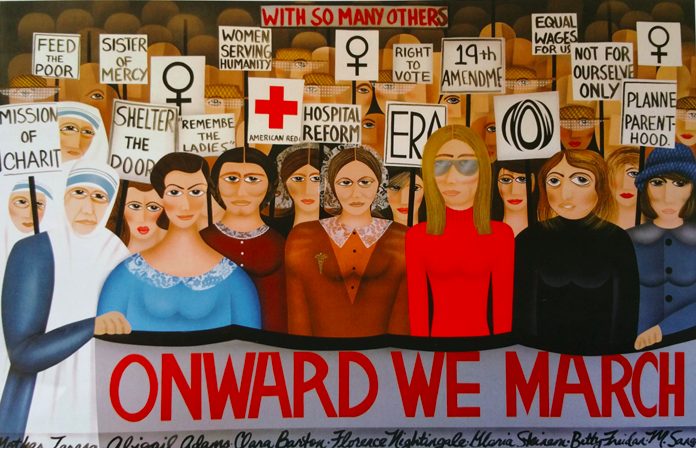
Vandalized “Women of Purpose” (photo courtesy of Kate Czaplinski, Trumbull Times)
Last night, a painting hanging in the town library in Trumbull, Connecticut was defaced, while in the same building, the library board was holding a meeting about the display of said painting. I wish I could say I was surprised that this happened, but to be honest, I’m not. I’ve been expecting it. I believe this was the inevitable result of a series of events that broke into public awareness two weeks ago, when the town’s First Selectman ordered the painting removed.
Let’s review the timeline:
- A collection of paintings entitled “The Great Minds Collection,” commissioned by Trumbull residents Richard and Joan Resnick has been on display at the Trumbull Library since the fall of 2014. It had previously been on display at nearby Fairfield University.
- In mid-February, the Bridgeport Archdiocese made it known publicly that they were displeased about one painting in the collection, “Women of Purpose,” because it included in its depiction of influential women both Mother Teresa and Margaret Sanger. The library itself received eight calls of complaint and a religious order in India notified the town that any use of Mother Teresa’s image was a copyright violation.
- In response to the copyright claim, which experts – save for the town attorney – agreed was specious, the First Selectman Timothy M. Herbst ordered the librarian to remove the painting to protect the town. He said he required an indemnification from the Resnicks against any copyright claims that might arise from the painting, which the Resnicks had already provided verbally and were happy to commemorate in writing. This action generated significant press attention throughout the state.
- When the First Selectman then said he required indemnification against any claims that might arise from possible damage to the collection while in the town’s care, publicly chastised the librarian and library board for not having secured one previously, and accused the librarian of ethics violations in her dealings with the Resnicks.
- The Resnicks agreed to sign an indemnification agreement against damage to the collection, but balked when the town reportedly proffered language that could have made them responsible for such instances as one of the paintings falling off the wall and causing damage or injury, as well as requiring that the Resnicks foot the bill for repairing and repainting library walls when the exhibition concluded.
- On Friday, March 6, the town added a rider to its own insurance policy covering the paintings and “Women of Purpose” was rehung at the library.
- Five days later, someone defaced the image of Margaret Sanger.
As quoted in the Trumbull Times, First Selectman Herbst responded to last night’s vandalism by saying, “I think this proves exactly what we have been saying for the last three weeks.”
Here’s what’s faulty with Herbst’s argument: this wasn’t a public issue until he made it one. By demanding the removal of the painting, by sending a barrage of communications to the Resnicks and others and by simultaneously releasing them to the local press, he elevated dispute into controversy, all the while saying he was doing it to protect the town. His tactics likely led to the painting becoming a target, in a way it hadn’t been before.
Why didn’t Mr. Herbst simply ask the Resnicks for indemnification, working through the established channels of their relationship with the library? Why, if the town had such language ready for works that might be displayed in town hall, wasn’t that immediately offered to the Resnicks? Why did Herbst accept the sole legal opinion that encouraged removal of the painting, instead of seeking further guidance from an intellectual property lawyer? Why if the concern was for the safety of the paintings while in the possession of the town did he demand only that the single painting, the one which had been the subject of complaints, be removed, when surely his liability concerns pertained to all of them?
While I don’t deny that some of the responses from the Resnicks and their attorney were part of the escalation of tensions, the fact is this could have all been handled quickly and quietly as part of an administrative process. Instead, by selectively removing the one painting that had received some complaints – an act of censorship, not protection – this was transformed into a culture war: of art, of ideas, of expression and of religion.
In all of the discussion of the painting itself – and I respect the beliefs and opinions of all of those who are distressed by it – I haven’t seen anyone make the argument about the fact that in this work, Mother Teresa and Margaret Sanger are at the opposite ends of the frame. I’m not art critic, but one could validly say that while all contained are influential women, the great nun and the family planning pioneer are literally as far apart as they can get, opposite ends of the spectrum. Might that not reflect their divergent views? It’s one simplistic interpretation, I know, but might it not be a valid one? Does their mere presence in the same image declare that one endorses the tenets of another?
I am impressed that Dr. Resnick has stated that he will not press charges if the vandal is caught, which is a generous statement that shows his desire to return the conversation to one of ideas, not vindictiveness. That said, Mr. Herbst must be held to his statement to the Connecticut Post that, “”We’re going to nail the person who did this and Police Chief (Michael) Lombardo and I are mutually committed to holding the person who did this accountable.” Without that investigation, without someone held responsible, the town sends the message that vandalism is an acceptable form of debate anywhere in the town of Trumbull, let alone inside a town property.
It’s unfortunate and infuriating that we’re seeing the many faces of censorship in Trumbull. It’s also unfortunate that the actions of town officials set it in motion on the pretext of municipal protection, rather than handling what was obviously a potentially charged situation with finesse and with care for the protection of open public discourse and the expression of ideas through art.
Howard Sherman is Director of the Arts Integrity Initiative at the New School for Drama.
Note: crude or ad hominem attacks in comments will be removed at my discretion. This is not censorship, but my right as the author of this blog to insure that conversation remains civil. Comments will not be removed simply because we disagree.
March 7th, 2015 § § permalink
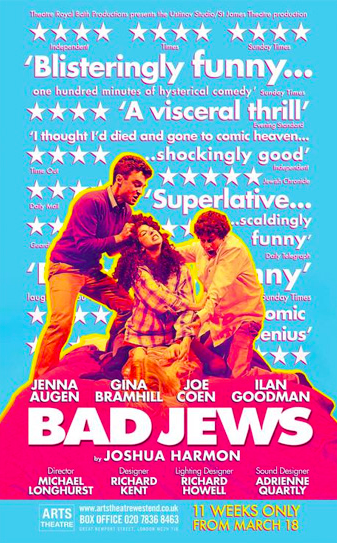 It is the policy of London’s Underground, commonly known as “the tube,” to not accept advertising which, in the words of it supervisory authority, Transport for London, “may cause widespread or serious offence’.” By judging posters for the West End transfer of Joshua Harmon’s Bad Jews as potentially doing so, and therefore banning them, TfL may well be giving greater widespread offense for its oversensitivity, even if it comes from a place of genuine concern, which now rises to the level of censorship.
I don’t want to discount disturbing reports of rising anti-Semitism in Europe, but this poster won’t feed that trend. A Jewish playwright and a Jewish producer shouldn’t be prevented from their promoting their work because of fears of how some might misinterpret its name.
True, there is no governing body preventing the production of the play itself, and numerous other outlets – all presumably with a set of advertising standards – haven’t apparently taken issue with the ads. But in cutting off the miles of pedestrian tunnels used by countless shows to reach both natives and tourists alike, TfL has put a dent in what, by my own observations when visiting London, is a foundational part of a great deal of theatre marketing.
Had the poster been a stark white sheet with nothing but the words “Bad Jews” in big block letters and a tiny print phone number and web address, one might possibly mistake it as a political statement. If the play title were “Jews Are Bad,” you might at least be able the comprehend the protective concern. But the Bad Jews poster, with its rash of review quotes, billing of actors and creative team and clear identification as a theatrical production, can hardly be mistaken for anti-Semitic propaganda. It is, unquestionably, a show poster.
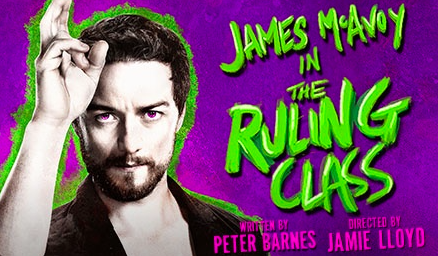
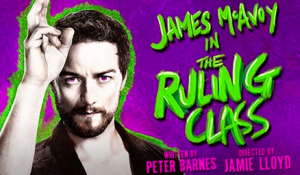 Presumably, this has not occurred because representatives of TfL have seen the play and decided that it’s ‘not good for the Jews.’ If that were their criteria, then presumably they have also banned posters for the current London run of The Ruling Class, a pitch dark satire whose targets include the Church of England and whose central character is a nobleman who believes he’s Jesus.
 Let’s remember that the authority which has banished Bad Jews from The Tube is the same one that saw no problem with (strikingly clever, IMHO) ads for the English National Opera’s Don Giovanni in 2012, the ones which showed an open condom wrapper and offered the slogan (in big block capital red letters) “Don Giovanni. Coming Soon.” Surely the parents of some small children, asked to explain this image, may have felt offense. (I saw a modified version of the poster that read “Opening Soon.”) Perhaps, like so many censorious authorities before them, TfL misses innuendo until it’s pointed out to them, but sees offense in the straightforward. And, like so many censors, it makes arbitrary decisions that it can’t justify.
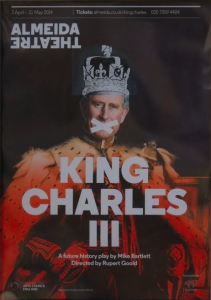
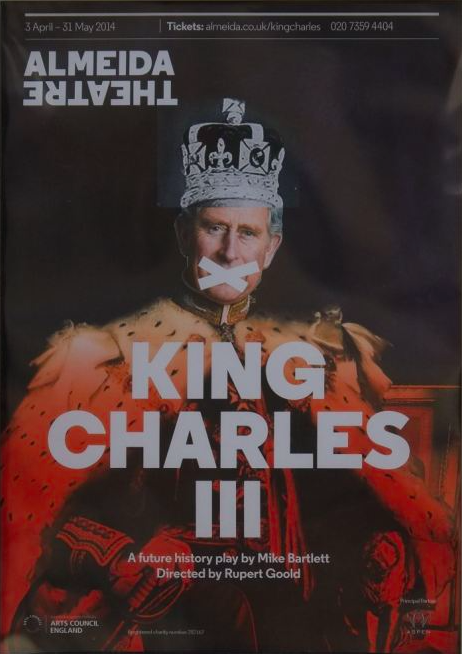
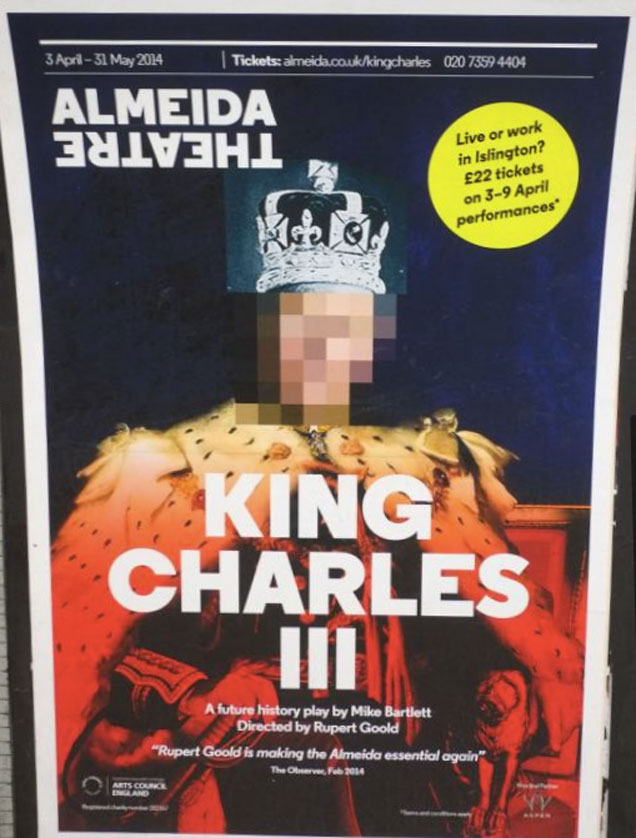
 Of course, this is also the same authority that blurred out the face of Prince Charles on posters for the play King Charles III, again to avoid causing offense. I have little doubt that the Don Giovanni campaign was designed to be provocative, and generate buzz around the production, but it was consistent with the efforts of so many opera companies to attract younger audiences by marketing their work in a manner that blows the dust off of perceptions of the art form. In the case of King
  Charles III, the image was arresting, but probably tamer than many an editorial cartoon about the monarchy. I know many British people have great affection for the Royal Family, but was the original poster really offensive to anyone beyond the family, who as public figures have been subjected to worse (such as the puppets of Spitting Image) and who I imagine don’t spend any time in the tube? The British government may have abolished the censorship authority of their Lord Chamberlain in 1968, but perhaps former staffers or acolytes of that role have holed up in the Underground.
Like so much public censorship, the decision on Bad Jews has produced a round of ridicule in the British press, which also brings with it untold free marketing for the show. Transit for London may have kept the words “Bad Jews” off of its walls, but it has placed the show on the lips of people everywhere, and if that prompts even more people to see that very provocative, probing play about Jewish identity among millennials in America, one is almost tempted to thank them. Save for the genuine worry about what TfL, in their seemingly absolute authority, might seek to censor next.
Howard Sherman is Director of the Arts Integrity Initiative at the New School for Drama.
March 6th, 2015 § § permalink

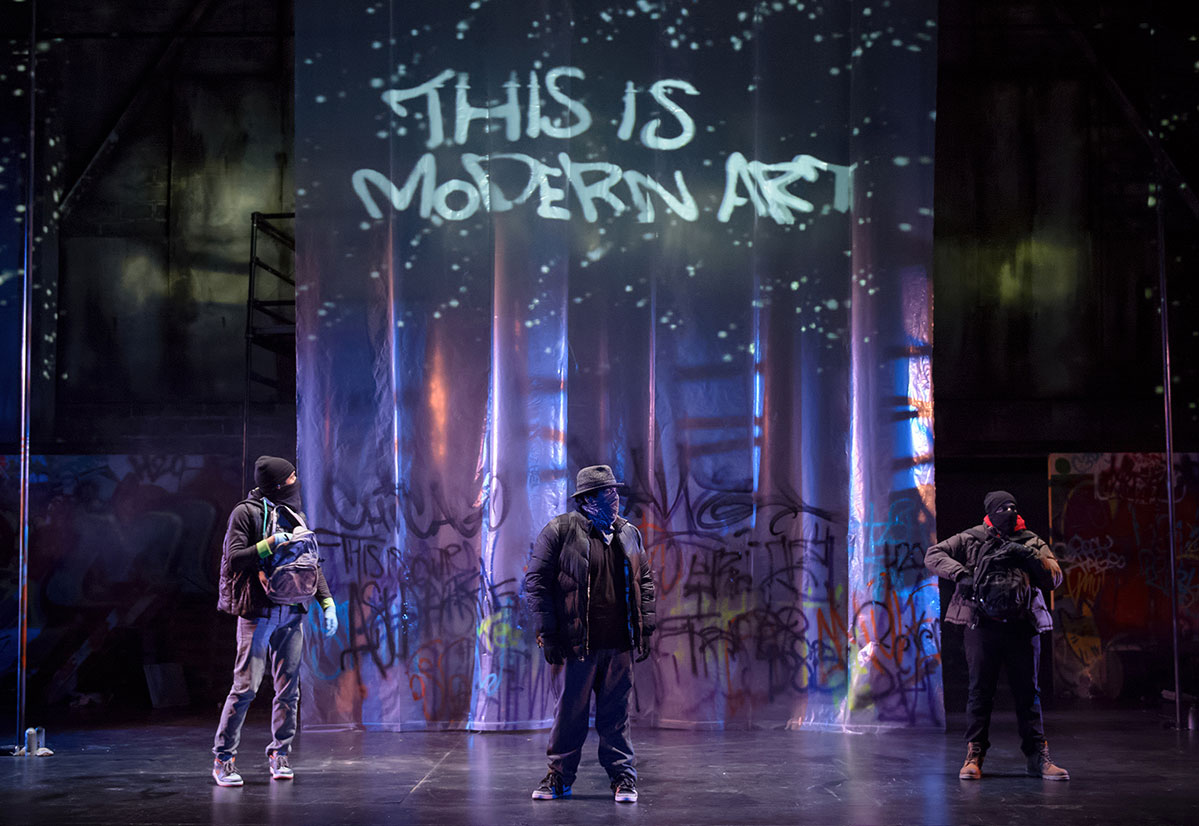
Jerry MacKinnon in This Is Modern Art at Steppenwolf Theatre
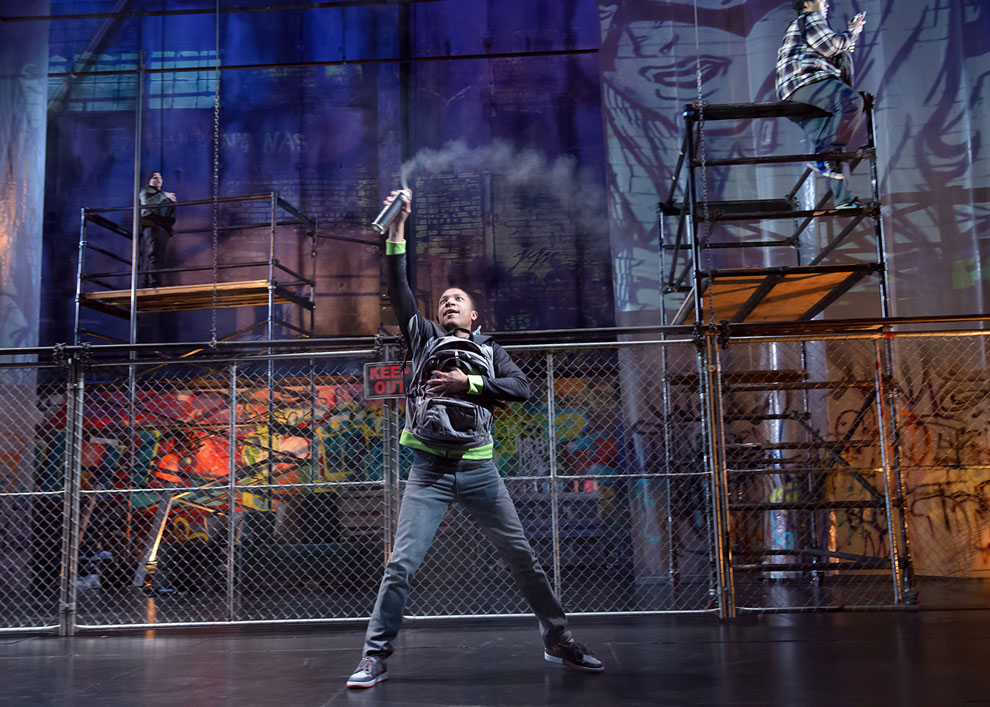
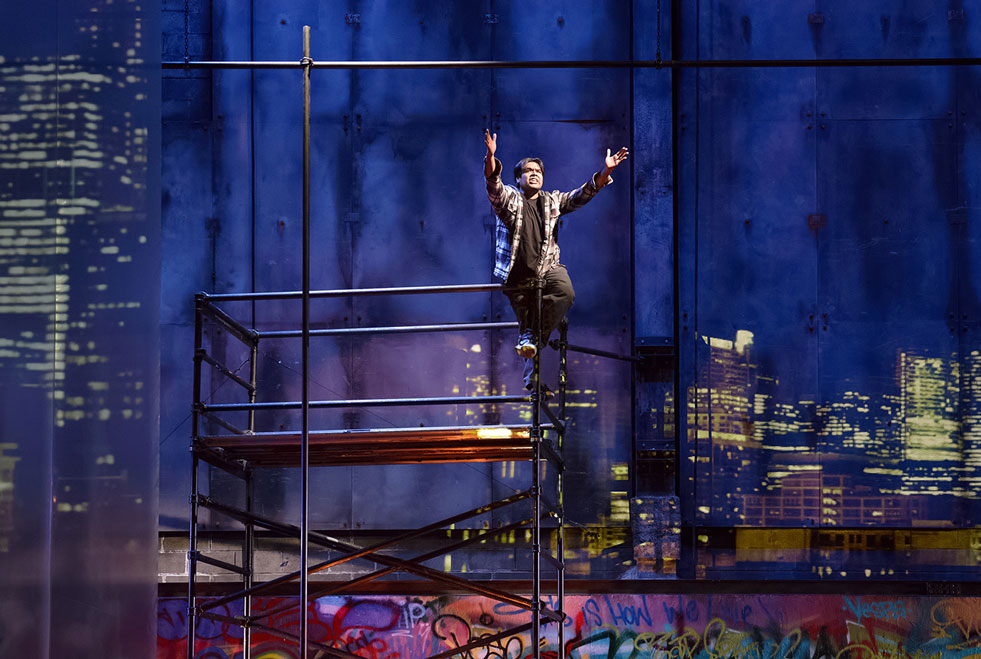
If, like me, you’re connected to members of the Chicago theatre community on social media (I’m NYC based), you’ve certainly seen an outpouring of reaction to two major reviews of the new Steppenwolf for Young Adults show, This Is Modern Art (Based On True Events). Since all perception of what’s being said on any subject in social media is mediated by who you ‘follow’ and who you ‘friend’ and what you like and retweet, I can’t possibly tell you what the prevailing sentiments are overall, online or in Chicago theatre lobbies. But I will say this: my connections are very unhappy, and in some cases enraged. Among their charges are that the reviews are deeply insensitive to a story about young people of color, and by extension the lives of all people of color, and that they condescend to the work from a place of privilege.
Chris Jones of the Chicago Tribune and Hedy Weiss of the Chicago Sun-Times both gave what I would characterize as predominantly negative reviews of the production. Both shared a common theme: that the play, about graffiti artists, celebrated their work without making sufficiently clear, to the critics’ minds, that the majority of graffiti art is also illegal vandalism. Jones calls graffiti “disrespectful”; Weiss calls the characters “urban terrorists.” The play is based upon a true incident in Chicago, when elaborate graffiti was created on the exterior of the Modern Wing of the Art Institute of Chicago, so it summons shared Chicago memories, beyond the writers’, readers’ or audiences’ personal experiences.
From the reviews, I offer two excerpts (with links to the complete pieces):
“But here is what “This is Modern Art” barely even mentions: Graffiti comes at a price. It can be invasive, self-important and disrespectful of the property of others — and plenty of struggling folks have had to clean graffiti off something they own or love. Graffiti can be inartful, for goodness sake. More importantly yet, graffiti had the effect of making people feel unsafe in the city. It terrified people. It was only when public officials declared themselves determined to wipe it out that cities finally came back to life, with broad benefits.
You wanna go back to riding public transportation in New York or Chicago in the 1980s? I do not. You do not have to be conservative or somehow not down with youth to think it reprehensible that these issues do not have a place in a show for schools that is quite staggeringly one-sided.” – Chris Jones, Chicago Tribune
“To start, a hypothetical question addressed to the powers that be at Steppenwolf Theatre: How would you react were you to arrive at work one morning only to discover that the entire facade of your theater had been spray-painted with graffiti, and that the message left behind went like this: “All the world is OUR stage.”
I pose the question after having just seen “This Is Modern Art,” the wildly misguided new Steppenwolf for Young Adults production written by hip-hop artist Idris Goodwin and “Louder Than a Bomb” founder Kevin Coval, and directed by Lisa Portes.
Clearly the play is meant to be a provocation and a catalyst for controversy and discussion among the many high school groups that comprise the principal audience for this series. And no one would deny that in terms of its fine acting and knowingly “hip” writing and design this is an entertaining and “artful” production. But “This Is Modern Art” also sends out a slew of profoundly misguided messages to its impressionable viewers. And no politically correct review to rationalize it will appear here.” – Hedy Weiss, Chicago Sun-Times
Now before I go on, I should point out that I write about this issue is as a middle-aged, Caucasian, cisgender, heterosexual Jewish male raised in and around New Haven, Connecticut. Many could say I write from a position of privilege as well; that’s their right. But I cannot be anyone but who I am and, as a longtime follower of theatre criticism, I would hope that all critics would write openly and honestly about their perceptions, with their biases out there for all to see and take into account. In the interest of full disclosure, I should also mention that I’ve known Chris Jones for more than a decade professionally; I’ve never had any occasion to meet or communicate with Hedy Weiss.

This Is Modern Art at Steppenwolf Theatre
With all of that out of the way, I have to say that I find both reviews limited. Not because I disagree with their opinions of the play – I’ve not seen it or read it, so I can’t – but because the reviews fail to give me sufficient information about the play that might allow me to draw any conclusions of my own. So much of the bodies of the two reviews are devoted to condemning graffiti and vandalism, and taking the play to task for not sharing that perspective, that it’s very difficult for me – and I would assume most readers – to assess whether the play might be something I want to see, which a daily review should do, even a negative one.
Presumably Chris and Hedy could have noted their displeasure with the play’s perspective while still attending more fully to the details of the play and the production, which they fleetingly praise. Subsequently, as senior critics, they could have easily then written separate essays in which they explored their political and personal reactions to graffiti as vandalism, and question Steppenwolf’s responsibility in presenting the work if they wished, instead of forcing such op-eds into the confines of a standard review.
Inevitably, some of the rhetoric surrounding these reviews has addressed the role of the critic, always a charged discussion but one that must be considered in the context of the diminishment of arts coverage in legacy mainstream media. Nationally, critics remain in their positions for as long as they’re able, even as positions are cut and newspapers constantly seek buyouts that target veteran employees (read older, better paid) in an economic version of Logan’s Run. But with limited alternatives, few critics are opting out voluntarily, and so it’s not entirely surprising to find that many “major” critics mirror the demographics that prevailed decades earlier: largely white and mostly male. That can set up a division with both artists and audiences who make up the more diverse America of today (though the field of theatre still has a great deal of work to do on diversity and equity in its own ranks as well), since they find work, often as not, being judged publicly by people who may not mirror them in any way or share or understand their experiences. When I started in theatre, for example, I wondered where the young critical voices were in the major media; remarkably, 30 years on, I still wonder (though I know I can find those voices online, in many cases working for free).

Kelly O’Sullivan and Jerry MacKinnon in This Is Modern Art at Steppenwolf Theatre
In the case of This Is Modern Art, a work explicitly created for teen audiences, I would suggest that the arts or features editors at the two Chicago papers missed an opportunity. While absolutely still affording Chris and Hedy their primacy as the papers’ critical voices, wasn’t this the moment to offer more diverse staffers the opportunity to weigh in? While This Is Modern Art does have evening performances for the public, the majority of the schedule is daytime shows, presumably for students and youth groups, and therefore deserving of viewpoints that might in some aspect approach greater commonality with the expressly targeted audience. Admittedly, it would be impossible to check off a series of demographic boxes on any critic that would fulfill the wishes of every reader and every artist on every show, but the paper might have made an effort when reviewing a show for youth to acknowledge that the seemingly monolithic role of critics doesn’t always serve readers, by adding diverse voices here (and, when appropriate, in the future). Op-ed pages have multiple voices, not just one.
In concluding her review, Hedy appears to try to trump any criticism of her perspective, as follows, “Really, what could Steppenwolf have been thinking? Now, I just hope local politicians will not jump on the bandwagon and, as the ultimate hypocrisy, make this play their ‘cause.’” She has presumptively critiqued those who might disagree with her, which strikes me as unfortunate. Professional critics have every right to state their opinion boldly, but preemptively challenging those with other opinions seems unnecessary.
In his review, Chris notes “the authority figures like police officers (mostly played by Chris Rickett) are either inept or bumbling or misunderstanding — certainly they never are allowed to make any kind of sympathetic point,” and later declares, “By all means, connect the city’s kids to this artistic tradition, but I say there is a moral obligation to make them think about the price we all pay.” I will only say that West Side Story also portrayed the police as ineffective and a source for ridicule (“Gee, Officer Krupke”) and that there are countless works of theatre that don’t pretend to balance – where, for example, in Grease do we find an appealing, highly respected honor student to counter the allure of Danny Zuko?

J. Salomé Martinez in This Is Modern Art at Steppenwolf Theatre
Mind you, like Chris and Hedy, I’m not saying that I want to see our cities riddled with graffiti the way they were in the 70s and 80s. But I am open to seeing a story that attempts to explore what might have motivated some of the people behind it, then or now. Both reviews assert that because the show is targeted at students it is therefore irresponsible in its sympathetic perspective. While I doubt any young person is unaware of the potential consequences for the defacement of public property, especially those being taken to the theatre by teachers or counselors, the Steppenwolf study guide (available to all online) spells it out:
“For these artists…their art form is worthy of the likes of Caravaggio and Escher, but to the city it is defined as “the criminal defacement of property with paint.” The consequences are severe: $750 to $1,500 in fines, felony charges and possibly prison time for the offenders. And it can mean a big bill for the city: Chicago has spent nearly $5 million dollars in graffiti removal in this year alone. Although the protagonist of our story, Seven, is motivated by a desire to gain recognition for his art and an evolution of what the public views as ‘high art, fine art, worthy of being in a museum’ the Art Institute bombing comes at a cost. Not only to the Institute, which had to remove the paint, but also for the artists who committed the crime and, who, nearly five years later, still face felony charges if their identities are revealed.”
And while I was unsuccessful in securing a copy of the play to read, the study guide suggests that the show’s protagonist does not get away consequence-free:
“As for Seven, at the end of the play, he is left grappling with whether or not what he did was worth it; after all, he now has no crew, no girlfriend, no graffiti.”
The experience of theatre for young people taken to it is rarely confined to just watching a play. It is typically contextualized through conversation, both before and after seeing a show, at the theatre and at schools and youth organizations. The evening performances reportedly had those same opportunities, although they’re certainly not compulsory. But for the ostensibly impressionable young seeing This Is Modern Art, the play is not presented in a vacuum, which these reviews seem to presume it is.
In reading commentary about the reviews on social media, I found the personal attacks on Chris and Hedy extremely distasteful; I applaud those who sought to temper that unacceptable rhetoric. The conversation now should be a greater one than simply these reviews and this play. Hopefully this incident will provoke some genuine consideration and conversation – which includes Chris and Hedy and some of the artists expressing concern about these reviews – about what voices are given the platform to judge work, the need for not just critics but their editors to open new avenues to diverse voices and critical responses, and the necessity for work to be judged on its own terms, not just on the basis of what others think it should be, whoever the work is “for.”
Howard Sherman is director of the Arts Integrity Initiative at the New School for Drama and Senior Strategy Director at the Alliance for Inclusion in the Arts.
March 4th, 2015 § § permalink
Remember Trumbull, Connecticut?
That’s the town where a new high school principal canceled a production of the student edition of the musical Rent in the fall of 2013. The resultant outcry from students, parents, town residents, the media and interested third parties (including me) was such that three weeks later, the show was reinstated. It was produced at the high school in 2014 without any incident.
 After my advocacy for Rent, I hate returning to the subject of the arts in Trumbull, for fear of being accused of piling on. That said, there must be something in the water supply in Trumbull, because it’s right back at the center of an arts censorship controversy again. Timothy M. Herbst, the town’s first selectman, has ordered the Trumbull Library to remove a painting by Robin Morris from a current exhibition, “The Great Minds Collection,” commissioned and loaned by Trumbull residents Richard and Jane Resnick. The painting in question, “Women of Purpose,” features representations of a number of famous women, including Mother Teresa, Betty Freidan, Gloria Steinem, Clara Barton and Margaret Sanger.
The Bridgeport Archdiocese of the Catholic Church has already made its dismay over the painting known, due to the juxtaposition of Mother Teresa with Sanger, who founded Planned Parenthood. Library Director Susan Horton says she has received eight messages complaining about the painting, all from men. It is not yet known what complaints may have gone directly to Town Hall, prompting Herbst to pull the painting (the Resnicks’ attorney has filed a Freedom of Information Request to determine whether his client’s property is being unfairly singled out).
In fact, Herbst won’t admit to complaints being the cause for the painting’s removal at all. He refers instead to threats of copyright infringement for depicting Mother Teresa and the lack of an indemnification from the Resnicks against any claims arising from the display of the paintings.
“After learning that the Trumbull Library Board did not have the proper written indemnification for the display of privately-owned artwork in the town’s library, and also being alerted to allegations of copyright infringement and unlawful use of Mother Teresa’s image, upon the advice of legal counsel, I can see no other respectful and responsible alternative than to temporarily suspend the display until the proper agreements and legal assurances are in place,” Herbst said. “I want to make it clear that this action is in no way a judgment on the content of the art but is being undertaken solely to protect the town from legal liability based upon a preliminary opinion from the town attorney.”
I heard Mr. Herbst in action during the Rent incident, when he went on radio several times trying to assume the role of peacemaker. Instead, he merely offered unworkable solutions that were clear to anyone familiar with the school and the town’s youth theatre troupe. It should be noted that as first selectman, he doesn’t control the school system. That is the purview of the elected school board, which is chaired by his mother, who was all but silent throughout. As before, I find his current protestations to be a smokescreen.
First, this isn’t a copyright issue, since the painting is an original work of art and no one appears to have claimed that it is in some way derivative of another copyrighted work. There is the possibility that Mother Teresa’s image may have some trademark protection, as claimed by the Society of Missionaries of Charity in India on their website, but the assertion of trademark is not proof of ownership and the organization offers no documentation of their claim; it’s worth noting that there are numerous organizations operating in Mother Teresa’s name, which suggests that policing of the trademark is shoddy at best. Additionally, the fact is that a privately commissioned painting in private hands is unlikely to constitute an infringement of rights that causes confusion in the marketplace, something trademark is meant to protect.
Second, Richard Resnick has said he would be pleased to offer indemnification to the town for the display of the painting, which would make any issue disappear. Herbst asserts he needs time for an attorney to draft something, but any attorney with even limited experience could produce straightforward “hold harmless” language in perhaps an hour’s time. Frankly, I have more than a few on my hard drive from literary agreements, since it’s not uncommon for playwrights to hold producing organizations harmless from any claims against a work that as challenged as not being wholly original to the author. The fact that Herbst has already tried to throw the town librarian under the proverbial bus for not getting such documentation is shameful, since if such protection is regularly required, why hasn’t the town’s attorney prepared a document for each and every exhibit the library has ever shown, that can just immediately be pulled out of a file? If Horton failed to get one signed, then it should be readily available for Resnick’s promised immediate signature; if it hasn’t been required previously, then the fault lies with Herbst and the town’s attorney.
When Principal Mark Guarino tried to defend his cancellation of Rent, he took refuge behind vague terms like ‘challenging issue.’ Now we have Herbst hiding under the guise of proper legal procedure, which is a flimsy excuse for what seems quite obviously an attempt to censor work which some find displeasing. In doing so, Herbst has placed himself in the unenviable situation of being damned either way: if the painting stays down, he’s a art censor (which he adamantly claims he is not) and if it’s restored he’s alienating members of his constituency who may object to the painting on religious, ideological, political or even artistic grounds. This is a fine mess he’s gotten himself into, and for someone who apparently harbors greater political ambitions – he lost the race for state treasurer by a narrow margin in 2014 – he’s placed his ideology squarely in front of voters for any future campaign, while ineptly handling a situation that is quickly rising to the level of crisis.
Regarding theological opposition to the painting, it’s worth noting that it was on display at nearby Fairfield University in 2014 without any incident. Oh, and for those unfamiliar with the colleges and universities of southern Connecticut (where I grew up), it’s important to note that Fairfield is a Catholic school. Why didn’t the Archdiocese or the Society of Missionaries in Charity raise their issues during that three-month exhibition?
Tim Herbst could make the charges of censorship go away instantly with one single document. But as he keeps throwing up roadblocks, it’s obvious that he’s not protecting the town from legal claims, but rather serving other interests. If Herbst is trying to establish his conservative cred, he may well get himself exalted in certain partisan quarters only to be vilified in others. The question is whether his actions are bolstering the profile and needs of Trumbull, Connecticut, or those of Timothy M. Herbst, the once and future candidate?
While it’s a tenuous linkage, I’d just like to toss into the pot that Herbst’s town budget has zeroed out the annual allocation for the town’s popular summer theater operation, the Trumbull Youth Association. This is the same TYA program that Herbst suggested could provide a home for Rent if it couldn’t be done at the high school (although that wasn’t a workable alternative for several reasons). If we’re looking for patterns about art and Trumbull, one does seem to be emerging.
And just to cap this off, it has been noticed that in discussing the withdrawal of the painting from the library exhibit, the Trumbull town website reproduced the painting itself. If Herbst is so concerned about copyright infringement, didn’t he just place the town at risk once again? Seems like a contradiction to me.
Update March 4, 2 pm: I just spoke briefly with Jane Resnick, as we both called in to “The Colin McEnroe Show” on WNPR in Connecticut. Mrs. Resnick affirmed that she and her husband had always been prepared to indemnify the town against any damage that might occur while their paintings were on display in a town facility and that, while they had not anticipated the need, they would also hold the town harmless from any copyright claims that might possibly be forthcoming.
Update, March 4, 4 pm: Regarding First Selectman Tim Herbst’s efforts to zero out the budget of the Trumbull Youth Association, it has been reported today by the Trumbull Times that just last night, the town’s Board of Finance overruled the cut, and the funding was restored, against Herbst’s wishes.
Update, March 4, 5:15 pm: The Hartford Courant, the state’s largest newspaper, declares in an editorial, “Public works of art, like library books, should not be held hostage to the complaints of a few whose sensibilities are offended.”
Update, March 4, 5:30 pm: The Trumbull Times reports, via e-mails it has seen, that organized opposition to the display of the painting originated with the Catholic fraternal organization the Knights of Columbus, and indicates that a town councilman assured members of the group that the painting would be coming down as early as February 14, and suggested that First Selectman Herbst was in support of its removal. Herbst, however, denies that this was the case, and says that an indemnification agreement has been provided to Dr. Resnick and that, “As soon as the agreement is executed by Dr. Resnick, the artwork can be re-hung in the library.”
However, Herbst goes on to say that “Public buildings should bring people together to have an open exchange of alternate points of view,” which seems positive, save for the fact that it is immediately followed by, “Public buildings should not make any member of the community feel that their point of view is secondary to another,” which seems exceedingly vague and undercuts the prior statement. A single work of art rarely pleases everyone. If dissatisfaction or dislike of a work of art, or a book, can be construed as making someone feel “secondary,” what is to prevent future efforts to remove controversial content from the Trumbull Library?
Update, March 6, 12 pm: The Trumbull Times reports that Dr. Resnick has returned a signed indemnification agreement to the Town of Trumbull. There is no word yet on whether the painting has been restored to its place in the library.
Update, March 6, 3:30 pm: While the disputed painting has been rehung just now, the Town of Trumbull is now demanding a “comprehensive indemnification” for all of the paintings from their owner Dr. Richard Resnick, without which the entire collection will be taken down as of 5 pm. The letter from first selectman Herbst to Dr. Resnick’s attorney has been made public by the Connecticut Post.
Update: March 9, 12 noon: So far as I know at the moment, the entire collection is currently hung at the Trumbull Library. A series of claims and counterclaims between First Selectman Herbst and attorney Bruce Epstein on behalf of Dr. Richard Resnick have been made in correspondence, and shared with all interested parties via the Trumbull Times. They are: “Painting back up for now; but all could come down soon” (March 6, with updates); “Herbst and Horton: Chief wasn’t at meeting” (March 7, with updates), and “Resnick: I won’t be intimidated by Herbst’s demands” (March 8).
Update, March 11, 11:00 pm: At approximately 8 pm this evening, as the painting was being discussed at a meeting of the library board, an individual defaced the painting, reportedly by obscuring Margaret Sanger’s face. The Trumbull Times reported on the developments.
As of March 12, there will be no further updates to this post, but please refer to my newer post, “The Shameful, Inevitable Result of The Trumbull Art Controversy” for any additional details.
Howard Sherman is the director of the Arts Integrity Initiative at the New School for Drama in New York.
Note: crude or ad hominem attacks in comments will be removed at my discretion. This is not censorship, but my right as the author of this blog to insure that conversation remains civil. Comments will not be removed simply because we disagree.
February 25th, 2015 § § permalink
 It is not, sad to say, news that controversy has surrounded a production of Terrence McNally’s Corpus Christi. It is certainly not surprising to hear that such controversy took place on a university campus. But when one hears that Corpus Christi became the subject of controversy as a result of a production at a Christian faith-based university, the reflex is to wonder how anyone ever thought it could be done there in the first place. But the production of Corpus Christi that was to have been produced this past weekend at Eastern Mennonite University in Virginia reveals a situation that demands something more than a reflexive scoff, as it reveals a great deal about the struggle between the tenets of faith and academic freedom, between traditional ways and where our society is in the 21st century.
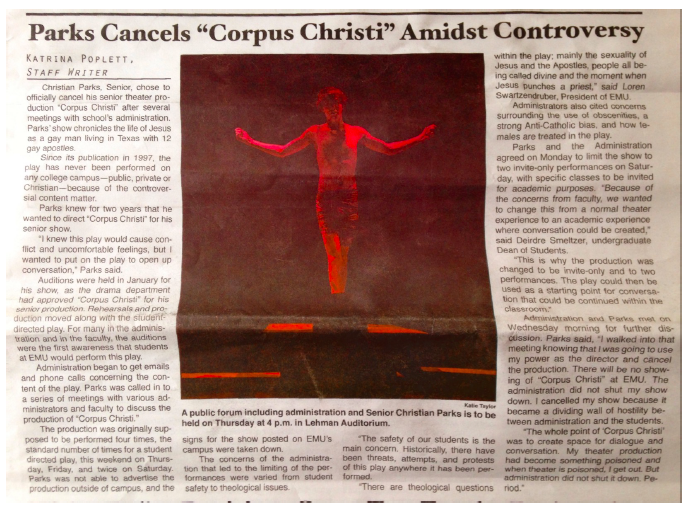
The basic facts are this: Christian Parks, a senior majoring in theatre at Eastern Mennonite University (EMU) proposed as his senior project a production of Corpus Christi, which was, according to him, approved by the school’s theatre faculty in the spring of 2014. Since January, due to increasing concerns by the school administration over the content of the play, Parks was called into a series of meetings about the play, which escalated from expressing concern to reducing the number of performances from four to two and severely limiting who would be permitted to attend to the show being completely canceled. It seems to echo many cases of academic theatre censorship, although there appears to have been significantly more dialogue surrounding the process as it accelerated – and how the final decision was made, and by whom, seems unique in my experience.
* * *
For those unfamiliar with Corpus Christi, it is McNally’s 1998 play in which he reimagines the story of Jesus as told and enacted by 13 gay male friends in the present day. When it was first announced for its premiere at the Manhattan Theatre Club, it was thrust into the center of controversy over its content – which few people had seen or even read – resulting in violent threats against MTC and the production, causing it to be briefly canceled and then restored, with strong protests outside the theatre during its run and security measure put in place to protect the theatre, the show and its patrons.
The play subsequently had numerous productions around the country, many which had their own controversies where it played, again, often over what people imagined to be the content rather than the play itself. It has been produced at colleges and universities, provoking similar reactions. Now, 17 years later, the play is produced intermittently, hardly surprising for any play that, in its way, had such a huge “moment” in the late 90s.
Writing of the play in the preface to the trade paperback edition, McNally describes it as follows:
Corpus Christi is a passion play. The life of Joshua, a young man from south Texas, is told in the theatrical tradition of medieval morality plays. Men play all the roles. There is no suspense. There is no scenery. The purpose of the play is that we begin again the familiar dialogue with ourselves: Do I love my neighbor? Am I contributing to the good of the society in which I operate or nil? Do I, in fact, matter? Nothing more, nothing less. The play is more religious ritual than a play. A play teaches us new insight into the human condition. A ritual is an action we perform over and over because we have to. Otherwise we are in danger of forgetting the meaning of the ritual, in this case that we must love one another or die. Christ died for all of our sins because He loved each and every one of us. When we do not remember His great sacrifice, we condemn ourselves to repeating its terrible consequences.
All Corpus Christi asks of you is to “look at what they did to Him. Look at what they did to Him.” At the same time it asks you to look at what they did to Joshua, it asks that we look at what they did one cold October night to a young man in Wyoming as well. Jesus Christ died again when Matthew Shepard did.
* * *
The play is set in the present day and employs language that might raise concerns within religious groups, but McNally’s message of dialogue and ritual seems particularly well suited to the discussion of faith in present day life. That said, it helps to know something about the Mennonites. Here I’ll draw from the website of Mennonite Church USA.
Mennonites are Anabaptists
We are neither Catholic nor Protestant, but we share ties to those streams of Christianity. We cooperate as a sign of our unity in Christ and in ways that extend the reign of God’s Kingdom on earth.
We are known as “Anabaptists” (not anti-Baptist) – meaning “rebaptizers.” The Anabaptist movement began in the 16th Century in Europe.
To defuse a commonly held misconception I also draw from their website the following
Mennonites are not Amish
We find that many people asking about Mennonites are actually thinking of the Amish or “Old Order Mennonites.” Mennonites and Amish come from the same Anabaptist tradition begun in the 16th century, but there are differences in how we live out our Christian values. The distinctiveness of the Amish is in their separation from the society around them. They generally shun modern technology, keep out of political and secular involvements and dress plainly.
It is important to know, however, that there is great debate within the Mennonite community about the acceptance and role of LGBTQ followers, which has historically been one of exclusion. However, as in so many faiths, there is a strong contingent of Mennonites who want to see the church change its ways, and there are groups working to bring that about. But there is no agreement.
* * *
Christian Parks first proposed doing Corpus Christi as his senior project two years ago, inspired by seeing a production of the play in San Francisco by 108 Productions as part of their “I Am Love” effort to bring the play and its message to communities around the country, including communities of faith.
“There is an application process,” Parks explained, describing the theatre department’s standard procedures, “where I give them the name of the script. I also give them the reasons why I’m doing the project. I also give them a budget that I had to pre-balance, so that they knew where I was going to spend my money. Then we began more discussions after the script had a read-through and that’s when the conversations about this being a student lab production entered in. That entails making sure there’s a talkback, a way for the audience to process the show after every performance and it also means the department will not collectively advertise this outside the campus.”
Parks explained that a lab production is a full production, with four performances, and that while it may not be advertised off campus, the local community may attend. He then said, “I got approval when the season was approved, in the spring of 2014. Surprisingly enough, the administration is mailed every season that gets approved and this show was on the list.”
Asked as to whether he was aware of the play’s controversial past, he said, “In the fall, I began my senior thesis, which is the theoretical part which goes along with the production. I wrote a conceptual, theorized piece using poor theatre and Grotowski and using some other things that had more to do with the ritual side of Corpus Christi. I actually had to dive into the script and look at past performances, where this had been and the controversy that has been around it. So yes, I was very aware of everything that was around Corpus Christi. But it was a lab production, so that was the clearance, or should I say the filter, in which I said that ‘Yes, this is a thing but we’re doing it as a lab production. That will be alright.”
Had Parks considered that the play might not be approved?
“It was a little iffy because I’m in a religious community and an especially close-knit one like the Mennonites. The university, according to the process we went through last year, was ahead of the church, so I knew that on the church denominational level will do whatever it does, and yes it’s going to make some conflict, but that’s OK because there’s enough people who can take care of that.”
“The process” Parks refers to was a “Listening Process” on the EMU campus in 2014, which sought to address issues relating to LGBTQ representation, particularly among the faculty. After six months, the school deferred formal action on hiring policy. Parks’s proposal was being considered by the theatre faculty during this time.
“I wasn’t aware,” he said, “that there was enough harm and enough pain and enough tension in the process that we went through, because in the spring of 2014 we approved it as a department in the middle of the listening process. It seemed, especially with the concept around the show, as if it would fit the culture that we were in and becoming.” Asked about his reference to “pain and hurt,” Parks explained that he was referring to situations that arose, “any time you have a lot of straight people talking about queer and gay bodies, and just constantly being under the microscope as they figure out what to do with us. So this show was a way of finally putting our voice at the table that they tried to do with us last year, but it didn’t really work because they still don’t understand and don’t want to understand.”
* * *
Parks said that conflict over the play began when he put out his audition notice at the beginning of January, which included a description of the play. Parks then described a series of meetings that he was called to by the administration beginning in late January. The first two were led by the Provost and Academic Dean; at the first, Parks said he was made aware of “concerns” and was asked to provide the script. He said that the provost subsequently stated that he never completed reading it, having stopped at the play’s nativity scene, at roughly page 20. Parks was also asked for his director’s notes and his advisor was asked for an explanation of the standard lab process.
At the second meeting, a week later, he said “We prepared a resource list and they took four or five of their resources and I took four or five of my resources and we were going to synthesize them together for people who might have more questions and might need places to go.” Parks also said that at that time, there was some concern as to whether he could field a full cast, and that the possibility of a reading instead of a full production, which would require less rehearsal, came up, but that he quickly thereafter secured a full cast and notified the theatre department that a production would be possible as originally planned. At a third meeting, this one called by the president, following a weekend meeting by the president’s cabinet, he was given a choice.
“The two decisions that they laid on the table for me was that either they would shut it down completely or, on the basis of academic integrity, they would confine the show to the classroom so that it would become a classroom endeavor which meant one performance at one time with a select group of people, a select group of classes and classes that were already dealing with subjects around sexuality conflict and faith. We compromised and went with one day instead of one performance and so there was a three o’clock and an eight o’clock performance. That is what we settled on and that each of these classes would get a ticket and only people who would be allowed to enter the theatre would be the people with a ticket, which meant that we would have to turn away anyone who came from the community and anyone who was a student but didn’t have a ticket.”
Following this decision, the restrictions on attendance were announced.
“It went on Facebook,” said Parks, “The theatre department had to tell people and that got out quicker than wildfire and what that means is that all of the justice connections that I have got whiff of it. People were angry and they went to social media to get out their anger. That is when I got called in for another meeting, Wednesday the 18th.”
This is now just prior to the two remaining scheduled performances, set for February 21.
* * *
I reached out to several people, via e-mail, in the EMU administration about the Corpus Christi situation. I did not receive a reply from Heidi Winters Vogel, Parks’s advisor and an associate professor, and my inquiries to the university president Loren Swartzendruber and provost Fred Kniss were referred to Andrea Wenger, Director of Marketing and Communications for the school. I should note that Wenger attempted to schedule direct conversation between me and the provost, however his schedule and my own were in conflict, and Wenger accepted and responded to my questions via e-mail at my suggestion in the interest of expediency.
I asked Wenger when the administration first became concerned about Corpus Christi and whether it was their practice to alter academic efforts in response to complaints over previously approved content.
She wrote, “Administrative leadership became aware of the play – and its controversial history – in mid-January. It is not the school’s practice to ‘alter academic efforts in response to complaints about previously approved academic content.’ Production of the play hadn’t been reviewed or approved by department leadership or administration prior to mid-January.”
Wenger explained that, “Public performances were cancelled by the president’s cabinet when administration learned that what they had been assured in mid-January would be a staged reading with no publicity morphed into a full-blown production.” Responding to my question about limiting attendance, she said, “The student involved intended to sell tickets to this show. He anticipated off-campus interest and support even with limited publicity. The administration cut the performance schedule from four performances over three days to two performances on one day with an invitation-only audience
She further said, regarding the timing of the process, “The administration first became aware of the planned staging in recent weeks. Administration is evaluating the process of how the play was selected and vetted. EMU students are given freedom to choose productions that explore controversial topics as part of a rigorous academic program.
A report on the cancelation of the play in the school newspaper quoted Swartzendruber as citing threats of violence over the play, although he acknowledged that those had been over other productions, and none had been made at EMU. Asked about this, Wenger responded, “Given the history of this play’s controversial nature – which in some settings has generated threats of violence – EMU leadership took the action that they believed was in the overall best interests of students’ safety and well-being. Leadership had enough information to be concerned about the possibility of disruption.”
* * *
 Which brings us to the cancelation.
The EMU student newspaper ran their story, on Thursday, February 19, with the headline, “Parks Cancels ‘Corpus Christi’ Over Controversy,” saying that the decision was his, not the administration’s. Regarding the accuracy of this account, Parks returned to the meeting of February 18.
“After hearing what was going on,” he said, “and after doing some strategic planning in my mind, that is when I went in and I knew that they were going to shut it down. I knew. And so instead of the story being written as they shut it down, I’d rather it be written as I took it down, because I refuse to be a victim. I refuse, I refuse. So that’s when I made the decision, Wednesday the 18th, that Corpus Christi is coming down and we would not be having the performance and so I went back and told my cast.
I wondered whether Parks had jumped the gun, and asked Andrea Wenger whether the administration would have permitted the performances to go on had Parks said he was canceling them
“No,” Wenger replied. “The invitation-only performances were to be cancelled; administration believed this to be in the overall best interests of EMU students’ safety and well-being. Administration had enough information to be concerned about the possibility of disruption — especially when it became apparent that the students were proceeding with a full production versus a staged reading as originally planned.”
That statement stands in relief against a university wide communication by Wenger on behalf of Swartzendruber on February 18 which read, in part, “Despite the nature of the play, which varies from the university’s theological and biblical understandings, the cabinet sought to protect academic freedom and honor the student project as an academically engaging activity intended primarily for an internal audience,” then citing Parks’s decision as coming in the wake of the “intense reaction to the planned staging.” It doesn’t point out that the intense reaction was coming, at least in part, from the administration itself.
So no matter what had took place, and who spoke first, Corpus Christi wasn’t going to be seen at Eastern Mennonite University. The administration has responsibility for the denouement.
* * *
Seeking more perspective on the situation, I reached out to Barbra Graber, the co-chair of the EMU theatre department when she retired in 2005, having first started on the faculty in 1981. She had made several public postings on social media, which led me to her.
I asked her about the process that had taken place, which, when we spoke (preceding my communications with Parks and Wenger), she only had learned about the situation through friends and former colleagues on campus and what she had seen on social media. She also made clear that while she was familiar with McNally’s work, she did not know Corpus Christi.
Graber said, “It was troubling to hear that EMU pulled this play at all after it being passed through the theatre department. For the president’s office to feel that they just have the right to pull something the theatre department has already approved and that students have put their heart and soul into, you need to let the show go on. You can’t just step in and make that decision. It is a blatant misuse of freedoms, of rights, all kinds of rights violations going on there.”
“Religious people love to make decisions for other people and think they have a right to do that and they think they have the corner on what should or shouldn’t be spoken into the public arena.”
Graber, who now works with Our Stories Untold, a Mennonite advocacy group focused on addressing sexualized violence within the church and its members, that also seeks to address the church’s heterosexism and suppression of LGBTQ members, also took exception with Swartzendruber’s citing of potential threats as a reason for opposing the show, saying that Mennonites had historically always faced up to violence without flinching.
“In the name of justice we will walk into anything violent,” she declared. “We don’t shirk from violence. Because we serve a higher calling than this world, we will walk into violence. We will be these voices, we will be these peace and justice people – until it’s our own little prejudices and bigotry. When it affects our own bigotry and prejudice then we say, ‘Oh, there might be violence, we’d better stop this.’ It would be like Martin Luther King saying there’s a threat of bombing here so we’re going to cancel church.”
* * *
 Parks had cited his inspiration for producing and directing Corpus Christi at EMU as being a production of the play by 108 Productions, best known through their “I Am Love” efforts which subsequently became a documentary film, Corpus Christi: Playing With Redemption. I reached out to both Nic Arnzen and James Brandon, who are partners in 108, I Am Love and the film, which they directed, and reached Arnzen first.
When he described that close to half of their ongoing touring performances, now a decade old, are in church-related venues, I asked about how the play reached those communities. “We basically answer the call where people are eager to see it,” he said. “Invitations often come from some spiritual leaders who are eager to broaden the minds of their congregation.”
Arnzen said that while certain Christian denominations resist the play, that once the group is in a community, they always issue an invitation to the leaders of all area churches, noting that, “We’ve had 10 years of running the play with little or no protest.” He observed that they rarely hear back after sending invitations, but that, “We’re not bitter that they’re not reaching back. We respect people’s boundaries. If I don’t respect their boundaries, how can I ask them to respect mine?”
Arnzen spoke about the many misconceptions about the play among those who haven’t seen or read it, dating back to the original Manhattan Theatre Club production. While acknowledging that they play does have “some words in it, very real language” and estimated “the f-word” appears “22 times, I think,” he was quite clear in his feeling about the overall message of the play.
“I attest to the fact that this is a very respectful retelling of the Jesus story.”
As a side note, 108’s production of the play uses a mixed gender cast, as Parks planned to do at EMU.
* * *
From four performances to one to two to none, Corpus Christi was not seen on the EMU campus this past weekend. There was, on February 18, after Parks’s decision – before the university administration was going to make it for him, one last rehearsal of Corpus Christi. While there was no official invitation, but apparently the theatre was packed. It became, in Parks’s word, a sit-in.
Parks has been assured that the show’s suspension will not affect his academic record, that he will receive full credits for his work and will graduate on time. I wondered whether he wanted to try to present the show off-campus, out from under the school’s authority.
He said, “I have considered it and I have considered it. The thing that is stopping me is that I have 13 actors who have lived through the I have a cast that wasn’t included in the decision making. No one sat at the table with me, no one gave their voice to what did happen, should happen, what might happen and at the bottom of the totem pole was the Corpus Christi cast. Now we have some harm and trauma that has been done and I don’t want to lead made cast members back into the hurt and trauma because now this story has it. I’ve been trying to think about how you do that and still give care to actors and not exacerbate the entire problem?”
I asked Parks whether he has any regrets and he said no. “I got to do what I love and there was some controversy about it,” he declared. “That’s OK, because I’m a queer body and that’s OK because I’m used to controversy.”
The conversation on the campus has not ended, and indeed I am told that the school community is consumed by it. There will be a student assembly for further conversation tomorrow, February 26. What will Parks’s role be at that event?
“I was invited,” he said. “I want to be the gatekeeper of the story. I want the facts to be straight.” And then his voice trailed off, in the equivalent of a verbal shrug as to what else might happen.
I will add my voice to that conversation, to the extent this is read on the campus, to say that 1) contrary to an assertion in the school newspaper, Corpus Christi has been produced on college campuses, dating back to at least 2001, however I was not able to determine whether it had been done at any faith-based university; 2) Andrea Wenger’s statement that not even the theatre department had approved the play, when Parks’s project had been approved in the spring and he was working on a thesis that was ready when the university asked for it and had announced auditions through university channels, seems highly contradictory; 3) that while there have been protests and threats against productions of Corpus Christi, my research did not reveal any overt acts against productions, only threats, and canceling it on the grounds of threats, or imagined threats, is the equivalent of giving in to terrorists, and 4) if the Mennonite Church’s practice of discernment in regards to this play is to be complete and thorough, then the play should be seen, so all discussions are fully informed by production, not merely by reading the script, or worse, hearsay, because that is how plays are truly meant to be seen.
The Mennonite Church may be wrestling with whether to welcome LGBTQ members of their church, and Eastern Mennonite University, in their handling of Corpus Christi, has proven how urgent the need to address this actually is. As someone who believes in complete equality for all people, I’d just like to suggest they have a leader in their midst who can open eyes and change minds and do so with love, respect and care. His name is Christian Parks.
I will update, correct and amend this post if circumstances warrant.
February 24th, 2015 § § permalink
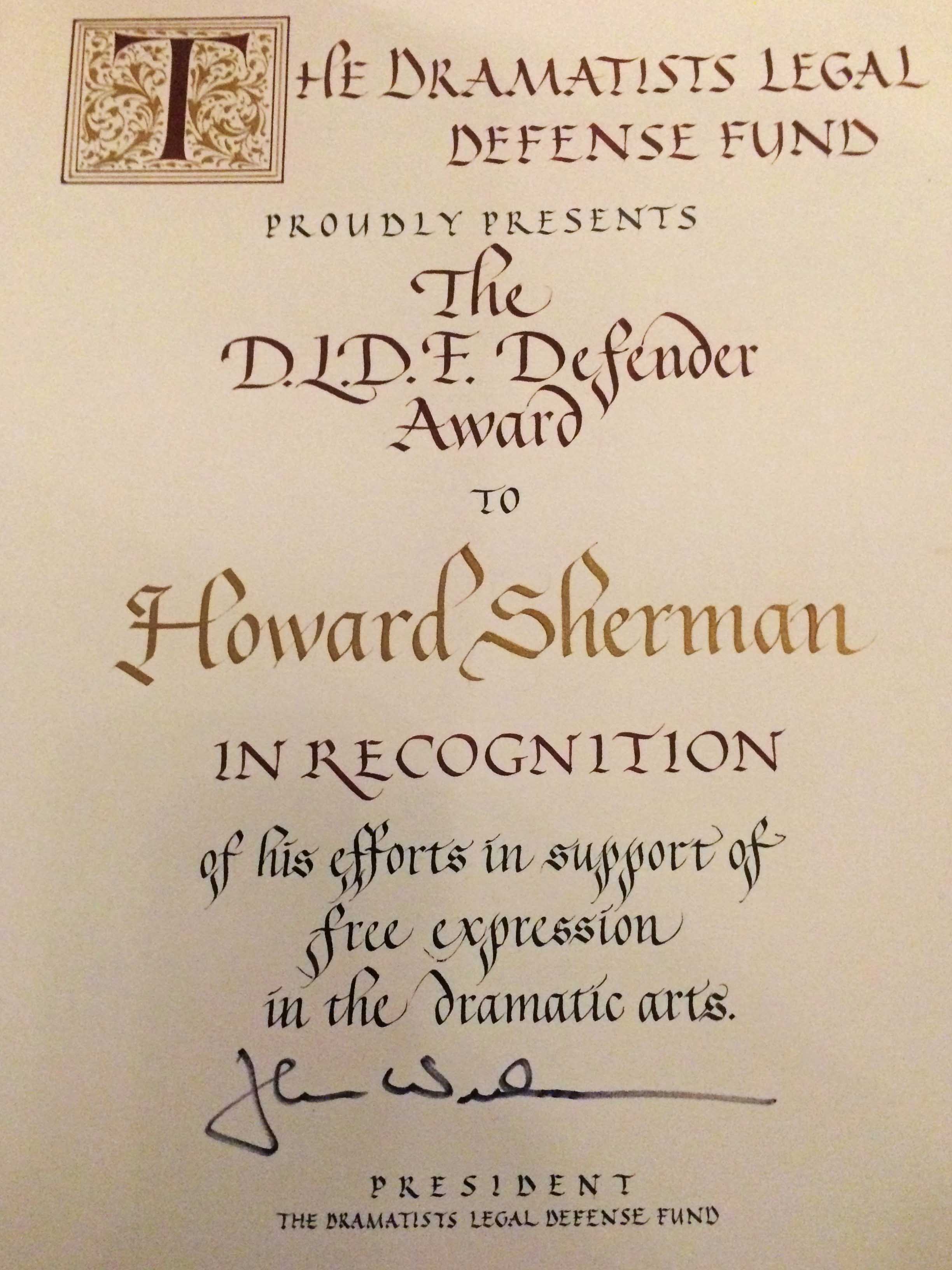
 Last night, I was extremely flattered and honored to receive the second annual Dramatists Legal Defense Fund’s “Defender” Award, for my work on behalf of artists’ rights and against censorship. My remarks were fairly brief (I know a little something about brevity and awards presentations, even when there isn’t an orchestra to “play you off”), so for those who have expressed interest, or may be interested, here’s what I had to say, following a terrific and humbling introduction by playwright J.T. Rogers, my newest friend.
I feel as if this evening is a classic Sesame Street segment, because as I see my name alongside those of such great talents as Annie Baker, Jeanine Tesori, Chisa Hutchinson, Charles Fuller and my longtime friend Pete Gurney, I can’t help feeling that one of these things is not like the others, one of these things doesn’t belong, namely me.
That said: I am honored more than you can possibly know to receive this recognition from the Dramatists Legal Defense Fund and the Dramatists Guild, because I have spent the better part of my life in the dark with your stories, your characters, your words and your music, and my life is so much better for it.
My efforts on behalf of artists rights and against censorship began, four years ago, in what I merely thought was one blog post among many. My awareness and understanding has evolved significantly over that time. I am asked sometimes why I think there is so much more censorship of theatre now, and I’m quick to say that I know this has been happening for years, for decades; all I have done is, perhaps, to make some people more aware of some of the incidents, and to try to address them in greater depth than they might have otherwise received.
I think the same is true of unauthorized alteration of your work, sad to say. All I’ve been able to do is call more attention to it, in the hope of warning people off from trying it ever again. It is an uphill battle.
I want to thank John Weidman, Ralph Sevush and everyone who is part of creating the DLDF for giving me this honor, and to thank the Guild for being my partner and for welcoming me as your partner in these efforts. I want to thank Sharon Jensen and the staff and board of the Alliance for Inclusion in the Arts for allowing me the latitude to address these situations as they have arisen in the 18 months I have been part of that essential organization. I want to thank David van Zandt, Richard Kessler and especially Pippin Parker for making it possible for me to professionalize this work as the Arts Integrity Initiative at the New School for Drama; I look forward to working with all of you through that new platform. And I especially want to thank my wife, Lauren Doll, for so many things, not least of which has been tolerating the late night and early morning calls with strangers around the country, often high school students, and the furious typing at all hours, whenever someone reaches out to me about censorship or the abrogation of authors rights.
I accept this award less for myself than for the students, teachers and parents who stand up for creative rights, in places like Maiden, North Carolina; South Williamsport, Pennsylvania; Plaistow, New Hampshire; Wichita, Kansas; and Trumbull, Connecticut, among others. If they didn’t sound the alarm, we might otherwise never know.
I should tell you that when I’ve visited some of these communities, I have had people come up to me repeatedly and tell me that I am brave for doing this work. ‘But I’m not brave,’ I tell them, ‘You’re the brave ones. I have nothing at stake here. You do.’
Indeed, I am not brave. What I am is loud. I will shout on behalf of theatre, on behalf of arts education, on behalf of creative challenge, on behalf of all of you here and all of those artists who aren’t here for as long I have a voice. And those of you who know me are fully aware that it’s very hard to shut me up.
My congratulations to tonight’s other honorees and thank you again for this award.
February 20th, 2015 § § permalink
 Perhaps you’re unaware of it, but there’s an arts education film up for an Oscar this year. And no, I’m not referring to something in the documentary short subject category, but rather a Best Picture nominee.
Though it hasn’t been called out as such in any of the articles or reviews I’ve read, Whiplash is a film about the mastery of music set largely in and around a music school. But it has primarily provoked stories about how the film managed to give viewers the impression that Miles Teller is a masterful drummer, why the film is a terrible banner-carrier for jazz, and why J.K. Simmons, journeyman actor, is long overdue for professional recognition, a great deal of which has subsequently come his way since the advent of awards season.
But what of Whiplash the arts education film? After all, we don’t get all that many, and when we do, they tend to be syrupy uplift pictures like Mr. Holland’s Opus or Music of the Heart. Since Whiplash can’t possibly be accused of being saccharine, why isn’t its musical didacticism being discussed in arts circles?
For anyone working in or teaching the arts, the answer is probably simple: it’s a harsh film in which we see the ugly side of musical monomania, a depiction of college level arts education that would probably send any prospective student running in the opposite direction from a conservatory program. But I’d like to suggest that while music is the movie’s métier, it’s really not about the arts at all, insofar as it mirrors or exists in relation to any cinematic antecedent. Whiplash is, first and foremost, a sports movie-military movie hybrid.
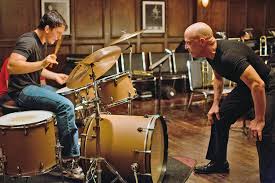
Miles Teller and J.K. Simmons in Whiplash
Made for only $3 million, Whiplash has stripped its story to the bare essentials, perhaps for budget reasons, or perhaps solely to focus our attention on a handful of bravura scenes. While it establishes our hero’s passion for music, it spends the majority of its first two acts showing us how he beats his way into an elite music ensemble – and then proceeds to have his hands and emotions beaten to a pulp by a teacher who is music educator as drill sergeant, a hard-ass, perhaps heartless, taskmaster whose idea of teaching seems based in ridicule and torment rather than actual training. While it’s likely that Teller’s character has other teachers and classes, they’re all relegated to the level of incidental or absent in favor of scenes of solo practice or ensemble totalitarianism under the baton of Simmons.

Richard Gere and Louis Gossett Jr. in An Officer and a Gentleman
We’ve seen the drill sergeant in countless films – Burt Lancaster in From Here To Eternity, Louis Gossett Jr. in An Officer and A Gentleman, and R. Lee Ermey in Full Metal Jacket to name three (with only the last suggesting that the drill sergeant methods might not be all they’re cracked up to be). You could also add Robert Duvall’s The Great Santini into this mix, especially for the scene where he bounces a basketball off of his son’s forehead. We’re meant to wonder whether these men are psychotic or uniquely skilled “builders of character” and that’s the same model that’s in place in Whiplash. They have their equivalents in the average sports movie – think of Gene Hackman in Hoosiers, trying to reclaim his stature after punching a kid at a prior job – and the link between sports movie, military movie and Whiplash becomes fairly obvious. They all share the idea of growth through humiliation.
Now to be clear, I really liked Whiplash as a film, and I’m not inclined to think that it’s representative of arts, or specifically music, education in any way, nor do I think it should be. It’s just one story, probably no more accurate about jazz than Smash was about the theatre, and I liked it for the two lead performances, the steadily rising tension between those characters, and because it was, at least, a film that sought to take the arts with a degree of seriousness – although I bridled quite a bit at the cruelty in the name of something meant to be emotionally resonant and I was troubled by its abject failure of the Bechdel Test or any meaningful depiction of diversity. Without giving away anything, I did think its third act, while thrilling, was ultimately preposterous in its plotting.
I happen to have a deep antipathy for stories with heroic but brutal coaches or brutal but tough-loving drill sergeants; often as not, I find myself deeply angry after watching stories in those genres, since I would never have been able to function in the face of such dehumanizing treatment, and always question whether it’s necessary or even morally right. Despite using that same template, I was able to stay with Whiplash because, while I have seen my share of angry directors and conductors in my day, I’ve never encountered such relentless ugliness in the arts.
The film did force me to review my own musical training, because while I did act in high school and college, I had absolutely no theatre education, but I did dabble with musical instruments. Disregarding compulsory class-wide forays into the recorder and its more simplistic forerunner the flutophone, I took cello lessons in elementary school for what now seems like all of three weeks and took private guitar lessons for perhaps a year and a half in junior high. Much as I loved music, I demonstrated no particular skill on any of these instruments but revealed my inability to submit to anything resembling regular practice. I continued to play the guitar, badly, for fun, for many years, but I haven’t picked one up in any meaningful way in about a decade.
Would I have benefited from a J.K. Simmons in my life? Might I have mastered the guitar – or the piano, as my mother dearly wished – if there had been someone to really push me? I tend to think not, because the drill sergeant as music teacher might have not only turned me away from the instrument, but from music itself, and that would have been a shame, since (recorded) music remains a balm for me in times of stress or sadness. But might I have developed a skill had I been under the guidance of someone who wasn’t content to let me practice lackadaisically or walk away after a brief attempt? That we’ll never know.
As for Whiplash? Good movie, but a work of fiction, more spare than Mr. Holland’s Opus, but equally manipulative. And for god’s sake, if you are thinking of taking up music, or any arts training, or you have a child who shows aptitude and interest, I strong suggest you approach it not as an arts movie, a sports movie or a military movie. At that point, consider it a horror film – as you watch it, keep repeating: it’s only a movie, it’s only a movie, it’s only a movie. At least I hope it is.
February 13th, 2015 § § permalink
No, I’m sorry, it’s not a blog post; it’s a press release. But if you’ll read on, I hope you’ll understand why I’ve placed it here, and indulge me this once. – Howard
NEW YORK (February 12, 2014) – The New School for Drama (Pippin Parker, Director) announces the launch of the Arts Integrity Initiative, a new project aimed at supporting and protecting the work of artists at every level of society and production. Under the leadership of arts administrator, writer and advocate Howard Sherman, Arts Integrity will not only examine and take an active role in instances of censorship and alteration of works, but also serve as a resource for the academic and professional arts communities.
 The program is designed to ensure that audiences and practitioners alike have the opportunity to engage directly with challenging, vital work that reflects the very best the arts have to offer.
“As long as books are banned, creative works are rewritten, and plays and musicals are eliminated by schools because they deal with challenging issues, we need to be vigilant about protecting freedom of speech, quality education and the rights of artists,” said Richard Kessler, Executive Dean of The New School’s Performing Arts School and Dean of Mannes School of Music. “With this new program, The New School addresses the subject from multiple vantage points, developing students who understand the necessity of free artistic expression as a means by which to explore, reflect, and critique society.”
The program features new curricular opportunities for students that explore the value of free artistic expression, as well as enhanced community outreach and projects to confront the issue. These commitments will be amplified through a range of public programs to promote discourse on the silencing or manipulation of artistic works, copyright protection, and broader use of the arts as a vehicle for social engagement and justice.
 Projects associated with the Office for Arts Integrity include integrated coursework in conjunction with a forthcoming Master’s degree in Arts Management and Entrepreneurship; a collective space for affected professional and community artists to raise concerns and seek guidance; an online publication chronicling challenges to artistic expression and offering original work speaking directly to those issues from within the New School community and expert outside voices; and public programs to raise awareness of the silencing of artistic works and devise strategies for mobilization of the creative and educational communities.
“Since he first picked up the anti-censorship banner, no one has been a more vocal, tireless, and effective advocate for the playwright’s right to be heard than Howard Sherman,” said John Weidman, President of the Dramatists Legal Defense Fund.
“I began doing work in this area on an ad hoc basis four years ago,” said Sherman, “and since that time I’ve increasingly found the need for a proactive resource to study and address arts censorship, supporting both academic and professional arts companies in their efforts to do work that has the greatest rewards for their constituencies. At the same time, I find more and more examples of works being altered unilaterally to appease often arbitrary assessments of what is appropriate or acceptable – or even simply appealing.”
Sherman continued, “Too often when challenges arise, those who are targeted don’t know where to turn, and I hope we’ll be able to provide those facing such restriction or tampering with guidance and on the ground resources, as well as collaborate with other organizations which share those goals, while bringing specific arts expertise to the table. In addition, our plan is to explore the roots of these issues in the arts and work collaboratively within schools and both the amateur and professional communities to develop best practices to reduce these high profile incidents over time, even as we look to explore cases that never reach the general public.”
Recent examples of obstruction of artists’ rights include the ongoing lawsuit preventing production of David Adjmi’s dark parody 3C and the unauthorized alteration of the musical Hands on a Hardbody in its Texas premiere in Houston. Recent arts censorship efforts have included the cancelations of Almost, Maine in North Carolina and Spamalot in South Williamsport, Pennsylvania; and the cancelations and subsequent restorations of Rent in Trumbull, Connecticut and Sweeney Todd in Plaistow, New Hampshire.
Howard Sherman is senior strategy consultant at the Alliance for Inclusion in the Arts, a position he’ll continue in parallel to his new role at The New School for Drama. Sherman has been executive director of the American Theatre Wing and the O’Neill Theatre Center, managing director of Geva Theater, general manager of Goodspeed Musicals and public relations director of Hartford Stage. He has recently been recognized as one of the National Coalition Against Censorship’s “Top 40 Free Speech Defenders of 2014” and will be honored later this month with The Dramatists Legal Defense Fund’s second “Defender” Award. His writing about the arts has been seen in such publications as American Theatre magazine, Slate and The Guardian, and he is the U.S. correspondent for London’s The Stage newspaper. He blogs at www.hesherman.com.
February 10th, 2015 § § permalink

Hannah Cabell and Anna Chlumsky in David Adjmi’s 3C at Rattlestick Playwrights Theater (Photo: Joan Marcus)
Seen any good productions of David Adjmi’s play 3C lately?
Sorry, that’s a trick question with a self-evident answer: of course you haven’t. That’s because in the two and a half years since it premiered at New York’s Rattlestick Playwrights Theater, no one has seen a production of 3C because no one is allowed to produce it, or publish it. Why, you ask? Because a company called DLT Entertainment doesn’t want you to.
3C is an alternate universe look at the 1970s sitcom Three’s Company, one of the prime examples of “jiggle television” from that era, which ran for years based off of the premise that in order to share an apartment with two unmarried women, an unmarried man had to pretend he was gay, to meet with the approval of the landlord. It was a huge hit in its day, and while it was the focus of criticism for its sexual liberality (and constant double entendres), it was viewed as lightweight entertainment with little on its mind but farce and sex (within network constraints), sex that never seemed to actually happen.
Looking at it with today’s eyes, it is a retrograde embarrassment, saved only, perhaps, by the charm and comedy chops of the late John Ritter. The constant jokes about Ritter’s sexual façade, the sexless marriage of the leering landlord and his wife, the macho posturings of the swinging single men, the airheadedness of the women – all have little place in our (hopefully) more enlightened society and the series has pretty much faded from view, save for the occasional resurrection in the wee hours of Nick at Night.
In 3C, Adjmi used the hopelessly out of date sitcom as the template for a despairing look at what life in Apartment 3C might have been had Ritter’s character actually been gay, had the landlord been genuinely predatory and so on. It did what many good parodies do: take a known work and turn it on its ear, making comment not simply on the work itself, but the period and attitudes in which it was first seen.
 Enter DLT, which holds the rights to Three’s Company. They sent a cease and desist letter to Adjmi back in 2012 claiming that the show violated their copyright; Adjmi said he couldn’t afford to fight it. Numerous well-known playwrights wrote a letter in support of Adjmi and the controversy generated its first wave of press, including pieces in The New York Times and Wall Street Journal. Over time, there have been assorted legal filings by both parties, with another wave of press appearing last year just about this time, when Adjmi sued for the right to reclaim his play for production, with commensurate press coverage once again from the Times and Studio 360, among others.
Why do I dredge this all up now? Because the bottom line is that DLT is doing its level best to prevent a playwright from earning a living, and throwing everything they can into a specious argument to do so. They say, both in public comments and in their filings, that 3C might confuse audiences and reduce or eliminate the market for their own stage version (citing one they commissioned and one for which they granted permission to James Franco). They cite negative reviews of 3C as damaging to their property. And so on.
But while I’m no lawyer (though I’ve read all of the pertinent briefs on the subject), I can make perfect sense out of the following language from the U.S. Copyright Office, regarding Fair Use exception to copyright (boldface added for emphasis):
The 1961 Report of the Register of Copyrights on the General Revision of the U.S. Copyright Law cites examples of activities that courts have regarded as fair use: “quotation of excerpts in a review or criticism for purposes of illustration or comment; quotation of short passages in a scholarly or technical work, for illustration or clarification of the author’s observations; use in a parody of some of the content of the work parodied; summary of an address or article, with brief quotations, in a news report; reproduction by a library of a portion of a work to replace part of a damaged copy; reproduction by a teacher or student of a small part of a work to illustrate a lesson; reproduction of a work in legislative or judicial proceedings or reports; incidental and fortuitous reproduction, in a newsreel or broadcast, of a work located in the scene of an event being reported.”
As someone who has gone out on a limb at times defending copyright and author’s rights, I’d be the first person to cry foul if I thought DLT had the slightest case here. But 3C (which I’ve read, as it’s part of the legal filings on the case) is so obviously a parody that DLT’s actions seem to be preposterously obstructionist, designed not to protect their property from confusion, but to shield it from the inevitable criticisms that any straightforward presentation of the material would now surely generate.
Rather than just blather on about the motivations of DLT in preventing Adjmi from having his play produced and published, let me demonstrate that their argument is specious. To do so, I offer the following exhibit from Mad Magazine:
What’s fascinating here is that Mad, a formative influence for countless youths in the 60s and 70s especially, parodied Three’s Company while it was still on the air, seemed to already be aware of the show’s obviously puerile humor, was read in those days by millions of kids – and wasn’t sued for doing so. That was and is a major feature of Mad, deflating everything that comes around in pop culture through parody. The fact is, Adjmi’s script is far more pointed and insightful than any episode of Three’s Company and may well work without deep knowledge of the original show, just like the Mad version.
 The most recent filing in the Adjmi-DLT situation comes from the Dramatists Legal Defense Fund, an offshoot of The Dramatists Guild. Like all of the filings in this case, it’s very informative about copyright in general and parody in particular, and it spells out the numerous precedents where the use of a prior work was permitted under fair use, with particular attention to the idea that when the new work is transformative – which 3C surely is – it is permitted (read the complete amicus curiae brief here). In addition to their many examples, I would add from my own misspent youth such works as Bored of the Rings, a 1969 book-length parody of Tolkien by some of the people who would go on to create the National Lampoon, where incidentally, DLDF president John Weidman exercised his own comic skills) and Airplane!, which took its plotline (and punctuation mark) of a poisoned airline crew directly, uncredited, from the 1957 film Zero Hour! More recently, the endlessly touring Potted Potter has successfully run without authorization, though clearly derived from the works of J.K. Rowling and prior to any authorized stage interpretation.
It’s been months since there have been filings for summary judgment in the case (August 2014, to be precise), and according to Bruce Johnson, the attorney at Davis Wright Tremaine in Seattle who is leading the fight on Adjmi’s behalf, there is no precise date by which there will be a ruling. Some might say that I’m essentially rehashing old news here, but I think it’s important that the case remains prominent in people’s minds, because it demonstrates the means by which a corporation is twisting a provision of copyright law to prevent an artist from having his work seen – and that’s censorship with a veneer of respectability conferred by legal filings under the umbrella of commerce. There may be others out there facing this situation, or contemplating work along the same lines, and this case may be suppressing their work or, depending upon the ultimate decision, putting them at risk as well.
We don’t all get to vote on this, unfortunately. But even armchair lawyers like me can see through DLT’s strategy. I just hope that the judge considering this case used to read humor magazines in his youth, which should provide plenty of precedent above and beyond what’s in the filings. 3C may take a comedy and make it bleak, but there’s humor to be found in DLT’s protestations, which are (IMHO) a joke.
P.S. I don’t hold the copyright to any of the images on this page. I’m reproducing them under Fair Use. Just FYI.

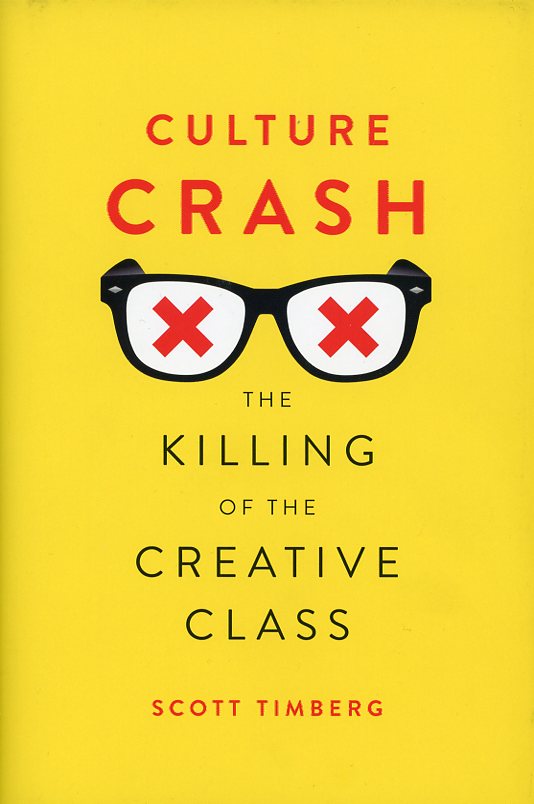 Timberg, a former arts journalist at the Los Angeles Times who writes the “Culture Crash” blog for ArtsJournal, predominantly focuses on the music industry and the state of legacy media and journalism, with nods to architecture and literature, while Kaiser, former head of the Kennedy Center and now leader of the DeVos Institute of Arts Management, concentrates on the world of symphonies, opera and dance. As an avid consumer of music and journalism, my interests run closer to those explored by Timberg; professionally my background comes closer to the disciplines discussed by Kaiser, but (troublingly) neither book spends much time at all on theatre, my actual profession and leisure time avocation as well.
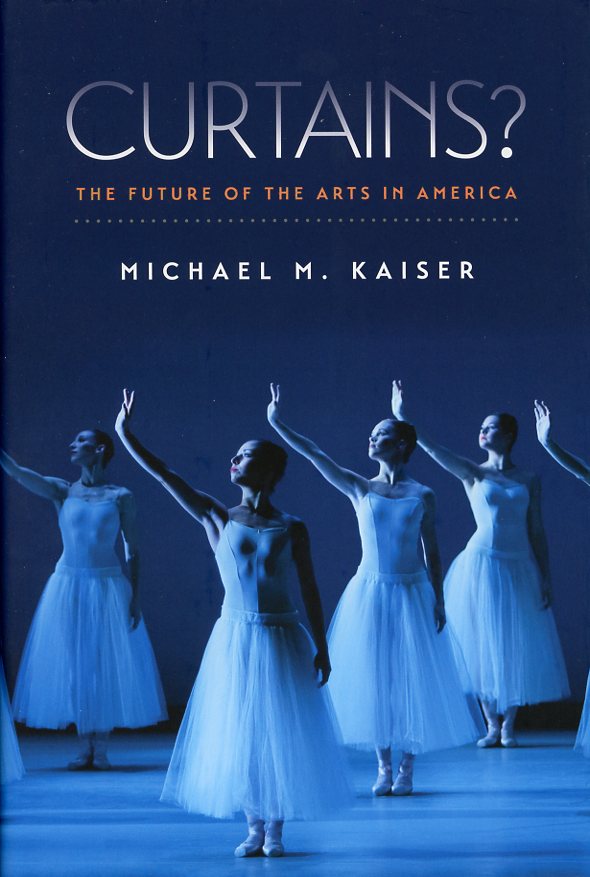 Kaiser’s book resembles a series of lectures about the state of the performing arts – a look at a golden era in the latter half of the 20th century, where we are now, where we may be in 20 years time, and how we might make things better. Unfortunately, the lectures seem to spring wholly from Kaiser himself, as he quotes no experts, provides no data, and doesn’t include either an appendix or bibliography. It seems we are to take what Kaiser tells us simply on faith, even such sweeping statements as “While the outlook for the performing arts is dire, museums have better chances for survival” or “Theatre organizations should fare better than symphony orchestras.” In the case of the latter statement, much as I would dearly love it to be true, it flies in the face of recent studies from the National Endowment for the Arts, cited by Timberg but AWOL from Kaiser’s survey. Given how much of his brief book is taken up with prognostication, its unfortunate that Kaiser doesn’t extrapolate from existing data; in imagining 2035, it’s surprising that ongoing demographic shifts, especially in regards to race and ethnicity, in the country play so little role in his thinking. That’s not to say he doesn’t have some interesting observations, among them the thesis that while the end of Metropolitan Opera touring gave rise to more regional opera companies in the 80s, the success of the Met Live cinecasts may now be undermining those very troupes.