Now in its 20th year, the New York International Fringe Festival, better known as FringeNYC, has presented nearly 4,000 productions for five-performance runs each summer, sustaining a beehive of theatrical activity in spaces on the Lower East Side. In contrast to many fringe festivals, all of which seem to owe a debt to the progenitor, the Edinburgh Fringe, FringeNYC is a curated festival, with its 200 annual productions chosen from an array of applications. Unlike reports from Edinburgh, which have some 8,000 productions scrambling for space and audiences each summer, FringeNYC engages all of the necessary spaces and doles them out to the productions they accept, controlling the probability of the highly speculative rents that have crept into Edinburgh. FringeNYC also negotiates an agreement with Actors Equity, provides lighting and sound equipment, and covers general liability insurance.
FringeNYC’s two decade history and success made last week’s “Biz Blip” from the Dramatists Guild to its members, challenging terms regarding subsidiary rights, or ongoing revenue, within FringeNYC’s authors agreements all the more surprising. While it was not sent as a press release or public statement, the missive, issued the night before the 2016 Festival began, quickly became a topic of conversation on social media. One of the early sources for non-Guild members was Isaac Butler’s Parabasis blog, which reproduced the item in its entirety. Headed “NYC Fringe Contract: Warning,” it read, in part:
Playwrights should be aware that the standard for fringe festivals around the world (including the US Association of Fringe Festivals, the Canadian Association of Fringe Festivals, and the Edinburgh Festival, the model on which most other festivals are based) is that, as presenting entities that are not actually producing the work, festivals are not entitled to subsidiary rights from authors. The NYC Fringe, however, under Article IV-B of their contract, requires an author to pay 2% of subsidiary rights revenues earned within 7 years of the festival (after the author’s first $20,000). And the contract does not limit the scope of its definition of “subsidiary rights,” so it includes every use of the play on a worldwide basis; this is a definition broader than a LORT theater or even a commercial off-Broadway producer might be granted.
Because Arts Integrity and its director Howard Sherman have ongoing relationships with both the Dramatists Guild (having worked with them on multiple instances of theatrical censorship and having received an award from the Dramatists Legal Defense Fund) and FringeNYC and its producing artistic director Elena K. Holy (including reporting a 3-day “Fringe Binge” for Narratively.com and participating in a panel on censorship during the 2015 festival), it was incumbent that both parties have an opportunity to explain their policies and views.
* * *
In conversation at one of the FringeNYC Lounges on the first full day of the 2016 Festival, Holy said of the Guild statement, “My initial response is that most of what they’ve said is true about our contract. However our contract incorporates a Participants Manual, which is like 64 pages, and none of that was included [in the Guild’s summary of issues]. We don’t have an attorney on staff so we wrote the participants’ agreement in 1997 and haven’t really changed it much since then. Every year, facts, figures, dates and stuff change, and technology changes, so that part gets put into the Participants Manual.”
Regarding the Dramatists Guild’s explicit comparison to the Edinburgh Festival, Holy explained, “We call ourselves presenters, but my biggest point of contention with what the Dramatists Guild said is we should be compared to Edinburgh. They see Edinburgh Festival Fringe as an industry standard, which totally makes sense, they’re the granddaddy of them all, they were 50 years old when we started, but the model is very different. They charge a similar participation fee to us and then they hand you a list of venues, and say ‘Great, go out and rent one of these venues to produce your show in.’
“Our thought was that if we did that in New York City and set loose 200 shows all looking to book the same 16 days, forget ten grand a week it would be thirty to forty grand a week, just through supply and demand. So we rent the venues, equip the venues, we staff the venues, we do marketing, we do marketing speed dates, director speed dates, town meeting – we are very hands on, and we’re invested in their production and we like to have skin in the game. I like that we are an adjudicated festival.”
Regarding the festival’s economics, Holy said, “On our 2014 990 form, we operated on 86% earned income. We’re invested in our artists. We spend between $6,000 to $7,000 on each show at FringeNYC. Part of that is we want a) for them to be invested in us and b) if they see huge success, huge unlikely success, for having done the show at FringeNYC, which does about 13,000 industry and press comps a year, then we would like for that to be recognized in order to keep our participation fees low for future artists. In our 19, almost 20, years now of doing our festival, three shows have contributed to that.” She cites Urinetown, which paid approximately $5,000 in royalties to the festival, as well as Eva Dean Dance and Dixie’s Tupperware Party.
Holy acknowledges that some applicants resist FringeNYC’s terms.
“Our 2% clause,” she notes, “when a famous person walks into our office and fills out an application form and doesn’t submit their script, or when someone’s agent calls us and says, ‘I know they’ve been accepted into the festival but we can’t sign this,’ it’s a pretty good indication that they don’t need one of our 200 slots.
“We only have 200 spots and if their career is beyond what we can offer, if their play is being produced that widely or if in the past they’ve had opportunities on Broadway, there’s really no reason for our 2500 volunteers to volunteer to help make somebody’s show happen when that somebody has ample opportunity elsewhere. So I’m not ashamed to say it scares a lot of people off and they’re probably people that shouldn’t be applying for our festival even.”
But isn’t it possible that FringeNYC is capitalizing on people’s desire to get their work seen on a New York stage, whatever the cost?
“Are they,” Holy asks, “given that it’s kicked in three times in 20 years? Given that it doesn’t kick in until after they’ve made $20,000, which actually these days means that you have to have a major motion picture made out of your play? Are they really encumbering their project? Most often what happens here is it’s not even the plays from FringeNYC that gets picked up. It’s our playwrights’ second and third plays that are what’s being produced regionally, or that’s when they get the Netflix series or the television show or whatever. So we certainly are not still around because of that $5,000 from Urinetown in 2000, or it was probably 2001 that it started.” She notes that the Fringe has received no subsidiary income from such shows as Matt and Ben and Silence! The Musical.
* * *
Regarding the citation of other fringe festivals in the Dramatists Guild’s “Biz Blip,” David Faux, associate executive for business administration at the Guild, explained in a phone conversation, “When we speak to festivals and producers, every single one of them can say, ‘We’re special, we’re different, we do things differently from what the other people do,’ and invariably they’re telling the truth. That’s the beauty of the theatre, every festival has its unique attributes, every producer has his or her unique attributes that they bring that nobody else can bring. That’s part of the chemistry of good theatre. So the fact that they do something that other festivals don’t do, we can just look at the other festivals and say, ‘Yeah, but they do things that you don’t.’ Why would the thing that they do different have to rest on the authors’ shoulders? Why should the author be burdened with a unique attribute of the festival?”
“We look at thousands of contracts that our authors ask us to review every year,” said Faux. “When you see that many contracts you see patterns and you see where theatres and festivals are deviating.”
“It’s always germane what other people are doing in the market,” notes Faux. “With the Guild in particular we don’t tell members whether or not to sign contracts, we don’t dictate terms of contracts, but we do express our opinions when we believe a contract has substandard terms. In that way, all we have is the comparison.”
Asked to explain a very general idea of common practice regarding subsidiary rights, Faux said, “Commercial theatres certainly receive subsidiary rights. They’re taking on a lot of risk and this is how the author shares in that risk on the back end. If it works out, the success of the authors work can go back to the commercial producer or the investors.
“With not-for-profits, there’s a different structure, because they are receiving grant monies, they don’t pay taxes, they get a certain number of benefits that commercial producers don’t. So that’s why it would be unusual to see an author giving subsidiary rights of more than 5% to a not-for-profit theatre. That’s about the top when you talk about regionals, LORTs. We’ve seen a trend lately of only having subsidiary rights kick in after a significant windfall, and by significant we’re talking $40,000 to $50,000. These are general terms.
“At festivals though, you don’t see authors having to yield a revenue stream on their future revenue. That’s what’s different about this. You know what happens, a theatre festival in Wichita, Kansas will hear that NYC Fringe is getting subsidiary rights from the author. And that festival in Wichita doesn’t say, ‘Oh, it’s New York City, of course it gets something we don’t.’ That festival in Wichita says, ‘Our production values are even better than what they’re getting in New York. Our dedication, the number of hours we put in, because we have lower overhead, we can spend more time on each individual, festival has more value.’ And they may be right about that.
“But nobody thinks, ‘New York City Fringe is so much better than my festival they deserve what they get.’ They all think they have something to bring to the table that New York City Fringe doesn’t. So suddenly because one festival says, ‘I want to tax the author,’ now authors are getting taxed all across the nation. So we have to say something about it before it becomes a standard practice.”
* * *
Addressing some smaller items in the Dramatists Guild statement, there are several points that bear clarification.
The Guild’s memo states, “It has been reported to us that the Fringe sent out its contracts to authors for this year’s festival at the end of July. If that is true, then it was a contract presented only a few weeks before the festival was scheduled to begin, after money has been raised and spent, leaving little or no time for authors and producers to assess their options in good faith.” Holy points out that all of the major terms of the agreements are included as part of the application process, so the terms should not come as a surprise, unless, in her words, “they didn’t read the information on the application before they submit.” However, Holy acknowledges the lateness of the agreements this year, saying, “I take full responsibility. We were trying to do everything electronically this year using DocuSign and I set it up so that the author’s agreement would fire when everyone had completed step one, the participants agreement and their W-9, and they haven’t all done that yet. That was a foolish way to set that up. So then I just gave up and e-mailed them a PDF.” Holy noted that this was a new process this year, replacing the previous practice of mailing paper contracts back and forth.
The Dramatists Guild cites “the standard for fringe festivals around the world (including the US Association of Fringe Festivals, the Canadian Association of Fringe Festivals, and the Edinburgh Festival, the model on which most other festivals are based).” However, Jeff Larson, responding to an online inquiry by Arts Integrity to the US Association of Fringe Festivals, commented, “The USAFF is a loose affiliation of United States Fringes and does not enforce standards on its members.”
The Guild noted, regarding the authors contract, that, “There are no obligations specified (either in the contract or the rules) for the Festival to support the show with any particular expenditure of marketing monies, nor any warrant of proper billing for the author and the play in whatever marketing and advertising the Fringe might do, and there is also no guarantee of mutually acceptable venues or performance schedules for the play, nor any discussion of the festival’s duties with regard to providing technical support.” As Holy noted above, those terms are included in the Participant Manual, an Appendix to the Participant Agreement. While the Guild concerns itself solely with the authors agreements, in the interest of transparency, FringeNYC might consider providing both the authors and participants agreements, as well as the participant manual, to the Guild so that all pertinent terms regarding production of the authors’ work are made clear.
So what of the FringeNYC terms regarding subsidiary rights, given the Guild’s characterization of prevailing practice and Holy’s acknowledgement that the terms cited were correct?
It is perhaps useful to look at the example of another New York summer festival, the New York Musical Festival, commonly referred to as NYMF, in operation since 2004 and the starting place for such musicals as Next To Normal and [title of show]. In 2010, NYMF sought to introduce a subsidiary rights clause to their agreements, saying in a statement:
Writers are the core beneficiaries of NYMF. Our goal is for NYMF shows to have future life, and for as many of our writers as possible to have their work produced again after the festival.
We specifically chose not to demand income from future third-party producers, as many other theater companies do, because doing so would encumber the project — making it less likely to be optioned or produced. Instead, we carefully structured our contract so that if — and only if — writers benefit substantially from NYMF’s support, they give back a small percentage so that we can provide similar opportunities to future generations of writers.
We think that’s fair.
Following a challenge by the Dramatists Guild to these new terms, NYMF withdrew its new terms in less than a month, writing in a statement:
The mission of NYMF is to support theatre artists, not to argue with them. We therefore withdraw our request to share in the subsidiary rights of authors participating in the 2010 Festival and will remove that section (Paragraph 5(E)) from our contract. Given the challenges of moving new musicals from the page to the stage and on to further productions, NYMF wants first and foremost to ensure that the shows we present have the unified support of the community.
While not working in the same kind of festival format, the O’Neill Theatre Center, one of the country’s oldest play development labs, also sought to introduce a subsidiary rights clause in 2006, at the start of the application process for the 2007 summer season. That effort drew a rebuke from Marsha Norman and Christopher Durang, the co-heads of the playwriting program at The Juilliard School at the time. A report from the New York Sun notes that the effort was quickly rescinded:
“We have their assurance that they will not this year, or in the future, be asking for a percentage of future royalties from the plays they accept for development,” Mr. Durang and Ms. Norman wrote. “They are looking for other sources of funding, but those monies will not come from your subsidiary rights.”
As the director of the Arts Integrity Initiative, I must step out of the third person to note that during my tenure as executive director of the O’Neill Theatre Center, from 2000 to 2003, I recall being charged by the board of directors to investigate the impact of introducing a subsidiary rights participation in authors’ future royalties. While I do not retain my notes from the time, I clearly remember my survey of prevailing practice, which consistently showed that regardless of whether I spoke with a festival, developmental, or producing organization, there was a clear dividing line for when it was appropriate to negotiate for subsidiary rights. That line was when a show was actually produced, not merely workshopped or showcased, even in cases where the work in question had been commissioned.
* * *
In conversation, Elena Holy noted that “we call ourselves presenters,” although in the context of explaining how the role of FringeNYC differs from the Edinburgh Fringe, she noted more direct involvement with productions than many presenters might have. In its Participant Agreement, which is signed by the designated liaison for each FringeNYC show, FringeNYC identifies itself as the “Presentor,” as distinct from a Producer (to which the Participant may be equivalent, even when the Participant is the producer, author and performer all in one). It is the Participant who is taking on primary responsibility for raising money, securing rehearsal space, assembling the show and delivering it to FringeNYC – the role of a Producer – and is even subject to penalties if it is unable to do so after a certain date, though they may not have continuing right to the show themselves. While FringeNYC does provide resources to each production and makes an investment of resources in them, mores than many fringe festivals, anecdotally the costs of producing the shows themselves, especially for companies not based in New York, can be considerably more than the FringeNYC allocation, once artist compensation, physical production, and travel and housing are factored in. In addition to the 2% subsidiary rights participation that FringeNYC asks of authors, it also asks for 2% of the Participants’ future revenues as well (again, over the $20,000 threshold).
While the discussion of Presentor, Presenter, Participant, Producer and so on may seem semantic, it’s not. Subsidiary rights typically accrue to producers who mount full productions of shows, at their expense (or with funds raised by them), whether commercial or not-for-profit, although the terms may vary. In Arts Integrity’s experience and in the examples given, they are not customary for productions which do not meet that standard. As for subsidiary rights granted by authors to entities responsible for the original mounting(s) of their play, for more than 25 years, there has been discussion of the complications engendered by encumbrances on authors when works receive several early productions that each secure (or demand) subsidiary rights. Providing them to developmental productions as well could have the effect of making it too expensive to produce a work that has promised multiple payments to multiple entities, or severely impede an author’s ability to be properly paid for subsequent productions. Additionally subsidiary rights are typically activated once a production has given a certain number of performances; as few as five are typically insufficient.
For 20 years, FringeNYC has been and continues to be an invaluable asset for new, inventive, irreverent and diverse work in New York. While it can’t hope to catch up with the longevity of the Edinburgh Fringe Festival, it is deserving of a comparably long life. After the frenzy of the current festival subsides, FringeNYC would be well served to reconsider its policy regarding subsidiary rights, lest it prove an increasing impediment to the depth and breadth of work seen in its venues each summer. But precisely because the Fringe by its nature attracts younger or less established artists seeking a showcase in one of the world’s greatest theatre cities, with the possibility of being seen by industry and media professionals who could advance their shows, their careers, or both, it would do well not to ask more of its authors, its artists and its producers than any other fringe, showcase, workshop, reading series or the like. While many artists have enjoyed and benefited from the Fringe and have agreed to its longstanding terms, with the subsidiary rights language ultimately being activated for the very tiniest percentage, the Fringe’s embracing spirit can set an example for its artists and producers of what they can and should expect in the future, and that begins with their contracts.
Lin-Manuel Miranda and Quiara Alegría Hudes, authors of “In The Heights” (photo courtesy of New Dramatists)
The casting of the upcoming production of In The Heights at Porchlight Music Theatre in Chicago, in particular a non-Latinx actor in the leading role of Usnavi, has provoked a great deal of comment and controversy. On August 9, Victory Gardens Theatre hosted a public forum, “The Color Game: whitewashing Latinx stories,” which drew a full house and an even larger online audience to explore the issues of race, ethnicity, authenticity and representation provoked by the Porchlight casting and an earlier production of Evita in Chicago; reporting from the Chicago Tribune and Chicago Reader on the forum expanded its reach yet further). The event had been preceded by multiple online essays on the subject, including posts by Trevor Boffone, Tommy Rivera-Vega and Jose T. Nateras, as well as two reports (here and here) from Arts Integrity as the situation unfolded, and a commentary by me, writing in my capacity as interim director of the Alliance for Inclusion in the Arts.
On Sunday evening, August 14, Victory Gardens artistic director Chay Yew shared, via Facebook, a post that was headed, “Just Got this from Lin-Manuel and Quiara.” Readers have noted that it seems to be coming from a single voice, but Hudes’s preface addresses that:
I will be swamped returning from vacation and may not get a statement out, I wanted to forward you my email interview thread with Diep Tran for American Theater at the end of July when this happened. Lin stood behind my comments in this thread then, and I assume that still stands. Here are some of my most relevant comments, cut and pasted for continuity which I am comfortable with them being posted publicly, in the context of “excerpts from her interview with Diep Tran for American Theatre Magazine.”
For those seeking more clarification about Miranda’s position, I was in touch with him with him following the publication of the American Theatre article; he had been on vacation when the controversy over Porchlight’s casting emerged. Responding to an offer to add his own thoughts, he wrote, referencing Hudes’s comments in the the article, “I honestly can’t improve on her words. She speaks for us both.”
Hudes’s full statement to Yew is as follows:
I am not familiar with Porchlight but based on them being Equity, then I can only assume this is a professional theater company. Within the context of professional productions, casting the roles appropriately is of fundamental importance.
The fact is that creating true artistic diversity often takes hard work. Concerted, extra effort. It takes time and money. You cannot just put out a casting call and hope people come and then shrug if they don’t show up. You may need to add extra casting calls (I do this all the time), to go do outreach in communities you haven’t worked with before. You may need to reach out to the Latino theaters and artists and build partnerships to share resources and information. You may need to fly in actors from out of town if you’ve exhausted local avenues, and house them during the run. When faced with these expensive obstacles, an organization’s status quo sometimes wins because it’s cheaper and less trouble. The Latino community has the right to be disappointed and depressed that an opportunity like this was lost. It can be very disheartening, as an artist and as an audience member.
The sad fact is that even in New York, where we Latinos abound, the theater world often reflects a much more closed system. I’m talking onstage and off.
For decades, the vast majority of Latino roles were maids, gang bangers, etc etc. It’s demoralizing, obnoxious, and reductive of an entire people. It’s a lie about who we are, how complicated our dreams and individuality are.
Chicago has a historic Puerto Rican and Latino community. Its history as a hub of Latino migration is beautiful and robust. I’ve had the honor of working in Chicago numerous times and getting to know a deep pool of diverse talent there. Artists like Eddie Torres founded Latino theater companies to create opportunities where there were none. The Goodman houses a Latino theater festival frequently, and they did a beautiful job casting my play The Happiest Song Plays Last. DePaul recently hosted the Latino/a Theater Commons festival. Chicago is poised to be at the forefront of these issues!
I am proud to have written complex roles for actors of many ethnicities: Latino, African-American, White, Asian-American, Arab-American. I have stumbled at times. But I continue to commit to nuance and specificity as the core of the dramatic impulse, and the gateway to the human experience.
I have been in a lot of rooms where people give lip service to being committed to diversity. But that’s different than doing the hard work that it often involves.
I do not hold these views as strongly with educational and non-professional productions. I’m happy for schools and communities who do not have these actors on hand to use In the Heights as an educational experience for participants of all stripes.
I have had the pleasure of working with directors of many backgrounds on my work. Women and men, Latin@, Asian American, African American, bicultural, and white. I have purposely tried to work with the widest range of directors possible, aesthetically and culturally speaking, and this broad group of collaborators has enriched my vision as an artist.
I have chosen directors based on many considerations: aesthetics, artistic mission, their connection with a given script, their history of excellent casting and designer collaborations.
Rather than demand a particular background for a director of my work, I try to encourage Artistic Directors and producers to consider hiring woman directors and culturally diverse directors THROUGHOUT their season–not just for the “Latino” play or “women’s” play. Directors of color should be hired to do EVERYTHING. They should be directing Shakespeare and Moliere and Ibsen and Cruz. Not just Cruz.
This post, in a slightly different form, first appeared on the website of the Arts Integrity Initiative.
The casting of the upcoming production of In The Heights at Porchlight Music Theatre in Chicago, in particular the hiring of a non-Latinx actor for the leading role of Usnavi, has provoked a great deal of comment and controversy in that community and beyond. In response, on August 9, Victory Gardens Theatre hosted a public forum, organized by ALTA, the Association of Latinx Theatre Artists of Chicago, “The Color Game: whitewashing Latinx stories.” It drew a full house and an even larger online audience to explore the issues of race, ethnicity, authenticity and representation, provoked by the Porchlight casting and an earlier production of Evita in Chicago; reports from the Chicago Tribune and Chicago Reader on the forum expanded its reach yet further. The event had been preceded by multiple online essays on the subject, including posts by Trevor Boffone, Tommy Rivera-Vega and Jose T. Nateras, as well as two reports from Arts Integrity (here and here) as the situation unfolded, and a commentary by Arts Integrity director Howard Sherman, writing in his capacity as interim director of the Alliance for Inclusion in the Arts.
On Sunday evening, August 14, Victory Gardens artistic director Chay Yew shared, via Facebook, a post that was headed, “Just got this from Lin-Manuel and Quiara.” Readers have noted that it seems to be coming from a single voice, but Hudes’s preface addresses that:
I will be swamped returning from vacation and may not get a statement out, I wanted to forward you my email interview thread with Diep Tran for American Theater at the end of July when this happened. Lin stood behind my comments in this thread then, and I assume that still stands. Here are some of my most relevant comments, cut and pasted for continuity which I am comfortable with them being posted publicly, in the context of “excerpts from her interview with Diep Tran for American Theatre Magazine.”
For those seeking to clarify Miranda’s position, Arts Integrity was in touch with him following the publication of the American Theatre article; he had been on vacation when the controversy over Porchlight’s casting emerged. Responding to an offer to add his own thoughts, Miranda wrote, referencing Hudes’s comments in the the article, “I honestly can’t improve on her words. She speaks for us both.” Additionally, Yew reports that he had received an e-mail from Miranda backing the statement.
Hudes’s full statement, the excerpts from her American Theatre interview, as she provided it to Yew, is as follows:
I am not familiar with Porchlight but based on them being Equity, then I can only assume this is a professional theater company. Within the context of professional productions, casting the roles appropriately is of fundamental importance.
The fact is that creating true artistic diversity often takes hard work. Concerted, extra effort. It takes time and money. You cannot just put out a casting call and hope people come and then shrug if they don’t show up. You may need to add extra casting calls (I do this all the time), to go do outreach in communities you haven’t worked with before. You may need to reach out to the Latino theaters and artists and build partnerships to share resources and information. You may need to fly in actors from out of town if you’ve exhausted local avenues, and house them during the run. When faced with these expensive obstacles, an organization’s status quo sometimes wins because it’s cheaper and less trouble. The Latino community has the right to be disappointed and depressed that an opportunity like this was lost. It can be very disheartening, as an artist and as an audience member.
The sad fact is that even in New York, where we Latinos abound, the theater world often reflects a much more closed system. I’m talking onstage and off.
For decades, the vast majority of Latino roles were maids, gang bangers, etc etc. It’s demoralizing, obnoxious, and reductive of an entire people. It’s a lie about who we are, how complicated our dreams and individuality are.
Chicago has a historic Puerto Rican and Latino community. Its history as a hub of Latino migration is beautiful and robust. I’ve had the honor of working in Chicago numerous times and getting to know a deep pool of diverse talent there. Artists like Eddie Torres founded Latino theater companies to create opportunities where there were none. The Goodman houses a Latino theater festival frequently, and they did a beautiful job casting my play The Happiest Song Plays Last. DePaul recently hosted the Latino/a Theater Commons festival. Chicago is poised to be at the forefront of these issues!
I am proud to have written complex roles for actors of many ethnicities: Latino, African-American, White, Asian-American, Arab-American. I have stumbled at times. But I continue to commit to nuance and specificity as the core of the dramatic impulse, and the gateway to the human experience.
I have been in a lot of rooms where people give lip service to being committed to diversity. But that’s different than doing the hard work that it often involves.
I do not hold these views as strongly with educational and non-professional productions. I’m happy for schools and communities who do not have these actors on hand to use In the Heights as an educational experience for participants of all stripes.
I have had the pleasure of working with directors of many backgrounds on my work. Women and men, Latin@, Asian American, African American, bicultural, and white. I have purposely tried to work with the widest range of directors possible, aesthetically and culturally speaking, and this broad group of collaborators has enriched my vision as an artist.
I have chosen directors based on many considerations: aesthetics, artistic mission, their connection with a given script, their history of excellent casting and designer collaborations.
Rather than demand a particular background for a director of my work, I try to encourage Artistic Directors and producers to consider hiring woman directors and culturally diverse directors THROUGHOUT their season–not just for the “Latino” play or “women’s” play. Directors of color should be hired to do EVERYTHING. They should be directing Shakespeare and Moliere and Ibsen and Cruz. Not just Cruz.
Walking through Covent Garden, I always imagine a site-specific production of My Fair Lady (or Pygmalion), with the opening scene played out on the very ground where it was first conceived to occur. This same flight of fancy has always held for me as well when I visit Independence Hall in Philadelphia, and dream of John Adams and Benjamin Franklin singing in the building where the musical 1776 is set and key moments in American history took place.
So when I received a press release about a concert of the musical Ragtime to be held on Ellis Island, the first stop for some 12 million immigrants to the US in the late 19th and first half of the 20th century, I couldn’t scramble fast enough to secure a ticket.
I didn’t stop to fuss over who was producing, directing or performing, I just wanted to be there. I’ve been a great fan of the Lynn Ahrens, Stephen Flaherty and Terrence McNally show since I first heard the original recording. My affection was reinforced when the show landed in New York. The novel on which it’s based, by E.L. Doctorow, is also a favourite; I read it when it was new, while I was in my teens.
As it happens, the production was the vision of a 22-year-old tyro director named Sammi Cannold, heretofore unknown to me. She had apparently made a splash in California directing a site-specific production of the musical Violet on a bus while in college. She’ll repeat the production next year at Massachusetts’ American Repertory Theater.
Cannold’s concert was designed as a test run for a possible full production of Ragtime on Ellis Island. Held in the Registry Room for an audience of some 450 people, it featured a good-sized cast led by Laura Michelle Kelly and Brandon Victor Dixon, with narration and anecdotes from Brian Stokes Mitchell, who created the role of Coalhouse Walker on Broadway.
Perhaps a dozen songs from the expansive score were performed. Despite its relative brevity, the logistics must have been a challenge, since every element had to be brought to the island by ferry, including the audience.
Unlike my imagined My Fair Lady and 1776 productions, Ragtime had a particular resonance for me beyond the obvious historical link: all four of my grandparents came to America through Ellis Island. I watched this fictional story, which could have been that of my own forbears, unfolding in a building that I knew they had walked through, three leaving Tsarist Russia, a fourth having come from Marseille.
I never knew the specifics of their voyages – my parents, now deceased, never told me any details, my maternal grandparents died when I was an infant, and my father’s parents were taciturn and stern, never given to saying any more than absolutely necessary.
Monday’s water voyage to Ellis Island was vastly shorter than that of those arriving by boat more than 100 years ago, but the verisimilitude of approaching by water, of watching the Statue of Liberty loom ever larger, brought site-specific and slightly immersive work to a whole new level. Even without the book scenes acted out, I found myself moved to tears at one point by the confluence of art and history, and had a sense of being closer to my grandparents than I ever was in their lifetimes.
Of course, Ragtime is not the story of a single family of Eastern European immigrants, but also the story of black Americans and white Americans, their lives intertwined by fate, racism and forgiveness.
At a time when our Republican presidential nominee and the Brexiteers want to close borders to immigrants, Ragtime is a vivid reminder that immigrants and migrants are essential parts of the story of almost every country, even if the musical doesn’t represent every race. While its message will likely be evergreen and surely pertinent should a full production be realised, its resonance in 2016, even in a suite of songs, is impossible to miss.
As someone who has not travelled a great deal internationally, I have always said that it is the theatre that has taken me to places I’ve never been, in addition to being a time machine that has taken me to eras other than this one. Ragtime on Ellis Island was, for me, a singular experience in a lifetime of theatregoing as a result of the convergence of the show, the place and my own heritage.
But with 12 million immigrants having passed through its doors, I am surely not alone, as a second-generation American, in appreciating its hold. Ragtime on Ellis Island is a terrific argument for more theatre happening outside of theatres, in places where the stories truly or imaginatively took place, making the case both for the value of art and emphasising the humanity and truth that lies within art, merging invention and reality far from any proscenium.
Thanks to smartphone technology, we all walk around with cameras in our pockets or bags, but tend to pull them out to take pictures of events, of friends, of ourselves. As someone trained on 35 millimeter film cameras at the age of 11 or 12, and trained to use a darkroom at perhaps 14, I still can’t adjust to the idea of pointing a phone to take a picture. Indeed, when I’m not otherwise laden down by a bag of some kind, I usually have a DSLR with me, to confirm to the kind of picture taking I learned some 40 years ago.
That said, I’m always alert to the possibility of some striking image crossing my path, and over the past eight months or so, I’ve come to realize how many images literally roll right by me. It seems that an increasing number of white panel vans, making deliveries throughout the city, have been turned over to artists, who are allowed and it would seem encouraged to make statements on these motorized tabulas rasa, undertaking works that range from vivid graffiti to subjects more deliberate and varied. I wonder whether they’re created to stave off unauthorized graffiti artists or perhaps to stake out territory that will warn them away. Whatever their provenance, they certainly brighten up the streets, and bring urban art into the increasingly sanitized center of Manhattan, without vandalizing property in the process.
Below is a selection of examples I’ve caught since the beginning of the year, some parked, some merely stopped at traffic lights, causing me to move fast and capture them in less than optimal circumstances. I make no claims for these as photography, but merely as a record of public art, unsubsidized by public funds, that might go unnoticed or even unseen by many.
To a particular subset of junior comedy nerds, of which I was an unapologetic member, 1976 was a watershed year, for a reason only tangentially connected to the official Bicentennial celebration that faced Americans down at every turn.
At a time when the vinyl record remained the primary means of owning recorded music (cassettes were coming into vogue, as were, briefly eight-tracks), the comedy sections of record stores were relatively low on product. Without access to a really good used record store, it was particularly hard to find vintage comedy recordings, and by vintage at age 14, that meant anything older than 10 years. Cosby and Carlin filled the racks, but beyond them it was luck of the draw. Believe me, I looked.
So when the essential Barry Hansen, aka Dr. Demento, began “serializing” Stan Freberg’s 1961 album “Stan Freberg Presents The United States of America Volume One: The Early Years,” it was nothing less than a revelation. Conceived as the cast recording of a Broadway musical that never was, with Freberg writing, composing and performing many of the vocal chores, “America” was, to my mind a masterpiece, and I was thrilled when, in the wake of its showcase on Dr. Demento’s show, it was rereleased by Capitol Records, so I could listen to it again and again (which I did, and still do).
As Freberg’s witty, wise-guy approach to everything from the voyage of Christopher Columbus to the Battle of Yorktown proved subtler than Mad Magazine, not as raw as the National Lampoon, and as tuneful any classic cast album, I was hooked. I even went so far as to write down to the lyrics to every song (some in two and three part counterpoint), which involved constantly lifting the needle and dropping it back again, so that I could truly commit the songs to memory, where they remain.
Freberg’s voice, as it happened, was plenty familiar, as he had been a cartoon voice artist for years, but as I grew older, I learned more about his work.
That he was part one of television’s earliest children’s shows, Time For Beany, whose most popular character, performed by Freberg, was Cecil, seasick sea serpent (initially a live puppet show, it was much later made into an animated cartoon).
That he had been a charting recording artist, who broke out with a record called “John and Marsha,” which consisted of nothing but some romantic string music and a male and female voices saying “John” and “Marsha” in a way that charted a relationship.
https://www.youtube.com/watch?v=KkfwmB8jeSU
That he obviously found the Jack Webb TV procedural Dragnet an endless source of amusement, as he parodied it often (with Webb’s support).
That he had one of the last network radio comedy shows, having filled the gap left when Jack Benny shifted to television (a favorite target of Freberg’s). And, most startlingly, that by the time I discovered him, he had largely left the comedy business in order to bring humor into advertising.
https://www.youtube.com/watch?v=CY2VAIIQAj4
That he wrote the longest radio commercial ever, which became so popular that it was recorded and released commercially.
I raise all of this because today would have been Stan Freberg’s 90th birthday. Unfortunately he passed away at the age of 88 early last year. I regret never having sent him a fan letter, never having made an attempt to meet him on one of my irregular forays to Los Angeles.
Listening to 50+ year old comedy can be a mixed bag, but when I came to Freberg’s work, it was only 15 to 20 years old, so the majority of the comedic references were sufficiently current for me. Today, his parodies of Mitch Miller and Arthur Godfrey don’t resonate as they would have in Freberg’s heyday; his cutting satires of everything from the commercialization of Christmas to the McCarthy hearings can be appreciated for their virtuosity, but they don’t necessarily elicit laughs. That said, Freberg’s riff on censorship and “political correctness” from 1957 holds up very well.
And because his humor was – like that of my other comedic heroes from the same era, Tom Lehrer, Allan Sherman and Bob and Ray – entirely aural, there aren’t copious videos to show Freberg at work. YouTube reveals page after page of Freberg routines, but the images are often of static record labels, of montages of photos.
Because he was more prolific than Lehrer and, even truncated, his comedy career was longer than Sherman’s, I have more Stan Freberg discs on my shelves than those two artists put together – included the complete boxed set of his radio shows (well, it was canceled after only four months of weekly airings). But just as I play Lehrer’s “Poisoning Pigeons In The Park” every year on the first day of spring, and play Bob and Ray’s “Komodo Dragon Expert” every time I want to demonstrate what truly inept interviewing and moderating skills sound like, Freberg gets a spin at least once a year, on the Fourth of July, when his masterwork “The United States of America” underlines and undermines every patriotic expression of the day.
Happy birthday, Stan Freberg. I knew you, but oh, how I wish I’d known you.
It is quite possible that, when the English stage was officially opened up to allow women to perform alongside men, most likely in 1660 when Margaret Hughes played Desdemona, some argued against it, on the grounds that young boys had been successfully been playing women for years, and if it ain’t broke, don’t fix it. After all, only 30 years earlier, a French touring troupe met with disdain for daring to employ women, and even once English women were permitted to act, men did not immediately cease playing women’s roles.
Ira Aldridge
When Ira Aldridge became the first black actor to find fame on the stages of Europe, having left America, which offered him no opportunity, there were at first people who took exception to the breaking of the color line, feeling that blackface had been more than sufficient for the portrayal of non-white characters and that a black man speaking the words of Shakespeare was “blasphemous.” One critic wrote that “with lips so shaped that it is utterly impossible for him to pronounce English,” while another objected to his leading lady being “pawed about on the stage by a black man.”
Phyllis Frelich
After Phyllis Frelich won a Tony Award in 1979 for Children of a Lesser God, might some have dismissed her honor as resulting from a sympathy vote because she was a deaf woman playing a deaf woman, or that her achievement was somehow less simply because she used sign language, which was how she communicated every day? After all, one critic, praising Frelich, took note of her “affiliction.”
Invented scenarios? Only in part. And certainly none are implausible, at distances of hundreds of years or just a few decades. They are, after all, representations of the breaking of a status quo, the altering of a dominant narrative, and the much too easy ways of diminishing significant achievements at the time that they happened.
The stage remains a place where certain practices, steeped in tradition, persist. Despite being seen by many as a bastion of liberals and progressives, the arts are dominated by white Eurocentric men, whether it comes to the stories being told or the people placed in the positions of authority who are charged with making work happen. While the not-for-profit arts community has begun in recent years to explore equity, diversity and inclusion initiatives designed to give voice to a broader range of gender, race, ethnicity and disability, the field is still dominated by white structures and white professionals “opening doors” to other stories.
That’s not to be dismissive of those efforts, but only a means of contextualizing them and reflecting how nascent they still are in so many places. Let’s not forget, it was only in 2015 that the Metropolitan Opera dropped using blackface on the actor playing the title role in Otello, an original Broadway musical featured an all-Asian cast, an actor with a mobility disability in life originated a role in a Broadway production using a wheelchair. How was it possible that this hadn’t happened sooner?
The changes on our stages, the efforts to assert of a broad range of identity where it was previously denied, is reflective of society as a whole. While it has been 51 years since the passage of the Civil Rights Act and 26 years since the passage of the Americans With Disabilities Act, there are still legal battles being fought to insure and protect their full and proper implementation. However, in the past decade, with the rise of social media, advocates for change have had the opportunity to make their cases ever more swiftly and directly, without adjudication by the media as to what concerns will be permitted to reach a critical mass of awareness, with people driving the story, not the story driving the people.
As efforts towards fairer and truer representations of racial and ethnic identity in theatre have resulted in particular shows becoming flashpoints – with The Mikado in Seattle and New York, with The Mountaintop at Kent State, with Evita and In The Heights in Chicago, The Prince of Egypt in the Hamptons and so many more – one of the more frequent and derisive responses has been, “It’s called acting.” That is to say, ‘Oh, it’s all make believe,’ all little more than ‘let’s pretend,’ and as such shouldn’t be held to the same scrutiny or standard as say, the make-up of juries or the population of schools. It says that since the discipline is about taking on a persona, the reality of the person doing so shouldn’t be considered, shouldn’t matter. The phrase condescends to anyone who dares think otherwise.
Those who would reduce efforts toward equity in the arts might wish to isolate them as being the result of identity politics or political correctness. The “it’s called acting” claim is, make no mistake about it, an argument for the status quo, for tradition, for the denial of opportunity, for erasing race. It expresses the thinking that gives awards to people who pretend to be disabled on stage and screen, while making it difficult for people with disabilities to attend cultural events, let alone be a participant in creating them. It is the mentality that loves West Side Story, but cries foul when songs sung by characters who speak Spanish are translated into and performed in Spanish.
“It’s called acting” is the response of those who perceive their long-held dominance, their tradition, as threatened, their own position as being at risk. “It’s called acting” sustains systemic exclusion. After all, as the saying goes, “When you’re accustomed to privilege, equality looks like oppression.” Privilege abounds in the arts, on stage, backstage and in the seats.
If we lived in a society, a country, where everyone was indeed equal in opportunity, then the arguments for paying heed to the realities of race, ethnicity, gender and disability might be concerns that could be set aside. But that’s far from the case, and if the arts are to be anything more than a palliative, they must think not just of artifice, but also about the authenticity and context of what they offer to audiences.
For the arts to survive, they must move forward, lest they become antiquated. In a society where the balance of ethnicity and race is shifting, it is incumbent upon the arts to at last fully welcome and support all voices and allow them to portray and tell their stories as well as the stories of others, instead of being forced to assimilate into some arbitrarily evolved template. There should to be an acknowledgment of how the lived experience can contribute to the arts, rather than denying its presence or validity, along the lines of the canard, “I don’t see color.”
There is no absolute in the arts, no definitive good or bad, right or wrong. The act of creation and the response to that act exist simultaneously in the eye of the creator and beholder (the audience). Consequently, the arts give rise to phalanxes of arbiters at almost every level – teachers, directors and artistic directors, and critics – who seek to guide and even control training, practice and opinion, each in their own way. When those arbiters have disproportionate influence, or in fact become gatekeepers, they assume a greater responsibility, one that goes beyond themselves into the field as a whole. How they are empowered, what they believe, becomes essential to sustaining – or diminishing – the arts.
When it comes to respect and recognition, diversity and inclusion, there is a new arts narrative being written right now. Within that process there are progressives making change, late adopters who are coming to understand, and reactionaries who want to hold on to the past. If we believe that art has value, so do the ethics and process of making it. Being unaware, or worse still, dismissive of how the arts are changing and how the arts reflect society, would keep the field trapped at a moment in time, one already mired in the past, as the world advances. That’s the road to irrelevance, which the arts cannot afford.
Howard Sherman is interim director of the Alliance for Inclusion in the Arts.
Andy Huntington Jones in Cats (Photo by Matthew Murphy)
In hindsight, the slogan ‘now and forever’ looks a bit less like marketing and a bit more like hubris. While it didn’t run forever, on the U.S. side of the Atlantic, the musical Cats maintains a formidable place in the annals of longest-running Broadway shows, surpassed only by The Lion King, the revival of Chicago and The Phantom of the Opera. While those latter three shows are all still chugging along, meaning they’re widening their lead over Cats, it’s going to take another four years or so before Wicked takes over the number four slot on the list – though that looks to be an increasingly likely achievement.
When the revival of Cats opens on Broadway on Sunday, in an open-ended run (in contrast to its recent limited-run engagements in the West End), it finds itself in a very different marketplace to the Broadway of the early 1980s, one that it helped to create through its success. The 1980s were a period when Broadway was in a slump, with theatres being demolished to make way for more lucrative real estate, and one even sold to a church. Now, musicals that run for fewer than five years can in some cases be seen as disappointments; 10-year runs are increasingly commonplace, if not exactly run of the mill.
The arrival of Cats, riding on a crest of acclaim from London back in 1982, was a big cultural event. Tickets for it in its first years were as dear as Hamilton tickets today, even if the secondary market was invisible to the average theatregoer in those pre-internet days. It’s important to remember how celebrated Cats was in its day, because as its 18 year run wore on, the show began to be perceived as a bit less groundbreaking and perhaps somewhat timeworn. For all of its enormous commercial success, its penetration into the popular consciousness and successful tapping of both the family and tourist markets, its then unprecedented run ultimately yielded jokes about the show having outlived its nine lives. The parade of animals that opened Julie Taymor’s production of The Lion King for Disney became the new standard for anthropomorphised animals on Broadway; the two shows overlapped for almost three years in New York.
While Chicago returned to Broadway in a production that echoed the Bob Fosse-directed original, it isn’t the same staging; no doubt the show benefited from a hiatus of some 20 years. Conversely, Les Misérables came back to Broadway for the first time only three years after the original run closed, in the same production, and lasted just 15 months. The Cats revival has the benefit of being gone from Broadway for almost 16 years, but it’s largely the same show (save for some new choreography and lighting). It remains to be seen whether ticket buyers embrace the show that may well have been their very first time at the theatre, seizing an opportunity to take their children to an experience they once loved as children, or whether the iconic production might have needed a full rethink for the digital era, for a generation raised on The Lion King and Wicked.
I have to confess that I am rather uniquely unqualified to hazard a guess as to what the fate of the Cats revival may be. Why? Are you sitting down? Because I’ve never seen it. Despite avid theatregoing that began in the late 1970s, I never did manage to see Cats on Broadway, on tour or even in a high school auditorium. I was already a collegiate theatre snob when the show opened, and, without children of my own nagging me to take them as the run continued, I never felt the feline lure of T.S. Eliot or Andrew Lloyd Webber during the ensuing two decades. When I worked on the US premiere of By Jeeves in the mid-1990s, I always feared Lloyd Webber turning to me and saying, “Do you remember that moment in Cats when…?” I would have been left sputtering for a response.
That’s not to say I don’t have a strong impression of the show, since numbers were performed in full on television back in the day, excerpted for Broadway histories and television ads alike, parodied frequently, and so on. The TV sitcom Caroline in the City featured an actor character who was – fictionally – a member of the Cats menagerie. It was such a cultural touchstone that I remember The New York Times critic Frank Rich panning a show I did press for, about illegal dog fighting (no animals were harmed), with a withering, “Anyone for Cats?”
Come next week at this time, I will no longer be a Cats virgin. Whatever I make of it, inevitably my response cannot be one of youthful wonder nor middle-aged nostalgia. The question for the producers is whether there are enough people out there who want to evoke one or the other of those sentiments, among the already initiated or those born too late to experience the original run. As much as I plan to watch the show at long last, I’ll be keeping an eye on the audience as well, to see who turns out for the reconstituted Cats, if not now and forever, than at least once and again.
Subsequent to Arts Integrity exploring the Porchlight Music Theatre’s casting of their forthcoming production of In The Heights, as well as Hedy Weiss’s article for the Chicago Sun-Times (detailed in Race, Spoken and Unspoken, in Chicago Cast Announcement), other voices weighed in on the issue of authenticity in casting. They added details that weren’t all apparent to someone outside the Chicago theatre community, as well as commentary on the situation.
Trevor Boffone, a professor at the University of Houston and Ph.D. in Hispanic studies, wrote about the situation on his website, asserting that the cast features “a white actor playing Miranda’s theatrical doppelganger Usnavi, the musical’s main character,” going on to write:
This casting decision gentrifies a show that is about a community fighting against gentrification. Evidently, Porchlight fails to comprehend the lived realities of Latin@s all across the nation who face many of the issues seen in Miranda and Hudes’ musical. This especially rings true when a white man is cast as Usnavi. These roles were written by Latin@s for Latin@ actors. The Latin@ community wants their stories told, but in an ethical way that speaks with the community in question. To gentrify In the Heights is to completely miss the point of the musical.
Tommy Rivera-Vega, a Chicago area actor who had auditioned for the Porchlight production, wrote in a public Facebook post:
I understand that you cast some Latinxs in the show (people that I have worked with before, respect their work, and love.) But when the person actually narrating the story is not Latinx, you are creating an atmosphere, an ecosystem, a perfectly created barrio around him, where the white folks behind it can now feel safe telling our story. You are essentially “building a wall.” Not giving us a chance….
By casting a non-Latinx Usnavi, and not even having an overwhelming Latinx support in the Production team, the backbone of the show suffers, because it was never lived. Being a Latinx will turn into devising what being Latinx is, instead of just being it. You have essentially gentrified Lin-Manuel Miranda’s gentrification masterpiece.
* * *
Asked about the ethnicity of the actors cast in many of the show’s leading roles, Porchlight provided a statement through their press representative, which reads:
While Porchlight specifically encouraged artists who self-identified as Latinx to audition for In the Heights both in our AEA and non union audition announcements; we did not invite nor require potential employees to state their racial self-identification as part of our hiring practices. Even if we knew for certain an artists’ self-identification (of any qualification) we do not feel it is appropriate to violate the confidentiality of their privacy.
When it comes to the subject of inquiring about ethnicity in any casting process, Porchlight makes an important point, which can be stated even more emphatically: while the company neither invited or required actors to state their ethnicity, they legally can’t. To do so would violate antidiscrimination laws in regards to hiring, where subjects such as race and ethnicity, as well as age, sexual orientation, and medical status, are off-limits. However, that doesn’t prevent a producer, theatre company, director or casting director from proactively seeking actors of a specific ethnicity (or gender, or disability) and inviting them to audition.
Writing at fnewsmagazine, “a journal of arts, culture, and politics edited and designed by students at the School of the Art Institute of Chicago,” Jose T. Nateras explains:
The truth of the matter is, often, actors of color aren’t able to get an audition in the first place. For instance, Porchlight makes audition appointments available through a website that has only so many audition slots open for signing up on a first-come-first serve basis. It is well known that these slots fill up fast and whether or not the roles looking to be filled are for actors of color, a large portion go to white actors.
Granted, these are actors who, very understandably, want a chance to audition for one of the more respected musical theater companies in Chicago. An actor’s agent can submit them for auditions, or they can self-submit, but it is ultimately up to the casting department of a theater to call actors in from the many submissions they receive. So, yes, casting does come from the pool of actors who audition, but when you’re in control of who is in that pool, that’s not an excuse.
* * *
“…I immigrated from the single
Greatest little place in the Caribbean,
Dominican Republic.
I love it.”
– from In The Heights
The casting notice provided by Porchlight to the Casting Call portion of the Actors Equity website (the company hires both Equity and non-Equity performers) did state, “Especially seeking actors/actresses who identify as Latino.” However, the same posting, as is standard for Equity listings, also carried non-discrimination boilerplate, “Performers of all ethnic and racial backgrounds are encouraged to apply.”
Even Hamilton, praised for its diverse cast, got into trouble when it sought “non-white” actors, because such a notice violated non-discrimination hiring laws. But one way of addressing intentionality in ethnic casting, in being “color-conscious,” is to specify the race or ethnicity of the characters, not the actors.
It’s worth noting that when the AEA posting was used by Backstage as the basis for their own notice of the casting of Heights at Porchlight, the specific character breakdown repeatedly noted, under ethnicity, “all ethnicities,” which translates the non-discrimination language on the AEA website into the misleading suggestion that, unless otherwise noted, the characters themselves can be of any ethnicity. In an e-mail to Arts Integrity, Luke Crowe, casting vice-president at Backstage, explained, “With Equity listings, we also default to the inclusive ranges (all ethnicities, all ages 18+, etc.) unless the Equity listing specifically defines narrower criteria.”
While three of the more detailed character descriptions as provided to Equity by Porchlight mention ethnicity – Usnavi “dreams of returning to the Dominican Republic,” Abuela Claudia “moved from Cuba to New York,” Carla is “of Chilean, Cuban, Dominican and Puerto Rican descent – the others don’t address it, save for Benny, who is “not Hispanic.” This contrasts with the current casting notice for an upcoming production at Theatre Under the Stars in Houston, which at the start of the descriptions of the major characters in their breakdown, notes them as, “Usnavi, male, 20s, Dominican,” “Nina, female, 19, first generation Puerto Rican,” “Kevin, male, 40s, Puerto Rican,” and so on. While the published edition of the Heights script does not list ethnicity on its cast of characters page, the specific ethnicities are evident within the script itself, and even the back cover describes the setting as “a tight-knit Latin American community.” The clearer the breakdown, the stronger the call for the specific actors being sought.
“My answer is: authorial intent wins. Period,” Miranda said, going on to emphasize that, “In every case, the intent of the author always wins. If the author has specified the ethnicity of the part, that wins.”
As part of the same interview, although previously unpublished, Miranda spoke of his intent in writing In The Heights. Having previously noted that West Side Story is populated by Latino gang members, he said:
“One of the impulses that went into the writing of Heights was, like, I don’t see a world in which I can play a part in musical theatre. There’s nothing existing. In the Heights was my way of writing something that had lots of roles for Latinos.”
* * *
In the struggle for equity in arts, across gender, racial, ethnic, disability and other communities which have seen choices default too often to white, Eurocentric males, there are many traditions, habits, practices and in some cases outright discrimination to be addressed. Exploring a single situation at a small theatre in Chicago is not meant to vilify that company, but only to highlight how challenging it seems to be for so many to move to a place of true diversity and equity, where stories that involve race and ethnicity are told with those elements intact, in addition to welcoming diverse artists into the telling of stories that were originally created by and for white artists. Only by looking at what has happened in the past and what is taking place today can we find our way to a fairer future – and a future where the voices of those creating work for today and many tomorrows can be heard and respected, even when they’re not in the room or even on the phone, checking to see that their intent has been understood and properly represented.
* * *
Addendum, July 27, 4:00 pm: Arts Integrity received the following statement from Porchlight Music Theatre, approximately five hours after this piece first went online. It reads, in its entirety:
To our colleagues in the Chicago Theatre community, please know that we at Porchlight Music Theatre have been intently listening to and have clearly received the messages of concern regarding our upcoming production of In the Heights.
The thoughts that have been expressed are accepted with the utmost seriousness and consideration, and we humbly wish to contribute to this needed conversation.
In the casting of In The Heights, as with all productions at Porchlight, we did not invite nor require potential employees to state their racial self-identification as part of our casting and hiring process. All actors who attended were considered based solely on the content of their audition.
Our continual objective is to create and encourage an environment of inclusion in all our work here at Porchlight Music Theatre.
Moving forward, we are committed to expand our efforts in regard to inclusion and representation as well as furthering our relationships with the diverse talent and institutions that make up the Chicago Theatre community.
Addendum, July 29, 2:00 pm: In the wake of the casting conversations about the production, Michael Weber, artistic director of Porchlight, provided the following expanded statement to the website PerformInk, elaborating on their prior comments. Jason Epperson, publisher of PerformInk, told Arts Integrity that the site already had a four-part series on In The Heights in the works, with the first part always planned to focus on casting, when the controversy developed. This statement is reproduced with PerformInk’s permission.
We at Porchlight Music Theatre, as a company and as individuals, are deeply committed to being inclusive in all aspects of the organization. We acknowledge and apologize to the Chicago theatre community and the Latinx community as a whole for disappointment in the hiring of our IN THE HEIGHTS cast and production team, and for frustration that has been caused by the slowness of our fuller public response. We agree that we could have done a better job in making a public statement more quickly. We have been carefully paying attention to the conversations and assimilating them with the utmost consideration. During this time we have also been actively implementing many of the constructive ideas and suggestions that have been offered to us through social media and by email.
From the beginning, our casting approach was to hire an acting company that genuinely represented the community of characters as described in the play. We advertised in a transparent way with the intention of especially inviting actors who identify as Latinx to audition. There was an extremely large turnout, including many actors who had never auditioned at Porchlight before.
As is common knowledge, in the casting process we found ourselves at the heart of the challenge of how to hire a potential employee without crossing legal or privacy boundaries that would result in someone being denied employment based solely on their race. We found ourselves at the epicenter of the debate, “how can you know for sure when you cannot ask?”
There has been much conversation around the suggestion to do research and “ask around.” Prior to auditions, we did reach out to several noted Latinx artistic leaders in the community for guidance. All suggestions on avenues to post our casting notices were implemented. All suggested actors were invited to attend auditions. And during the audition process, we did ask around regarding actors we were interested in casting, but whose ethnicity we were unsure of, in order to gain as much insight as we could. However, that information often proved inconsistent and thus unreliable, with the only definitive means being to ask the actor directly as a condition of employment.
So, at the moment of decision, when an actor is in front of you, giving an excellent audition, and of whose ethnicity you are just not precisely sure, what do you do? From the information we were able to gather we moved forward with the actors who gave the best auditions, believing we couldn’t absolutely know their definite ethnic heritage without violating a boundary. We know now we could have done better.
Only post hiring did we learn conclusively that not all cast members self-identify as Latinx and that the fine actor playing “Usnavi,” Jack DeCesare, is actually of Italian descent. We want to be very clear that the responsibility for hiring Jack is wholly ours, not his. This excellent young actor merely showed up for an audition. And he did his job well. Our job was to assemble a company for a work that has unique casting responsibilities. We fell short.
We absolutely stand by the cast and creative team that has been hired for this production, but we recognize that more must be done to assure a truthful dramatic representation of this work, as well as how we at Porchlight approach diverse and representative casting in the future.
To this end we have reached out again to diversity and cultural leaders, including The Chicago Inclusion Project, The Latina and Latino Studies department of Northwestern University, The Latin American and Latino Studies Department at DePaul University, Latinx theatre professionals in our community, and others to obtain suggestions of cultural consultants that we can add to the creative team to assure the best representation of the nuances of the work and the community being represented in it.
Further, we plan to expand our already planned post-performance discussion series by inviting many of the voices who have expressed themselves on social media or to us directly to join in a prominent way in this needed and continuing national conversation. And we welcome this production being a point of example and learning for not only Porchlight but for other arts organizations who, like us, may face the same challenges. We look forward to creating forums where we can move forward, and closer, together.
IN THE HEIGHTS is not only a play about community and gentrification, it is a catalyst for conversation about the way things are and ways they can be better. This production has become a source of valid controversy and conversation in our community and an important source of increased understanding and growth for Porchlight Music Theatre. We acknowledge and accept the response our decisions have caused. We deeply regret that our actions have caused offense to our friends and colleagues in the Chicago theatre community, and beyond. We truly are embracing this as an opportunity to improve our artistic processes and we sincerely hope that we can once again earn your trust and respect as the inclusive organization that we have always striven to be.
We welcome further conversation both in public forums and directly via email.
Porchlight Music Theatre
Michael Weber, Artistic Director
Howard Sherman is director of the Arts Integrity Initiative at The New School College of Performing Arts and interim director of the Alliance for Inclusion in the Arts.
Michael Countryman, Raffi Barsoumian, Daniel Radcliffe and Reg Rogers in Privacy (photo by Joan Marcus)
Last week, The New York Times reported on a dispute between Theatre for a New Audience, one of the city’s major producers of classical theatre, and the acclaimed director Sam Gold. Gold had withdrawn from directing the company’s planned production of Hamlet, which was to star Oscar Isaac, the stage veteran and rising movie star. Gold cited artistic differences with TFANA’s leadership as the cause for the break, and the company’s artistic director was uncharacteristically public with his dismay. According to the article, Gold was shopping the production to other theatres, notably the Public Theater, and it appeared that he would be taking Isaac with him.
With only one side giving their account of the conflict, it’s impossible to parse what happened when, and who said what to whom. My attention, instead, drifted to the last paragraph of the article, which read: “Theatre for a New Audience ended up quickly making arrangements for a Measure for Measure production, directed by Simon Godwin, for next June. Without a star like Isaac, the theatre projected, Measure would make half the money that Hamlet would have.”
While Hamlet tends to be more popular than Measure in general, the implication of the article’s closing sentence, reflecting the sentiments of TFANA, is that the real loss is that of the ‘name’ performer, which will have an impact on the bottom line. That may well be true, though if it’s important to their planning, certainly the company has choice roles in Measure to offer up to other capable stars. I think Jessica Chastain would be a terrific Isabella, for example.
But should Off-Broadway companies be predicating their health on their ability to attract stars? Aren’t stars the essential ingredient of Broadway, with vastly more seats to fill and at a higher price?
That’s not to say that the idea of stars Off-Broadway is a new concept. I think back to the late Jessica Tandy at the Public in the early 1980s in Louise Page’s Salonika as an example of a legendary actor taking a role in a venue much smaller than the Broadway houses to which she was accustomed. But have we reached a point where the major Off-Broadway companies, subsidised theatres all, need names who have established themselves not just in the theatre, but in television or film as well?
Earlier this year at the Public, we saw Claire Danes, John Krasinski and Hank Azaria in Sarah Burgess’ Dry Powder, and right now Daniel Radcliffe is there in James Graham’s Privacy. This fall will see Rachel Weisz in David Hare’s Plenty. New York Theatre Workshop will have Daniel Craig and David Oyelowo in Othello (also directed by Sam Gold). George Takei will be at Classic Stage in John Doyle’s revival of Pacific Overtures. Matthew Broderick was at the Irish Repertory Theatre in Conor McPherson’s Shining City until just a couple of weeks ago. And so on.
None of this is invoked to question the talents of the actors involved, who absolutely should have the opportunity to do work on stages other than Broadway, even after they’ve achieved a level of fame that might well sustain a commercial run on the Great White Way. It’s also a credit to these companies that stars will forego the income and amenities of film, TV and Broadway to consider working there. The phenomenon is not new, though anecdotally it seems more prevalent than ever before.
But with more TV and film stars seemingly taking leading roles Off-Broadway as well as on, especially when it comes to plays, is the opportunity for solid working actors to be discovered in smaller houses being incrementally lost? After all, this year’s Tony winner for best featured actor in a play, Reed Birney, has only been in Broadway shows four times in his career, and there was a gap of more than 30 years between his first and second opportunity. It was Off-Broadway (and Off-Off-Broadway) that sustained him, but if more stars take leading roles, how will fine actors such as Birney manage to maintain their careers?
There’s no question that it is a special thrill to see a star who is also a superb actor in a small venue. But it is also a thrill to see great actors who may not yet have been ‘discovered’ and to watch younger actors hone their craft in major roles, as was the case with Nina Arianda in Venus in Fur. If the need for stars, that some bemoan is now a driving, even essential, force on Broadway, has trickled down to Off-Broadway as well, theatre may be denying itself the opportunity to create its own stars and falling prey to the drive toward ‘celebrity first’ that has permeated our culture. Indeed, this is reinforced by media outlets that only give coverage to theatre when there are big names on the stage; good work is no longer enough to merit mainstream media attention in many cases.
Off-Broadway seemed a place where theatre was holding out against this, but perhaps it has already lost its standing as a place where talent alone rules, with economic pressures increasingly underlying some creative choices. The question is whether it’s too late to do anything about it, or whether anyone actually wants to.


 Thanks to smartphone technology, we all walk around with cameras in our pockets or bags, but tend to pull them out to take pictures of events, of friends, of ourselves. As someone trained on 35 millimeter film cameras at the age of 11 or 12, and trained to use a darkroom at perhaps 14, I still can’t adjust to the idea of pointing a phone to take a picture. Indeed, when I’m not otherwise laden down by a bag of some kind, I usually have a DSLR with me, to confirm to the kind of picture taking I learned some 40 years ago.


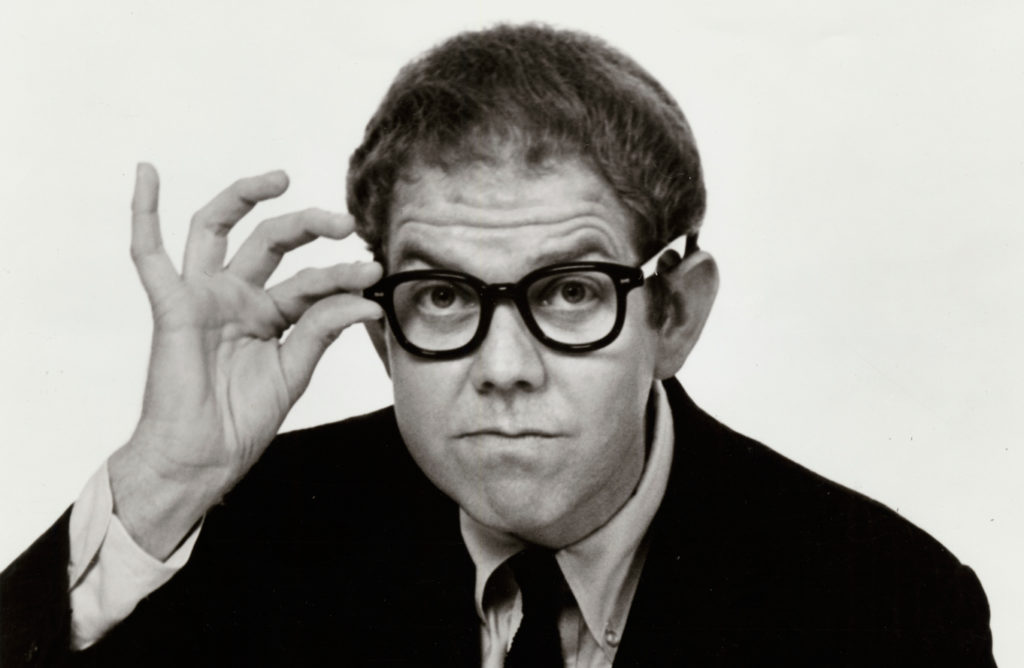 To a particular subset of junior comedy nerds, of which I was an unapologetic member, 1976 was a watershed year, for a reason only tangentially connected to the official Bicentennial celebration that faced Americans down at every turn.
 So when the essential Barry Hansen, aka Dr. Demento, began “serializing” Stan Freberg’s 1961 album “


