November 11th, 2015 § § permalink

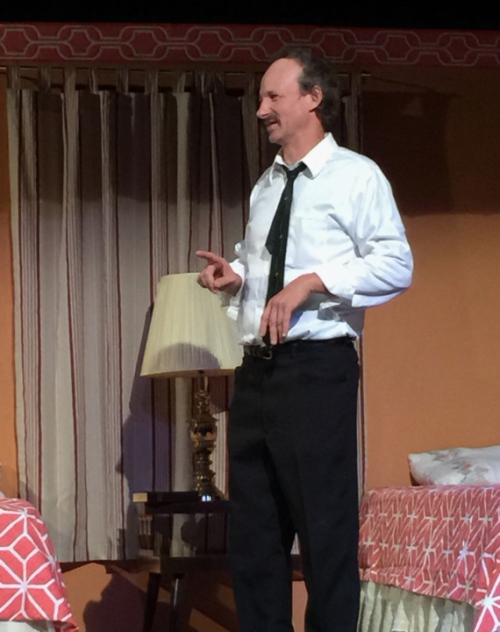
Joe Bannister & Leon Annor in As You Like It at the National Theatre (Photo: Johan Persson)
Four words. Why do four words bother me so much?
After all, they appear in one review of an As You Like It production at the National Theatre in London that I’m highly unlikely to ever see. So why are these four words – which appear in a parenthetical clause, by the way – still on my mind a week after the review, by Dominic Cavendish in The Telegraph, was published? Well, I guess we should start with the four words in question.
“Man mountain black actor.”
Have I taken these words out of context, in order to emphasize them? I have certainly extracted them from a much longer sentence, but that’s because they are so fleeting in the overall review as to pass by unnoticed many readers. Here’s the full sentence:
“A match is set up for Orlando against the wrestler Charles (man-mountain black actor Leon Annor in shiny gold cape) – this test of mettle is conducted on crash-mats with lots of flashing lights, pounding rock-music and moronic chanting by the spectators.”
My first question is, simply, does the actor’s race matter? None of the other actors are identified by their race in the review, although there are other actors of color (or to cite the UK term, “BAME actors,” referring to Black, Asian and minority ethnic) in the production. Is there any legitimate reason for calling out this one actor’s race, since it is not being discussed as germane to any interpretation of the production or the particular scene. It is, so far as I can tell, casual and irrelevant. Which makes it stand out to me all the more.
Combined with “black,” does “man mountain” mean to imply that the character is in some way more dangerous or threatening? It could certainly be read that way. Would that have been mentioned if Annor was white? Of the more than a dozen reviews I read, many of which don’t mention Annor at all, his size is only mentioned by Matt Trueman for Whatsonstage.com, who simply notes that the actor is “large,” without any racial identification. Another critic, Quentin Letts in the Daily Mail, made note of a “plump shepherdess” in the production, which could prompt its own questions about whether size mattered at all in referring to an actress, but he didn’t see any need to point out that she is white. So I think it’s fair to say that Cavendish is alone in choosing to call Annor the equivalent of “a giant black man,” a construct which I would hope would set off alarms of caution to any writer or editor on either side of the Atlantic. Though in this case, it obviously didn’t.
Set on the path of investigation by these four words, I did find one other review that touched upon the race of the actors in this production. On Londonist.com, Franco Milazzo wrote, “The colourblind casting of Wringer is a masterstroke, his austere tone providing just the right level of gravity.” His reference is to Leo Wringer, a BAME actor, as Duke Frederick, and it’s fairly puzzling as well, even though it’s laudatory. After all, if Milazzo acknowledges the casting as colorblind, why bring it up at all, and why bring it up specifically when referring to a black actor, rather than a white one? Is it possible that when Milazzo speaks of “austere tone” he is referring to skin tone? That certainly seems to be part of the construct. But I hope it’s an accident.
In the examples I’ve cited, “austere tone” and “man mountain” might not be worth mentioning on their own, but when combined with the only references to race, both implied and explicit, they seem to me wholly gratuitous, even if they were done without any deep thought as to their implications. But it is the likelihood that they were casual statements by white critics about actors of color that I find so worrisome, since nowhere along the path from writer to editor to copy editor to publication did anyone apparently suggest that these mentions or constructions might be offensive, reinforcing racial division.
I think it’s important for me to note that I was questioned about my use of the phrase “female directors” just a week ago, when writing about the casual disregard of Pam MacKinnon in the headline of a story in which she was the main subject. It was raised because I made mention of MacKinnon as “one of New York’s most recognized female directors,” which wasn’t casual, yet even in the context of an essay about equality could give the impression of setting women apart from men in a subordinate way. In hindsight, perhaps it wasn’t a necessity that I address gender at that point, and it may well have undermined the main point I was discussing. I did not remove the reference because, even with a note about such an edit after the fact, I felt it would have been dishonest. But I acknowledge that my own intent may not have come across clearly, and therefore failed.
My exploration of racial references in reviews of As You Like It in the UK are in no way meant to be attacks on the British arts press or to suggest we don’t face the same problems in the US media. Cavendish’s review simply happened to say what in my opinion was the wrong thing at the right time. That is to say, I saw it at a moment when I am on ever more heightened alert to what some define as micro-aggressions by the members of the arts press, who are hardly alone in needing to grapple with their language choices surrounding the subjects of race, gender, and disability, to name but three. There are times, especially given the limited amount of space afforded to arts coverage, when mentioning race can be at best superfluous and at worst insidious.
I find myself reverting to a sentiment that I’ve expressed before about the arts, which is that we have the opportunity, and in my opinion the mandate, to model a better world on stage, on screen and behind the scenes. To achieve that, we also need those who cover the arts to be our partners in those efforts, so that there is consistent messaging not only within the work itself but in discussions, considerations and reporting on the work, writing which reflects equality and eradicates bias, be it subtle or overt, at every turn.
Howard Sherman is the interim director of the Alliance for Inclusion in the Arts and director of the Arts Integrity Initiative at The New School College of Performing Arts School of Drama.
November 2nd, 2015 § § permalink
A great deal has been written about the diminishment of arts journalism in general, and criticism in particular. Editors want to focus more only on big name productions, or celebrities, as budgets are continually cut and positions and space are pared back.
So it’s really sad when you find a critic doing their utmost to diminish the perception of critics and criticism entirely of their own volition. While I wouldn’t suggest that this is a regular occurrence, a particularly egregious aberration has emerged out of Seattle in recent days. A critic has posted on Craig’s List about his regular availability of a spare ticket to the city’s many cultural venues, making the following offer:
I am compiling a list of people who would like to purchase these single great seats for the performances. I plan to sell the ticket, and the price will less than half of the face value. In addition, your input might well be reflected in my review.
He goes on to write:
If you’re interested in participating, respond with your name and email address. I will then reply with my blog address (to prove that this is a real offer and give you an idea of what I’ve reviewed in the past few months) and the first list of upcoming events.
Thanks for considering this proposition and helping me to keep these seats from being empty in the future.
While some commenters on Facebook have provided links to who they believe this critic is, I am holding back from linking because I haven’t got absolute proof. But whoever this guy is, he seems blithely unaware of – or unconcerned by – the ethical and possibly legal boundaries he has crossed.
Here’s the complete listing:


The profiteering critic
I could write at great length about why this is wrong, but I hope it would seem obvious. The short version is that this bozo is being afforded complimentary tickets for his use as a critic and if he doesn’t need more than a single seat, he simply shouldn’t take the second one. It is not his role to fill that second seat, and it’s certainly not his right to profit from selling that seat, even at a discount, regardless of whether he’s being paid to write or not. I have seen some critics offer their second ticket – gratis – to their readers on social media, which seems an inventive way of reaching out to their own audience and to audience members for the theatre. But no money changes hands.
So whoever this is, I hope that the theatre community in Seattle blackballs him. I hope he isn’t given tickets by anyone ever again. I hope the theatres don’t feel they somehow need him. If, as it appears, he writes for The Huffington Post, I hope they withdraw that platform from him, because even with the very broad range of unpaid writers at HuffPo (an ethical debate for another day), he’s not doing that site any favors in the credibility department either.
Dude, not that I have any authority here, but as a former publicist, general manager and executive director, I’d say you’ve forfeited your rights to complimentary tickets. If you want to write about theatre, then you can buy a seat. If there’s any justice, your free ride is over.
P.S. This “offer” is under “men seeking women,” so there may be even more to the deal than meets the eye. Maybe that’s why he’s always got an extra ticket, too.
Update, November 2, 6:15 pm: The Craig’s List posting was removed within one hour of this post going live.
Update, November 2, 7:30 pm: Seattle’s weekly The Stranger has written about this situation, insuring it will spread throughout the Seattle arts community.
Howard Sherman is director of the Arts Integrity Initiative at The New School College of Performing Arts School of Drama.
November 2nd, 2015 § § permalink
A great deal has been written about the diminishment of arts journalism in general, and criticism in particular. Editors want to focus more only on big name productions, or celebrities, as budgets are continually cut and positions and space are pared back.
So it’s really sad when you find a critic doing their utmost to diminish the perception of critics and criticism entirely of their own volition. While I wouldn’t suggest that this is a regular occurrence, a particularly egregious aberration has emerged out of Seattle in recent days. A critic has posted on Craig’s List about his regular availability of a spare ticket to the city’s many cultural venues, making the following offer:
I am compiling a list of people who would like to purchase these single great seats for the performances. I plan to sell the ticket, and the price will less than half of the face value. In addition, your input might well be reflected in my review.
He goes on to write:
If you’re interested in participating, respond with your name and email address. I will then reply with my blog address (to prove that this is a real offer and give you an idea of what I’ve reviewed in the past few months) and the first list of upcoming events.
Thanks for considering this proposition and helping me to keep these seats from being empty in the future.
While some commenters on Facebook have provided links to who they believe this critic is, I am holding back from linking because I haven’t got absolute proof. But whoever this guy is, he seems blithely unaware of – or unconcerned by – the ethical and possibly legal boundaries he has crossed.
Here’s the complete listing:
The profiteering critic
I could write at great length about why this is wrong, but I hope it would seem obvious. The short version is that this bozo is being afforded complimentary tickets for his use as a critic and if he doesn’t need more than a single seat, he simply shouldn’t take the second one. It is not his role to fill that second seat, and it’s certainly not his right to profit from selling that seat, even at a discount, regardless of whether he’s being paid to write or not. I have seen some critics offer their second ticket – gratis – to their readers on social media, which seems an inventive way of reaching out to their own audience and to audience members for the theatre. But no money changes hands.
So whoever this is, I hope that the theatre community in Seattle blackballs him. I hope he isn’t given tickets by anyone ever again. I hope the theatres don’t feel they somehow need him. If, as it appears, he writes for The Huffington Post, I hope they withdraw that platform from him, because even with the very broad range of unpaid writers at HuffPo (an ethical debate for another day), he’s not doing that site any favors in the credibility department either.
Dude, not that I have any authority here, but as a former publicist, general manager and executive director, I’d say you’ve forfeited your rights to complimentary tickets. If you want to write about theatre, then you can buy a seat. If there’s any justice, your free ride is over.
P.S. This “offer” is under “men seeking women,” so there may be even more to the deal than meets the eye. Maybe that’s why he’s always got an extra ticket, too.
Update, November 2, 6:15 pm: The Craig’s List posting was removed within one hour of this post going live.
Update, November 2, 7:30 pm: Seattle’s weekly The Stranger has written about this situation, insuring it will spread throughout the Seattle arts community.
November 1st, 2015 § § permalink
A few weeks ago, the headline of a review rubbed me the wrong way.
I didn’t have an issue with the review itself, by Charles McNulty for The Los Angeles Times. But the headline for the piece, which covered the new Broadway productions of Old Times and Fool For Love, read as follows, “Clive Owen and Sam Rockwell hit Broadway in ‘Old Times’ and ‘Fool for Love’ with different results.”
Why was the headline only about men, I thought. Admittedly, I hadn’t seen either production at that point, but I was familiar with the plays, and knew that the character Rockwell plays in Fool is at least evenly matched with the role played by Nina Arianda, and Owen shares the stage in a triangle with characters played by Eve Best and Kelly Reilly. My theatre-centric brain took this headline as gender inequity.
Thinking on it, I can see why the men might have gotten the headline mentions, since both have done television and film work, with Owen currently in the second season of The Knick. But neither are exactly bankable stars who “open” movies. Best and Arianda are “only” Tony Award winners, which may mean less in the entertainment hierarchy these days than electronic media work, especially in the major paper of the city that is the center of television and film business.
That said, Best appeared in 51 episodes of Nurse Jackie, though she’s not the lead, as Owen is on The Knick, but she did that series for much longer on Showtime than Owen has been doctoring on Cinemax. Admittedly, Owen was making his Broadway debut, and Rockwell was only making his second appearance, making their gigs slightly rarer than Arianda and Best each taking their third Broadway turns. I decided this wasn’t a clear cut case of advancing men over women, despite my own perception of implied unequal worth among the players along gender lines.
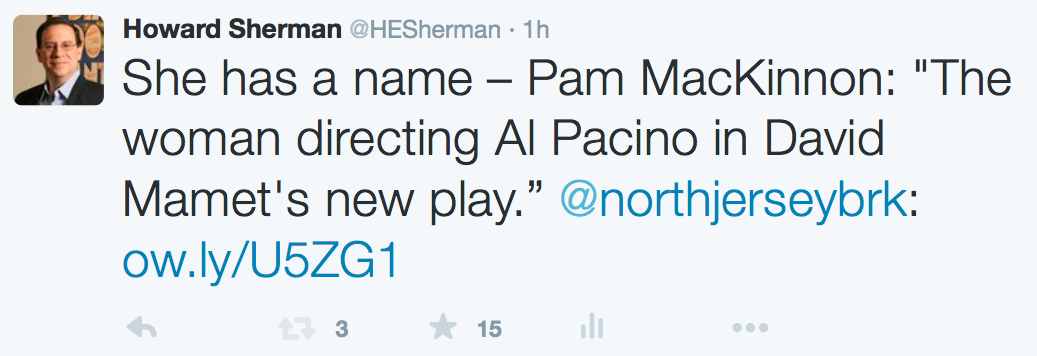
But this male favoritism sprang to mind again just this morning, when I saw this headline on a theatre story on NorthJersey.com, a website that includes coverage from The Record and other New Jersey outlets: “The woman directing Al Pacino in David Mamet’s new play.”

Now I knew instantly that the piece was about Pam MacKinnon because it’s my business to know who’s working on what show, but also because Pam has quickly become one of New York’s most recognized female directors, for such works as Clybourne Park (for which she had received an Obie) and Who’s Afraid of Virginia Woolf? (for which she won a Tony). Yet the headline was all about the big, male names, even though neither of them had spoken to The Record’s Robert Feldberg. Only Pam had done so.

Pam MacKinnon
Sure, you can chalk it up to celebrity, to what might get the most clicks online, but once again it was a case of choosing male names over female, and in this case the article was about “the woman.” I don’t fault the writer, but an editor and perhaps someone at the copy desk, who figured they’d go with male fame, rather than the female subject of the story.
Obviously it’s not possible to say from the two headlines I’ve cited to say that there’s a widespread pattern here, but I would suggest to readers who care about this issue that they should be on the lookout for such casual disregard of women in the theatre and call it out (or let me know; I’m starting a list) whenever it appears. Yes, it’s a very small-bore, incremental game of standing vigilant, but if indeed there’s a pattern, then it has to be broken at every opportunity.
Before I wrote this post, I called out The Record on its headline on Twitter as follows, at 10:30 am:

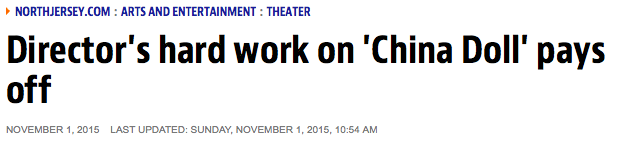
Now I can’t know for certain there’s any cause and effect, but 25 minutes later, after multiple favorites and retweets of my message, The Record altered its headline to “Director’s hard work on ‘China Doll’ pays off.” It appears they got the message – though presumably the original headline is what’s in the print edition. It’s also worth noting that the headline was changed without any acknowledgement, so in the long memory of the internet, the male-centric headline never happened. That’s dishonest.
 But even in an effort to ameliorate their insensitivity, it seems The Record still can’t bring itself to give the “Director” a name. So I’ll say it once again: it’s Pam MacKinnon. Remember it and use it, because without it, the record is incomplete and the paper’s bias is showing.
Howard Sherman is director of the Arts Integrity Initiative at The New School College of Performing Arts School of Drama.
November 1st, 2015 § § permalink
A few weeks ago, the headline of a review rubbed me the wrong way.
I didn’t have an issue with the review itself, by Charles McNulty for The Los Angeles Times. But the headline for the piece, which covered the new Broadway productions of Old Times and Fool For Love, read as follows, “Clive Owen and Sam Rockwell hit Broadway in ‘Old Times’ and ‘Fool for Love’ with different results.”
Why was the headline only about men, I thought. Admittedly, I hadn’t seen either production at that point, but I was familiar with the plays, and knew that the character Rockwell plays in Fool is at least evenly matched with the role played by Nina Arianda, and Owen shares the stage in a triangle with characters played by Eve Best and Kelly Reilly. My theatre-centric brain took this headline as gender inequity.
Thinking on it, I can see why the men might have gotten the headline mentions, since both have done television and film work, with Owen currently in the second season of The Knick. But neither are exactly bankable stars who “open” movies. Best and Arianda are “only” Tony Award winners, which may mean less in the entertainment hierarchy these days than electronic media work, especially in the major paper of the city that is the center of television and film business.
That said, Best appeared in 51 episodes of Nurse Jackie, though she’s not the lead, as Owen is on The Knick, but she did that series for much longer on Showtime than Owen has been doctoring on Cinemax. Admittedly, Owen was making his Broadway debut, and Rockwell was only making his second appearance, making their gigs slightly rarer than Arianda and Best each taking their third Broadway turns. I decided this wasn’t a clear cut case of advancing men over women, despite my own perception of implied unequal worth among the players along gender lines.
But this male favoritism sprang to mind again just this morning, when I saw this headline on a theatre story on NorthJersey.com, a website that includes coverage from The Record and other New Jersey outlets: “The woman directing Al Pacino in David Mamet’s new play.”
Now I knew instantly that the piece was about Pam MacKinnon because it’s my business to know who’s working on what show, but also because Pam has quickly become one of New York’s most recognized female directors, for such works as Clybourne Park (for which she had received an Obie) and Who’s Afraid of Virginia Woolf? (for which she won a Tony). Yet the headline was all about the big, male names, even though neither of them had spoken to The Record’s Robert Feldberg. Only Pam had done so.
Pam MacKinnon
Sure, you can chalk it up to celebrity, to what might get the most clicks online, but once again it was a case of choosing male names over female, and in this case the article was about “the woman.” I don’t fault the writer, but an editor and perhaps someone at the copy desk, who figured they’d go with male fame, rather than the female subject of the story.
Obviously it’s not possible to say from the two headlines I’ve cited to say that there’s a widespread pattern here, but I would suggest to readers who care about this issue that they should be on the lookout for such casual disregard of women in the theatre and call it out (or let me know; I’m starting a list) whenever it appears. Yes, it’s a very small-bore, incremental game of standing vigilant, but if indeed there’s a pattern, then it has to be broken at every opportunity.
Before I wrote this post, I called out The Record on its headline on Twitter as follows, at 10:30 am:
Now I can’t know for certain there’s any cause and effect, but 25 minutes later, after multiple favorites and retweets of my message, The Record altered its headline to “Director’s hard work on ‘China Doll’ pays off.” It appears they got the message – though presumably the original headline is what’s in the print edition. It’s also worth noting that the headline was changed without any acknowledgement, so in the long memory of the internet, the male-centric headline never happened. That’s dishonest.
But even in an effort to ameliorate their insensitivity, it seems The Record still can’t bring itself to give the “Director” a name. So I’ll say it once again: it’s Pam MacKinnon. Remember it and use it, because without it, the record is incomplete and the paper’s bias is showing.
Howard Sherman is director of the Arts Integrity Initiative at The New School College of Performing Arts School of Drama.
October 30th, 2015 § § permalink

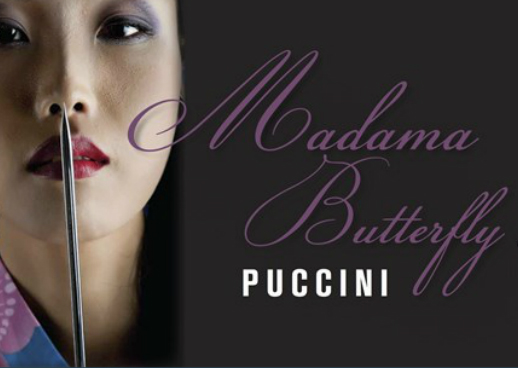
From the Fargo Moorhead Opera website
As I write, if you visit the website of the Fargo Moorhead Opera, you’ll find an evocative image of a beautiful young Asian woman used in conjunction with the company’s production of Madama Butterfly, playing this weekend in North Dakota. However, upon reading a feature story in yesterday’s Fargo Inforum about the production, you’ll learn that the lead actress in the show itself isn’t the woman who appears in the ads, and isn’t Asian at all, but rather a Caucasian of German extraction. So what’s the deal with the false advertising?

Mathew Edwardsen and Carla Thelen Hanson in Fargo Moorhead Opera’s Madama Butterfly (photo by Carrie Snyder)
I can think of any number of reasons why a marketing image might not match exactly what appears on stage – the cost of an original photo shoot vs. stock photography, the availability of performers sufficiently in advance of rehearsals to create the image for a months long campaign, and so on. But in the case of the Fargo Moorhead Opera, what they’ve done, whether intentionally or not, is a case of bait-and-switch, wherein they have sold what appears to be an authentically cast production of Madama Butterfly, but will be presenting one which traffics in yellowface. Why is an Asian face appropriate for their advertising, but not for their stage?
In the wake of controversies in Seattle and New York over yellowface productions of The Mikado, I don’t think I need to explain once again why the practice of casting Caucasian actors as Asian characters is offensive to the Asian community and an insult to anyone who seeks genuine diversity in performance. After all, people can and have read about the issue in recent weeks from Leah Nanako Winkler, Ming Peiffer, Rehana Lew Mirza, Nelson Eusebio and Desdemona Chiang, among others. I’ve had my say on the subject as well.
Any remotely reasonable rationalization about the chasm between FMO’s marketing and production of Butterfly goes out the window when the company’s general director David Hamilton talks about his views on the subject of casting roles with racial authenticity with Inforum.
“I don’t want to be limited who I can cast because I want the best performer for the role,” says David Hamilton, general director of the Fargo-Moorhead Opera. “We don’t have the luxury of unlimited choices to bring to Fargo.”
Hamilton says he hasn’t heard any rumblings about the FM Opera’s selection.
“Opera is about the voice and I want the best voice I can find to sing their role,” Hamilton says.
The “best performer for the role” argument is often deployed when casting in theater or opera has obviously failed to employ racial authenticity. It particularly fails for Hamilton and the FMO when one learns that the last time the company did Madama Butterfly, an Asian-American performer played the role. So the company has already shown that it can cast the role authentically.
That Hamilton “hasn’t heard any rumblings” about the casting, which I take care to note is a paraphrase and not a direct quote, may be because opera companies so frequently fail to cast for racial authenticity. It’s only this year that the Metropolitan Opera abandoned using blackface for their production of Otello – yet retained a Caucasian actor in the role. That Hamilton is unaware of any unhappiness over his casting could be a result of the circles in which he travels, and therefore hardly representative of anything more than his acquaintances, or perhaps it’s because Fargo has only a 3% Asian population. But whatever the reason, lack of protest doesn’t mean racial insensitivity is therefore condoned. Even in a community with a 90% white population, accurate representations of race matter.
As for the “opera is about the voice” argument, I must confess that this has always befuddled me. If opera were only concerts in tuxedos, or recordings, I might be prepared to grant the form more leeway. But once you have people in costumes and on sets, there is more to the performance than simply sound; what the audience sees is part of the experience. While there are many aspects of Madama Butterfly – and its descendent, Miss Saigon – that are deeply troubling to Asian-Americans, as both works trade in and perpetuate Asian stereotypes, if the work is to be done, at least let it be done with the most respect possible. That means Asian performers playing Asian characters. If there truly aren’t enough qualified Asian performers to meet the FMO standards, then that is a direct result of companies failing to cast artists of color often enough, and perhaps also a failing on the part of training programs – though if artists of color can’t get roles, that might be deterring them from pursuing operatic careers, in a vicious cycle.
“We know it’s not real, but we don’t care,” Hamilton told Inforum. “You have to suspend disbelief. … Under all that geisha makeup, who would know?” Well, I know, Mr. Hamilton, and Inforum readers know, since the reporter who wrote the story, John Lamb, made the effort to present an opposing viewpoint from Chelsea Pace, an assistant professor of movement in the department of theater arts at North Dakota State University. I think many other people are going to find out.
While it’s late in the game to have any effect on this weekend’s production, I hope David Hamilton and the board of directors of the Fargo Moorhead Opera are going to start hearing “rumblings” that they can’t and shouldn’t ignore, as a message to the FMO and other opera companies about demonstrating genuine respect and appreciation not only for vintage Eurocentric music traditions, but for all people who make up this country, as well as the performing community and its audiences – and potential audiences. That goes for the Metropolitan Opera as well, which is doing Madama Butterfly this season with two performers sharing the title role, only one of whom is Asian. Even half measures are not enough.
If you’d like to share your thoughts on this topic with Fargo-Moorhead Opera general director David Hamilton, you can write to him at director@fmopera.org.
Howard Sherman is the interim director of the Alliance for Inclusion in the Arts.
October 29th, 2015 § § permalink
People are dumbfounded. People are incredulous. People are angry.

Robert Branch and Camila Christian in The Mountaintop at Kent State University
In the past few hours, a month-old story began circulating on social media about a production of Katori Hall’s widely produced The Mountaintop, specifically a story from the Akron Beacon-Journal about a production of the play at Kent State University in late September and early October. What has everyone so riled up? The two photos from the production of Hall’s two-character play about Dr. Martin Luther King’s imagined encounter with a motel housekeeper on the night before his assassination show a white male in both photos. And it’s not an error by the paper.
For his production, under the auspices of the African Community Theatre at Kent State, Michael Oatman who is the company creative director this year, said that he had double cast the role of Dr. King, with a black actor performing for three shows and a white actor performing for three shows. In an interview on the university website, Oatman explained his concept:
While Oatman understands that the piece may stir some controversy he also hopes that it stirs discussion about America’s original sin: race. “I truly wanted to explore the issue of racial ownership and authenticity. I didn’t want this to be a stunt, but a true exploration of King’s wish that we all be judged by the content of our character and not the color of our skin,” said Oatman about his non-traditional cast. “I wanted the contrast . . . I wanted to see how the words rang differently or indeed the same, coming from two different actors, with two different racial backgrounds.”
How was this allowed to happen? First off, no one apparently raised the issue during the two-weekend run. Despite appearing in a general circulation paper and online on both the paper’s site and the school’s site, it seems that there was not an immediate rush on anyone’s part to question this creative decision. Was this because Oatman is African-American and the African Community Theatre operates under the auspices of the school’s Department of Pan-African Studies, and so it was assumed that this approach was sanctioned?
Wasn’t the school in violation of the licensing agreement, in this case with Dramatists Play Service? Well, that depends upon how you interpret the contract and the play text. While the usual language about not making any changes was in place, it happens that the script doesn’t explicitly state that Dr. Martin Luther King is to be played by a black actor. Needless to say, most people would assume that to be implicit when hiring someone to play a civil rights leader who has been gone less than fifty years. But it was not absolutely specified. DPS informed me that as a result of the Kent State production, Mountaintop contracts going forward will carry language stating that both characters are to be played by black actors – unless permission to do otherwise is requested and granted.

Robert Branch as Dr. Martin Luther King in the Kent State University production of The Mountaintop
So with this production already in the rearview mirror, what are some of the takeaways from this? The first is that even when it seems obvious, if playwrights wish for certain roles to be played by actors of certain, ages, genders, race, ethnicity or disability, they need to make it very clear in their script and give clear instructions to their agents and their licensing house as well. Apparently you can’t be too careful.
While it is quite surprising to imagine Dr. King, or Malala Yousafzai, or Cesar Chavez played by white actors, let’s remember that we are now in the post-Hamilton era, which suggests to the narrowminded that roles meant for people of color can now be played by white actors if traditionally (or historically) white characters can be played by actors of color. I would, and frequently do, argue that this is a false equivalency.
Could such specificity lead to playwrights declaring that their characters can only be played by white actors? Yes, and whether we like it or not, that’s their right. For as long as work is under copyright, it is the decision of the author (or their estate) to decide what may be done with or to their work. Yes, that may seem to stifle creativity on the part of directors and limit opportunities for actors in some works, but in the theatre in the U.S. – as opposed to film or television – the authors own their plays and have the final word.
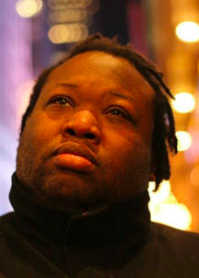
Michael Oatman
So it’s interesting to note that Michael Oatman, who directed the Kent State Mountaintop, is a playwright, and that his bio on the Kent State site doesn’t list directing credits, only writing credits. One has to wonder if in the wake of this production, Oatman had a playwright to playwright conversation with Hall, who now has explicit protection to prevent this situation from recurring – although not completely extinguishing the possibility of racial revision of the characters at some point in the future with her consent. Not knowing Oatman’s work, I wonder whether he either has asserted his authorial protections on productions, or desires to protect his own plays, or whether he welcomes the reworking of racial representation in the stories he seeks to tell.
There’s another key takeaway here, regarding academic productions, and that is that universities are not immune from the protections afforded by copyright law, and licensing agreements. While a scene may be tackled in a classroom setting in ways that may not fully comport with the text, when work is presented before an audience, the rules apply to everyone. I have heard tales of college productions, directed by faculty and by students, that flout the stipulation of works under copyright, and while the Kent State Mountaintop managed to get its six performances in before anyone with authority over the work, or in the broader theatrical community, caught on, academic theatre is a huge market and playwrights don’t want to see their work distorted there anymore than they would in a professional production. That’s not to say that directors with new ideas shouldn’t pitch them. But they have to be prepared to stick with the letter and spirit of the original text if approval isn’t forthcoming, or move on to a work where they can gain that approval, or which has entered the public domain, in which case they can do anything they like.
A final observation, based solely on seeing the two pieces I’ve referred to online. I find it curious that the Akron newspaper’s two photos both include the white actor playing Dr. King, Robert Branch (one which includes Cristal Christian, the black actress playing Camae, the housekeeper), but that there’s no photo of the black actor. The same situation crops up in the interview on the Kent State site – Oatman is interviewed, as are Branch and Christian. Again, no mention of the alternate Dr. King. Indeed, he’s not even named. The same holds true for an article on the site KentWired.com.
Is it possible that whoever the black actor was happened to be unavailable to be interviewed or photographed? Did these media outlets choose to excise him from their coverage? Was this accident, or strategy? Or did the double casting concept get abandoned at some point in the process, since it is only described in an August feature?
As this story becomes more widely known, I imagine members of the creative community will be reaching out to Michael Oatman to better understand the rationale behind his approach, and perhaps to share their views on this concept for The Mountaintop. Hall has posted on Facebook in regards to posts about this production that “an article,” presumably by her, is forthcoming; I await it eagerly. For those upset that this approach was ever taken, the Kent State production can now be the source for worthwhile conversations about representations of race on stage and how much latitude a director has with any script, ethically and legally, when staging copyrighted works.
We’re not going to see a repeat of this particular case unless Katori Hall says it’s OK. And maybe we’ll see much more specific character descriptions in scripts in the wake of this incident – but hopefully we’ll also see playwrights making clear when they not only allow, but encourage, racially diverse casts, as a signal to directors that diversity and indeed variety is desirable.
Update, November 9, 3 pm: Earlier today, the website The Root published Katori Hall’s own account of learning about the Kent State production, her conversation with the director and her response to what took place. It is essential reading.
Update, November 16, 5 pm: In a report in the Akron Beacon Journal, it was revealed that no black actor appeared in Kent State production of The Mountaintop. Click here for more details, including Katori Hall’s reaction.
Thanks to David Dubov-Flinn who first brought the Kent State production to my attention.
Howard Sherman is director of the Arts Integrity Initiative at The New School for Performing Arts School of Drama and interim director of the Alliance for Inclusion in the Arts.
October 29th, 2015 § § permalink
People are dumbfounded. People are incredulous. People are angry.
Robert Branch and Camila Christian in The Mountaintop at Kent State University
In the past few hours, a month-old story began circulating on social media about a production of Katori Hall’s widely produced The Mountaintop, specifically a story from the Akron Beacon-Journal about a production of the play at Kent State University in late September and early October. What has everyone so riled up? The two photos from the production of Hall’s two-character play about Dr. Martin Luther King’s imagined encounter with a motel housekeeper on the night before his assassination show a white male in both photos. And it’s not an error by the paper.
For his production, under the auspices of the African Community Theatre at Kent State, Michael Oatman who is the company creative director this year, said that he had double cast the role of Dr. King, with a black actor performing for three shows and a white actor performing for three shows. In an interview on the university website, Oatman explained his concept:
While Oatman understands that the piece may stir some controversy he also hopes that it stirs discussion about America’s original sin: race. “I truly wanted to explore the issue of racial ownership and authenticity. I didn’t want this to be a stunt, but a true exploration of King’s wish that we all be judged by the content of our character and not the color of our skin,” said Oatman about his non-traditional cast. “I wanted the contrast . . . I wanted to see how the words rang differently or indeed the same, coming from two different actors, with two different racial backgrounds.”
How was this allowed to happen? First off, no one apparently raised the issue during the two-weekend run. Despite appearing in a general circulation paper and online on both the paper’s site and the school’s site, it seems that there was not an immediate rush on anyone’s part to question this creative decision. Was this because Oatman is African-American and the African Community Theatre operates under the auspices of the school’s Department of Pan-African Studies, and so it was assumed that this approach was sanctioned?
Wasn’t the school in violation of the licensing agreement, in this case with Dramatists Play Service? Well, that depends upon how you interpret the contract and the play text. While the usual language about not making any changes was in place, it happens that the script doesn’t explicitly state that Dr. Martin Luther King is to be played by a black actor. Needless to say, most people would assume that to be implicit when hiring someone to play a civil rights leader who has been gone less than fifty years. But it was not absolutely specified. DPS informed me that as a result of the Kent State production, Mountaintop contracts going forward will carry language stating that both characters are to be played by black actors – unless permission to do otherwise is requested and granted.
Robert Branch as Dr. Martin Luther King in the Kent State University production of The Mountaintop
So with this production already in the rearview mirror, what are some of the takeaways from this? The first is that even when it seems obvious, if playwrights wish for certain roles to be played by actors of certain, ages, genders, race, ethnicity or disability, they need to make it very clear in their script and give clear instructions to their agents and their licensing house as well. Apparently you can’t be too careful.
While it is quite surprising to imagine Dr. King, or Malala Yousafzai, or Cesar Chavez played by white actors, let’s remember that we are now in the post-Hamilton era, which suggests to the narrowminded that roles meant for people of color can now be played by white actors if traditionally (or historically) white characters can be played by actors of color. I would, and frequently do, argue that this is a false equivalency.
Could such specificity lead to playwrights declaring that their characters can only be played by white actors? Yes, and whether we like it or not, that’s their right. For as long as work is under copyright, it is the decision of the author (or their estate) to decide what may be done with or to their work. Yes, that may seem to stifle creativity on the part of directors and limit opportunities for actors in some works, but in the theatre in the U.S. – as opposed to film or television – the authors own their plays and have the final word.
Michael Oatman
So it’s interesting to note that Michael Oatman, who directed the Kent State Mountaintop, is a playwright, and that his bio on the Kent State site doesn’t list directing credits, only writing credits. One has to wonder if in the wake of this production, Oatman had a playwright to playwright conversation with Hall, who now has explicit protection to prevent this situation from recurring – although not completely extinguishing the possibility of racial revision of the characters at some point in the future with her consent. Not knowing Oatman’s work, I wonder whether he either has asserted his authorial protections on productions, or desires to protect his own plays, or whether he welcomes the reworking of racial representation in the stories he seeks to tell.
There’s another key takeaway here, regarding academic productions, and that is that universities are not immune from the protections afforded by copyright law, and licensing agreements. While a scene may be tackled in a classroom setting in ways that may not fully comport with the text, when work is presented before an audience, the rules apply to everyone. I have heard tales of college productions, directed by faculty and by students, that flout the stipulation of works under copyright, and while the Kent State Mountaintop managed to get its six performances in before anyone with authority over the work, or in the broader theatrical community, caught on, academic theatre is a huge market and playwrights don’t want to see their work distorted there anymore than they would in a professional production. That’s not to say that directors with new ideas shouldn’t pitch them. But they have to be prepared to stick with the letter and spirit of the original text if approval isn’t forthcoming, or move on to a work where they can gain that approval, or which has entered the public domain, in which case they can do anything they like.
A final observation, based solely on seeing the two pieces I’ve referred to online. I find it curious that the Akron newspaper’s two photos both include the white actor playing Dr. King, Robert Branch (one which includes Cristal Christian, the black actress playing Camae, the housekeeper), but that there’s no photo of the black actor. The same situation crops up in the interview on the Kent State site – Oatman is interviewed, as are Branch and Christian. Again, no mention of the alternate Dr. King. Indeed, he’s not even named. The same holds true for an article on the site KentWired.com.
Is it possible that whoever the black actor was happened to be unavailable to be interviewed or photographed? Did these media outlets choose to excise him from their coverage? Was this accident, or strategy? Or did the double casting concept get abandoned at some point in the process, since it is only described in an August feature?
As this story becomes more widely known, I imagine members of the creative community will be reaching out to Michael Oatman to better understand the rationale behind his approach, and perhaps to share their views on this concept for The Mountaintop. Hall has posted on Facebook in regards to posts about this production that “an article,” presumably by her, is forthcoming; I await it eagerly. For those upset that this approach was ever taken, the Kent State production can now be the source for worthwhile conversations about representations of race on stage and how much latitude a director has with any script, ethically and legally, when staging copyrighted works.
We’re not going to see a repeat of this particular case unless Katori Hall says it’s OK. And maybe we’ll see much more specific character descriptions in scripts in the wake of this incident – but hopefully we’ll also see playwrights making clear when they not only allow, but encourage, racially diverse casts, as a signal to directors that diversity and indeed variety is desirable.
Update, November 9, 3 pm: Earlier today, the website The Root published Katori Hall’s own account of learning about the Kent State production, her conversation with the director and her response to what took place. It is essential reading.
Update, November 16, 5 pm: In a report in the Akron Beacon Journal, it was revealed that no black actor appeared in Kent State production of The Mountaintop. Click here for more details, including Katori Hall’s reaction.
Thanks to David Dubov-Flinn who first brought the Kent State production to my attention.
Howard Sherman is director of the Arts Integrity Initiative at The New School for Performing Arts School of Drama and interim director of the Alliance for Inclusion in the Arts.
October 16th, 2015 § § permalink
 “Is there a link for this so I can read the whole thing if there’s more?”
“Maybe this wants to grow up and become a blog post?”
“I’ve been encouraging him to do so!!!!”
“This, I feel, is not just a statement for theater folk, but a life statement, a ‘how are you living in the world’ statement.”
The quotes above have all been written in the past 24 hours or so in response to a comment I made on Facebook – not a blog post, not an essay, but a comment, although admittedly not a short one. The response is gratifying, even as I feel awkward about repeating some of the positive remarks it engendered.
I share them because there’s been a lot of likes and shares and comments for a short burst I essentially blurted out on Wednesday afternoon, after seeing an array of responses to American Theatre editor Rob Weinert-Kendt’s apology for aspects of his Monday post about The Mikado and the heinous practice of yellowface. My comment was not about either of Rob’s pieces, but rather some of the defenses of yellowface that they elicited, and outright attacks on those who seek to abolish it. I stand, as I made clear several weeks ago in my own blog post, with the latter group.
Much as I stare at my comment, I don’t see how I can expand it. It addresses multiple issues on which I speak and write frequently, composed directly in one of those Facebook comment boxes, borne of anger and empathy, effective in its terseness. I feel that trying to elaborate upon it will only reduce it, though I appreciate the appeals of those who would like there to be more. I have to thank my friend and colleague Jacqueline Lawton, who lifted it out of the comments section and reiterated it as a Facebook post on her timeline, for getting it more attention that it would have otherwise received.
Because the Facebook algorithm is a mercurial beast, and it’s impossible to know who may have seen the comment, or how long it will be floating around in people’s feeds, I share it now, unedited, primarily as a means of preserving a relatively off-the-cuff cri de coeur – despite my concerns, that in my haste, I did not properly differentiate between my use of the terms “race” and “ethnicity,” even though I should know better.
“One of the great fallacies employed by those who resist making the American theatre more diverse is that when opening up traditionally or even specifically white roles to people of color, it should be a two way street – that if black, API, Latino, and Native Americans can play Willy Loman or Hedda Gabler, white actors should be able to perform in the works of August Wilson. That’s nonsense. The whole point of diversifying our theatre is not to give white artists yet more opportunities, but to try to address the systemic imbalance, and indeed exclusion, that artists of color, artists with disabilities and even non-male artists have experienced. Of course, when it comes to roles specifically written for POC, those roles should be played by actors of that race or ethnicity – and again, not reducing it to the level of only Italians should play Italians and only Jews should plays Jews, but that no one should be painting their faces to pretend to an ethnicity which is obviously not theirs, while denying that opportunity to people of that race. To those who would claim that our theatre isn’t centered around white men, look no further than the results of the Dramatists Guild’s The Count, which shows that four out of every five plays produced in America is by a white man. As for those who charge racism on the part of people striving for equality in the 21st century, I would suggest you don’t fully appreciate the racial struggles that have been part of this country’s original sin since Europeans began eradicating Native Americans and forcibly bringing Africans to these shores as slaves. Perhaps those in theatre can’t ever hope to directly redress this history, but we can at least seek to model a better world in our work and on our stages. And certainly we can do better than to engage in ad hominem attacks and threats against others in our field who seek equality.”
Will I say more on this subject? Absolutely. It’s become very central to my belief about the world of the arts, and the world at large. But as someone who usually goes on too long about just about everything, I’d like to stick with atypical brevity, hoping it provokes more conversation, more writing, more thinking about how we can all do better at embracing everyone who seeks a role in the arts. And if my few sentences above prove at all useful, they’re yours to employ in the good fight for diversity and inclusion.
P.S. Because advocates can have a tendency to become single-minded and even humorless in their pursuits, I must share with you my favorite response to my squib of a doctrine, among the many I read, courtesy of the dreaded auto-correct: “Wow! That’s it in a buttshell!!”
Howard Sherman is interim director of the Alliance for Inclusion in the Arts.
October 2nd, 2015 § § permalink

Deborah Puette in Tommy Smith’s Ghost Light at Echo Theater Company
“This is a community art, built only on the goodwill between artists, and there isn’t enough money to bring in lawyers.”
If you ask me, that quote in The Los Angeles Times, from playwright Tommy Smith, is a rather contradictory one. Referring to the playwright’s current dispute with the Echo Theatre Company in Los Angeles, it suggests magnanimity, but then says that’s the chosen path only because legal recourse is too expensive. If it’s about good will, why is it in the press?
In the September 30 article by David Ng, Smith charges the company with, among other things, producing his play Ghost Light without a contract and willfully excluding the author from rehearsals. Performances date back to early August.
If Smith’s account is accurate, the behavior of the company is unconscionable, violating pretty much every tenet of the playwright-producer relationship and amounting to outright theft of creative material. It is exactly the sort of treatment that prompted playwrights to react to the call for submissions by Words Players Theatre, an amateur youth troupe in Minnesota, rising to a level of vehemence that may have undermined some of the completely legitimate arguments. Is this in part a similar scenario, but at a professional level, exactly the sort of behavior that many wanted to be sure Words Players wasn’t instilling in young writers and directors?
Here’s the problem with calling for equally passionate reaction to what’s happened at Echo Theater: the theatre claims it has a signed contract and that the playwright was paid for performances. And while David Ng’s article carries the headline, “Why a playwright is urging L.A. theatergoers to boycott his latest,” the article states that all future performances have been canceled, negating any need for a boycott at least. What we have here is a “he said/they said” situation.
Now it’s important to note that Ng attempted to contact Smith’s agent, which Smith’s website indicates is Jessica Amato at The Gersh Agency in New York. He received no response according to his article, and my own inquiry, via e-mail, 24 hours ago, also yielded no reply. I have written to Smith on Twitter to try to engage with him directly, but have as of yet been unsuccessful (though I should note that I’m writing from London, and an eight-hour time difference might be a factor). Ng also said Echo Theatre didn’t respond when he asked for more information about the contract they say they have.
If indeed Echo Theater proffered a contract that proposed to give Chris Fields, the company’s artistic director “complete authorial control over the production,” then the situation is shameful. If the play was proposed as a workshop and produced without a valid production agreement in place, it’s actionable. I would refer Smith and Amato to the Dramatists Legal Defense Fund, who I believe would vigorously pursue such a claim, including identifying an attorney who might take on the case pro bono. No matter the size of the company, the length of the play or the dollars at stake, the rights of artists to control their work must be defended.
The LA Times report as it stands is unsatisfying, and not quite the basis for a public campaign just yet. Now that it’s out in the open, someone beyond Smith needs to fully open up, whether it’s Echo Theater, by producing an executed copy of the contract in question to prove their claim (although if it includes language about ceding authorial rights the issue won’t stop there), or Smith’s agent, to corroborate the scenario he laid out.
There’s more to this story for sure. But whatever’s happened in Los Angeles, the dispute about Ghost Light can’t be allowed to become a phantom, because there’s too much at stake that’s vital to all playwrights to let it simply disappear, echoing as it evanesces.
PART II, October 6, 2015
At the end of my original post, I had asked the parties involved in the dispute over the production of Ghost Light at Echo Theater to speak up and shed more light on the situation. One responded, one demurred, and one stayed silent.
Jessica Amato of The Gersh Agency, who represents Tommy Smith, had not responded to my e-mail last week, but took my phone call yesterday. She said that in regards to inquiries about Ghost Light at Echo Theater, only the playwright could address questions regarding the play’s production. She confirmed that the e-mail address I had found for Smith, through a mutual acquaintance, was indeed the correct one, and said that if he wished to make any statement or speak with me, a response would be at his discretion.
Smith, however, has not responded to my inquiries, either on Twitter, as I had attempted last week, or via e-mail, despite two attempts yesterday, with more than 24 hours now passed. After sending notices to the Los Angeles press with his charges against Echo Theater’s production of Ghost Light last week, and speaking with the Los Angeles Times for the story that ran on September 30, Smith did not take the opportunity to discuss the issue any further, at least not with me.
I did hear from Chris Fields, the artistic director of Echo Theater, first via e-mail and then in two phone calls, a brief conversation on Sunday and a longer interview yesterday. In between those two calls, Fields sent me a copy of the theatre’s June agreement with Tommy Smith for the production of 12 performances (not described as a workshop) of Ghost Light, as well as a canceled check in payment of an author’s fee for those performances. It was exceedingly brief, amounting to a single paragraph in a three paragraph letter. One other paragraph had been redacted, which Fields explained as pertaining to a separate production of a play by Smith; the payment amount was also redacted on the check, however the agreement’s first paragraph indicated that the subsequent paragraphs were terms for two purposes, only one being Ghost Light. Provided the redacted paragraph was as described by Fields, what I saw appears to corroborate the statement Fields made to David Ng at the Los Angeles Times last week and contradict Smith’s account of Ghost Light being produced without an agreement.
In our conversation, Fields spoke highly of Smith’s work and recounted Echo’s production history with his plays, including the successful August debut of Ghost Light. When asked about the discrepancy between the theatre’s position and Smith’s assertions, Fields indicated that it stemmed from conversations about a new author’s agreement that was being negotiated in early September, in response to Smith’s request for an increased author’s fee. He denied any effort to alter the play or its title without Smith’s consent, or asking for any form of authorial control.
“He asked for more money,” said Fields. “I forgot I’d contracted for 12 performances.” But saying that even once he realized that he was not averse to an increase, Fields prepared a revised agreement that he described as “acknowledging that earlier agreement is void and authorizing additional performances.”
According to Fields, Smith said that the new agreement was not sufficient and that his agent would not accept it, and they agreed that Smith would send revisions. Among other points raised in the Smith draft, Fields said, “He sent agreement with language insisting on meeting with marketing and publicity director. It was moot because marketing already existed and the image we used came from him.” Fields said there was also standard language about authorial approval and consultation, but that in this case the agreement pertained to an existing production, which had already opened and been reviewed, so there was some disagreement regarding reasonable approvals language. There were communications between Fields, Smith and Smith’s agent, but Fields said that conversations over the new agreement lapsed on September 9; the next performance of the play was to be September 26.
Without an updated agreement, the June agreement was still in force, and Echo gave its scheduled performance on September 26. In communications the next day between Fields and Smith, in which Smith expressed his displeasure with the performance going forward the night before, Fields said he ultimately informed Smith that the remaining two scheduled performances would be canceled. It seems that Smith began his efforts to contact the media the next day.
So what can we take from this falling out between a playwright and theatre company that had worked together several times previously?
First, this is an object lesson on the benefit of representation. It appears that the original agreement, which as I noted was quite brief, was executed directly between Smith and the theatre. With an agent or attorney negotiating it, or if it fully followed Dramatists Guild guidelines, Smith would have perhaps had the fee and protections that he apparently sought to address with a revised agreement, negating the need for another contract.
Second, while contracts can be superseded and negated with new agreements, old agreements don’t lapse as a result of negotiation, but only upon execution of the new agreement encompassing those terms. While the situation may not have been ideal for Echo to proceed with more performances after communications broke down in early September, it appears they were within their rights in giving more performances of the existing production.
Third, playing out a dispute in the media is very tricky. While Smith got very high profile press for his charges via the LA Times, and indeed benefited from a headline which even the story didn’t support, a careful reading of the article suggested that the situation was more complex than was portrayed in the piece. Echo Theater might have helped itself in the situation if they had released the canceled check and brief contract immediately to David Ng, to bolster their position. Recalling an edict from the Bill Clinton campaign, repeated charges not challenged become facts.
It’s clear that a previously fruitful relationship between Tommy Smith and the Echo Theater has gone sour in a dispute over the revision of contractual terms. However, in the absence of any statement or explanation from Smith or his agent beyond his initial claim, it seems that the original agreement was still in force and Echo Theater was producing the show under a valid agreement for which payment had been made and accepted months before.
Update, October 7, 9 pm: Reporting further on the dispute between Tommy Smith and the Echo Theater Company, David Ng’s follow-up story included a new statement from Smith:
“After taking the time to consult with legal representation, I am profusely apologizing for and retracting my statements about Echo Theater Company and its project Ghost Light,” he said.
Smith said he consulted with the Dramatists Guild, the New York-based professional association of playwrights, on the matter.
“I thank Echo for allowing me the time to fully understand my situation and consider this difficult admission,” the playwright said. “I am sorry that the public had to be involved at all.”
Howard Sherman is the director of the Arts Integrity Initiative at The New School for Performing Arts.