My memory of the moment is quite vivid, if inevitably inexact. It happened 41 years ago, in the early afternoon, in Mrs. Winkler’s seventh grade science class at Amity Junior High School, as we were doing a “unit” on Ecology. In order to brighten our study of the physical environment, Mrs. Winkler announced one day at the start of class that she wanted to play us a song, and proceeded to put a black vinyl disc on the industrial weight turntable, the cover of which doubled as a speaker. The song she played was a savagely funny cri de coeur about how America’s cities and resources had been ruined by the scourge of pollution, from the perspective of a someone warning a foreign visitor about coming to America.
That was the day I first heard, and heard of, Tom Lehrer.
Not long thereafter, at a garage sale, I would discover a 10 inch, 33 rpm record, “Songs by Tom Lehrer” (on Lehrer Records), which I immediately seized and paid, I imagine, 25 cents to possess. Lehrer joined Allan Sherman and Stan Freberg among the small coterie of singing comedians to whom I became devoted, committing their songs to memory and happily singing them acapella for friends who had no earthly idea where I’d found these strange but funny tunes. After all, Sherman died in 1973, Freberg had shifted from comedy into advertising, and Lehrer’s U.S. fame had peaked on That Was The Week That Was, a short-lived TV precursor to The Daily Show back in 1964 (where he once took on the decimal system on the original British version of the show).
While Lehrer was a genuinely formative influence, who is rarely far from my mind, I think of him specially today because April 9, 2016 marks his 88th birthday. With Sherman gone for than 40 years and Freberg having passed just last year, Lehrer is the last surviving member of my own sung comedy superteam, and while it’s quite clear that there is nothing Lehrer would like less than to be celebrated for work he largely stopped doing 50 years ago (this BuzzFeed piece from two years ago explains), and even further back, it’s hard to restrain oneself.
This, of course, is the challenge of being a Tom Lehrer fan. While much of the work is evergreen, the majority of it was written in the 1950s and first half of the 60s, and Lehrer largely stopped performing by the time 1970s rolled around. Some have written that Lehrer’s withdrawal from performance was because he is – as a mathematician by training and primary trade – a perfectionist, and that he took no pleasure from concerts because he was determined to reproduce his recordings. Others have suggested that what was daring and ribald in the 50s ran smack against the counterculture of the late 60s, which Lehrer didn’t care for.
In any event, to the dismay of fans of funny, topical songs, Lehrer refocused himself on teaching. The result for comedy geeks was that he became, almost, our J.D. Salinger. Although he hid in plain sight, his students knew better than to discuss his performing fame; though almost no new work appeared, it was clear that he had not shunned his piano and verbal repartee, as the occasional song slipped out, or the odd public appearance. He gave a rare interview to National Public Radio in 1979; he spoke with The New York Times in 2000. Perhaps his last burst of general public fame came when the producer Cameron Mackintosh brought the musical revue Tomfoolery, comprised of Lehrer’s songs, to the stage in London and later New York. But that was in the early 1980s, almost two generations ago now, so Lehrer fans can even be nostalgic for that moment of nostalgia.
It may be the very last thing he wants, but today I’ll place a candle in a cupcake and wish for the continued health of Tom Lehrer, hoping, as I do every day, that he might one day be revealed to have been writing songs all this time, and shares them with us, even if not in performance, then at least as sheet music, the better to celebrate him with. Even if he doesn’t want us to do so.
P.S. Did I mention that Lehrer went to summer camp with Stephen Sondheim? Just wanted to toss that in. The verbal dexterity on the swim team that summer must have been quite something.
* * *
Whether you’re a Lehrer devotee or newly curious, I recommend watching this mid-60s live show from Copenhagen, in which he performs many of his best known songs for a relatively reserved college crowd.
While the Copenhagen concert has yielded an array of YouTube clips, much lesser seen is a short performance Lehrer gave for one of his teaching colleagues, stocked with an array of unrecorded songs, heavy on mathematics humor.
Strictly for the fans, here’s a decidedly odd industrial clip of Lehrer singing the praises of a new Dodge car.
https://www.youtube.com/watch?v=h3htMuJhz5Y
If you’d like to introduce younger kids to Lehrer, paving the way for them to discover his more transgressive work when they get older, here’s a bit of educational material from TV’s The Electric Company.
While “cover” versions of Tom Lehrer tunes are rare, here’s the late British comic Marty Feldman having his way with “The Vatican Rag.”
Of course, there’s also Daniel Radcliffe singing “The Element Song.”
I’ll wrap this up with what may be one of Lehrer’s last released songs to date, which is simply the best Hannukah song ever written.
The recent laws passed by the states of North Carolina and Mississippi, which condone discrimination against LGBTQ citizens under the guise of religious freedom are, so far as I’m concerned, a national shame. That other states have attempted or will soon attempt to pass similar legislation is frightening. I can only hope that these decisions will be swiftly challenged, taken to the supreme court, and repealed as unconstitutional.
Composer and lyricist Stephen Schwartz, known internationally for his work on, to name but three, Godspell, Wicked and Pippin, shares this opinion. He has used his platform as one of musical theatre’s most successful living artists to express his dismay: in the wake of the North Carolina decision, which came first, Schwartz announced that he would not permit the licensing or production of any of his works in that state so long as this law remains in place. Decrying the passage of HB2, as it is known, he compared his action to the boycotts undertaken against South Africa over apartheid.
While I saw numerous artists praising Schwartz online through social media, I also saw the response from theatres in North Carolina, who were concerned that a cultural boycott of their state might have minimal effect on their elected leaders, while denying works to a community that is predisposed to oppose the law. Angie Hays, the head of the North Carolina Theatre Conference, issued a statement in which she said her organisation has been in contact with “artists and producers from across the country who are asking how they can most effectively play a part in lifting up the NC theatre community so that we may continue to produce work that will open hearts and change minds.” In a letter to The Hollywood Reporter, Schwartz, in his second statement, said that his decision wasn’t singular, citing “a collective action by a great many theatre artists.”
As I write, based on news reports and my own conversations with the heads of several theatrical licensing houses, only one author (Tom Frye) beyond Schwartz’s own collaborators has joined him in placing a moratorium on his work in North Carolina. Ralph Sevush, executive director for business affairs at the Dramatists Guild, which represents the majority of playwrights and composers in the US, said in a statement that the guild itself “cannot call for or support boycotts, as a matter of law. However, even though the guild represents writers with divergent views, the guild is unified in supporting Stephen’s right to exercise control over the licensing of his work in whatever manner he deems appropriate.”
There is, I have no doubt, a great deal of conversation about how to respond to these loathsome laws at theatres, at dance companies, at orchestras and so on, and a prevailing unanimity in despising these decisions. But as is so often the case in the early days of a crisis, there is no consensus about how to combat it, either within North Carolina and Mississippi, or nationwide. If more and more works are denied, will theatres in North Carolina, and presumably in Mississippi, reach a point at which their creative decisions are truly constrained? Does stage work in these states rise to a level that will become meaningful to legislators, or will it stand in the shadow of major commercial interests, who have the scale and the economic power to sway policy?
Like Sevush from the Dramatists Guild, I absolutely support Schwartz’s right to make decisions regarding his own works. At the same time, I worry about the health of theatres in these states under these new regulations, at a time when they can be centres of opposition to HB2, by doing what theatre does so well, which is to teach empathy. In addition, even if they won’t be doing so on stages in these battleground states, I like to think that Charlemagne’s son, who renounced war and sin, that the Jesus who once wore Superman’s logo on his chest, and that the misunderstood green girl from Oz are on the ground there nonetheless, fighting the essential fight against bias and hate. Because we need every voice, real and fictional, to speak out and sing out as well.
Whhopi Goldberg in White Rabbit, Red Rabbit (Photo by Bruce Glikas)
I’m seeing Brian Dennehy in a play tonight. I know next to nothing about it. Apparently, neither does Brian.
The play in question is Nassim Soleimanpour’s White Rabbit Red Rabbit, which began a once-a-week New York run earlier this month after a number of international productions. I’ve chosen to write about it before seeing it because that seems entirely consistent with the play’s promotion – as well as its direction to the actors who take it on – which is to say that one is supposed to go into it with no preparation and no preconceived notions.
Critics have been warned not to give away too much. Even skimming The New York Times review and finding the portion that talked about this moratorium started to say more than I cared to know about the play. I feared that a close reading would spoil things, perhaps in the way that a friend ruined the big surprise in the film The Crying Game for me simply by remarking on the strange absence of pronouns in a major review.
There’s something slightly perverse about a play that asks you to attend simply on faith and not to reveal its secrets, because most any arts marketer will tell you that word of mouth is essential for sales. WRRR gets past that by deploying stars in a small Off-Broadway house (Nathan Lane and Whoopi Goldberg have already taken up the challenge). It would seem a premise that could sustain itself for some time playing only once a week for 200 people, especially in a city the size of New York, but the show is currently announced for a limited run.
Audiences have certainly been admonished in the past not to give away endings, perhaps most famously with The Mousetrap (I’ve never seen it, and I still don’t know who done it). Deathtrap relies on its twists and turns being a surprise, though the revival with Simon Russell Beale demonstrated that as social attitudes have changed, one of the play’s Act I stunners doesn’t have the impact it did 40 years ago.
Yet the idea of a show where you shouldn’t, or even can’t, talk about most what you’ve seen seems to be a very contrarian approach to finding an audience – though it seems to be working. While stars are the draw for WRRR, the mysterious You Me Bum Bum Train has only the enthusiastically cryptic praise of those who’ve managed to get in. I failed to do so in a dispiriting battle with the show’s website, so I’m one of the many who was denied the opportunity to see what would have apparently been one of the great theatrical experiences of my lifetime. That makes me wish I’d seen it all the more (and resentful of its online ticketing process).
While not as secretive about its content, Sleep No More manages to keep an air of mystery about it nonetheless. Having run for almost five years now in New York, it has never bought advertising, relying entirely on word of mouth. But just try describing it to anyone. Yes, it’s rooted in Macbeth and Rebecca, to name two primary touchpoints, but the physical experience of dashing up and down stairs and through multiple rooms at a show without dialogue means that few can sum it up, or have even seen the same show. When I saw it at the start of its run, my guest, familiar with Punchdrunk’s work, said it would be foolish to try to stay together throughout. When we met up at the end, she asked whether I had seen the naked goat head dance. I had not, but just that phrase remains tantalizing to this day.
During my time in marketing and PR, it was a dream that audiences would simply hear about a play, think it sounded interesting, and just buy a ticket, alleviating the need for advertising, media, promotions and the like. Of course, the reality was that people needed a great deal of cajoling to get them into the theatre and by and large, I would say that still holds true. But if the mysteries of White Rabbit Red Rabbit, The Mousetrap, You Me Bum Bum Train and Sleep No More teach us anything, it’s that audiences like to learn the answers to secrets – and keep them, happily in the know while others stand on the outside looking in. It may not be a new concept, but perhaps it deserves a new name, especially for shows where audiences are actively encouraged not to discuss them in any detail: unmarketing. Think about it. Then tell no one.
Exiting the subway at Christopher Street, turning south on Seventh Avenue, my eyes always turn to the brick building on my left, with the word “Garage” inlaid near the peak of its low-rise roof. The site of restaurants for the past two decades, currently plastered with a “For Lease” sign, this building always triggers the same series of thoughts, in more or less the same order: What a shame. Circle Rep. Balm in Gilead. Lanford Wilson.
I most recently walked by this location seven days ago. As I thought about Lanford, I was prompted to Google how long it has been since the playwright had passed away. As I write, it is five years ago to the day. I barely knew Lanford personally (I spoke with him a few times in the early 90s, and interviewed him in 2008), but I knew many of his plays, and I find myself missing him and his work.
Danny Burstein and Sarah Paulson in Talley’s Folly
In New York, there have been two revivals of Wilson plays in recent years, both in 2013: The Mound Buildersat Signature Theatre and Talley’s Follyat Roundabout’s Laura Pels Theatre. But prior to those runs, you have to jump back a decade to find significant Manhattan productions of Wilson’s work, when he was a Signature playwright with a season devoted to his plays. There has not been a Wilson play on Broadway since 1993, when Redwood Curtain played a short run.
I find myself wondering whether Wilson – Pulitzer Prize recipient, Obie Award-winner, three-time Tony nominee – has fallen out of favor. It happens to some authors, perhaps more than anyone realizes: after several Broadway failures, Edward Albee faded somewhat in the 1980s, only to roar back as one of the nation’s most admired playwrights in the mid-1990s; late in life, Arthur Miller was perhaps more acclaimed in London than on New York stages, but he has rebounded in critical and popular opinion.
Looking at the list of upcoming Lanford Wilson productions on the website of Dramatists Play Service, which licenses his work, one finds two “pages” of his plays, a seemingly healthy list. But it’s worth noting that of the nearly four dozen planned productions, only two are by professional companies, both of those being Talley’s Folley, probably Wilson’s most popular play, due in part to being a two-character, single-set play. Of the non-professional productions, the most-produced play is The Rimers of Eldritch, which requires a company of 17, ideal for high schools seeking large-cast plays.
Swoosie Kurtz, Richard Thomas, Jeff Daniels and Amy Wright in Fifth of July
I have many distinct memories of seeing Lanford’s plays, though oddly enough, I first became aware of his work because his first significant success, The Hot L Baltimore, which ran for more than 1,000 performances, was turned into a short-lived sitcom in 1975. Lanford had nothing to do with the show and didn’t much care for it, but as I once told him, it prompted me to find a copy of the script of the play, so it had a small lingering impact on at least one impressionable youth; surely I was not alone. A few years later, I saw Christopher Reeve (succeeding William Hurt; preceding Richard Thomas), Swoosie Kurtz and Jeff Daniels on Broadway in Fifth of July. I was introduced to Talley’s Folly in a production at the Philadelphia Drama Guild, with an actor named Jerry Zaks as half of the cast. I was mesmerized by the landmark Steppenwolf-Circle Rep revival of Balm in Gilead, directed by John Malkovich and featuring Gary Sinise, Laurie Metcalf, Terry Kinney and Giancarlo Esposito, among many others. I did publicity for a production of Serenading Louie at Hartford Stage during my time there.
Lanford Wilson outside Circle Rep
It is worth noting that Lanford was also one of the four founders of Circle Rep. While it’s hard to perpetually recall the broader legacy of a defunct theatre company and those who created it, it’s worth noting that among the plays produced by Circle Rep during its 20 year lifespan, above and beyond Wilson’s own, were Craig Lucas’s Prelude to a Kiss, Paula Vogel’s The Baltimore Waltz, Jon Robin Baitz’s Three Hotels and William M. Hoffman’s As Is.
Five years after his passing, some 20 years after his period of greatest success and productivity ended, what will be the legacy of Lanford Wilson? Will he live on only at high schools, colleges and community theatres – while that is certainly perpetual life? Is he already seen as a writer of his day, like Maxwell Anderson or even William Inge, remembered more in history books than in professional production? Or will it take just a single, significant production to prompt artistic directors and literary managers to reread his many works and begin mining his trove of plays once again?
I hope it’s the last scenario, because for all of Lanford’s plays that I’ve seen, there are plenty more that I only know from the page. But whether set among the denizens of the grungy New York of the late 60s and early 70s, or on the Talley family property in Wilson’s native Missouri, his plays evince a compassion for the foibles, flaws and eccentricities of humanity that I like to think transcend their era, and put me in mind at times of Horton Foote, not in subject or tone, but in spirit.
There’s no plaque on that building at 99 Seventh Avenue South to mark the work that began life there and ultimately the production those plays means more than a small metal plate attached to the brick of yet another restaurant. Nonetheless, I’m going to reroute my walk to work today to pass the building once again as a small tribute to Lanford Wilson, and hope that his work will be returned to professional stages very soon, not to supplant the essential new work to which he was himself devoted, but to sustain the voice of a quintessentially American author, but to remind theatregoers of the lives of the Talley family (beyond just Matt and Sally) and the residents of The Hot L Baltimore.
Lynn Hawley, Amy Warren, Maryann Plunkett and Meg Gibson in Hungry (Photo by Joan Marcus)
I’m writing this column during an interval. I’ll still be waiting out that interval when I write again next week. In fact, I won’t be getting in for Act II until September, after which I’ll wait about six weeks for Act III.
Of course, this is an exaggeration, but as I try to explain the experience of seeing Richard Nelson’s The Gabriels: Election Year in the Life of One Family, it gets at what Nelson is doing with his new trilogy, akin to what he previously achieved with his quartet, The Apple Family Plays.
Offering glimpses of a few hours with a family at something approaching real time, these works are not unlike dropping in on relatives that you manage to see only a few times a year. In some ways, it’s the opposite of immersive theatre: it gives you a very small taste of a story, and then makes you wait for months before you get another shot. To be fair, each play can stand on its own, though the collective experience gains a cumulative power.
I saw the first of The Gabriels plays, Hungry, on March 6; the events of the play took place on March 5, 2016 – and they always will. That’s why subsequent stagings of these Nelson works will never quite match the temporal verisimilitude of their first productions, because even if they’re spaced out to approximate real time, they can never again be exactly of the original moment. For all their simplicity, these Nelson works are almost daring in their formal approach to time.
Usually when we think about time in the theatre it’s durational: how many hours did it take? The Life and Adventures of Nicholas Nickleby, The Mahabarata, The Norman Conquests, Gatz: part of the experience is how long we sit for them – and subsequently we brandish our stamina in front of others. Nelson not only wants audiences to allow their own lives to pass before they next experience the work, but he also wants time genuinely to pass in the life of his characters – and it forces him as a playwright to grapple with intervening events in the world, beyond the Rhinebeck NY village where both multi-play works are set.
The tradition of playing with time in theatre is longstanding; J.B. Priestley used it frequently, in such plays as Time and the Conways; Ayckbourn has toyed with it as well, adding the geographic complications and simultaneity of House and Garden. More recently, Annie Baker has pushed the perceived boundaries of what can be done with naturalistic dialogue in The Flick, mandating gaps in conversation that mimic halting, awkward real speech, but are contrary to the snap and pace of so many stage works.
Sarah Steele, Arian Moayed and Jayne Houdyshell in The Humans (Photo by Joan Marcus)
Even as The Gabriels unfolds its first chapter and leaves us wondering what will be part of the next, another experiment in time is taking place on Broadway, but so subtly that few people realise they’ve seen one.
Moving from Off-Broadway, Stephen Karam’s The Humans has once again been acclaimed for its portrait of a family at Thanksgiving as they reveal the threads that may be unraveling in their permanently linked lives.
But what people miss is that while the play appears to unfold in real time, from the arrival of guests for dinner right up to the moment the guests depart – with drinks and meal included – it takes only 90 minutes from start to finish, never seeming rushed or abbreviated. Karam packs in an enormous amount of information about his characters’ lives in circumstances as mundane and everyday as those in The Gabriels. His sleight-of-hand compression, played out without a pause, takes an event we know to be lengthy from our own experiences and leaves us thinking we’ve watched the real thing.
Though it is often held up as an artistic goal, nothing in the theatre can ever truly be natural; a certain artificiality is inherent in the form. But right now in New York, in the least apparent of productions, we’re watching playwrights alter how we perceive time and how it can be employed in the theatre, invisible stage magic played out at extraordinary length and deceptive brevity.
Matthew Broderick and Nathan Lane in The Producers (Photo by Joan Marcus)
Let’s get the story straight. When Tappan Zee High School’s production of Mel Brooks’s The Producers was performed this weekend, there were swastikas on stage. This shouldn’t be any surprise to those who know the musical, the story of two producers who set out to make a mint by foisting a musical called Springtime for Hitler on Broadway audiences. With a song-and-dance Hitler – embodied at times by two different actors – and a chorus line of male and female stormtroopers in the show’s big number, Brooks’s play-within-a-play travesty of Nazi Germany during the Third Reich pretty much makes the swastika de rigeur, though not absolutely essential.
Garrett Shin, left, Greg DeCola and Jarrett Winters Morley in “The Producers” at Tappan Zee High (photo by Peter Kramer)
If you followed the headlines of Peter Kramer’s original story for LoHud.com or the followup from CBS2 News, you’d be sure that the swastika had been eradicated at Tappan Zee, in response to complaints from, reportedly, four parents after seeing rehearsal photos online. “Tappan Zee parents: Pull swastikas from ‘Producers’,” was the banner across Kramer’s story. “High School Removes Swastikas From Production Of ‘The Producers’ Following Controversy,” declared CBS. In fact, two banners featuring swastikas were removed from the production. Kramer has now reported that the symbols remained on display on costume armbands when called for.
So what’s really at issue here, since it’s not meant to be a sweeping defense of the swastika, a widely-known symbol of the Third Reich, or a celebration of its tenacity in high school theatre? The issue is, once again, the seeming willingness of a school administration to alter a theatrical production at the smallest hint of controversy, rendered in sharpest relief because it ended up pertaining only to oversized uses of an “offensive” symbol, which means the decision was not merely arbitrary, but inconsistent. It certainly contradicts the sweeping statement by School Superintendent Bob Pritchard, who told WCBS reporter Tony Aiello, “There is no context in a public high school where a swastika is appropriate.”
Um, history books? Productions of Cabaret or The Sound of Music? Saving Private Ryan?
Per WCBS: “The optic, the visual, to me was very disturbing. I considered it to be an obscenity like any obscenity,” Pritchard said.”
The swastika itself is not necessarily an obscenity. It is the symbol of obscenities, the Third Reich and the war and the Holocaust. Scrawled on a house of worship, or a cemetery? Yes, I would agree that that is an act of desecration, an obscenity. But in the hands of Mel Brooks, it is also a target to be seen and disdained, to be ridiculed, to be laid low.
Jose Ferrer and Mel Brooks in “To Be Or Not To Be” (1983)
Like a great deal in our lives, and in our arts, that want to do something more than simply blindly entertain or pacify, context is essential. At Tappan Zee High, rehearsal photos showing swastika banners were shorn of context, and for people who may not know The Producers, some dismay is understandable. But the job for the school then (and really, before such a thing even happened) was to put the production in context – for the students in the show, the other students at the school, for parents and for the community. As brassy and broad as the musical The Producers may be (the original movie was more obviously subversive and dark), it remains consistent with Brooks’s oft-stated desire to use the power at his command – humor – to take down the greatest horror of his life time. Let’s not forget that’s coming from a Jewish American who fought in World War II.
Charlie Chapin in “The Great Dictator”
There’s so much that could have been taught at Tappan Zee High over this incident, about World War II and the Holocaust, about the post-war rise of Jewish comedians (in the Borscht Belt not so very far from the school itself), of the role of satire in political and social commentary. That we eliminate and simply ignore the things we do not care for is at least contrary to what students should be learning from this experience, if not downright ironic.
Swastikas make sense in The Producers, but the show can survive without them. I hope the students at Tappan Zee High had a great success this past weekend. What does not make sense is when a few people voice complaints and the immediate reaction is to heed their call without allowing opposing views a fully equal opportunity to make their case, when the public relations optics trump an educational opportunity, and when things are torn down in response a a vocal minority. What does not survive is productive and indeed educational dialogue around a terrible time in world history, how it led to the very show they were performing, and why exactly “Springtime for Hitler” is a comic and cultural touchstone in its own right, precisely because of the horror behind the swastika.
Howard Sherman is director of the Arts Integrity Initiative at The New School College of Performing Arts. This post originally appeared at artsintegrity.org.
Let’s get the story straight. When Tappan Zee High School’s production of Mel Brooks’s The Producers was performed this weekend, there were swastikas on stage. This shouldn’t be any surprise to those who know the musical, the story of two producers who set out to make a mint by foisting a musical called Springtime for Hitler on Broadway audiences. With a song-and-dance Hitler – embodied at times by two different actors – and a chorus line of male and female stormtroopers in the show’s big number, Brooks’s play-within-a-play travesty of Nazi Germany during the Third Reich pretty much makes the swastika de rigeur, though not absolutely essential.
Garrett Shin, left, Greg DeCola and Jarrett Winters Morley in “The Producers” at Tappan Zee High (photo by Peter Kramer)
If you followed the headlines of Peter Kramer’s original story for LoHud.com or the followup from CBS2 News, you’d be sure that the swastika had been eradicated at Tappan Zee, in response to complaints from, reportedly, four parents after seeing rehearsal photos online. “Tappan Zee parents: Pull swastikas from ‘Producers’,” was the banner across Kramer’s story. “High School Removes Swastikas From Production Of ‘The Producers’ Following Controversy,” declared CBS. In fact, two banners featuring swastikas were removed from the production. Kramer has now reported that the symbols remained on display on costume armbands when called for.
So what’s really at issue here, since it’s not meant to be a sweeping defense of the swastika, a widely-known symbol of the Third Reich, or a celebration of its tenacity in high school theatre? The issue is, once again, the seeming willingness of a school administration to alter a theatrical production at the smallest hint of controversy, rendered in sharpest relief because it ended up pertaining only to oversized uses of an “offensive” symbol, which means the decision was not merely arbitrary, but inconsistent. It certainly contradicts the sweeping statement by School Superintendent Bob Pritchard, who told WCBS reporter Tony Aiello, “There is no context in a public high school where a swastika is appropriate.”
Um, history books? Productions of Cabaret or The Sound of Music? Saving Private Ryan?
Per WCBS: “The optic, the visual, to me was very disturbing. I considered it to be an obscenity like any obscenity,” Pritchard said.”
The swastika itself is not necessarily an obscenity. It is the symbol of obscenities, the Third Reich and the war and the Holocaust. Scrawled on a house of worship, or a cemetery? Yes, I would agree that that is an act of desecration, an obscenity. But in the hands of Mel Brooks, it is also a target to be seen and disdained, to be ridiculed, to be laid low.
Jose Ferrer and Mel Brooks in “To Be Or Not To Be” (1983)
Like a great deal in our lives, and in our arts, that want to do something more than simply blindly entertain or pacify, context is essential. At Tappan Zee High, rehearsal photos showing swastika banners were shorn of context, and for people who may not know The Producers, some dismay is understandable. But the job for the school then (and really, before such a thing even happened) was to put the production in context – for the students in the show, the other students at the school, for parents and for the community. As brassy and broad as the musical The Producers may be (the original movie was more obviously subversive and dark), it remains consistent with Brooks’s oft-stated desire to use the power at his command – humor – to take down the greatest horror of his life time. Let’s not forget that’s coming from a Jewish American who fought in World War II.
Charlie Chapin in “The Great Dictator”
There’s so much that could have been taught at Tappan Zee High over this incident, about World War II and the Holocaust, about the post-war rise of Jewish comedians (in the Borscht Belt not so very far from the school itself), of the role of satire in political and social commentary. That we eliminate and simply ignore the things we do not care for is at least contrary to what students should be learning from this experience, if not downright ironic.
Swastikas make sense in The Producers, but the show can survive without them. I hope the students at Tappan Zee High had a great success this past weekend. What does not make sense is when a few people voice complaints and the immediate reaction is to heed their call without allowing opposing views a fully equal opportunity to make their case, when the public relations optics trump an educational opportunity, and when things are torn down in response a a vocal minority. What does not survive is productive and indeed educational dialogue around a terrible time in world history, how it led to the very show they were performing, and why exactly “Springtime for Hitler” is a comic and cultural touchstone in its own right, precisely because of the horror behind the swastika.
Howard Sherman is director of the Arts Integrity Initiative.
The Nerds cast demonstrating good cheer in the immediate wake of their show’s shut down.
The recent flurry of conversations surrounding theatre chat rooms, prompted in large part by a blog post from Patti Murin in the wake of the premature shutdown of the musical Nerds, have been fierce. The uproar was deemed sufficiently important to rate coverage in The New York Times and there has been a flood of commentary on Twitter, on Facebook, and yes, in chat rooms themselves since the impassioned dialogue began. In the wake of Murin’s essay, BroadwayWorld.com has announced some new approaches to its chat room policies and implemented changes on its site, some of which it says were already in the works but were accelerated by the impact of Murin’s writing.
Many have applauded Murin, but plenty of others have dissented from her opinion, saying she’s advocating an effort to control what can be said about theatre productions and those who work on them. There has been criticism of BroadwayWorld for its rather quick accommodation of some of Murin’s requests. Some devotees of the chat rooms, on Broadway World at least, feel they’re being unfairly deprived of their opportunity to give voice to all of their thoughts.
Mentioned within those conversations at various points are the terms “free speech” and “censorship,” terms that also seem to figure rather prominently in some of our current political discourse. But whether in the national political arena or in the somewhat more narrowly defined community of theatre fandom, the terms are being applied somewhat indiscriminately. That suggests a refresher is in order.
* * *
The First Amendment of the U.S. Constitution reads as follows:
Congress shall make no law respecting an establishment of religion, or prohibiting the free exercise thereof; or abridging the freedom of speech, or of the press; or the right of the people peaceably to assemble, and to petition the government for a redress of grievances.
In an essay on the website of the National Constitution Center, Geoffrey R. Stone and Eugene Volokh write, “What does this mean today? Generally speaking, it means that the government may not jail, fine, or impose civil liability on people or organizations based on what they say or write, except in exceptional circumstances.”
It should be noted that the Constitution does not give everyone the right to say anything they want wherever they want and whenever they want. What it speaks to is the fact that the government may not inhibit people’s rights to express themselves. That means that if you own a theatre, you have the right to present the work you choose, or even the right to simply stand upon your stage and state your opinion, and the government cannot interfere. It does not mean, however, that you have to give over your venue to anyone who wishes to use it, to present their own work, or to express their own opinions.
When the government tries to stop someone from writing, or speaking, or performing work, that is an act of censorship. Censorship is, at its core, act of wielding power against speech; of using governmental authority, or some other manner of power, to shut down free expression. The definition on FindLaw.com cites it as an “institution, system or practice” against unfettered speech.
This is not to say that absolutely every form of speech is protected in absolutely every scenario or that every policy which controls speech in every circumstance in censorship. You may have heard such terms as libel, slander and defamation, for example, which are forms of speech that may be deemed intentionally and maliciously injurious to reputations. This doesn’t necessarily restrain free speech, but it can be grounds for penalties for certain speech meeting stringent criteria. You can’t, for example, engage in speech that directly incites or produces imminent lawless action.
This is hardly a comprehensive survey about the laws protecting and in some cases limiting speech. None of us have the time for that, unless one is currently in law school. But this will serve for the subject at hand.
* * *
Thank you for your patience. Now back to show biz.
No arm of the government has leapt to the defense of Patti Murin, the cast of Nerds or any artist or production that may have been spoken about unfavorably, or even cruelly, in a chat room. What has happened is that Murin made a plea, struck a chord, and Robert Diamond of BroadwayWorld – who Murin happens to know and who I know casually as well – took her words to heart and decided to take some steps to ameliorate the situation. Because he owns the company and the site, he’s entirely within in his rights to do so; BroadwayWorld is neither a public right nor a public utility. It’s all Diamond’s. In so far as how he chooses to administer BroadwayWorld, there’s nothing anyone can really do about it, unless he was, for example, fostering defamation or providing a platform for individuals to advocate illegal acts.
Those who don’t like new policies at BroadwayWorld can head to Reddit, or All That Chat, or probably any number of other places online, or set up their own theatre chat site. They haven’t had the Internet taken away from them; they’ve just had one online resource, that they’ve gotten used to using in certain ways, changed. Like any consumers faced with a product change, they can take their business elsewhere if they wish. Perhaps if too many of them do, the economic model of Broadway World will take a hit. But that’s Diamond’s decision and should it happen, Diamond’s problem. There’s no abrogation of free speech here, just the assertion of a business’s rights in order to maintain its brand.
That said, how this manner of supervision – which was always BroadwayWorld’s purview –will be administered could be tricky. Will Diamond have someone monitoring the site at all times – 24 hours a day, seven days a week? Given the potential volume of messages to be surveyed, and queries or complaints fielded, what will be considered a reasonable response time? “Snark for snark’s sake,” as stated in the site new message on its practices, isn’t a carefully articulated definition of what will and won’t be permitted to remain online, so what kind of policy manual exists or will be created, and how can it be insured that its guidelines are interpreted consistently by what will presumably be a tag team of arbiters? That’s entirely Diamond’s business too. The ongoing vitality and utility of the BroadwayWorld chat rooms will surely be judged by them. Even when the blocking of speech on a privately owned medium is entirely permissible, its equitable application in the real world can prove extremely thorny.
Part of what allows all manner of internet chat to flourish is the privacy and even anonymity the medium affords. Those who relish their incognito strafing of performers and shows have a great deal of protection, but they may do well to look at what constitutes libel, slander and defamation. If the subject of a verbal assault has a mind to really take exception to something they deem too harsh, too cruel, too just plain wrong, combined with the resources to do something about it, they may yet challenge chat room denizens and the operators of the boards. Take note of the way James Woods is currently bringing suit against a pseudonymous Twitter user for defamation, and seeking monetary damages for online remarks. What happens there could prove informative and influential.
We can always benefit from honest, open, candid, entertaining, and yes, critical conversation about the theatre. With that, there will probably always be people who have those conversations about theatre in ways that can be hurtful, cruel, and ugly. That’s regrettable to some, but that is the byproduct of living in a country founded upon the idea of open speech, and living in an era where everyone has the means to broadcast their opinions. If individuals and companies choose not to provide a forum for such dialogue (or diatribes), that’s well within their right, just as others have the right to build theatresnark.com, if they’re so inclined.
With Murin’s blog post and BroadwayWorld’s response only days old, there’s much to still play out. Some people have made some adjustments and others may have to. That’s just the way it goes when there’s effective advocacy; it’s to be seen whether a well-meaning response proves feasible and even desirable in the long term. But the bottom line is that no one’s rights have been trampled on and no one has been censored. At least so far as that aspect of this issue goes, while you’re welcome to claim your rights are being denied for as long as you like, maybe it’s time to chat about something else.
Howard Sherman is director of the Arts Integrity Initiative.
Civil and respectful comments on all aspects of this topic are welcome; all comments are moderated before they appear.
The recent flurry of conversations surrounding theatre chat rooms, prompted in large part by a blog post from Patti Murin in the wake of the premature shutdown of the musical Nerds, have been fierce. The uproar was deemed sufficiently important to rate coverage in The New York Times and there has been a flood of commentary on Twitter, on Facebook, and yes, in chat rooms themselves since the impassioned dialogue began. In the wake of Murin’s essay, BroadwayWorld.com has announced some new approaches to its chat room policies and implemented changes on its site, some of which it says were already in the works but were accelerated by the impact of Murin’s writing.
The cast of Nerds demonstrating good cheer in the immediate wake of their show’s shut down
Many have applauded Murin, but plenty of others have dissented from her opinion, saying she’s advocating an effort to control what can be said about theatre productions and those who work on them. There has been criticism of BroadwayWorld for its rather quick accommodation of some of Murin’s requests. Some devotees of the chat rooms, on Broadway World at least, feel they’re being unfairly deprived of their opportunity to give voice to all of their thoughts.
Mentioned within those conversations at various points are the terms “free speech” and “censorship,” terms that also seem to figure rather prominently in some of our current political discourse. But whether in the national political arena or in the somewhat more narrowly defined community of theatre fandom, the terms are being applied somewhat indiscriminately. That suggests a refresher is in order.
* * *
The First Amendment of the U.S. Constitution reads as follows:
Congress shall make no law respecting an establishment of religion, or prohibiting the free exercise thereof; or abridging the freedom of speech, or of the press; or the right of the people peaceably to assemble, and to petition the government for a redress of grievances.
In an essay on the website of the National Constitution Center, Geoffrey R. Stone and Eugene Volokh write, “What does this mean today? Generally speaking, it means that the government may not jail, fine, or impose civil liability on people or organizations based on what they say or write, except in exceptional circumstances.”
It should be noted that the Constitution does not give everyone the right to say anything they want wherever they want and whenever they want. What it speaks to is the fact that the government may not inhibit people’s rights to express themselves. That means that if you own a theatre, you have the right to present the work you choose, or even the right to simply stand upon your stage and state your opinion, and the government cannot interfere. It does not mean, however, that you have to give over your venue to anyone who wishes to use it, to present their own work, or to express their own opinions.
When the government tries to stop someone from writing, or speaking, or performing work, that is an act of censorship. Censorship is, at its core, act of wielding power against speech; of using governmental authority, or some other manner of power, to shut down free expression. The definition on FindLaw.com cites it as an “institution, system or practice” against unfettered speech.
This is not to say that absolutely every form of speech is protected in absolutely every scenario or that every policy which controls speech in every circumstance in censorship. You may have heard such terms as libel, slander and defamation, for example, which are forms of speech that may be deemed intentionally and maliciously injurious to reputations. This doesn’t necessarily restrain free speech, but it can be grounds for penalties for certain speech meeting stringent criteria. You can’t, for example, engage in speech that directly incites or produces imminent lawless action.
This is hardly a comprehensive survey about the laws protecting and in some cases limiting speech. None of us have the time for that, unless one is currently in law school. But this will serve for the subject at hand.
* * *
Thank you for your patience. Now back to show biz.
No arm of the government has leapt to the defense of Patti Murin, the cast of Nerds or any artist or production that may have been spoken about unfavorably, or even cruelly, in a chat room. What has happened is that Murin made a plea, struck a chord, and Robert Diamond of BroadwayWorld – who Murin happens to know and who I know casually as well – took her words to heart and decided to take some steps to ameliorate the situation. Because he owns the company and the site, he’s entirely within in his rights to do so; BroadwayWorld is neither a public right nor a public utility. It’s all Diamond’s. In so far as how he chooses to administer BroadwayWorld, there’s nothing anyone can really do about it, unless he was, for example, fostering defamation or providing a platform for individuals to advocate illegal acts.
Those who don’t like new policies at BroadwayWorld can head to Reddit, or All That Chat, or probably any number of other places online, or set up their own theatre chat site. They haven’t had the Internet taken away from them; they’ve just had one online resource, that they’ve gotten used to using in certain ways, changed. Like any consumers faced with a product change, they can take their business elsewhere if they wish. Perhaps if too many of them do, the economic model of Broadway World will take a hit. But that’s Diamond’s decision and should it happen, Diamond’s problem. There’s no abrogation of free speech here, just the assertion of a business’s rights in order to maintain its brand.
That said, how this manner of supervision – which was always BroadwayWorld’s purview – will be administered could be tricky. Will Diamond have someone monitoring the site at all times – 24 hours a day, seven days a week? Given the potential volume of messages to be surveyed, and queries or complaints fielded, what will be considered a reasonable response time? “Snark for snark’s sake,” as stated in the site new message on its practices, isn’t a carefully articulated definition of what will and won’t be permitted to remain online, so what kind of policy manual exists or will be created, and how can it be insured that its guidelines are interpreted consistently by what will presumably be a tag team of arbiters? That’s entirely Diamond’s business too. The ongoing vitality and utility of the BroadwayWorld chat rooms will surely be judged by them. Even when the blocking of speech on a privately owned medium is entirely permissible, its equitable application in the real world can prove extremely thorny.
Part of what allows all manner of internet chat to flourish is the privacy and even anonymity the medium affords. Those who relish their incognito strafing of performers and shows have a great deal of protection, but they may do well to look at what constitutes libel, slander and defamation. If the subject of a verbal assault has a mind to really take exception to something they deem too harsh, too cruel, too just plain wrong, combined with the resources to do something about it, they may yet challenge chat room denizens and the operators of the boards. Take note of the way James Woods is currently bringing suit against a pseudonymous Twitter user for defamation, and seeking monetary damages for online remarks. What happens there could prove informative and influential.
We can always benefit from honest, open, candid, entertaining, and yes, critical conversation about the theatre. With that, there will probably always be people who have those conversations about theatre in ways that can be hurtful, cruel, and ugly. That’s regrettable to some, but that is the byproduct of living in a country founded upon the idea of open speech, and living in an era where everyone has the means to broadcast their opinions. If individuals and companies choose not to provide a forum for such dialogue (or diatribes), that’s well within their right, just as others have the right to build theatresnark.com, if they’re so inclined.
With Murin’s blog post and BroadwayWorld’s response only days old, there’s much to still play out. Some people have made some adjustments and others may have to. That’s just the way it goes when there’s effective advocacy; it’s to be seen whether a well-meaning response proves feasible and even desirable in the long term. But the bottom line is that no one’s rights have been trampled on and no one has been censored. At least so far as that aspect of this issue goes, while you’re welcome to claim your rights are being denied for as long as you like, maybe it’s time to chat about something else.
Howard Sherman is director of the Arts Integrity Initiative at The New School College of Performing Arts. This post originally appeared at artsintegrity.org.
Empty display cases at the Longacre Theatre (Photo by Howard Sherman)
The fact that Nerds, a musical about Bill Gates and Steve Jobs which has been in development for a decade, cancelled its Broadway run less than a month before its first preview, shouldn’t be entirely shocking. After all, the marquee of the Longacre Theatre, where it was to begin performances, still carried the logo for Allegiance, the musical that closed there in February. At 5 pm on March 8, the day of the announced cancellation, the lighted display cases on the front of the building were empty and dark.
By the same token, the box office lobby was crammed full of equipment boxes for the show’s load-in. The cast was already in rehearsal. Presumably there was a nearly finished set somewhere, costumes on racks, and so on.
What happened to Nerds seems to happen every so often, but it’s one of the lesser discussed examples of a show going awry on Broadway. It doesn’t have the ignominy of closing immediately after its opening night (like the musical Glory Days) or the gossip page-worthiness of shutting down in previews (like the Farrah Fawcett vehicle Bobbi Boland). It’s not a case of a show that announced plans to happen, but never really came together, like Pump Boys and Dinettes did two years ago.
It’s not a saga like the cursed, headline-making musical Rebecca, twice underway and twice cancelled, with a con artist posing as the representative of a fictional investor behind its undoing. Because Nerds never began performances, it will never enter any of the history books or databases that would preserve its brush with Broadway.
Nerds was simply a lower profile show that, like a number before it, couldn’t survive the withdrawal of a key investor late in the game – or at least it stated that was the reason. The same thing happened to a revival of Godspell in 2008, although that one managed to get on three years later, with much of the same creative team and even a few of the same cast, albeit under the aegis of a different producer. But that’s more the exception.
The fate of Nerds is a reminder that for all of the bullish words about Broadway’s health – highest attendance! highest revenue! – many of the shows that get there may be doing so while playing a game of brinksmanship, racing the clock to get in the entire capitalisation by the legally mandated deadline. After all, if shows feature 10, 15, even 20 producers above the title, how many individual investors stand behind them, to make up budgets that can now be $4 million for a play, and in some cases four times that for a musical?
With Nerds, there are people who have suddenly been put out of work with no warning, there are people on the hook for expenses for a show that had its last full performance for a small invited audience on Wednesday in its rehearsal hall, there are creators whose dreams have been dashed. Nerds may quickly fade from the memories of the relatively few who were familiar with it, and it joins a list of other shows to meet the same fate. But it’s also an important reminder – in the era of juggernauts from The Phantom of The Opera and The Lion King to The Book of Mormon and Hamilton – of how many pieces have to come together to make a show a success, and just how fragile a new production can be.

 My memory of the moment is quite vivid, if inevitably inexact. It happened 41 years ago, in the early afternoon, in Mrs. Winkler’s seventh grade science class at Amity Junior High School, as we were doing a “unit” on Ecology. In order to brighten our study of the physical environment, Mrs. Winkler announced one day at the start of class that she wanted to play us a song, and proceeded to put a black vinyl disc on the industrial weight turntable, the cover of which doubled as a speaker. The song she played was a savagely funny cri de coeur about how America’s cities and resources had been ruined by the scourge of pollution, from the perspective of a someone warning a foreign visitor about coming to America.
 Not long thereafter, at a garage sale, I would discover a 10 inch, 33 rpm record, “Songs by Tom Lehrer” (on Lehrer Records), which I immediately seized and paid, I imagine, 25 cents to possess. Lehrer joined Allan Sherman and Stan Freberg among the small coterie of singing comedians to whom I became devoted, committing their songs to memory and happily singing them acapella for friends who had no earthly idea where I’d found these strange but funny tunes. After all, Sherman died in 1973, Freberg had shifted from comedy into advertising, and Lehrer’s U.S. fame had peaked on That Was The Week That Was, a short-lived TV precursor to The Daily Show back in 1964 (where he once took on the decimal system on the original British version of the show).
 While Lehrer was a genuinely formative influence, who is rarely far from my mind, I think of him specially today because April 9, 2016 marks his 88th birthday. With Sherman gone for than 40 years and Freberg having passed just last year, Lehrer is the last surviving member of my own sung comedy superteam, and while it’s quite clear that there is nothing Lehrer would like less than to be celebrated for work he largely stopped doing 50 years ago (this BuzzFeed piece from two years ago explains), and even further back, it’s hard to restrain oneself.
 In any event, to the dismay of fans of funny, topical songs, Lehrer refocused himself on teaching. The result for comedy geeks was that he became, almost, our J.D. Salinger. Although he hid in plain sight, his students knew better than to discuss his performing fame; though almost no new work appeared, it was clear that he had not shunned his piano and verbal repartee, as the occasional song slipped out, or the odd public appearance. He gave a rare interview to National Public Radio in 1979; he spoke with The New York Times in 2000. Perhaps his last burst of general public fame came when the producer Cameron Mackintosh brought the musical revue Tomfoolery, comprised of Lehrer’s songs, to the stage in London and later New York. But that was in the early 1980s, almost two generations ago now, so Lehrer fans can even be nostalgic for that moment of nostalgia.
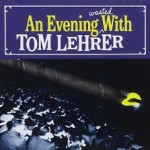 Not all of Lehrer’s material still plays today: in this era when space exploration has been minimized, a song about early rocket scientist Werner von Braun is hardly a source of laughter; post-Cold War, a cowboy crooning about the Atomic Energy Commission is perhaps too obscure. But a jazzy pop tune about Oedipus Rex can still crack up the college crowd, and anyone old enough to know of masochism is sure to find humor in a tango celebrating sexual gratification through pain. On the first day of spring each year, the idea of ridding our cities of the overpopulation of pigeons can still resonate. The NRA probably still doesn’t care for a hunting song about an inept marksman. Sexually transmitted diseases, sad to say, are perennial. And while National Brotherhood Week may be gone, a song about that effort to heal cultural rifts still stings.


 What happened to Nerds seems to happen every so often, but it’s one of the lesser discussed examples of a show going awry on Broadway. It doesn’t have the ignominy of closing immediately after its opening night (like the musical Glory Days) or the gossip page-worthiness of shutting down in previews (like the Farrah Fawcett vehicle Bobbi Boland). It’s not a case of a show that announced plans to happen, but never really came together, like Pump Boys and Dinettes did two years ago.

